Each person in Cuba is entitled to a minimum ration of basic foodstuffs. This was especially important during the “special period” during the 1990s after the collapse of the Soviet Union when people literally starved (the average Cuban last 20 pounds) because of the lack of oil, fertilizers, and food that had been imported from the Soviet Union. Even now, food can be scarce, and salaries are low, so each family receives a ration book, and the ration is based upon the ages and special needs of the family members. For example, family with a young child is entitled to more milk. The food is not free – the ration allows the family to buy the food at a subsidized price, which is a lot less than the market price.
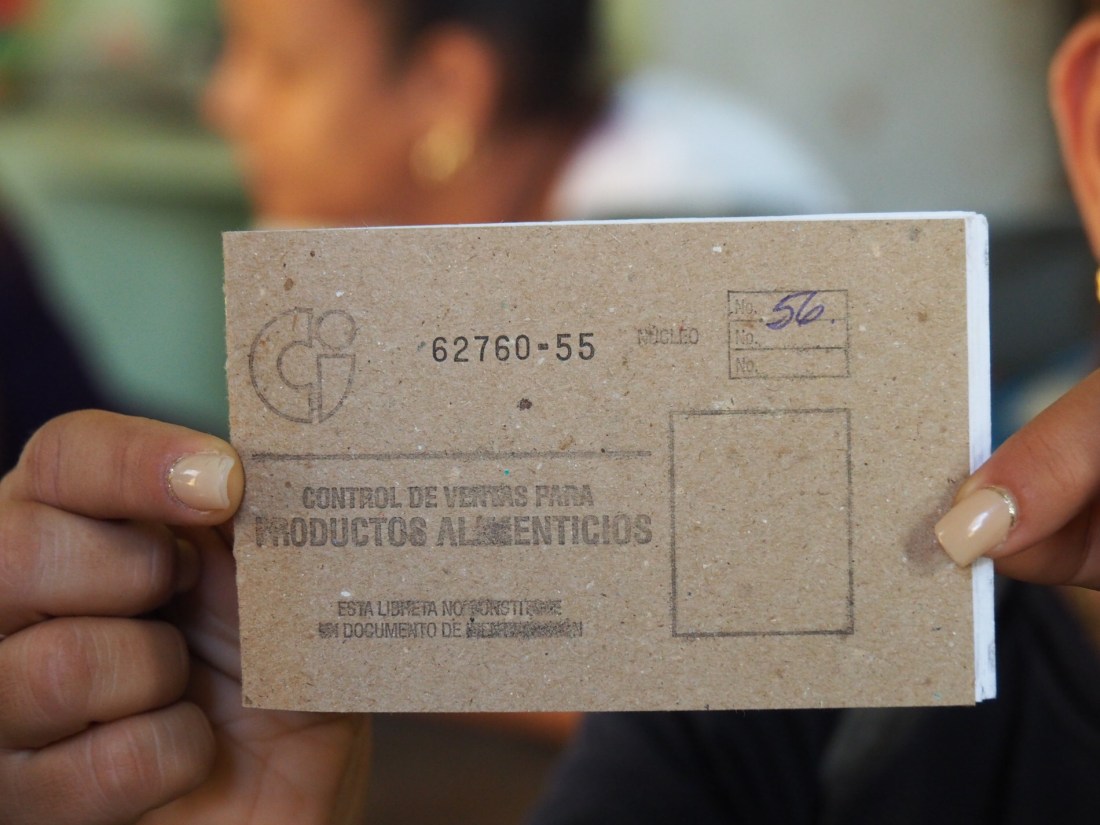
Each community has a ration store to which people bring their ration books and at which they buy the food.
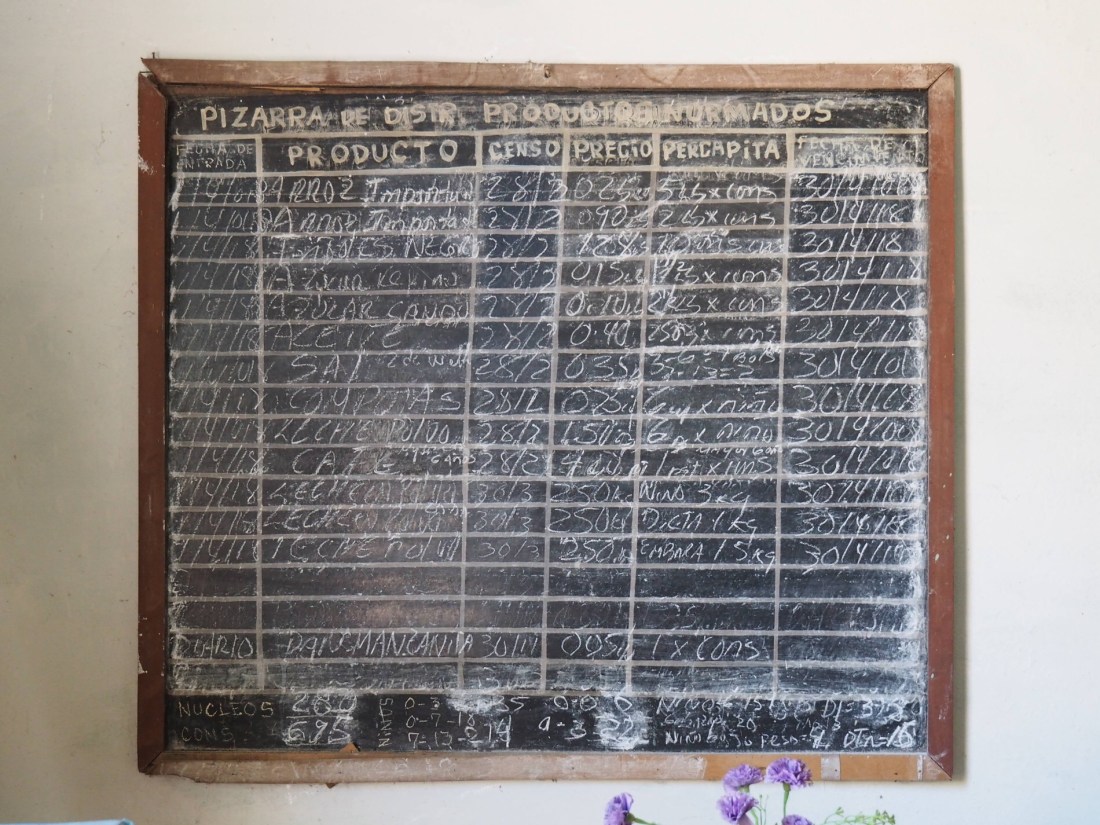
We visited one such store and saw the board that lists the commodities available. Included are things like rice, cooking oil, and salt.
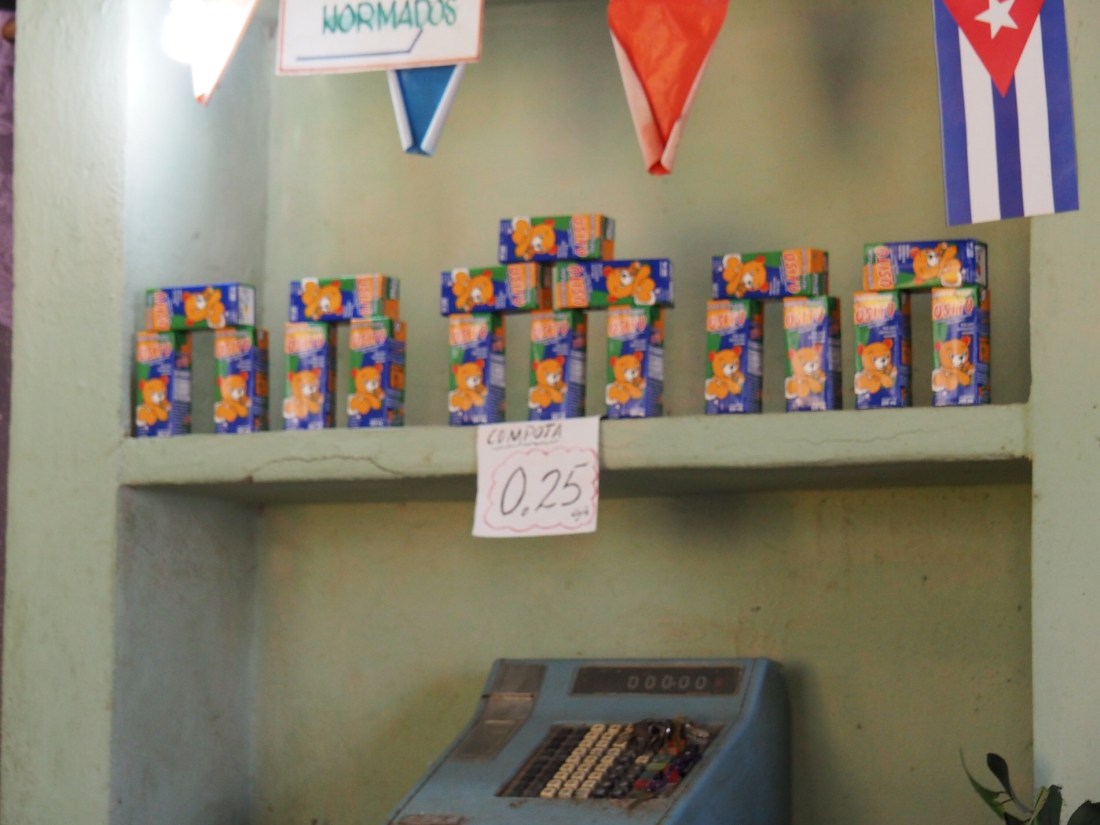
Baby Food (puréed fruit)
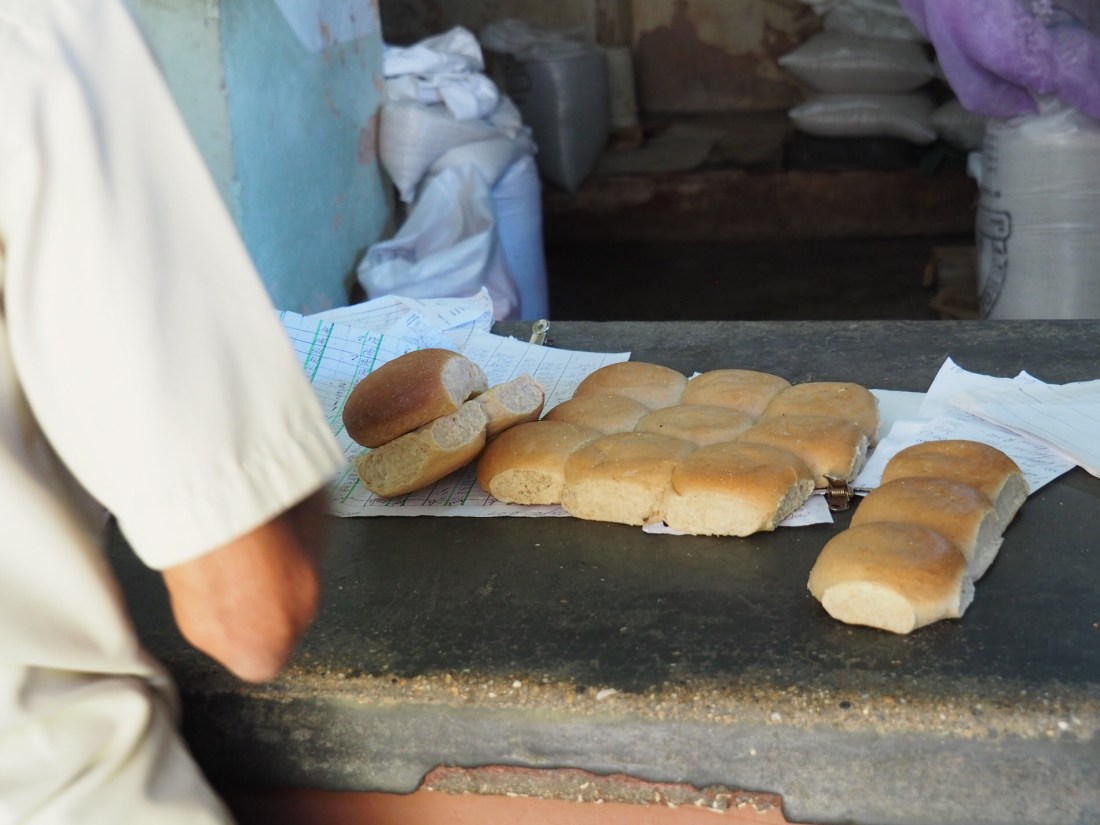
Bread,
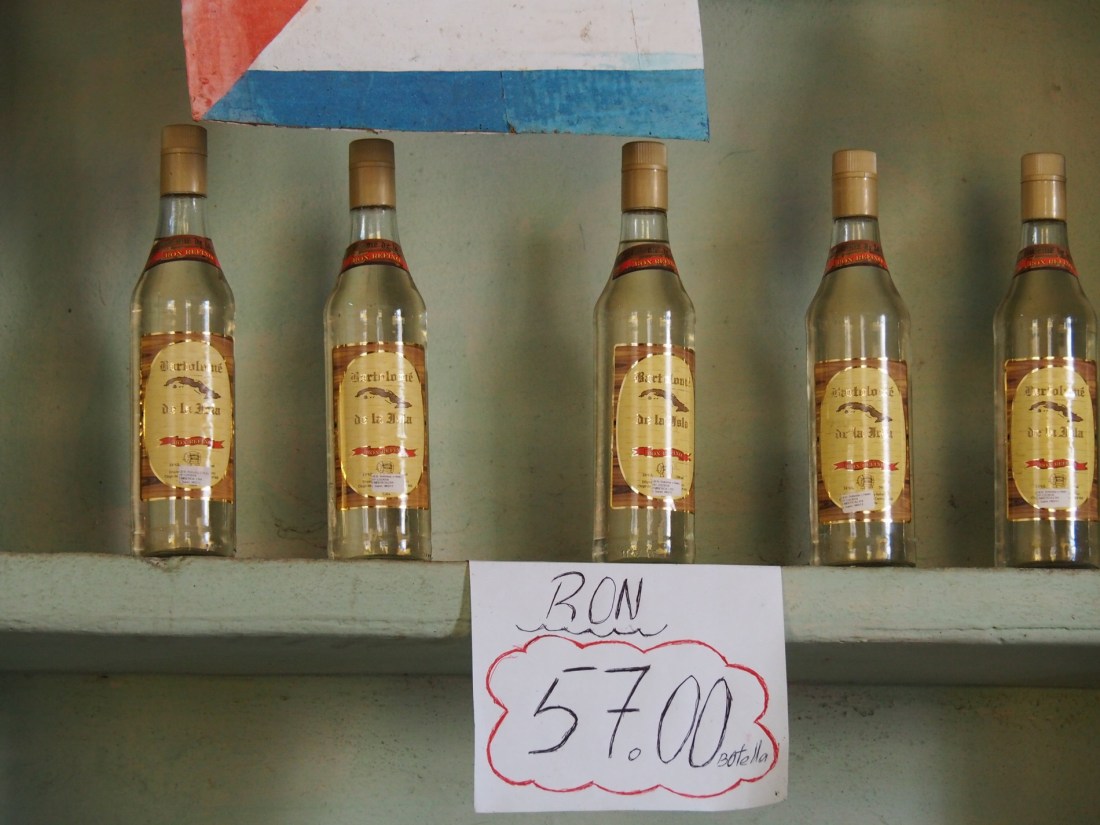
And even rum
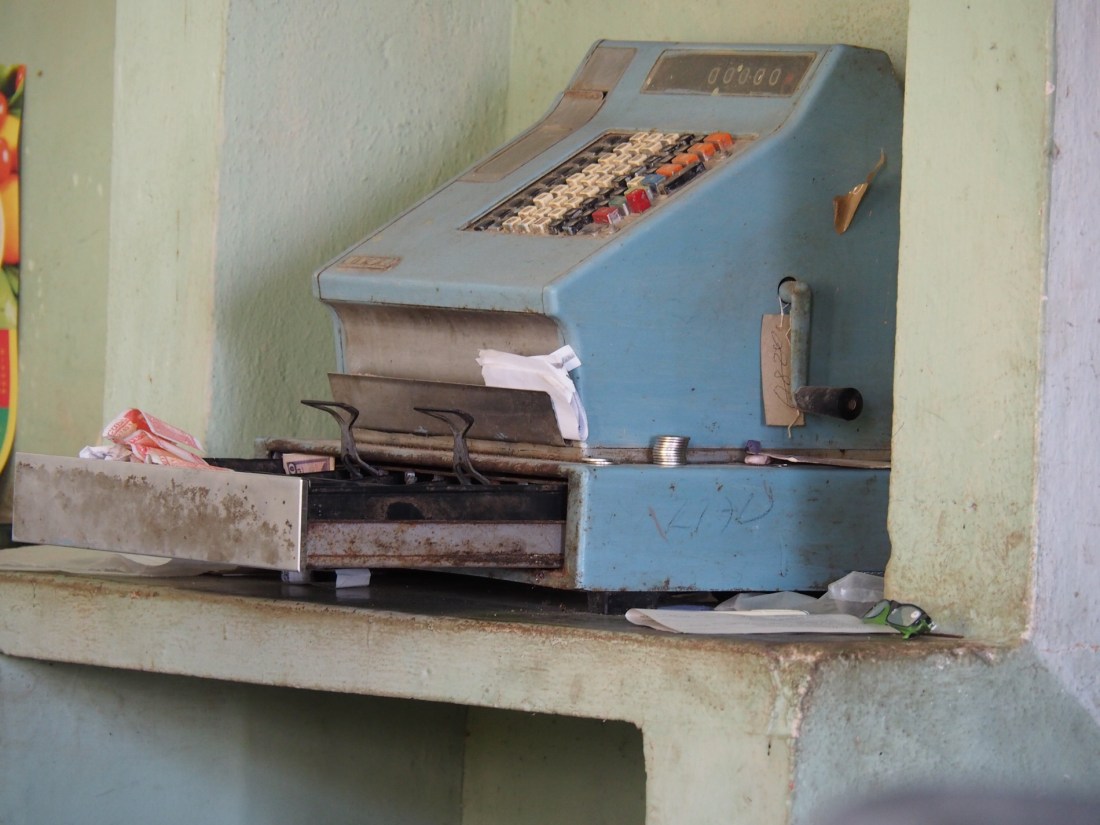
Here’s the “low tech” cash register
Our tour leader, who lived through the “special period” told us that the amount of rationed food available even today is not enough for the basic nutritional needs of the people, but that it goes a long way towards supporting them (remember that people still need to PAY in pesos for the food!)
So I sit in the courtyard of the Hotel Nacional de Cuba, drinking sparkling wine, typing these notes, and remembering all the meals I have eaten in Cuba (and worrying about how many pounds I might have gained here) and remember the woman we met in Havana last week who said that she barely ekes out her pension by selling pasta that she cooks, dries, and salts to sell, and feel guilty – but, in addition happiness that we bought a few cornicopiuous of pasta from her!
Typed in Havana, Cuba 4/12/18
Uploaded from Berkeley, CA 4/15/18

 Mary's Travel Blog