While visiting Cienfuegos, we met one morning with 6 or 7 members of the Union of Writers and Artists in Cuba (UNEAC), and were interested to hear the proactive approach that artists had taken with the Revolutionary Government.. The President of the local union, Orlando, explained that artists were worried that they would be faced with the same types of repression that Soviet artists had experienced in Russia. Very soon after the revolution, therefore, they met with Fidel Castro and members of his cabinet to express their concerns. That was the basis for an ongoing dialog with the administration that has ensured them that the arts and artists would be
- Separate from and not controlled by the government,
- Able to freely express their own viewpoints,
- Allowed to choose their membership in the Union, based upon the merits of the individuals’ work. Membership in the COmmunist Party would not be a requirement (in fact, many are not. Of the 7 members we met, only one is a member of the Party.)
- Sole owners of their work. (Yes, when an artist sells his or her work, a 10% tax is paid the government, but the rest of the money belongs to the artist).
Orlando told us that several members of Parliament are in fact members of the Union, and that many times local politicians solicit his opinion on changes that might be made. Early on, the Union criticized the art curriculum, which omitted any mention of artists who were not pro-revolutionary. Now the schools teach about the art of all Cuban artists, regardless of their feelings about the revolution (and whether or not they have defected).
The biggest battle, Orlando, said, is to change the mentality of the people in government. For example, in the beginning there was no such thing as private enterprise, but since Raoul took over, private enterprise is encouraged. The problem is that the regulators are those who so long enforced the previous rules, and it is difficult for them to change gears and make changes that facilitate private enterprise – which is not the same in Cuba as capitalism!
After the meeting, we visited the studios of several of the artists.
I bought a fan from Annia Alonso, (the woman in the middle, shown here with two of the women in our group who also bought fans from her)

A canvas bag with the image of the blue woman of the moon from Vladimir (the only artist who is a member of the Party, and ribbed unmercifully by the others during our meeting), shown here with his wife in front of a painting on an antique Texaco sign (part of a series of similar works on which he is working for an upcoming exhibition in the US)

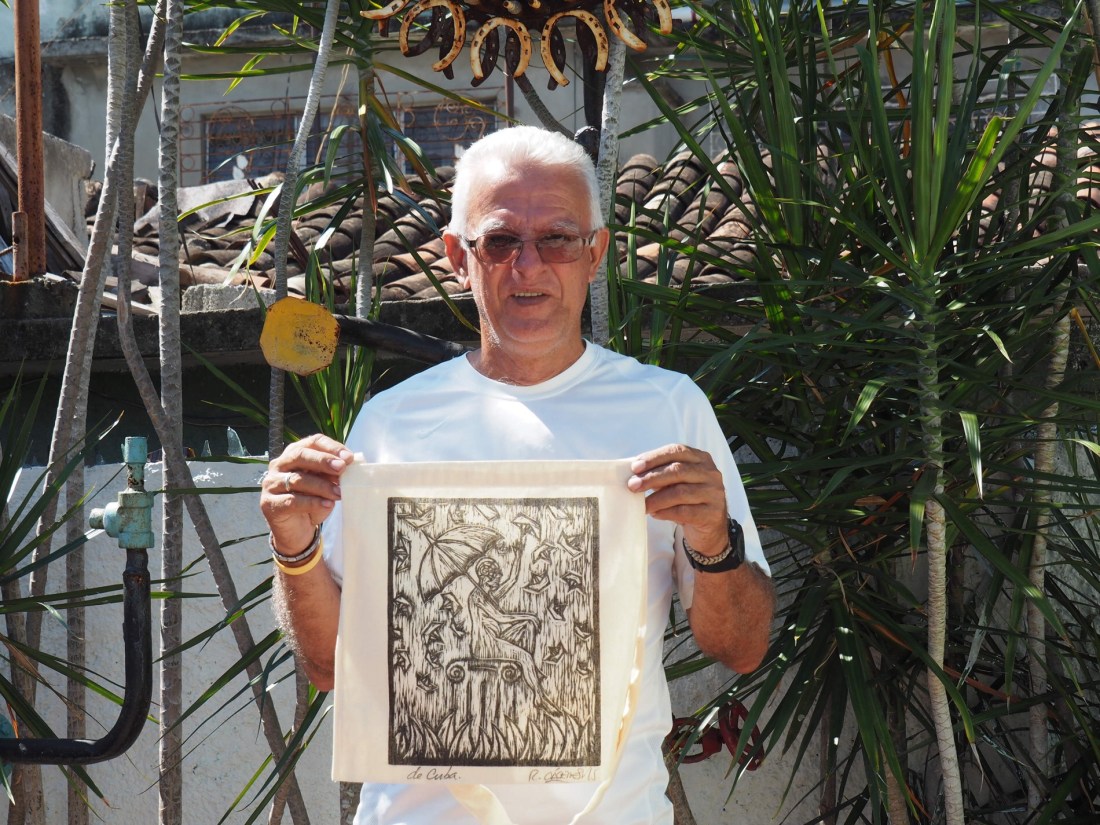
Another canvas bag with a black and white linoleum cut from Rafael,
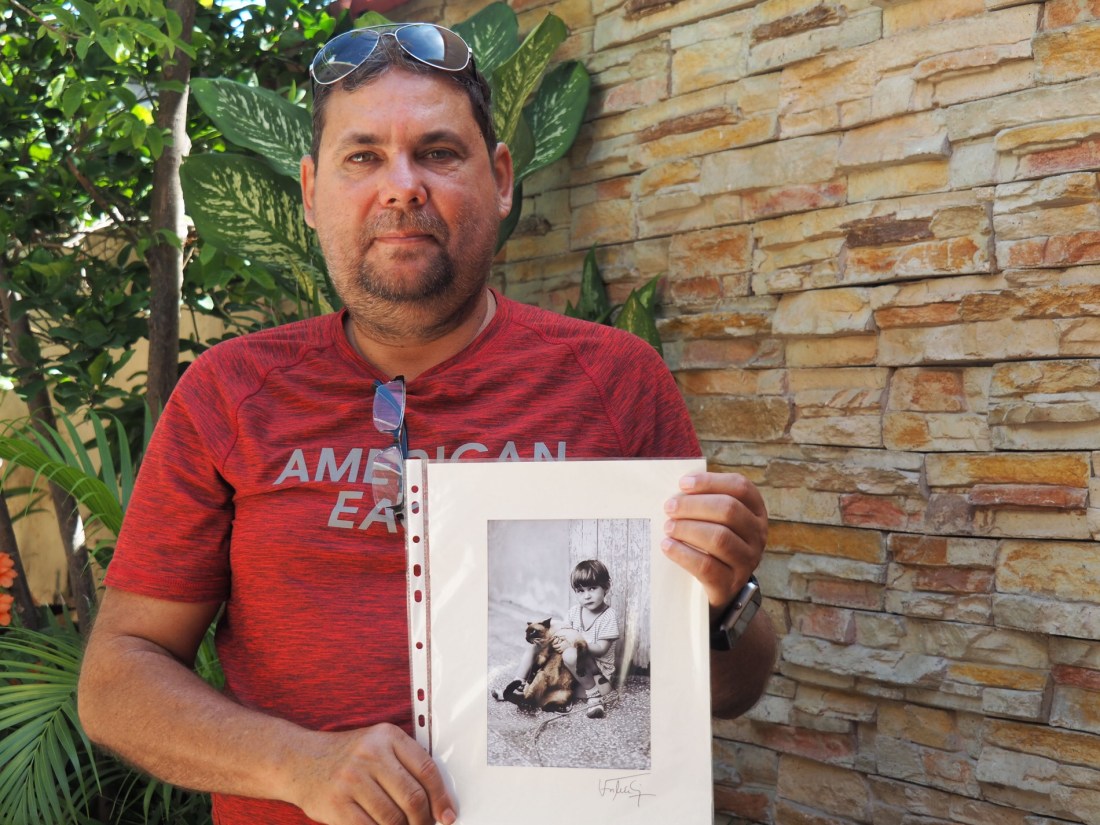
And a prize winning photo by Omar Garcia Valenti of his three-year old son, Marcel, called “the difficulties of friendship.” You can see, if you look closely, that not only the cat but also the son is unhappy – the son not least because he is sitting on the ‘potty chair.’
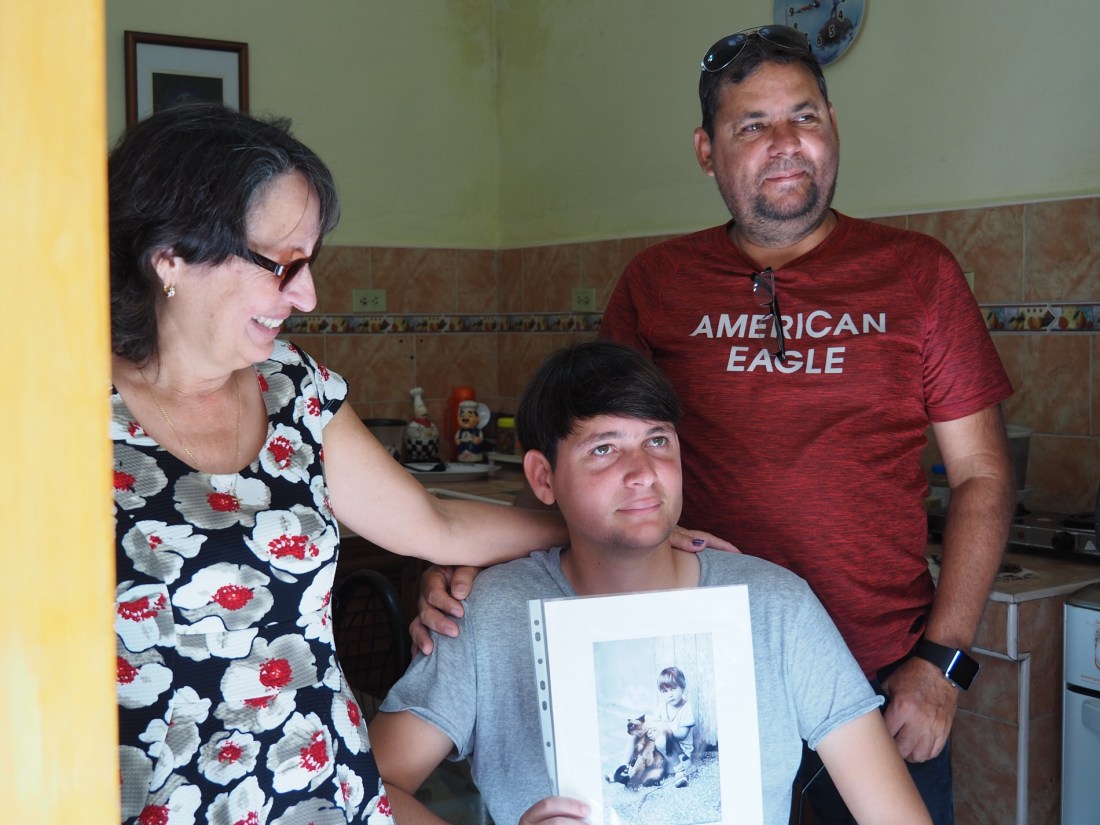
Here’s a picture of his parents and now 24 year old Marcel holding the photo (I’m not sure that Marcel was really happy about posing for this picture!)
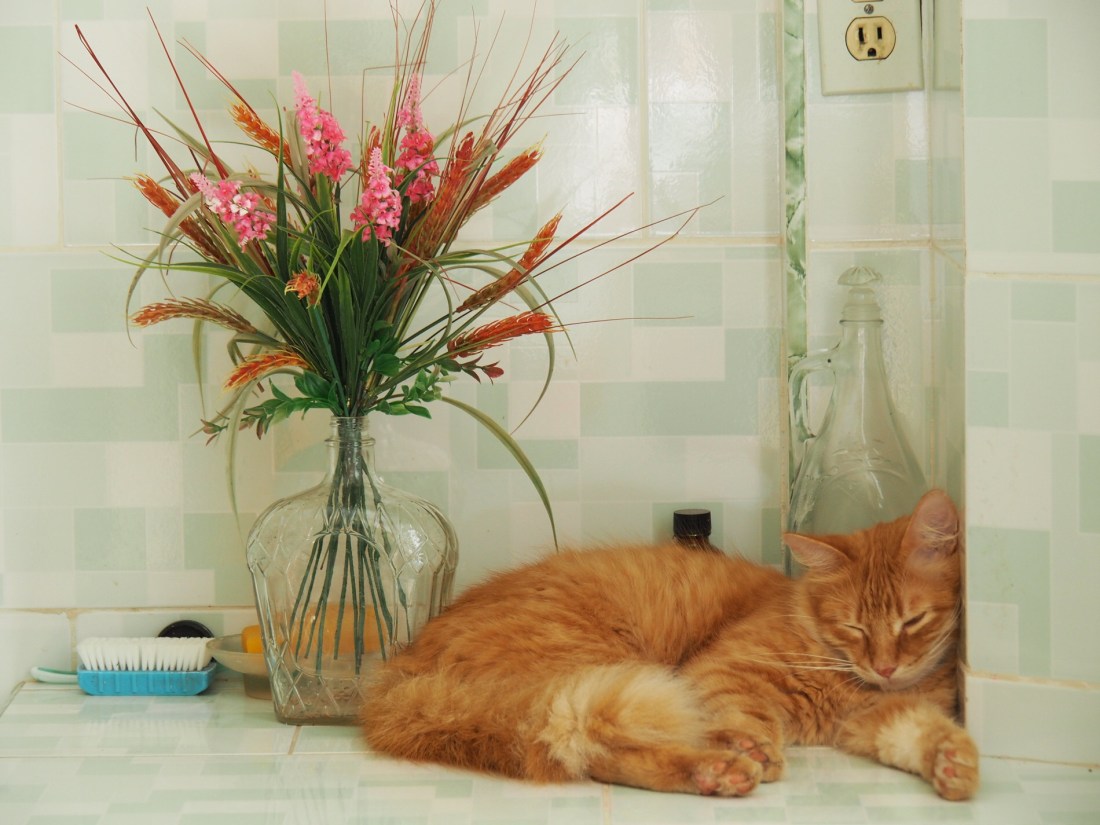
Omar is a great cat lover (7 live in his house).
In fact, one of his most famous photos is of a small cat in a canvas bag dangling from the bars of a bike on the way to be thrown in the river. Omar asked the owner to give let him photograph the cat and give it to him. And when Omar won an award with that photo, he shared the prize with the cat’s previous owner.
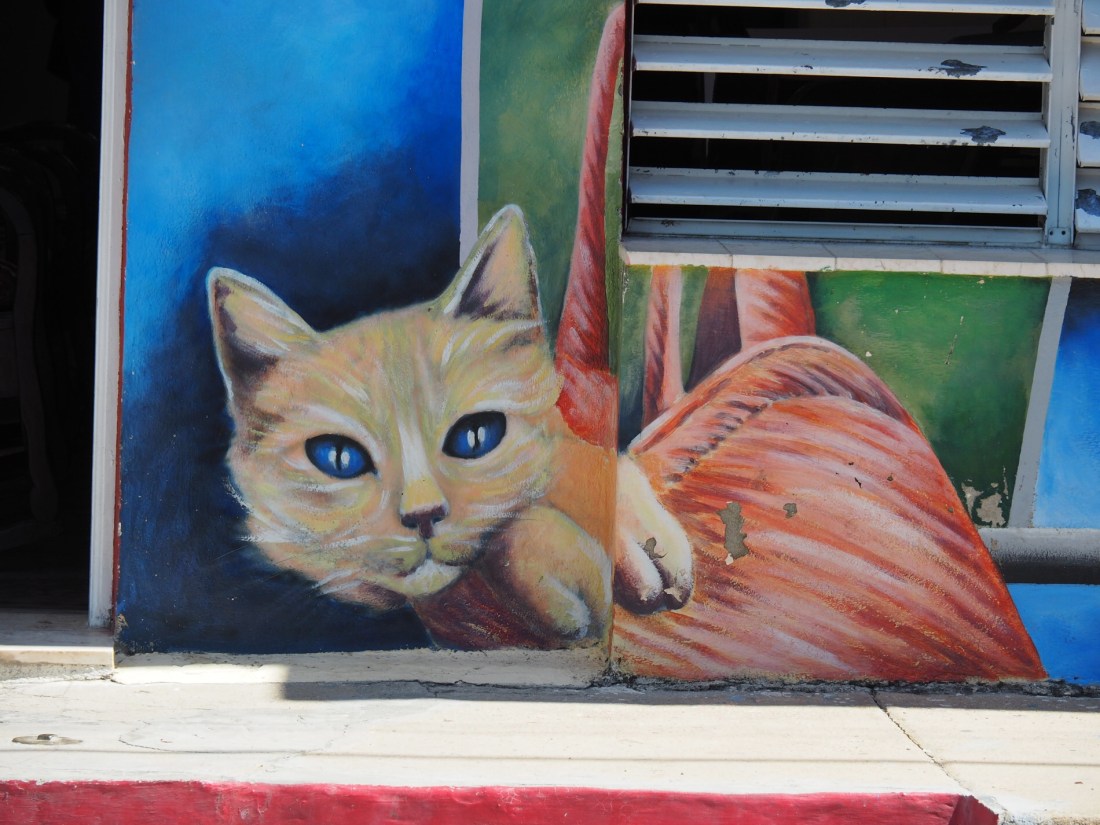
Omar’s home has been decorated with murals painted by other artists. One of them is (you guessed it) of a cat!
Cienfuegos, on the south coast of Cuba 4/8/18
Posted from Berkeley, CA 4/15/18

 Mary's Travel Blog