Great Britain and other places where Neolithic cultures thrived have a long history of standing stones. Many of these were raised in circles, apparently as places of worship, or perhaps for observation of the changing seasons to tell farmers when to plant and when to reap. Others stand as lonely sentinels. Why they were raised and how has long fascinated archaeologists and researchers.
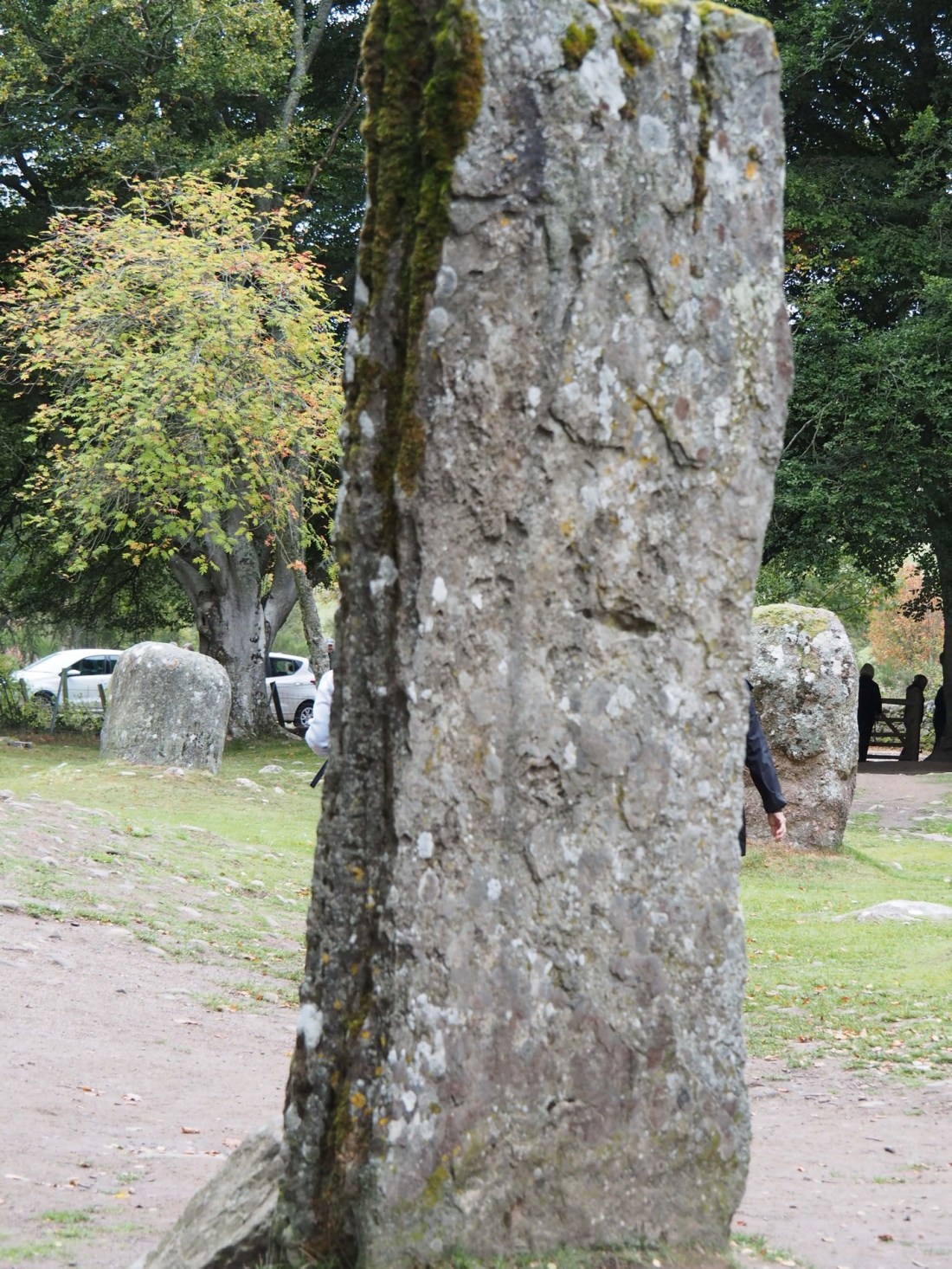
Earlier in our trip, we visited Stonehenge, probably the most famous of the stone circles. In Scotland we visited a lesser known site, Balnuaran of Clava, that contains four cairns (burial places) three of which are surrounded by stone circles. It is thought that this site, in the Nairn valley, was originally used by Bronze Age peoples at about 2000 BCE, which is just a little later than Stonehenge, where the builders seem to have started erecting stones in about 2500BCE. The site was apparently used for burials for 200 years, and then again in about 1000 BCE
There are burial berms in the area around Stonehenge, but it seems that there were no burials within the circle of its standing stones. That is not the case, however, at Balnuaran of Clava, where the burial cairns are inside the circle of stones.
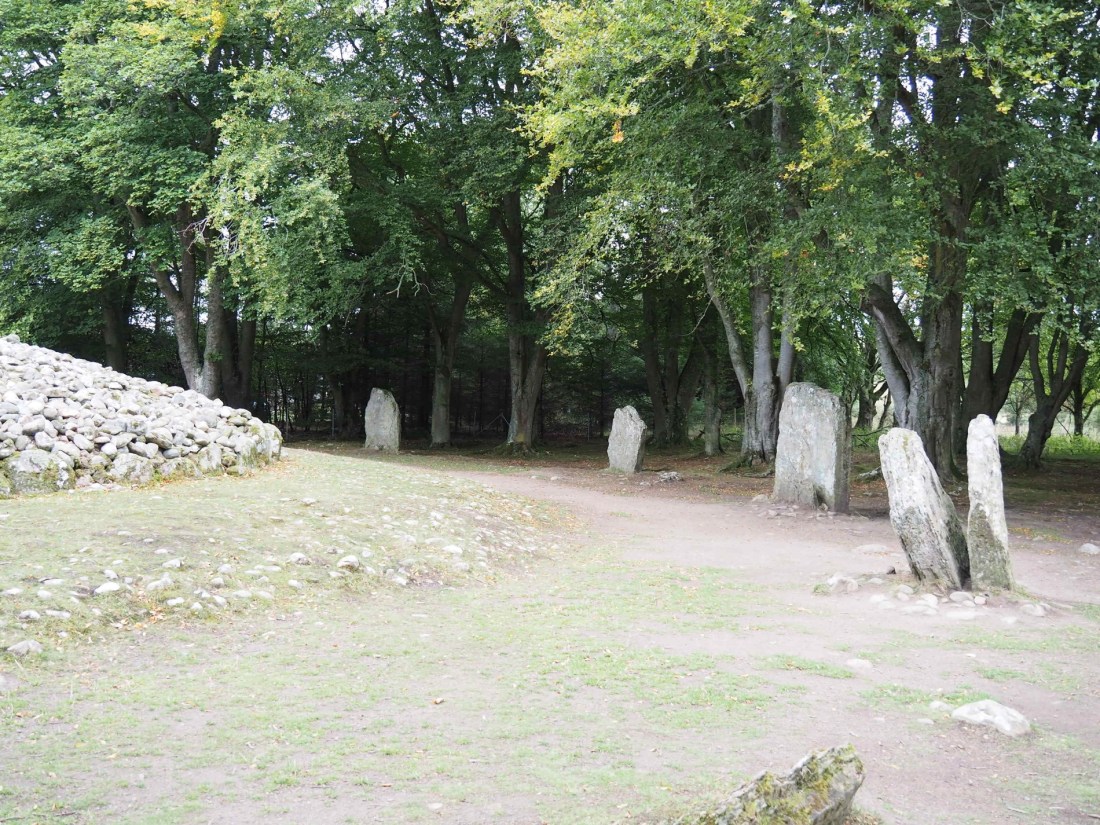
The people who raised the cairns and stones were obviously very in tune with the seasons. Both of the two large cairns are aligned to the midwinter sunset. On the shortest day of the year, sunlight streams up the passage to illuminate the burial chamber.

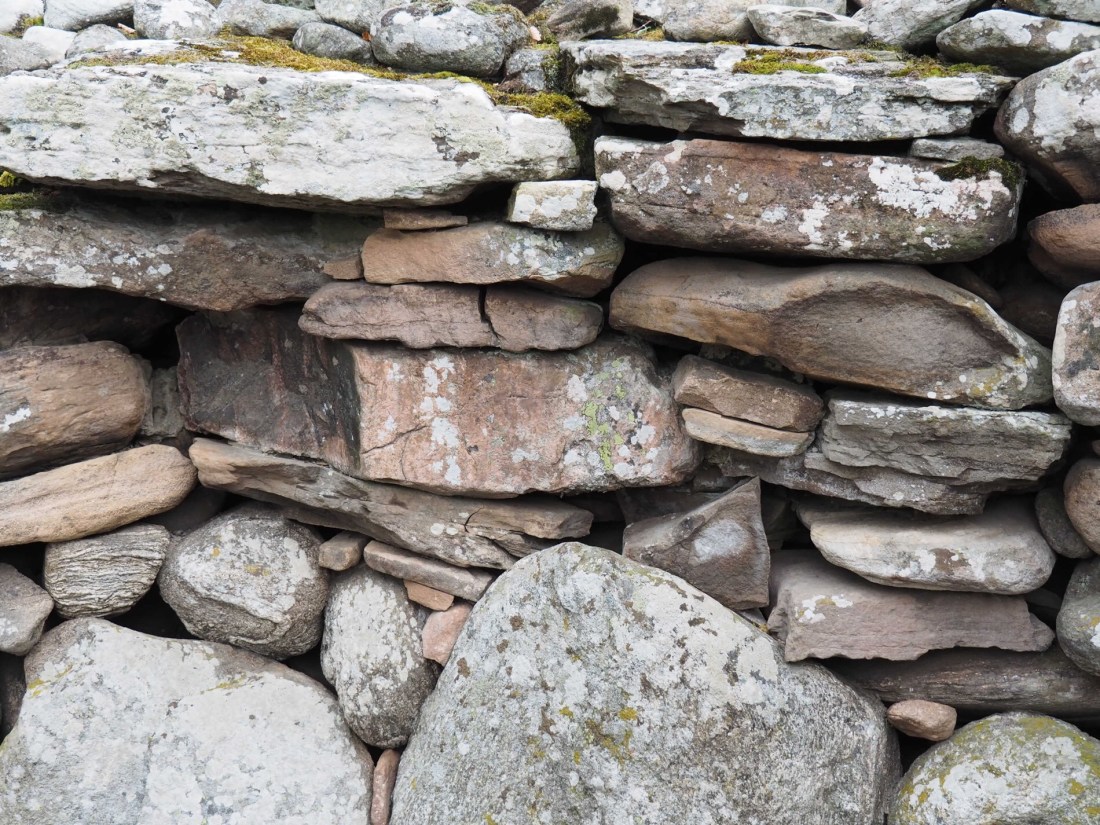
The builders also varied the colors of the stones, although they are so weathered now that it’s hard to see on the outside (the stones pictured here are on the inside of the cairn) but red and pink stones faced the midwinter sunset, while grey stones were used on the side facing the midwinter sunrise.
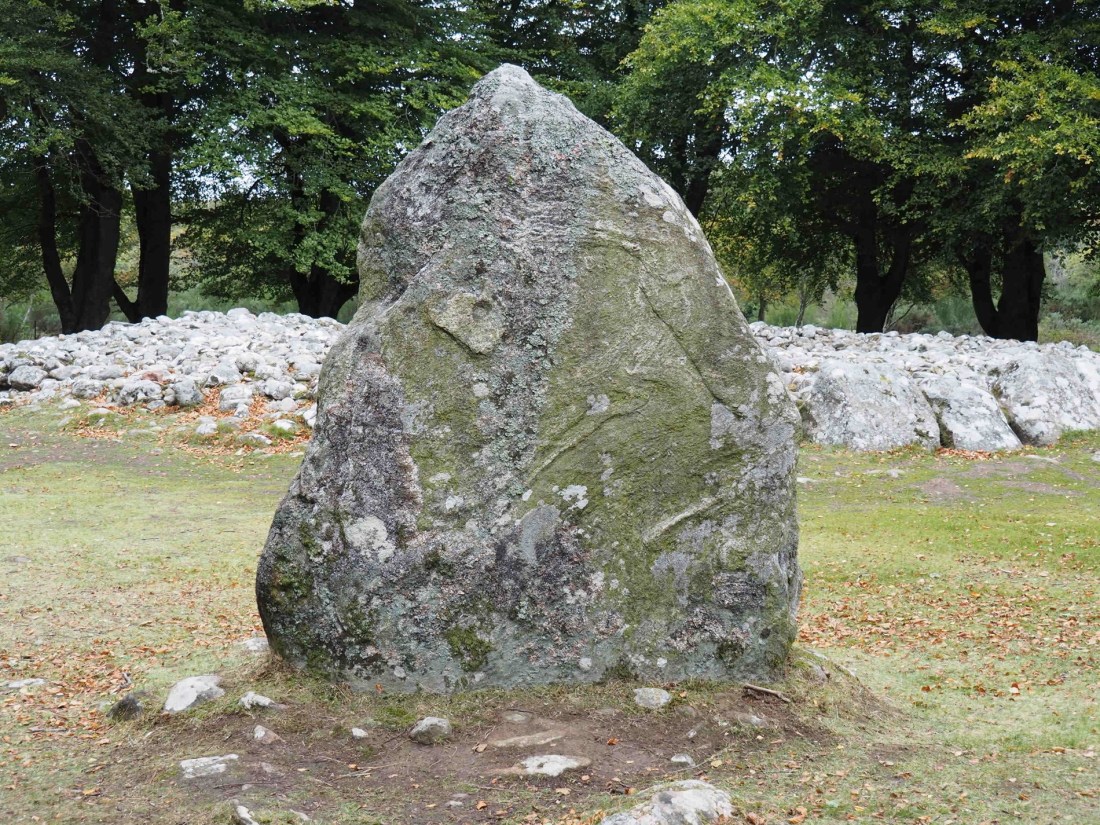
And the larger stones were also placed on the southwest side to face the midwinter sunset.
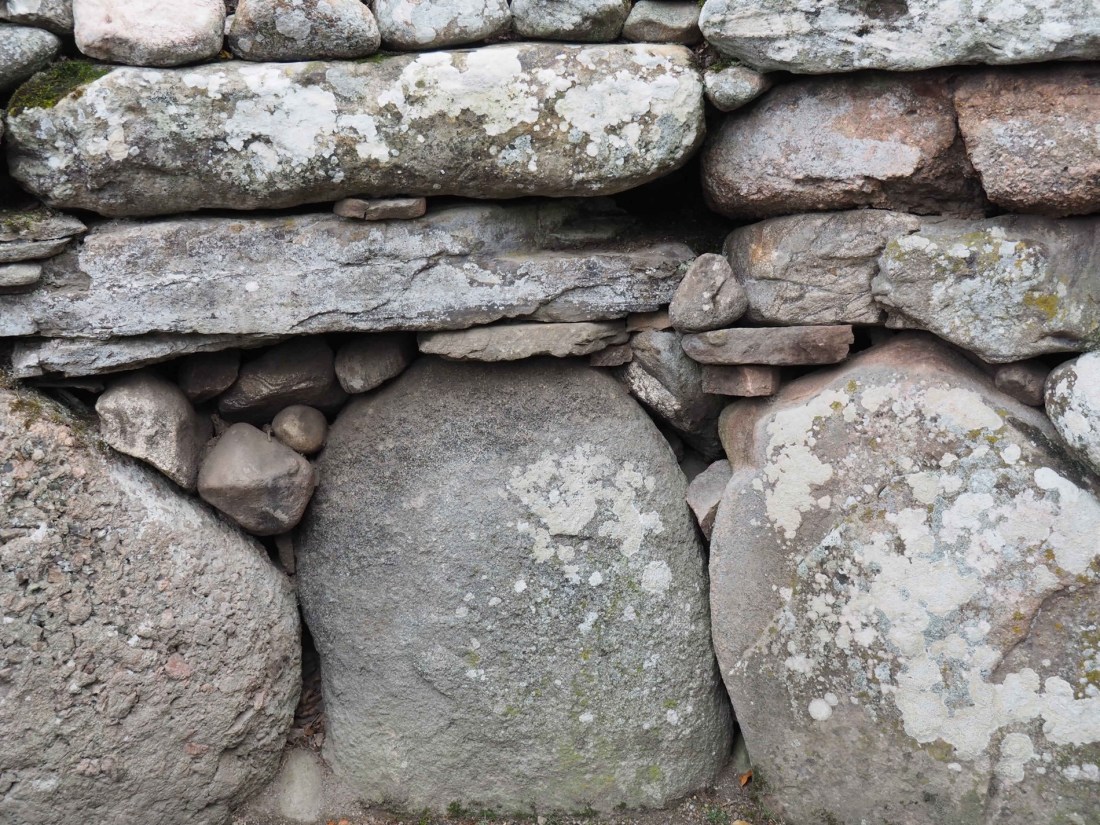
I was also interested to see that the technique of building ‘dry stone walls’ has not changed in 4000 years. While we were in the Lake District, we had a lecture from a man who is a ‘waller’ who teaches the building of dry stone walls today and he said that one of the absolute requirements is that the larger stones be horizontal, with “hearting” stones in between and behind.
And think back to the last time that you visited a graveyard that has been in use for a long time – we still erect the equivalent of standing stones to honor our dead.
Mary
Typed on the flight from Glasgow to Newark, Published at 36,000 feet somewhere south of Salt Lake City, UT
9/19/18

 Mary's Travel Blog