You didn’t think I would come to Scotland without going to a distillery, did you? We visited the Tullibardine distillery on our way from Edinburgh to Inverness.
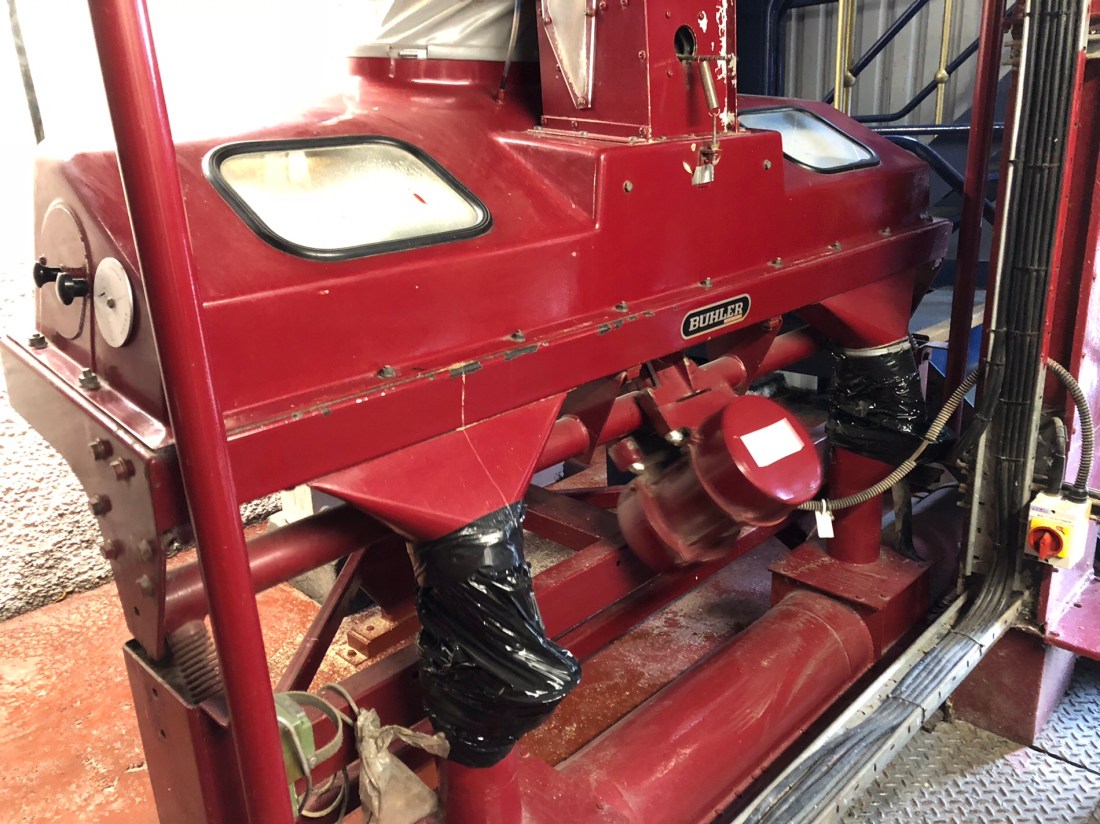
I learned that the distillery receives 28 tons of malted barley each day. The barley is malted by a local firm to the distillery’s specifications. The distillery mills the barley, and then it is mixed with water which comes from the local hill behind the distillery. It is very soft, having filtered through volcanic and limestone rock on its way down the hill.
Once the water is added, the mash is pumped to the “wash back” where yeast is added.
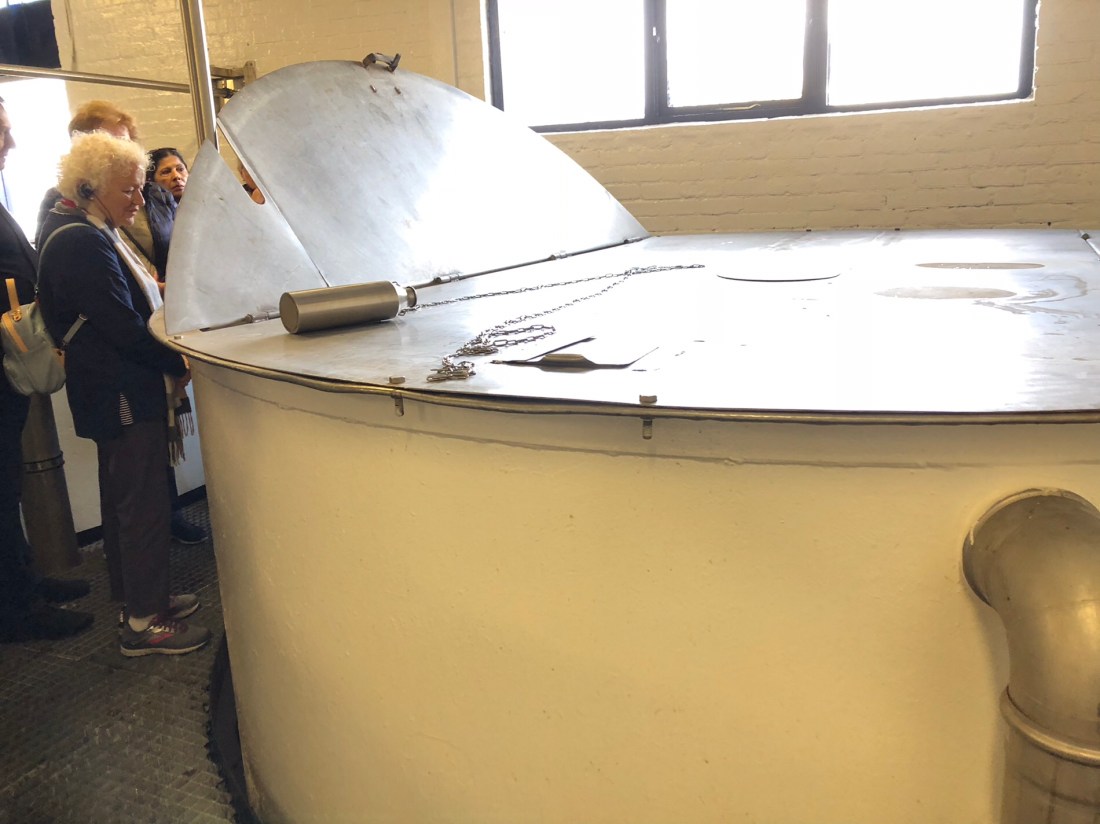
A few hours later, it looks like this,
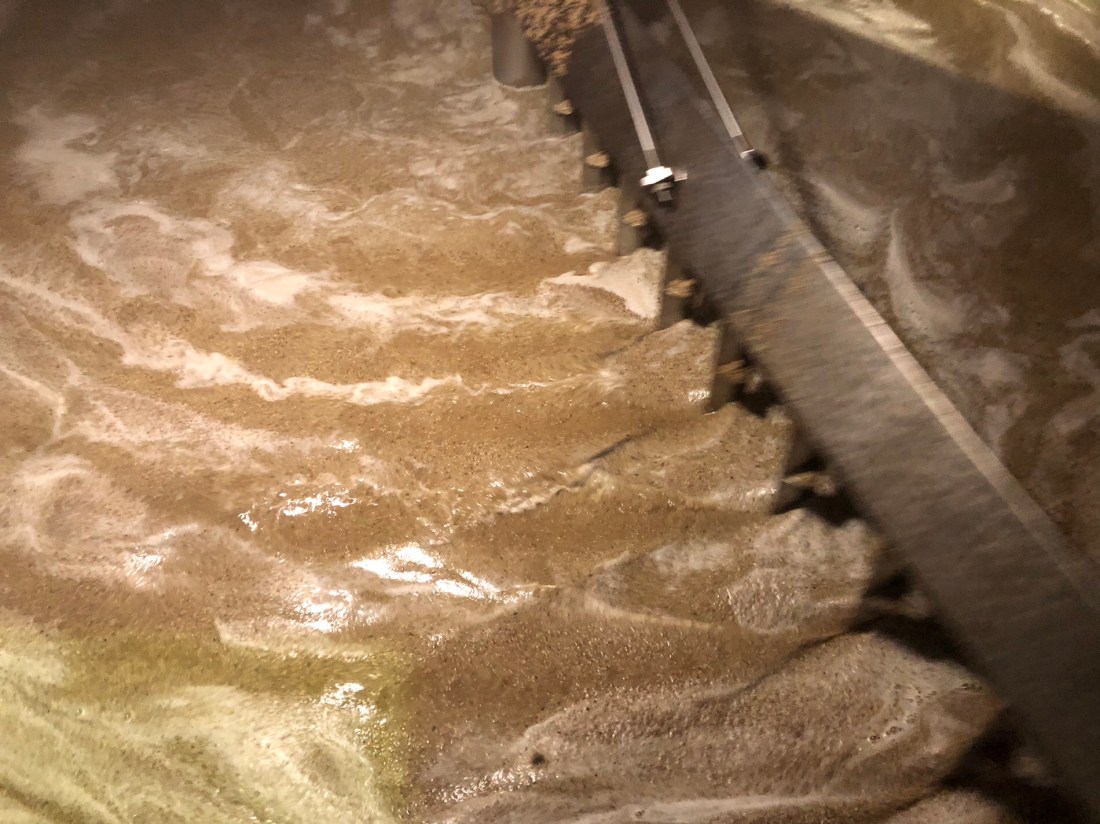
But when the fermentation is further advanced, it looks like this:

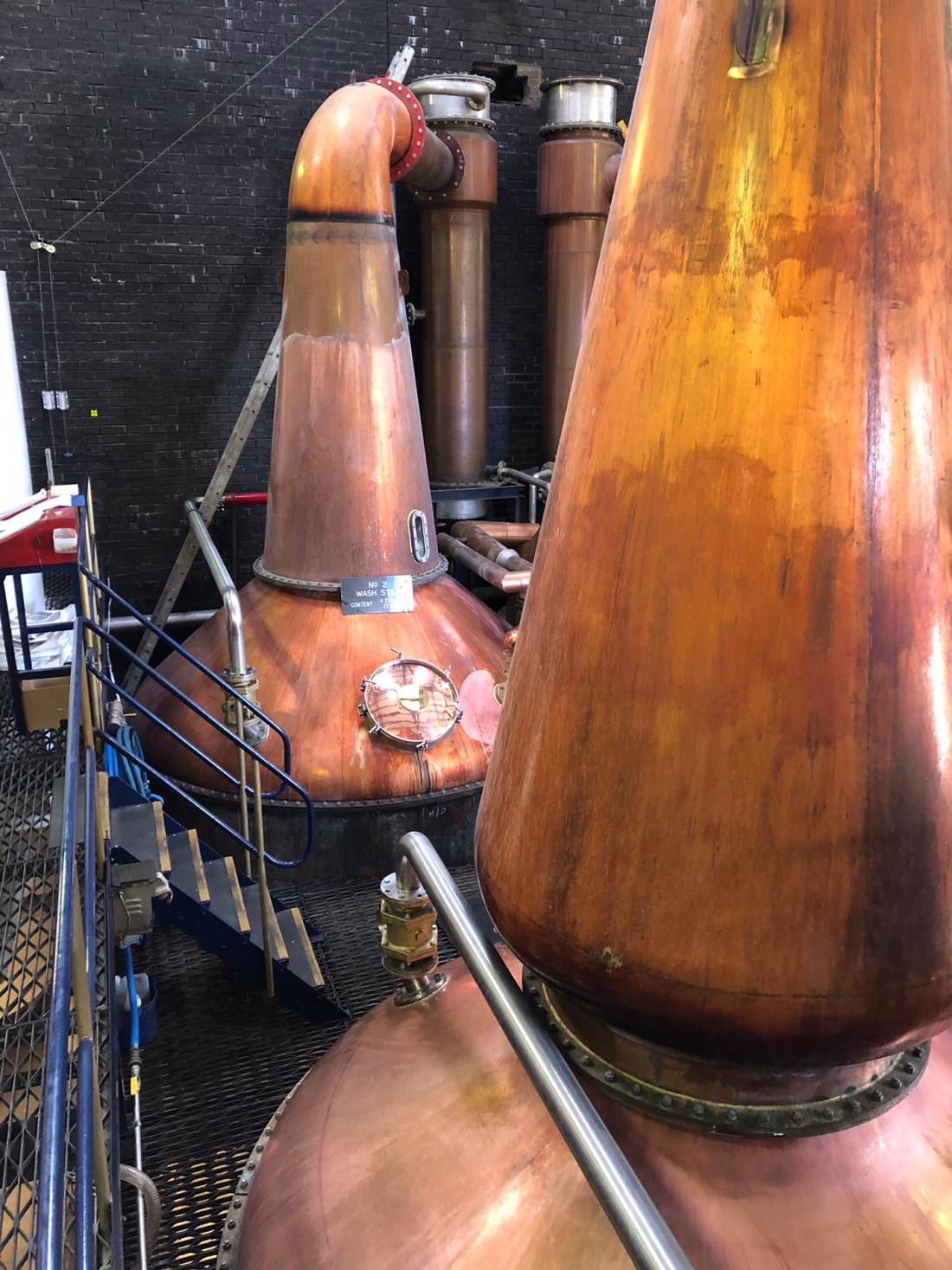
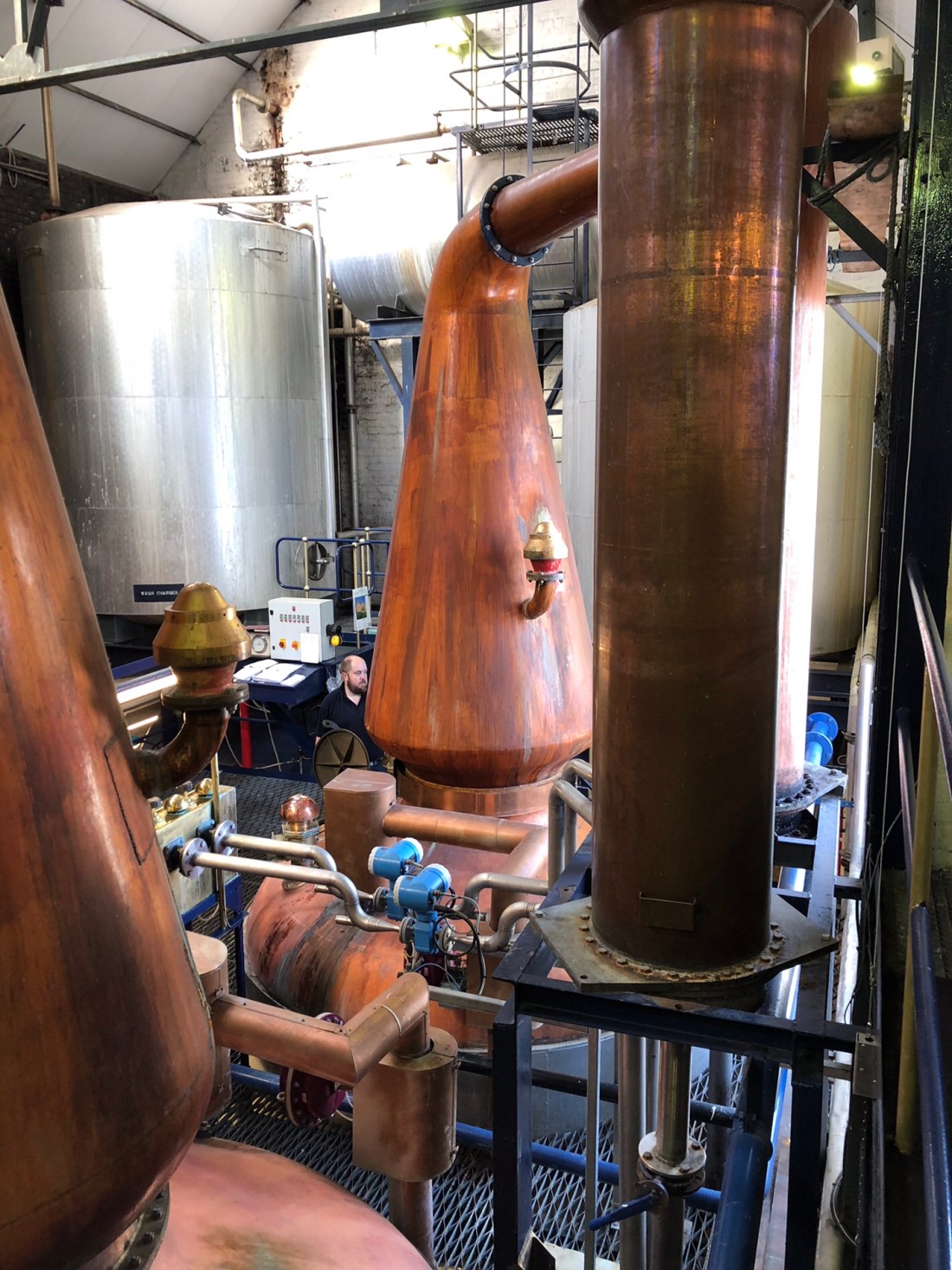
After fermentation the mixture is 7% alcohol. The liquid is then pumped to the wash still, and steam is pumped in to heat it. Steam goes up through pipe that is chilled, and it condenses. The condensed spirit is 23% alcohol.
Remember that the Scots are renowned for being thrifty: The remaining barley mash is pumped out and sold to farmers who are raising cows, where it is dried and used as feed (happy cows, maybe?). And after the mash is pumped out, the wash backs are washed with water, and that is pumped out and goes to be sprayed on the fields!
In the meantime, the distilled spirit goes into a second still where it is distilled again. The goal is to come out with spirit that is 70% alcohol.
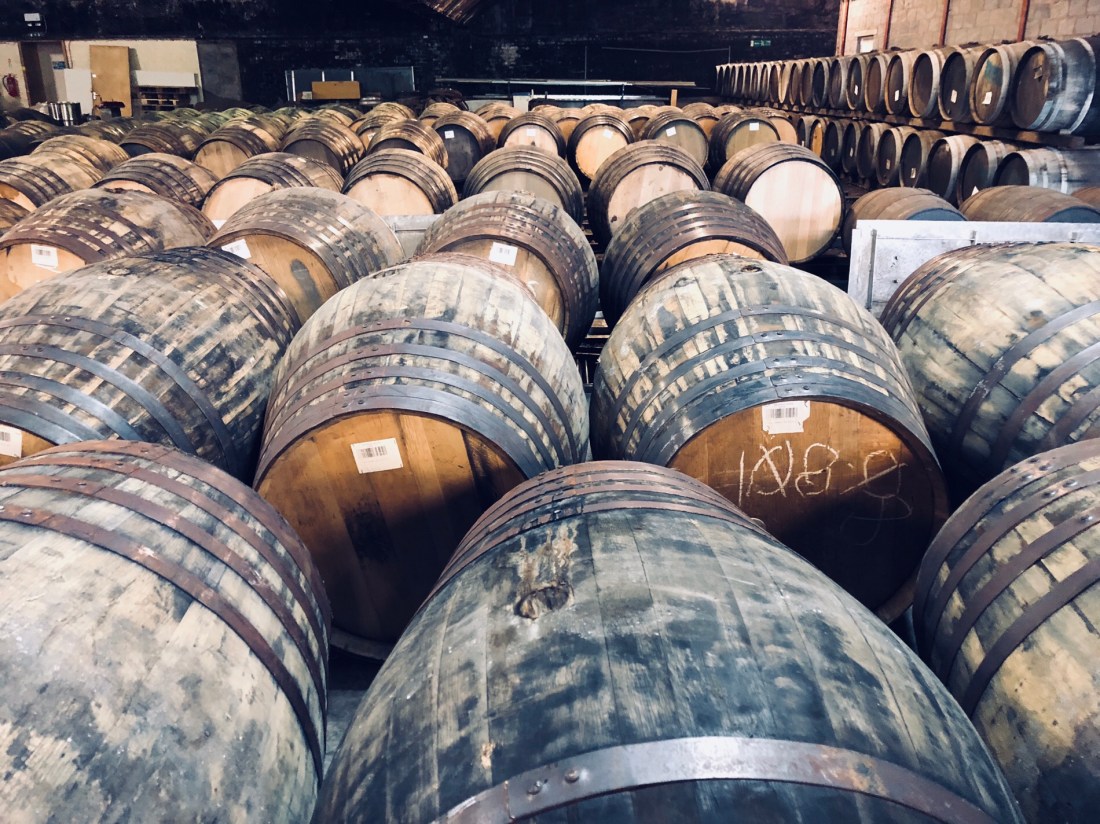
Next the distilled spirit is pumped to oak barrels for aging (by law, all Scotch Whisky must be aged in barrels for at least 3 years and a day, but many types of Scotch are aged for longer). The type of barrel effects taste. Some of the Whisky is placed in small American white oak barrels previously used for bourbon. Some of the Whisky goes into larger barrels of European oak that had previously been used for sherry, and some into medium sized barrels previously used to age Sauternes.
There has been brewing of one kind or another on the site of the distillery since the 1100s. The first brew was beer or ale. The distillery uses a crown and 1488 as its logo. It does so because in 1488 James IV became king. While traveling from Perth to Scone for his coronation, James stopped in the original brewery for a glass of ale.
So, as you probably assumed, at the end of our tour of the distillery we were treated to a “wee dram” (actually 2 tastes). My favorite was the one aged in the Sauternes barrels.

Mary
Typed in transit from Inverness to Glasgow 9/18/18
Posted from Newark on the way home 9/19/18

 Mary's Travel Blog