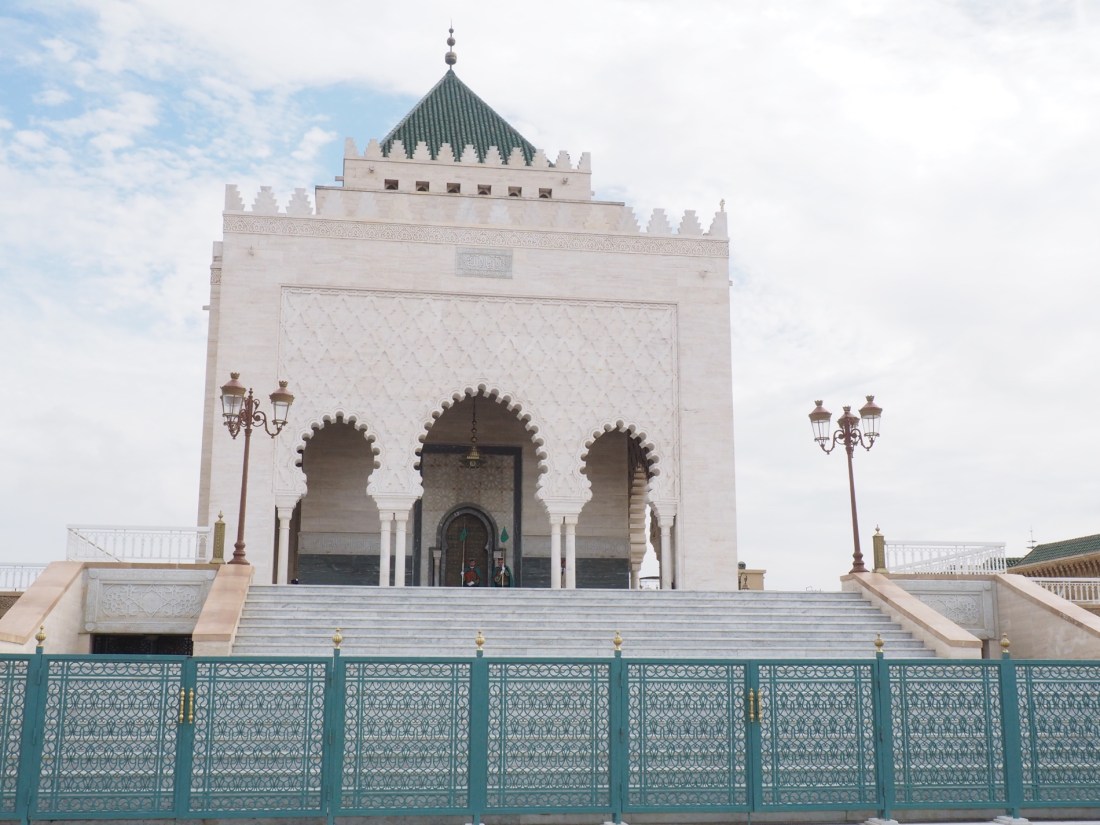
I started this trip in London, and on the first day I visited the British Museum (subject of another post). In the museum I saw drawings of the tomb of Mausolus, a Persian satrap of Caria, which was considered one of the seven wonders of the ancient world. Understanding came to me: This is where the term “Mausoleum” originated. I have visited some famous ones: the Taj Mahal in Agra, India, the Mausoleum of Cyrus the Great in Pasargadae, Iran, the Mausoleum of Ho Chi Minh in Hanoi, and the Tomb of Hafez in Shiraz, Iran, amongst others, but in Rabat I visited the tomb of Mohammed V, which was built by his son, Hassan II, and this one is truly extraordinary.
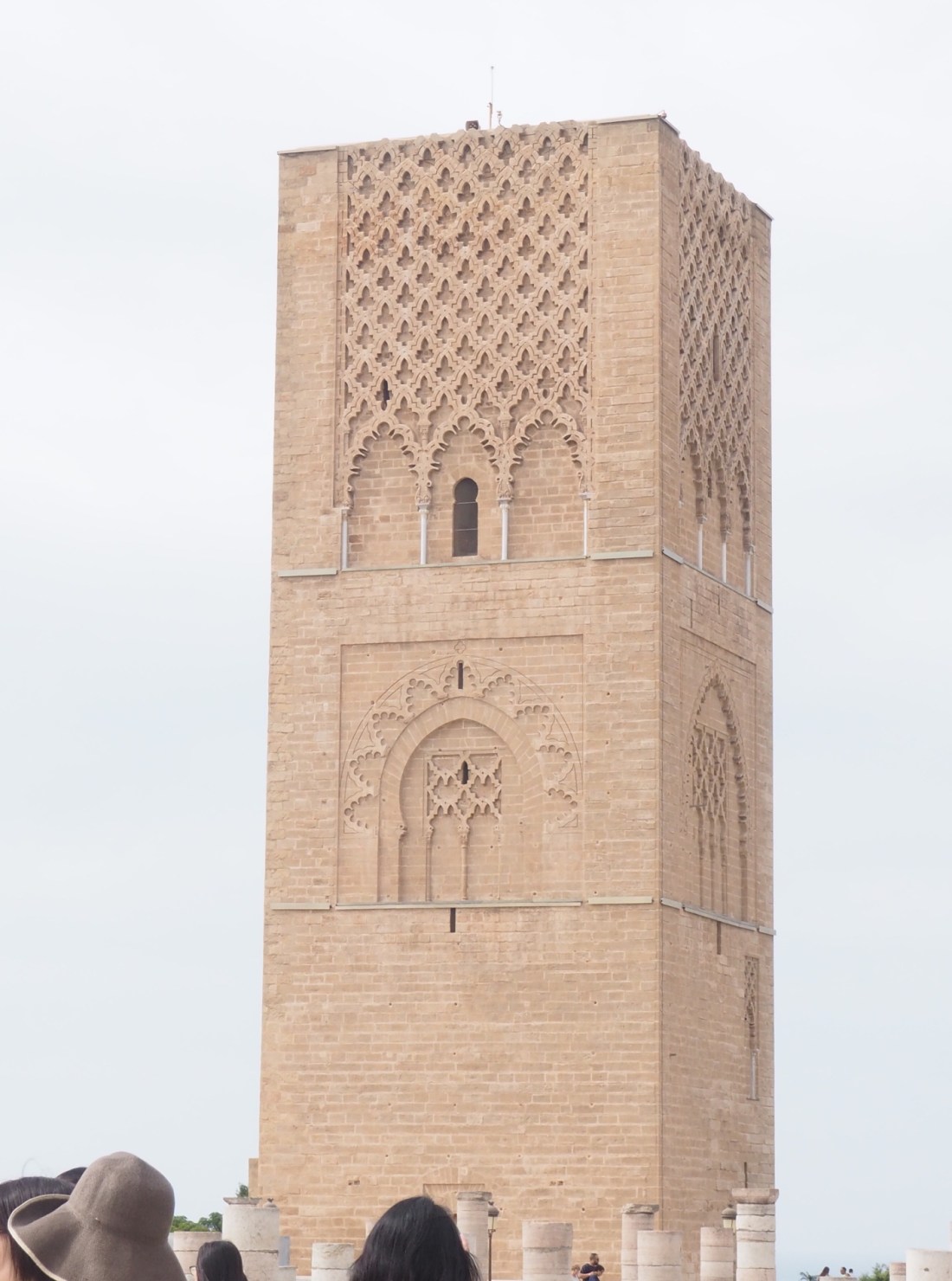
The Mausoleum is built on a large platform, the Yacoub al-Mansour esplanade, which was originally intended for a huge mosque. But only the minaret, known as the Hassan Tower, was built before the king, Abu Yusuf Yaqab- al-Mansur, who had commissioned the building, died in 1199 CE. The tower was originally intended to be about twice as tall as it is now (it stands 44 meters or 140 ft). It is so large, that it does not have stairs, but rather, it has ramps, which would have allowed the muezzin to ride a horse to the top to issue the call to prayer.
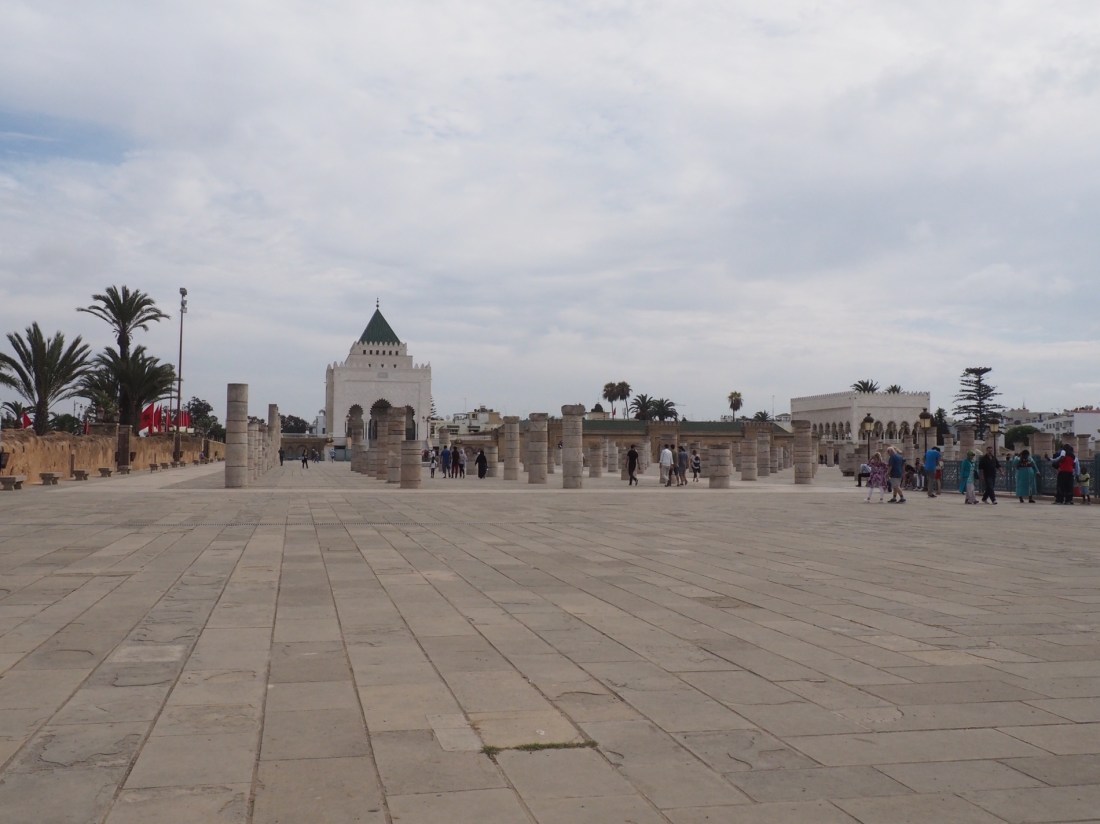
There are still a few columns that were intended to support the roof of the mosque, (and the modern architect added more) so that you can get an idea of how huge the structure would have been.
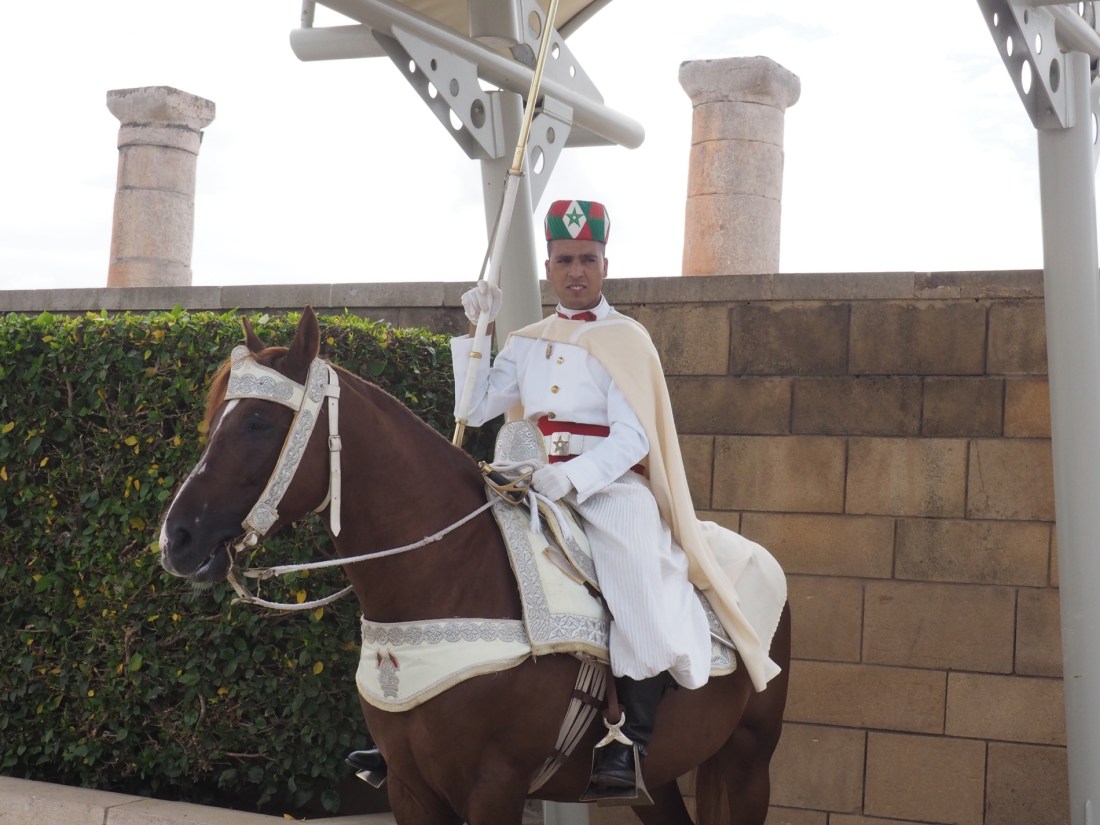
The entrance to the area is guarded by men on horseback.
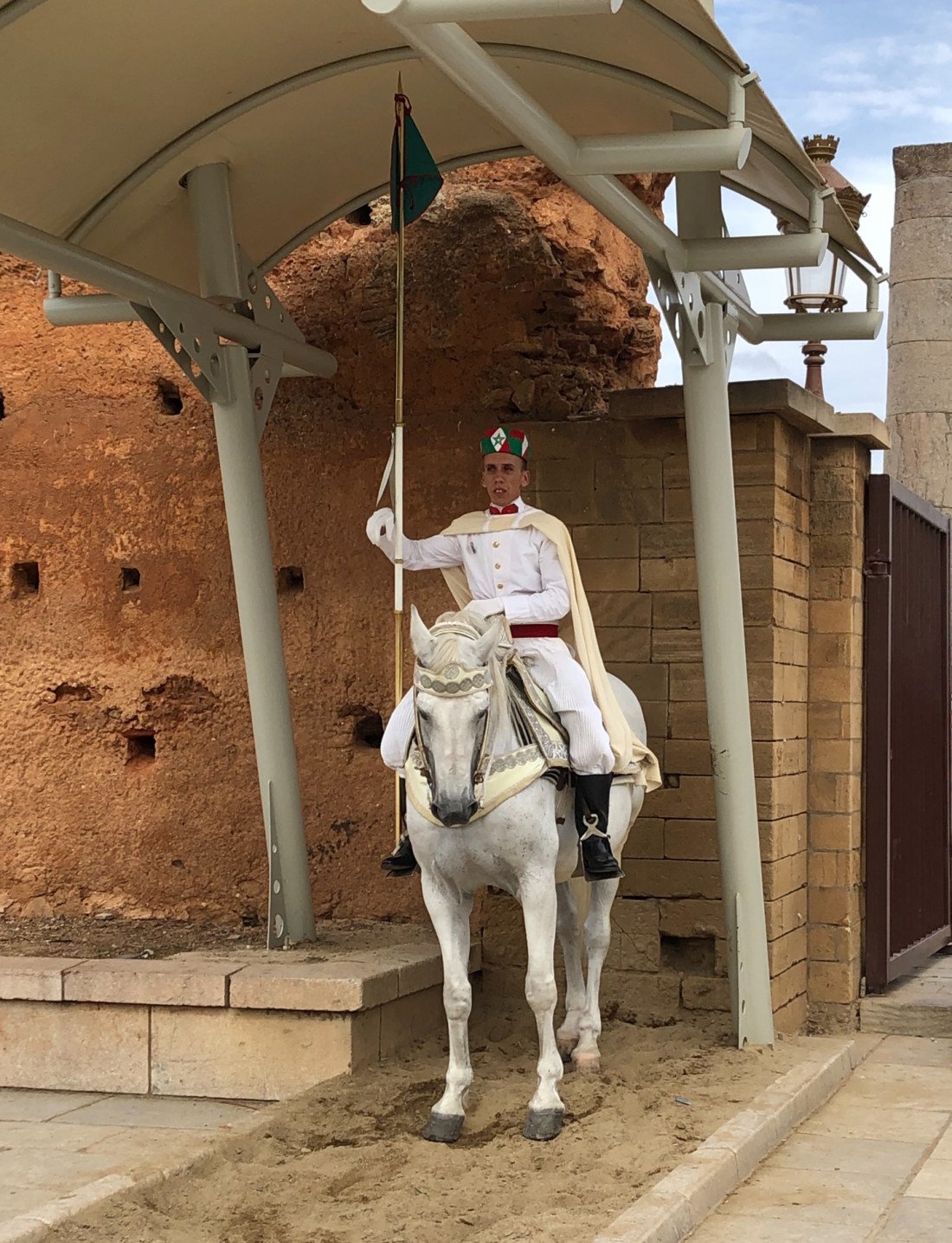
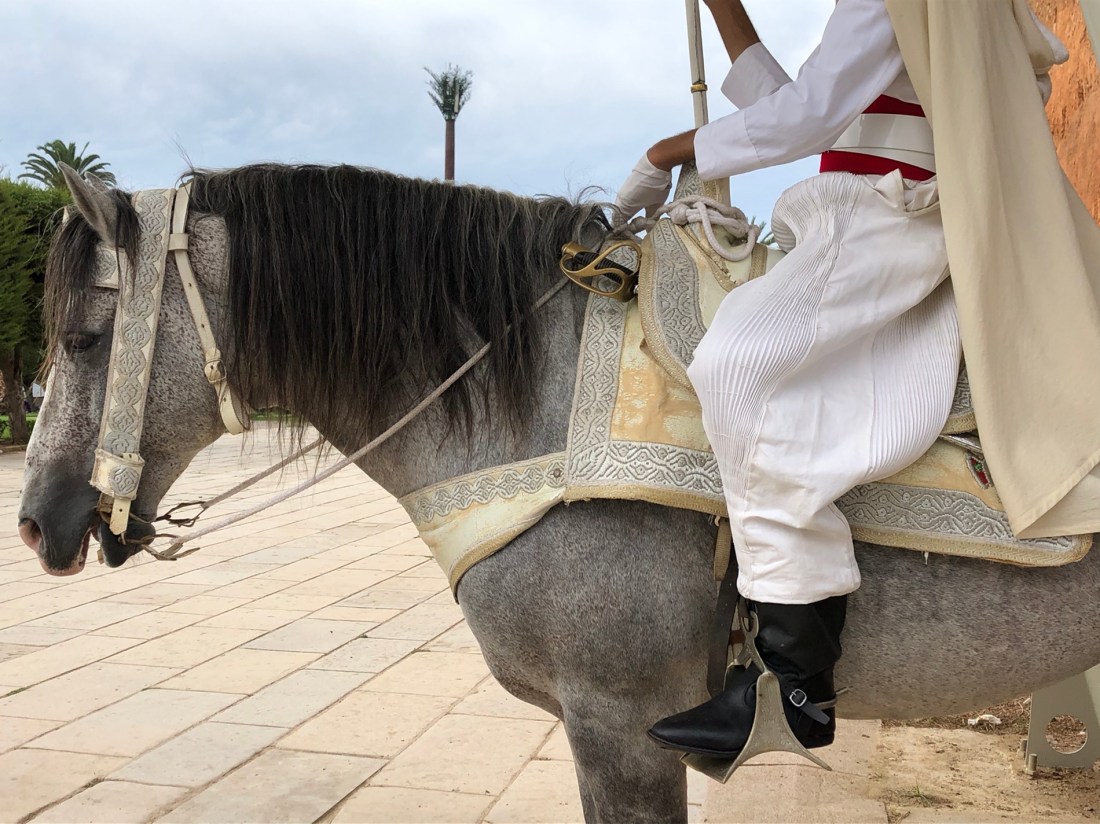
The horses and their riders stand a period of 1 hour, and are changed ritually. (And it appears that the breed of horse is changed, too.)
The men’s trousers are intricately pleated
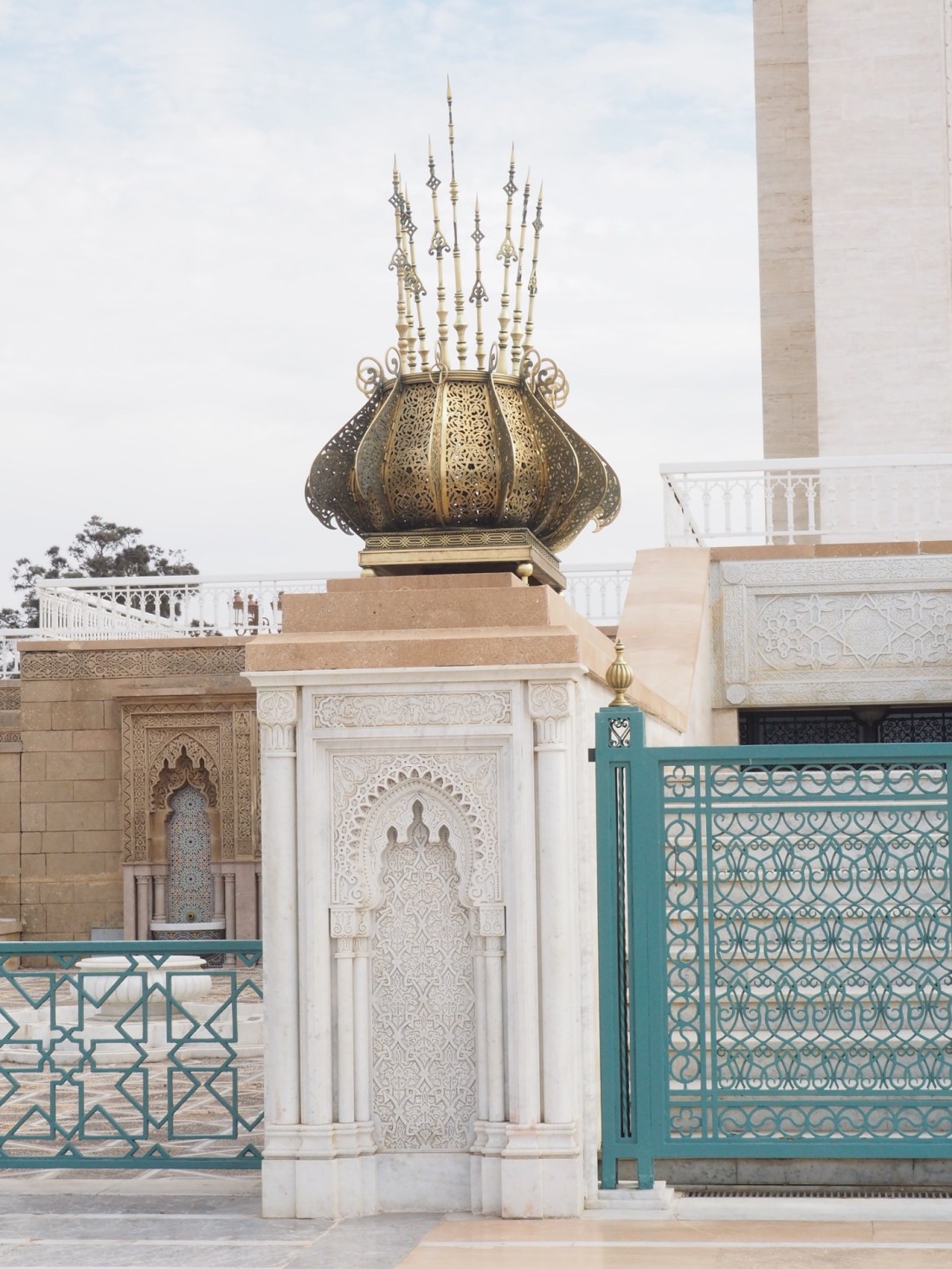
The mausoleum itself is surrounded with a low fence that is only opened during times that people can visit. And there are low pillars that break the fence at intervals. Unfortunately, I did not ask the significance of the large bowls and their decorative items that look a little like lightning bolts.
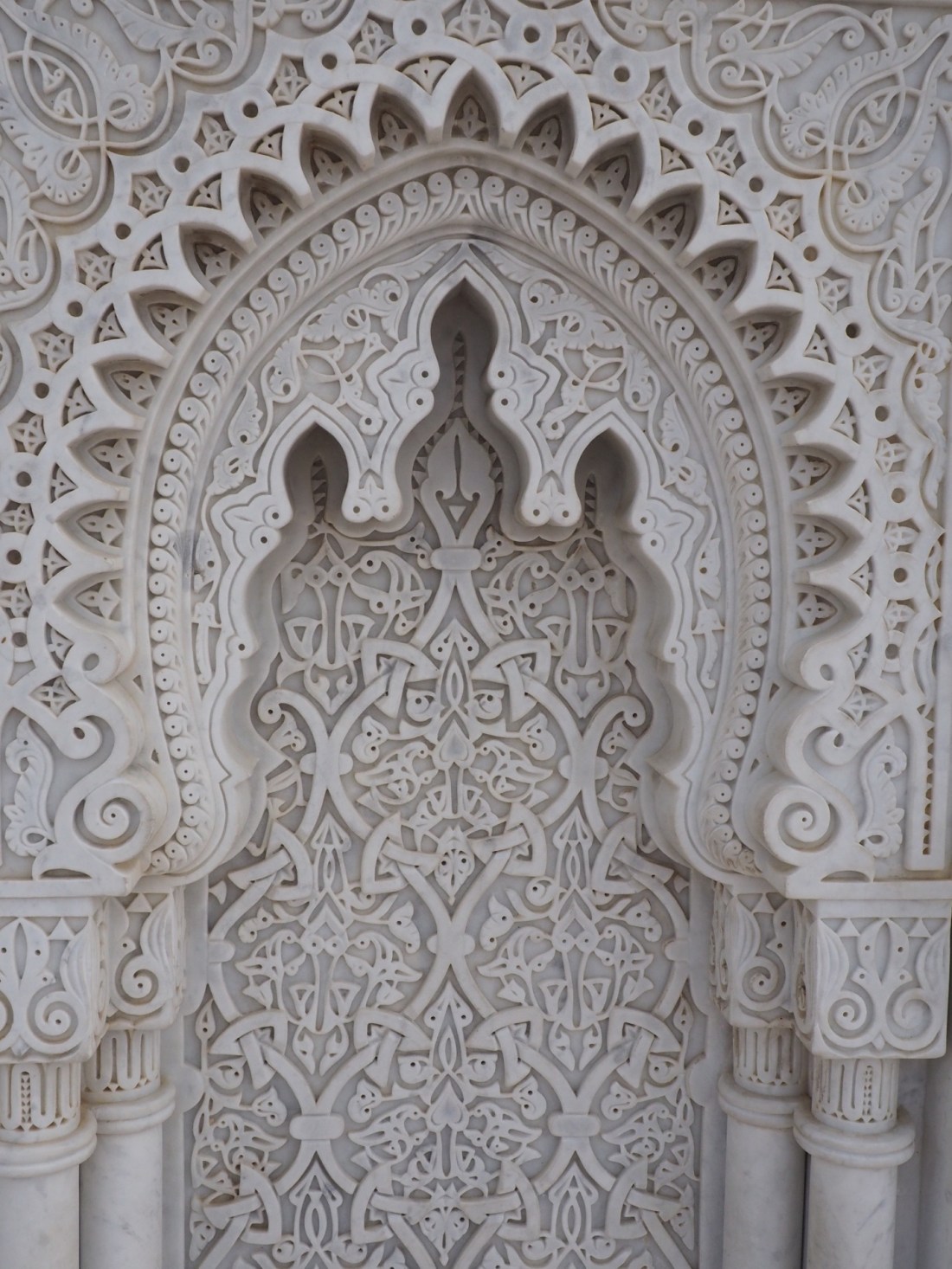
The pillars themselves are intricately carved.
The doors of the mausoleum are guarded by men in ceremonial uniform.

Here is a detail of the stock of the antique weapon held by one guard
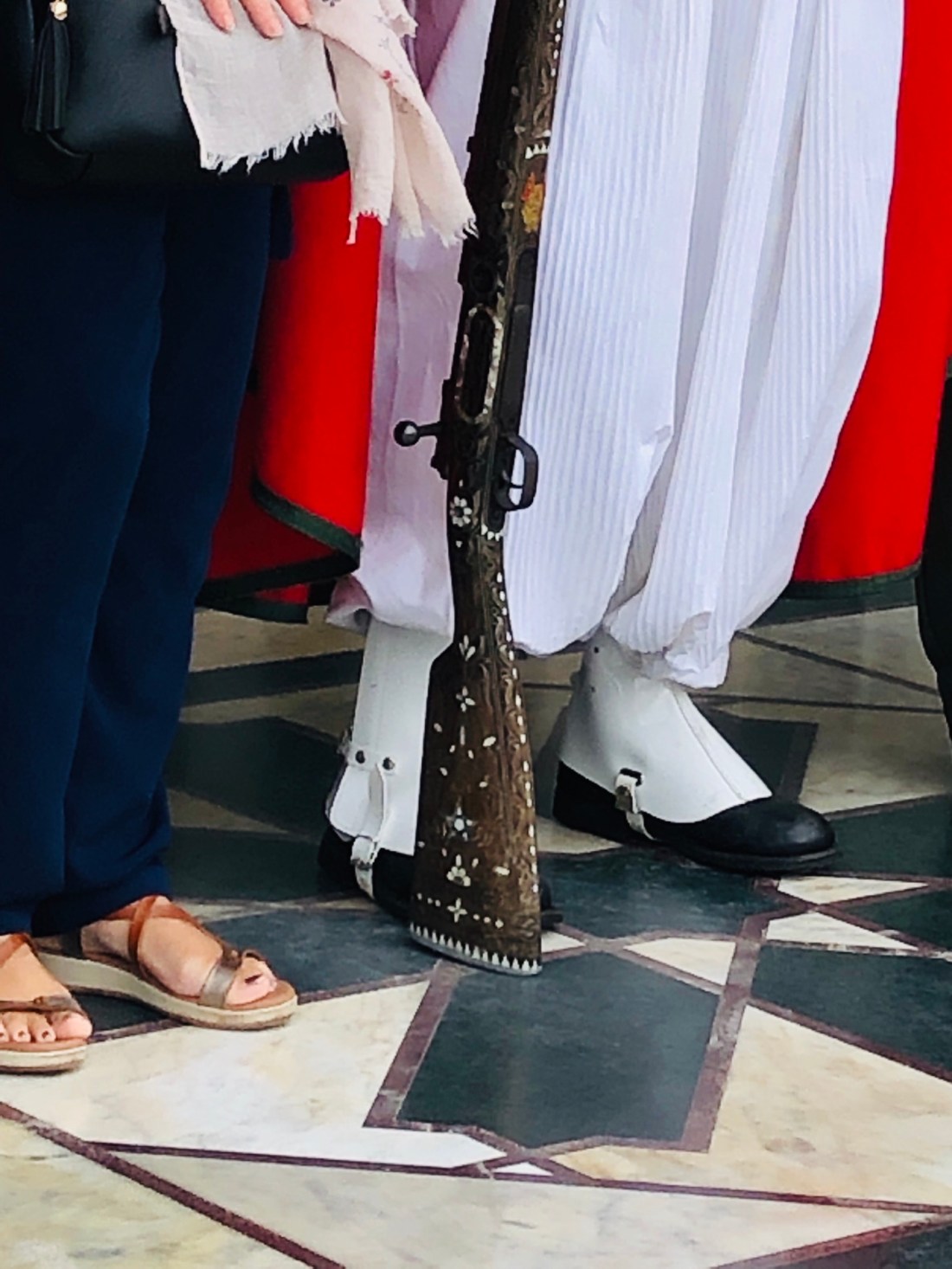
(As is true wherever there are men standing on guard, tourists want to have their pictures taken with them. That’s the reason for the women’s feet in the picture!)
We arrived originally when the mausoleum was closed, but when we returned later in the day, we were allowed to mount the stairs and enter through one of the doors
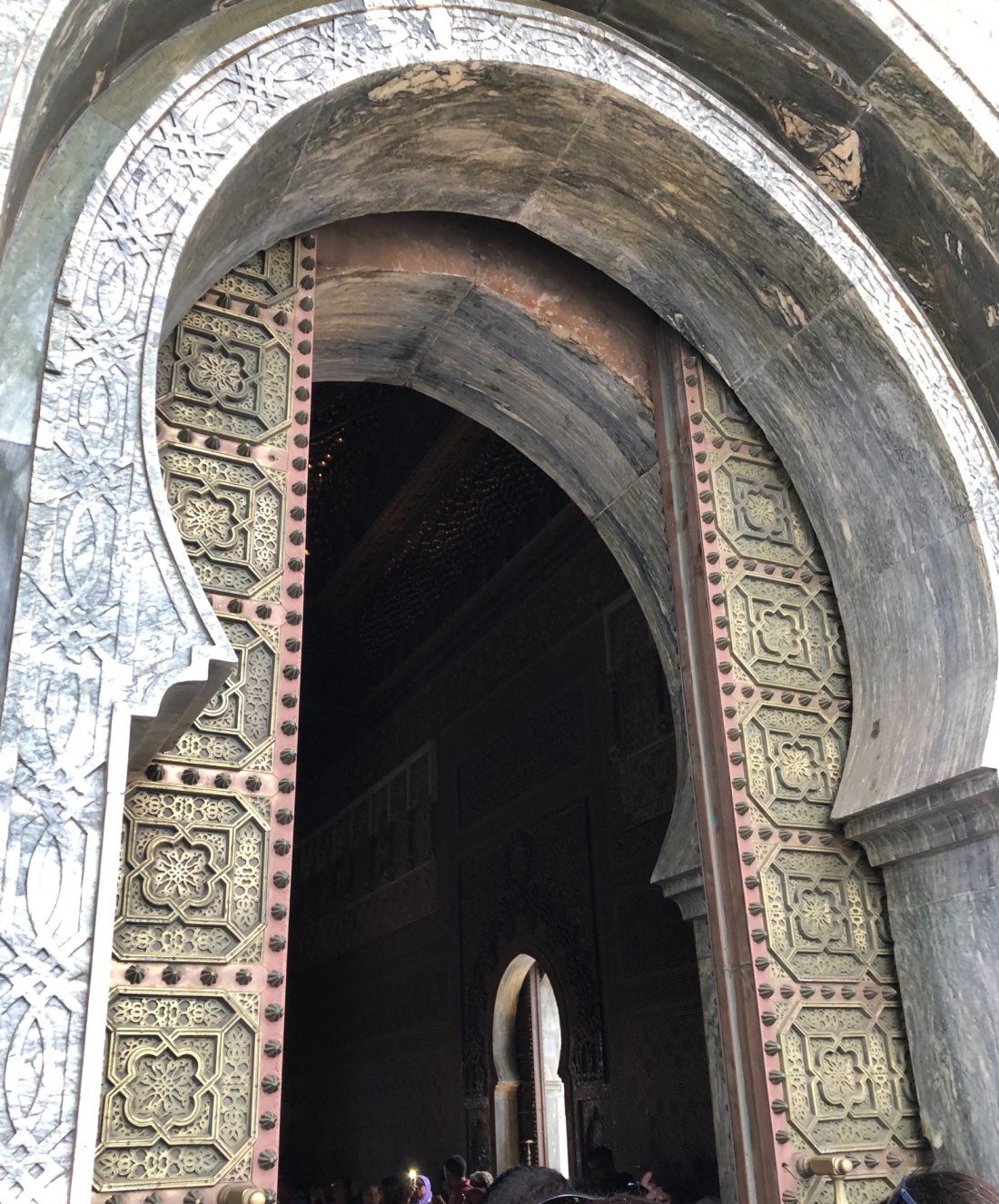
And were immediately amazed by the beauty of the interior. Every inch, including the coffered ceilings, is covered by decoration.
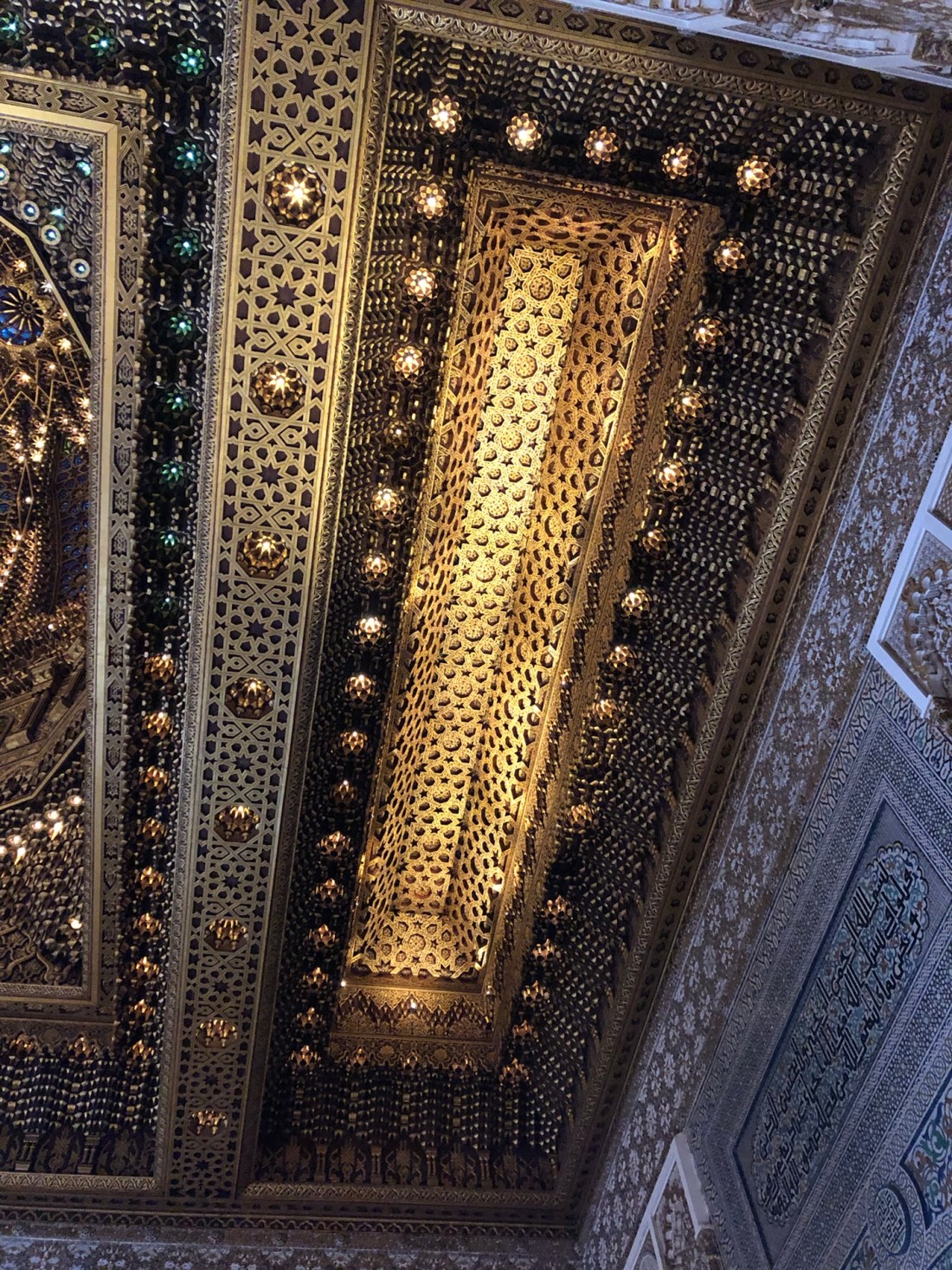
And the walls are covered with tile work (and protected by ceremonial guards)

But it was the central domed ceiling which was the most breathtaking:
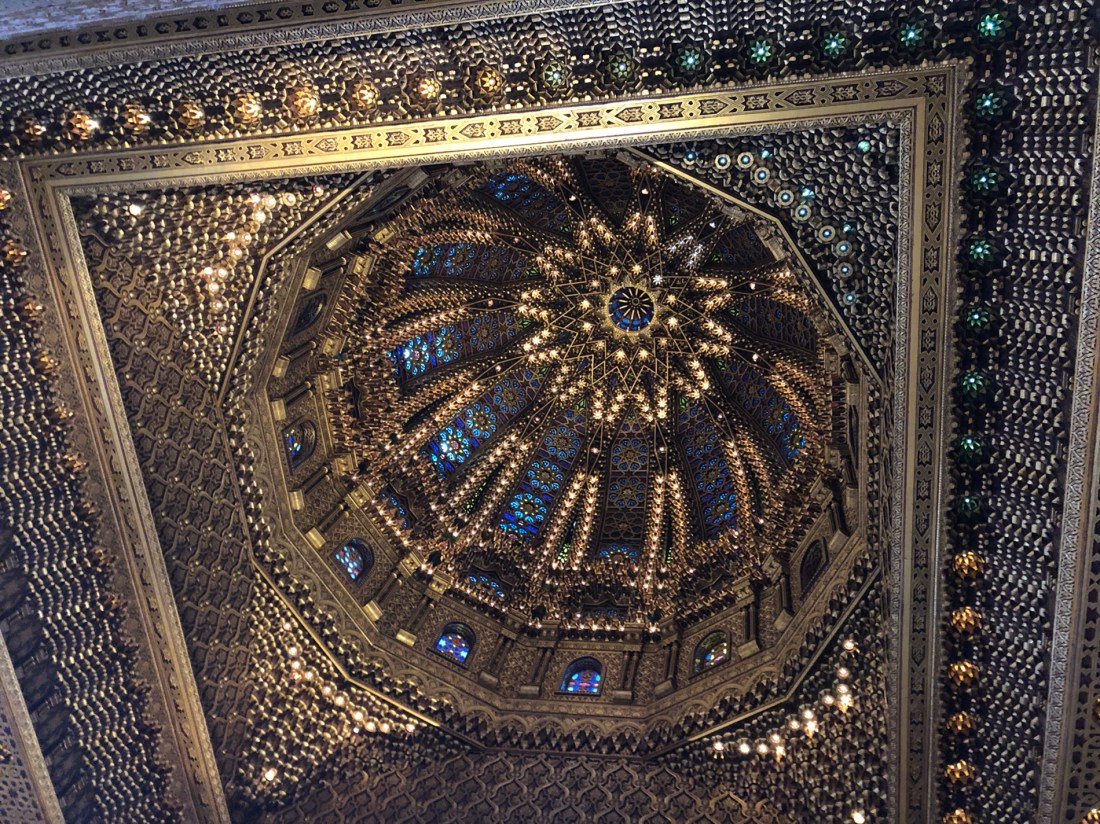
A closeup reveals that it is like a Faberge jewel

Mary
Written and posted in Fez, Morocco, 9/22/19

 Mary's Travel Blog