We met Idriss one day while driving south towards the Sahara through the Middle Atlas Mountains. No, not Moulay Idriss I who was a great king, the religious and secular founder of Morocco, and possessed great wealth in animals and land, but rather a semi-nomadic Berber who was not rich by any standard. He told us that he was herding 160 animals, 120 of which are his, and 40 of which he herds for others. At the end of the season, when the sheep are sold, he splits the profits on the 40 he doesn’t own with their owners. After all, he has done all the work to care for and protect them.
We learned that the Berbers here are semi-nomadic in that they do not wander all year. Rather, they take their flocks to the Middle Atlas Mountains for the summer to graze on lands that are owned collectively by the tribe, and then take the flocks down to lower valleys (2 days travel on foot, perhaps) for the winter. In the lower (winter) areas, the families own their land. In each place, the families have a home, although the home in the summer area is fairly temporary, but the families return to the same home site each year.
Idriss has a donkey which carries his food and water while he is out herding the sheep, but, unlike shepherds in many other parts of the world, there are no sheepdogs. His dogs, he explained, were back at his home, taking a rest. They have to stay up all night to guard the sheep from the jackals.
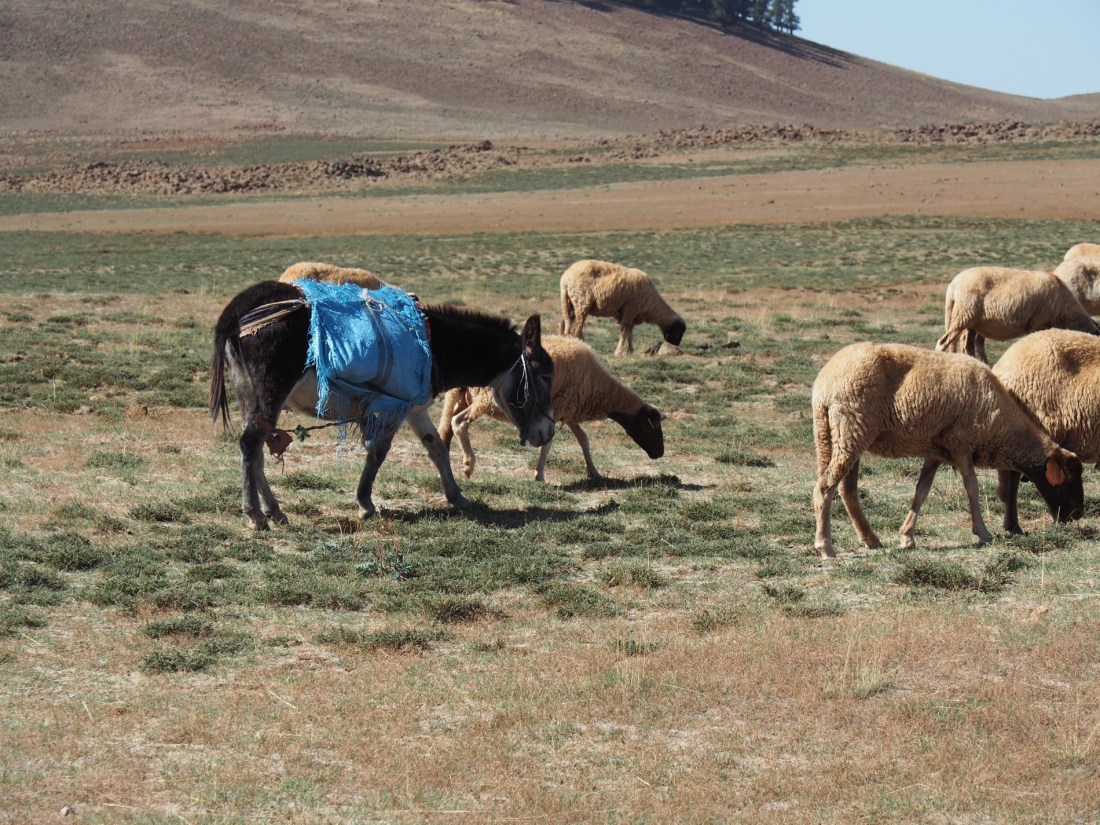
Idriss and his wife have a summer home near the area that belongs to his tribe for grazing. The herds are put into an enclosure at night, but it is not very sturdy. Hence the need for dogs to guard the sheep.
The herd consists almost exclusively of females (there are two males), and those that are pregnant are marked with red dye on their rumps. These ewes are given extra feed and salt in the morning before they and the rest of the herd are let out to roam and graze for the day.
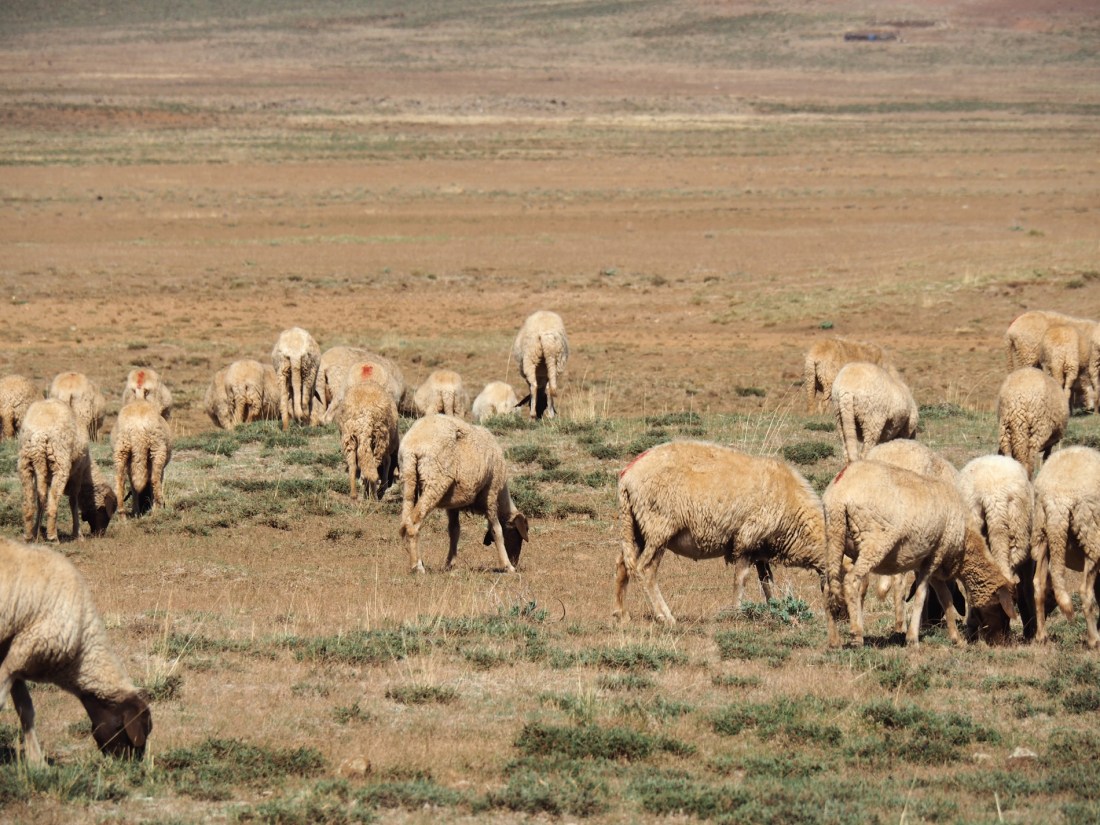
It is hard to understand at first how the animals can survive on what looks like very meager vegetation. But, upon looking closely you see that there actually are small plants and grasses.
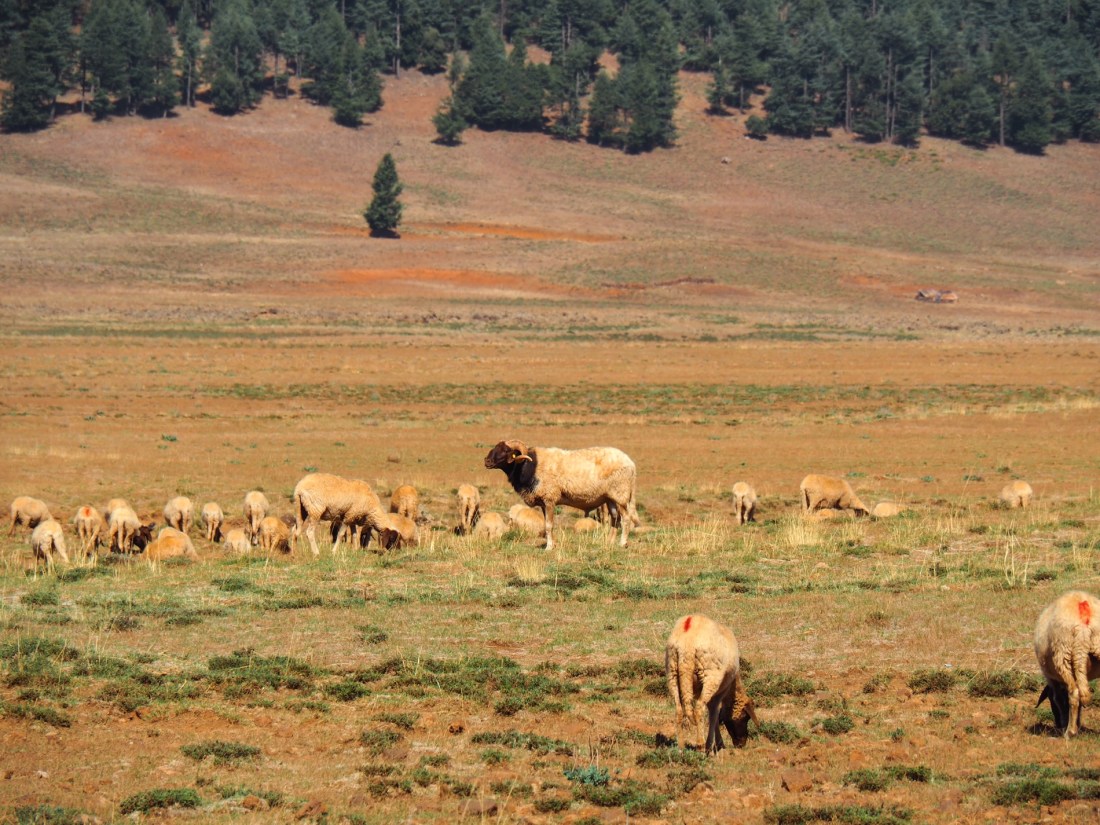
We learned that Idriss has three sons and two daughters, all of them independent now and also leading a semi-nomadic life. He has been herding animals all his life.
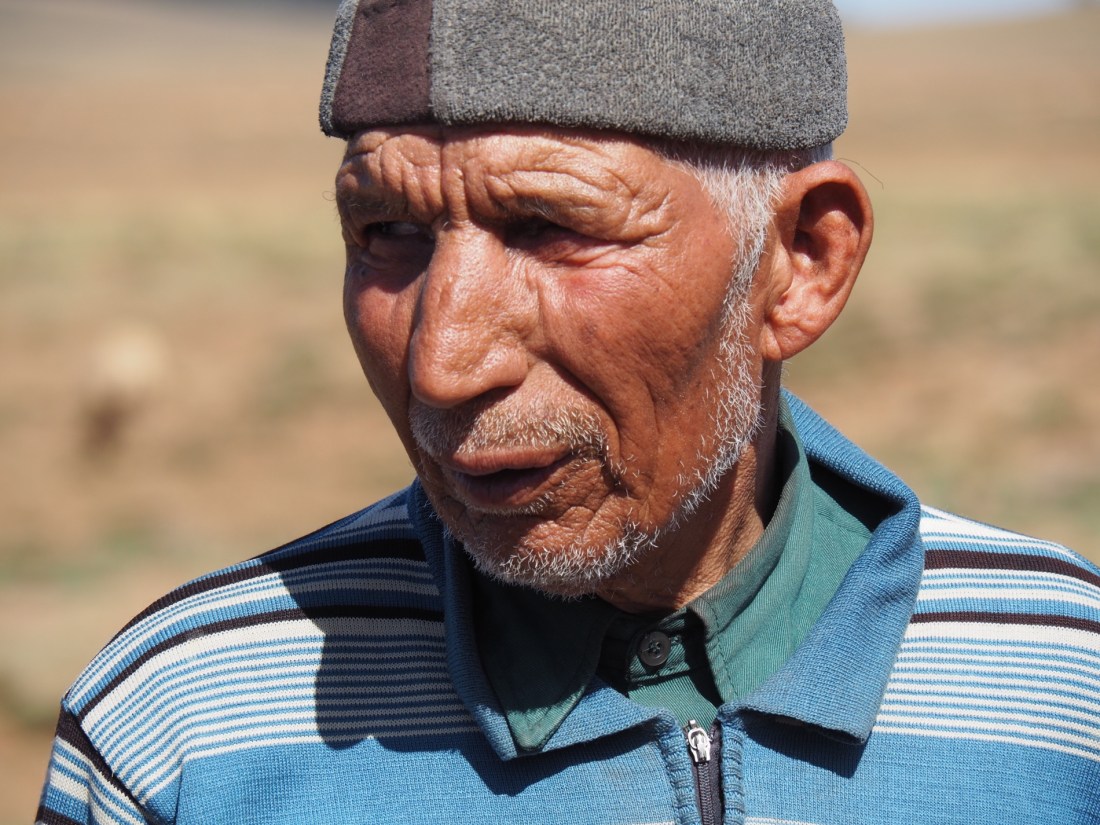
He is 75 years old. His children are carrying on the semi-nomadic tradition. But who knows whether his grandchildren will lead the same type of life?
Written on the road between Fez and the Sahara, in the Middle Atlas Mountains
Posted from Marrakesh, Morocco 9/29/19

 Mary's Travel Blog