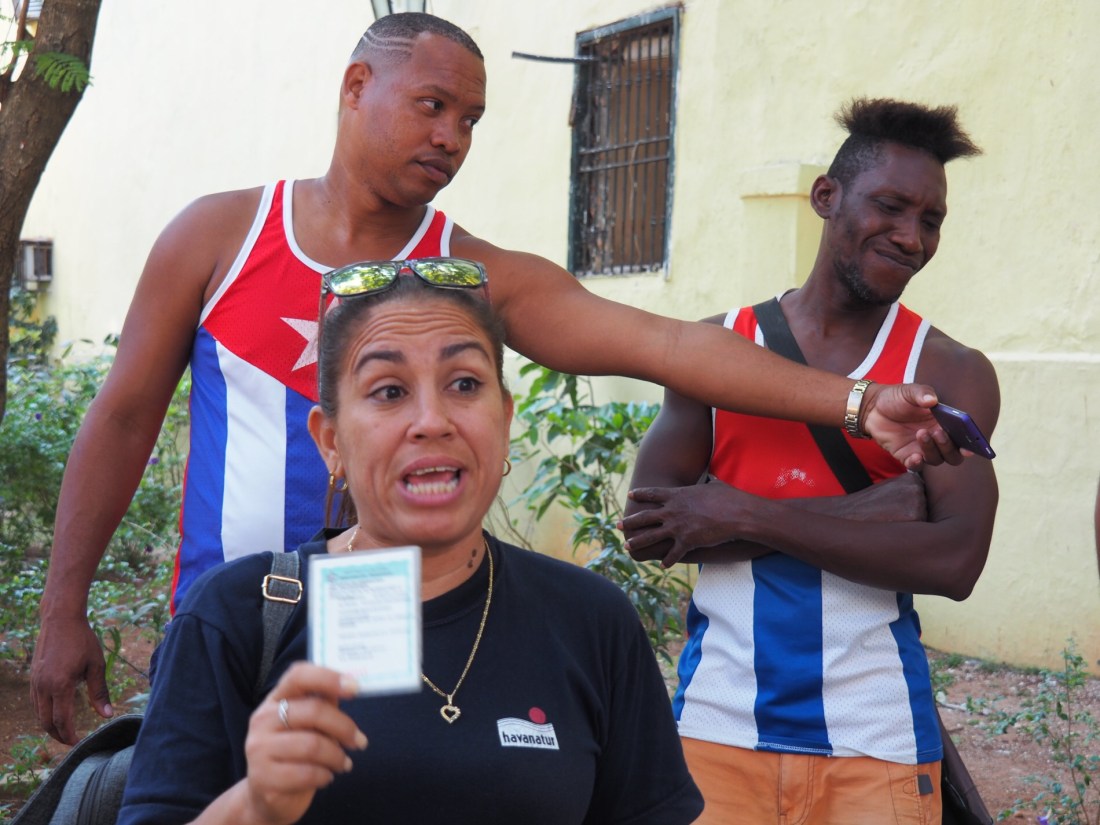
I have always been taught that the Revolution in Cuba brought repression and iron control to the people here, and that the embargoes that the US instituted, starting back in the 1960s were good things and would free the Cuban people from the iron fist of communism. I expected to find angry people with sad demeanors, eager to throw off the communist yoke. And I expected that we would not be able to talk to the average ‘man on the street’ – that they would be forbidden to express their feelings or tell us about their situation for fear of being punished by the government.
What I had not been taught was that the Cuban people were a lot worse off under the previous “democratic” regimes of people like Bautista. Corruption was rampant, as was prostitution, and the mafia was widely known to be in control. Healthcare was non existent, and 45% of the population was illiterate.
Our current government seems more and more eager to keep its citizens from traveling to Cuba and engaging with its people. God forbid that we might learn the following:
• 85% of all Cubans live in homes owned by their family (whether this is an apartment in a multi-unit building or a single family dwelling).
• 0% of the population is homeless.
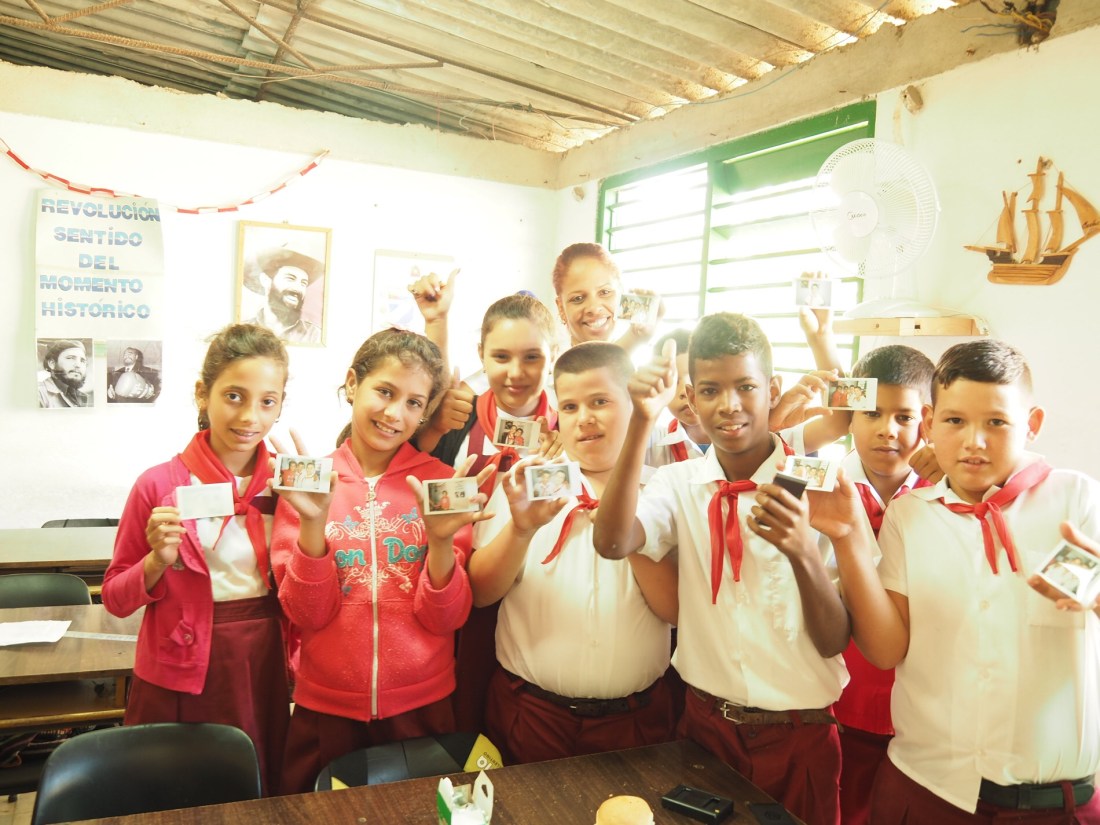
• Education is free starting with childcare and going through advanced University degrees. Attendance at school is mandatory from kindergarten through 12th grade.
• Medical care is free, and prevention is emphasized. Because of this, infant mortality is 4.04 infant deaths for every 1,000 live births. Life expectancy is 78.45 years (80.45 for women, 76.50 for men).
• Every woman who works for the government is entitled to a paid year to care for her child in the first year of its life. (If for some reason the father is the child rearer, he has the same right)
• Every person who works for the government gets 4 weeks of paid vacation, and a pension. (The same is not true, however of people who work for the private businesses that have only recently been allowed).
• Artists and musicians are paid to teach the arts, not just in schools, but also in community art programs.
• Sexism is not an issue – I asked a young woman who is an attorney if a man was given priority over her for a job, or receives a higher salary, and she looked at me as though I were crazy. “No,” she said, “not here.”
• Racism is not an issue – after all, the majority of people here have at least some black ancestors and skin and eye colors are not considered.
• 52% of the parliament is made up of women. Ages of parliamentarians range from 18 to 60. Presidents and legislators serve terms of 5 years and may not serve more than 2 terms.
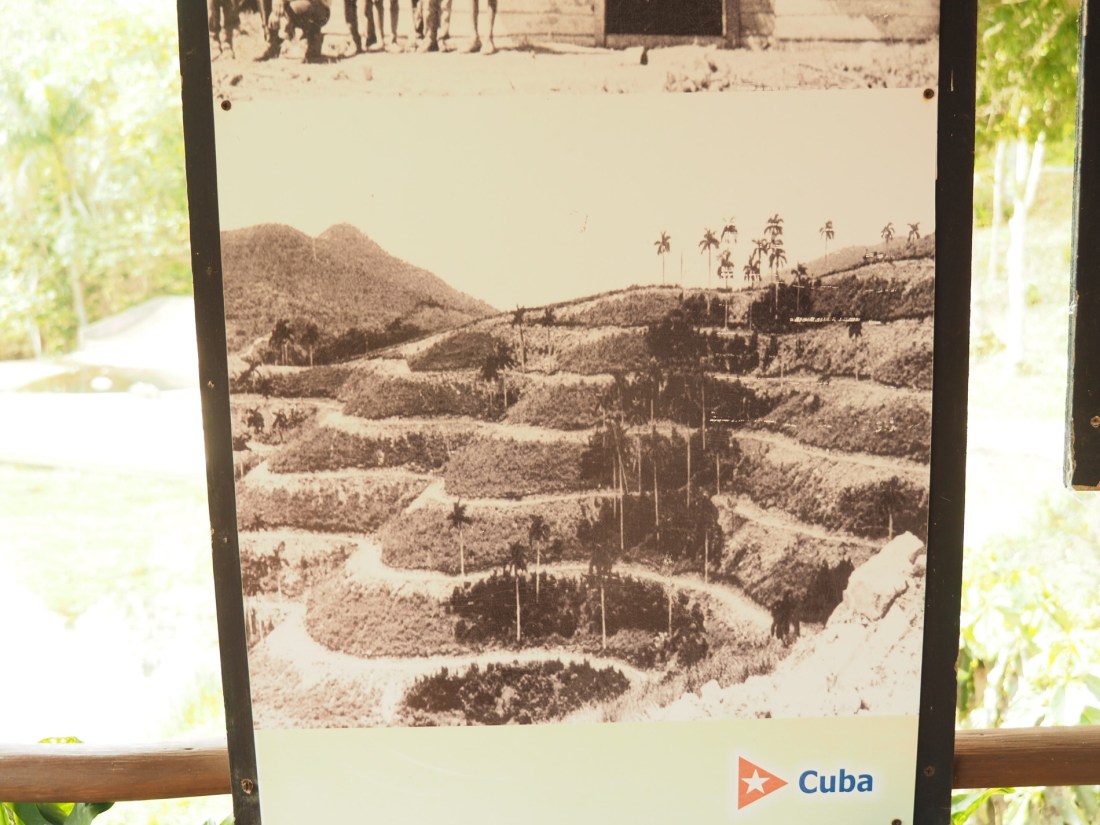
• Cuba has greatly reduced its dependence on foreign oil. Hand in hand with this is the almost universal use of organic farming practices, with no chemical fertilizers or pesticides. Many fields are plowed by oxen, rather than tractors (less gasoline required, less pollution). Away from Havana, in the ‘countryside’ you see lots of horse drawn taxis and delivery carts.
• The government is very concerned about the effects of global warming, and has a plan known as “Teresa Vida” (Life Task) for dealing with its effects. For example, the government prohibits any new construction of dwellings in threatened coastal areas, in other areas it is re-planting mangroves to reduce coastal erosion.
• After Fidel Castro retired and his brother, Raoul became President, private businesses began to be allowed. Everywhere you see the benefits of this – little shops in the front room of the house, people selling arts and crafts from a little cart, farmer’s markets where fresh produce can be bought.
• And, perhaps most importantly, people are HAPPY! Musicians perform on street corners, and everywhere people are dancing.
O.K., reality is that
• The average Cuban working in a government job is paid a very small amount of money. Pay is based upon qualifications and experience. So, a teacher straight out of university makes less money than a teacher who has been teaching for 5 years, for example. And the person sweeping the streets is paid very little.
• Pensions are correspondingly small. We met women selling little paper cornucopias of peanuts – they buy a quantity of raw peanuts, roast and salt them, then wrap them in white paper and sell them on the street for a few pesos. One of them told us that her pension was 300 pesos per month and although medical care is free, medications are not. She spends 30 pesos a month for her asthma inhaler, and another 20 for her cardiac medication.
• Each family receives a ration book that guarantees the right to buy at subsidized prices certain amounts of basic food stuffs per person, like rice, beans, salt, cooking oil, eggs (and even rum and cigarettes!). The guaranteed amounts are supposed to be the minimum required for good nutrition, but the person still has to have the pesos to pay for them.
• Education is free, but in return, the person is required to do three years of PAID community service – working in his or her specialty, but in a location determined by the government as one that needs those skills.
• Most people are too proud to beg – they sell peanuts, for example! – but I was approached by several elderly people asking for money (or a t-shirt, probably to have something to sell or wear). I saw NO young people begging however.
• Homes are very small, shared by several generations, and many buildings are in very bad repair. We visited a family in Trinidad that lives in a small 3 bedroom house. The family consists of the owner/mother and her three sons, her brother, his wife, and their 2 children AND the roof collapsed a month ago! They have managed to get a bank loan to repair the roof and meanwhile are camping in a very small space, surrounded by dust. Nonetheless, two of the sons are attending university.
• Although no one is homeless (no one is living in tents next to the railroad tracks), some of the homes we drove by were very dilapidated, some little more than shacks.
• As in the US, there is a ‘glass ceiling’ for women. This is changing, however, especially in the tourism industry, where 40% of managers are women.
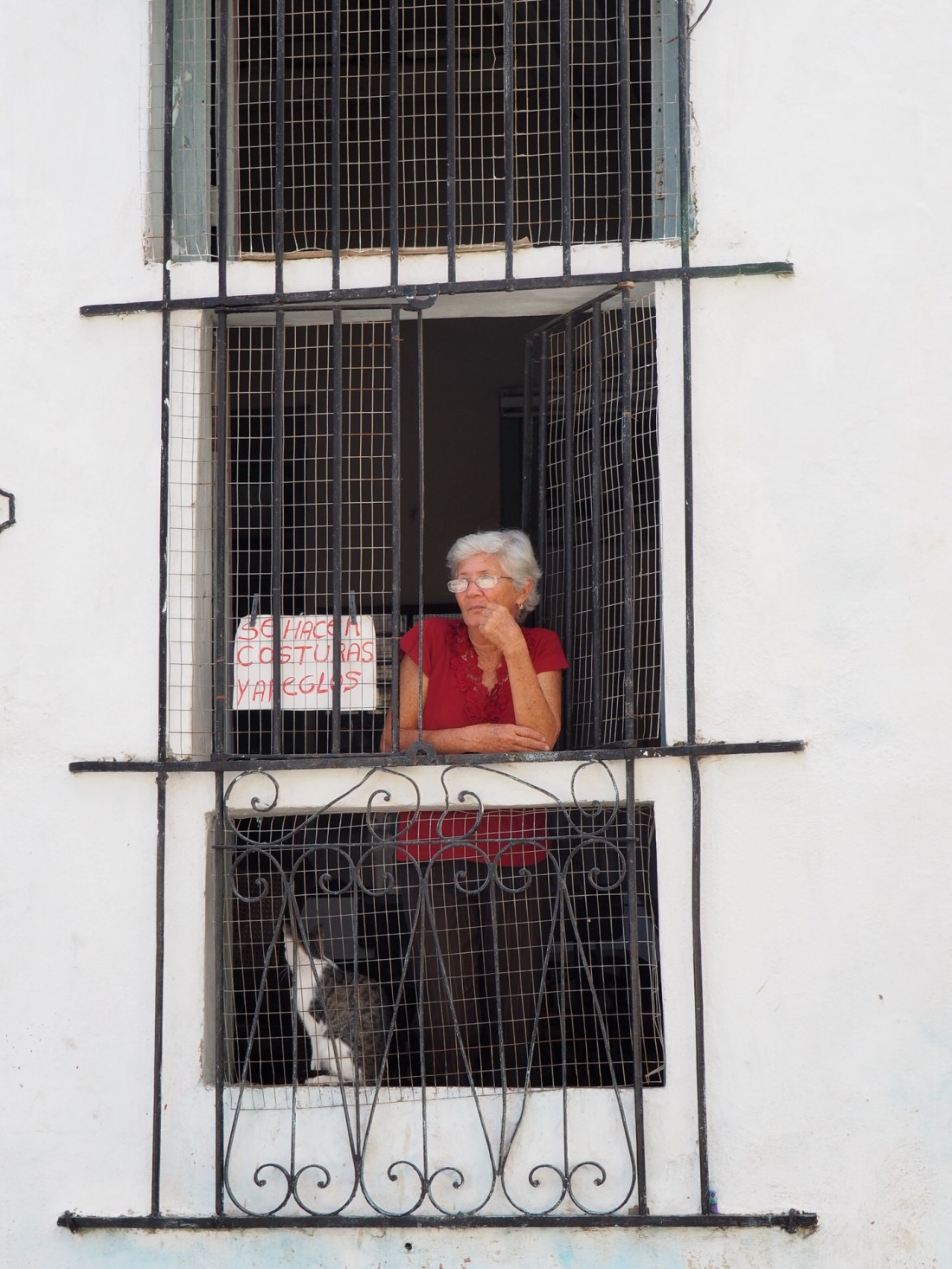
• To have a small private business you must purchase a license (whether you are a bicycle taxi driver, a street vendor, or the owner of a small paladar (a restaurant/bar in a private home). AND the government imposes quite high taxes on the profits. Nonetheless, people are beginning to enjoy a higher standard of living than they previously could.
• Tourism is making a great deal of difference – although some hotels and transportation services are 100% owned by the government, while some are 51% owned by the government, 49% by ‘partners’ such as foreign companies, people working for them receive tips in addition to pay. And, of course, the new private businesses are enjoying the large volume of tourist business.
So you ask yourself: Why have we imposed such punitive embargoes on Cuba because it is Communist? Why isn’t there a embargo against Russia or the Communist countries of Southeast Asia (which, by the way, I learned when I visited Laos, Cambodia and Vietnam 2 months ago do NOT provide free medical care or education)?
When the Soviet Union collapsed and no longer provided support to Cuba in the form of oil and food, Cuba’s economy collapsed. The average Cuban lost 20 pounds during the 1990s and children suffered from malnutrition because they were literally starving. Medicine was not available.
In response, the US just tightened its embargoes, and, in fact, retaliated against any business that did business with Cuba. No humanitarian aid – just embargoes that punished the people of Cuba.
I am embarrassed to say that I am an American whose taxes support the government which turned its back on starving people because they lived in a Communist country. And which continues to believe that it is doing a better job of caring for its citizens because they live in a democracy, a democracy in which racism is rampant, people are without health care and homeless live in tents, higher education is beyond the reach of many, and the gap between the ‘haves’ and the ‘have nots’ is widening every day.
Written at various places in Cuba
Posted from the US
5/20/18


























 Mary's Travel Blog