Ration Store

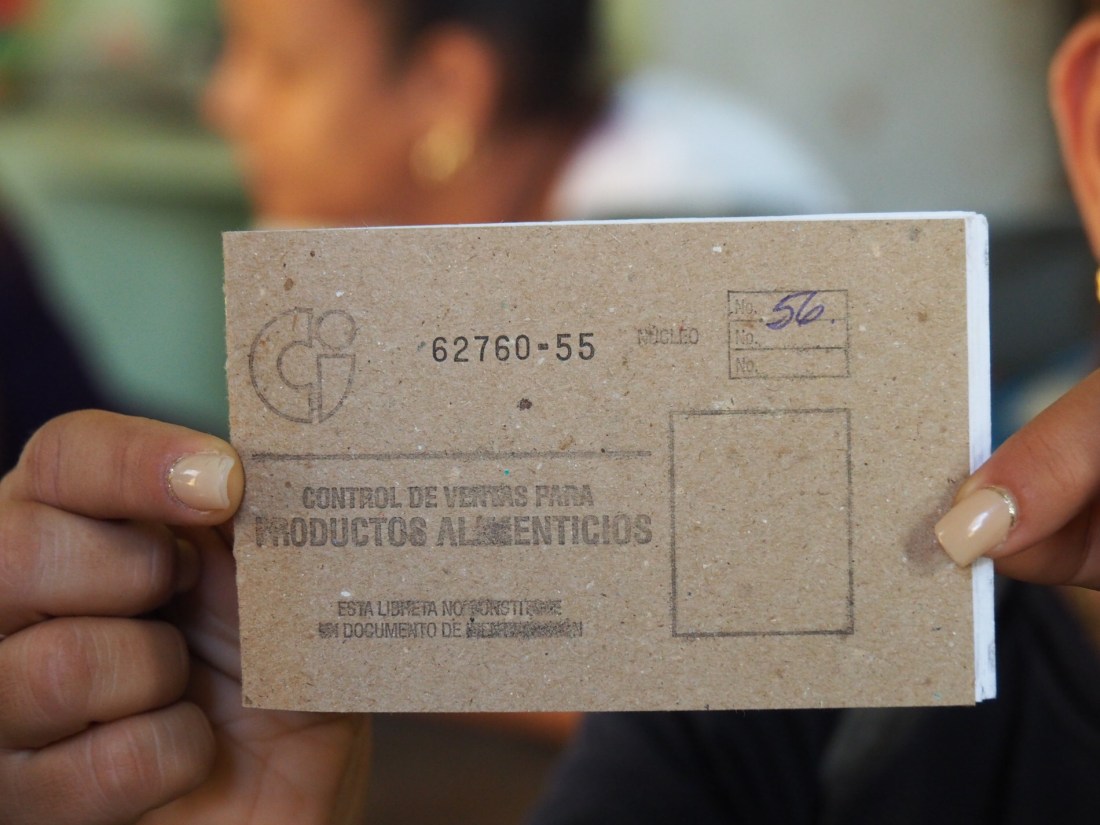
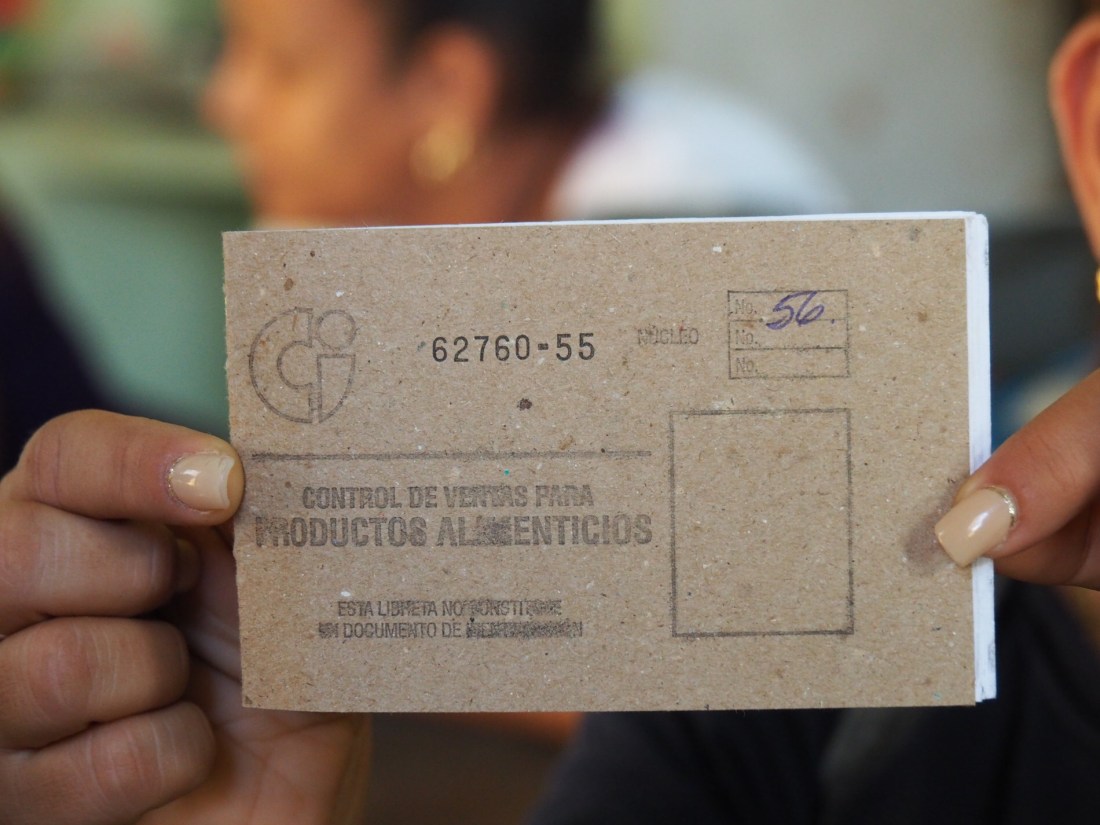
Each person in Cuba is entitled to a minimum ration of basic foodstuffs. This was especially important during the “special period” during the 1990s after the collapse of the Soviet Union when it withdrew its aid, and people literally starved (the average Cuban last 20 pounds) because of the lack of imported oil, fertilizers, and food. Even now. each family receives a book, and the ration is based upon the ages and special needs of the family members. For example, a family with a young child is entitled to more milk. The food is not free, however – the ration allows the family to buy the food at a subsidized price, which is a lot less than the market price.

Each community has a ration store to which people bring their ration books and at which they buy the food.

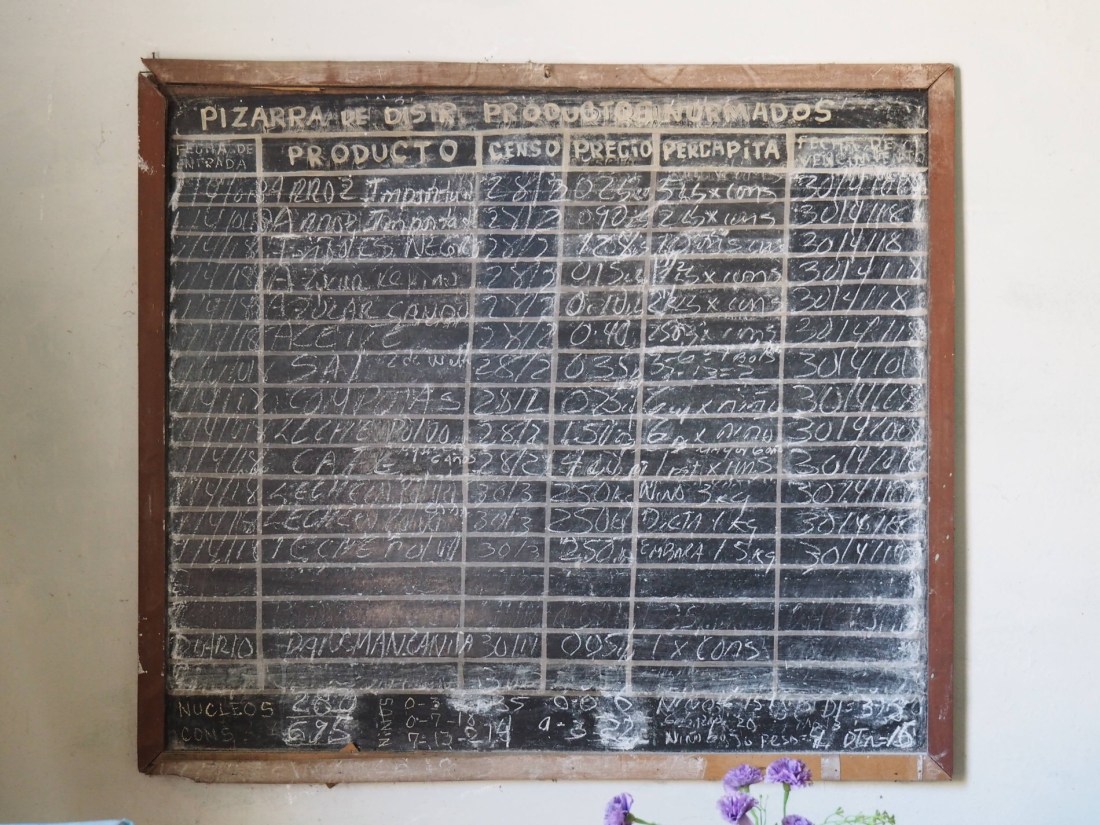
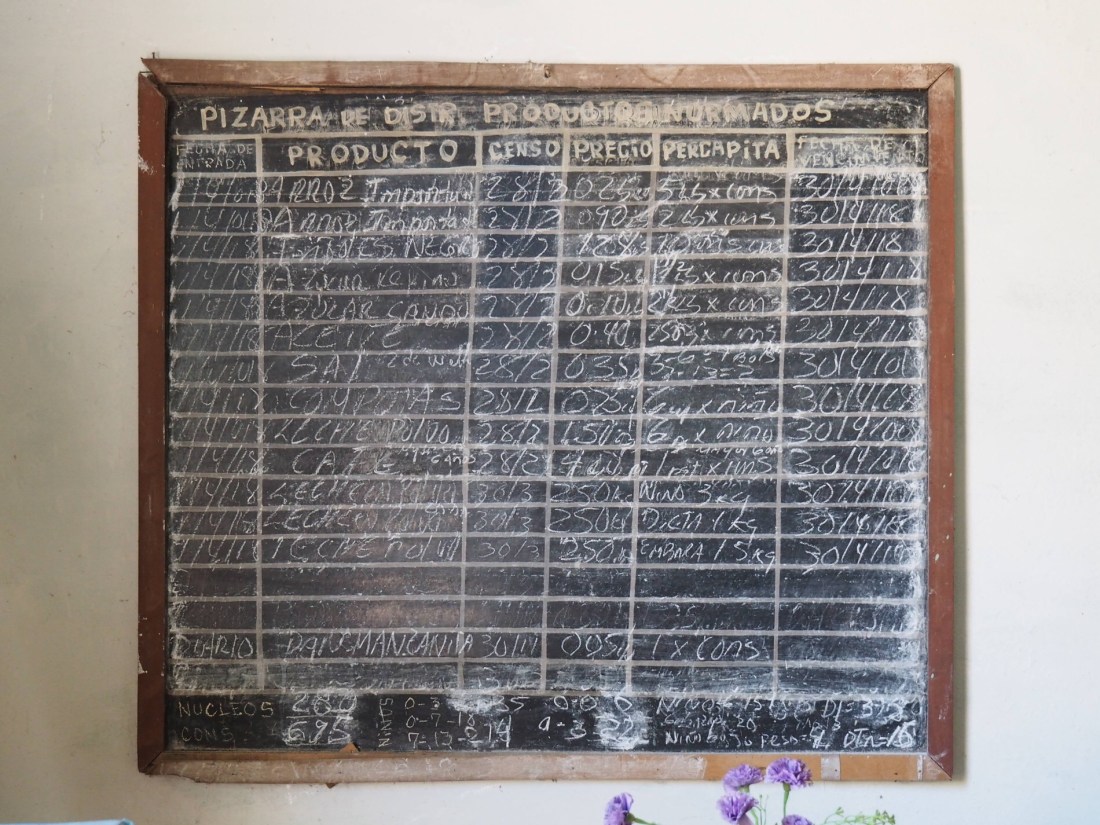
We visited one such store and saw the board the lists the commodities available. Included are things like rice, cooking oil, and salt.

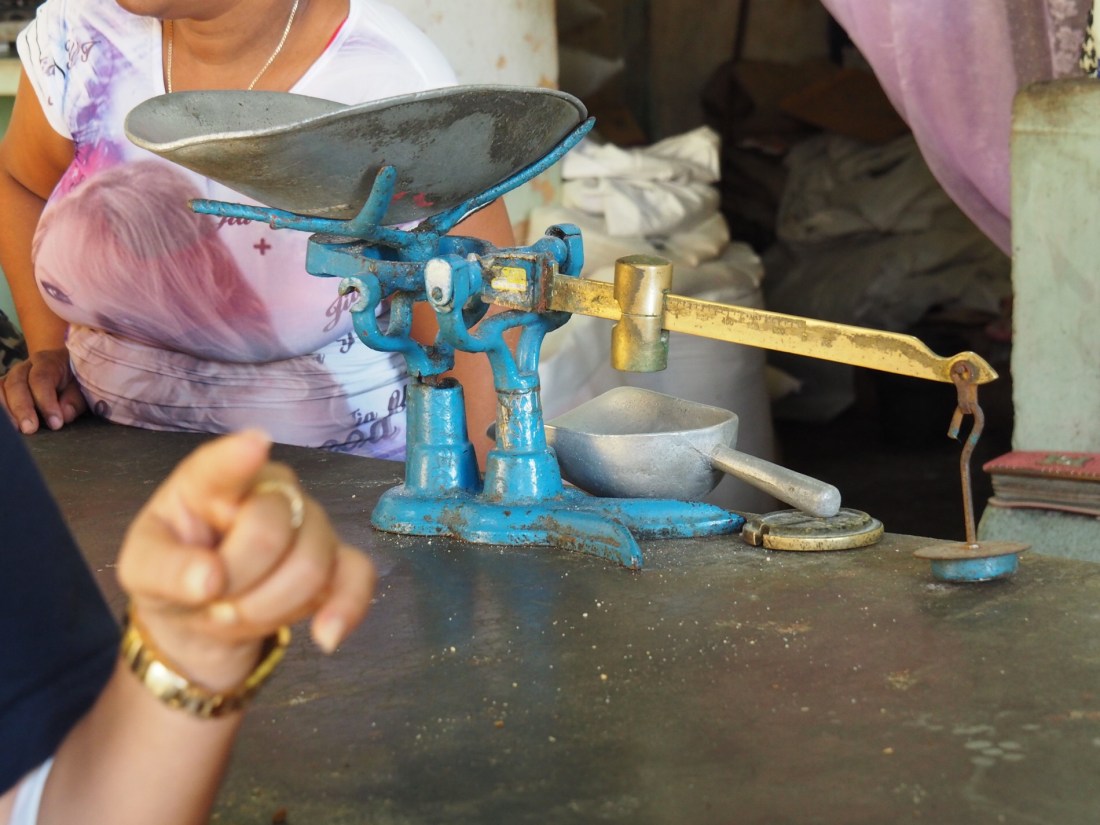
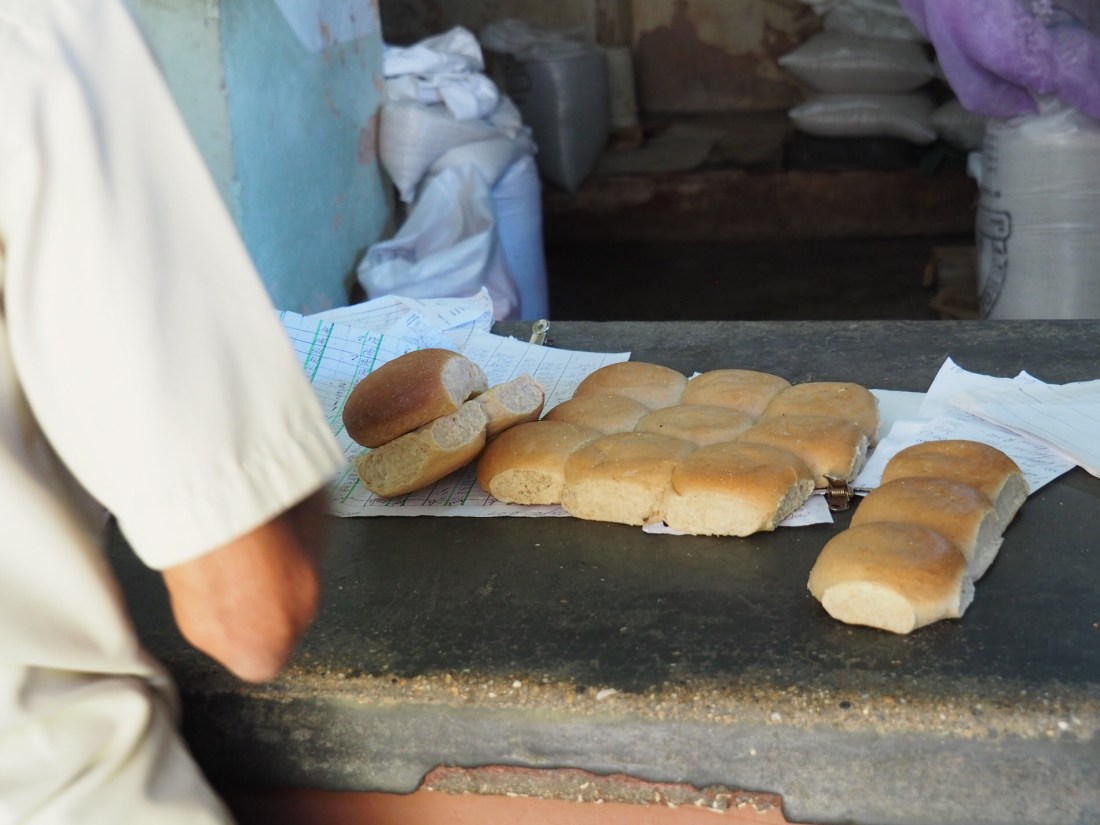
Bread, which is weighed out on this hi-tech scale,

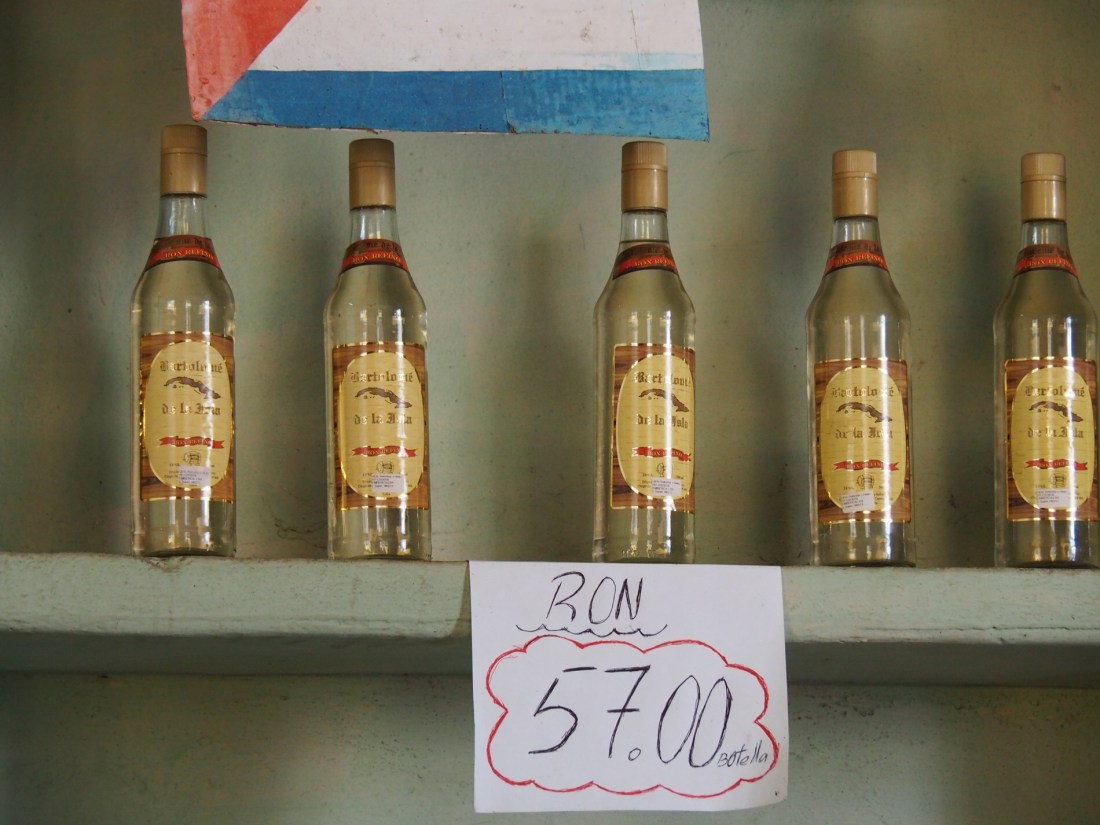
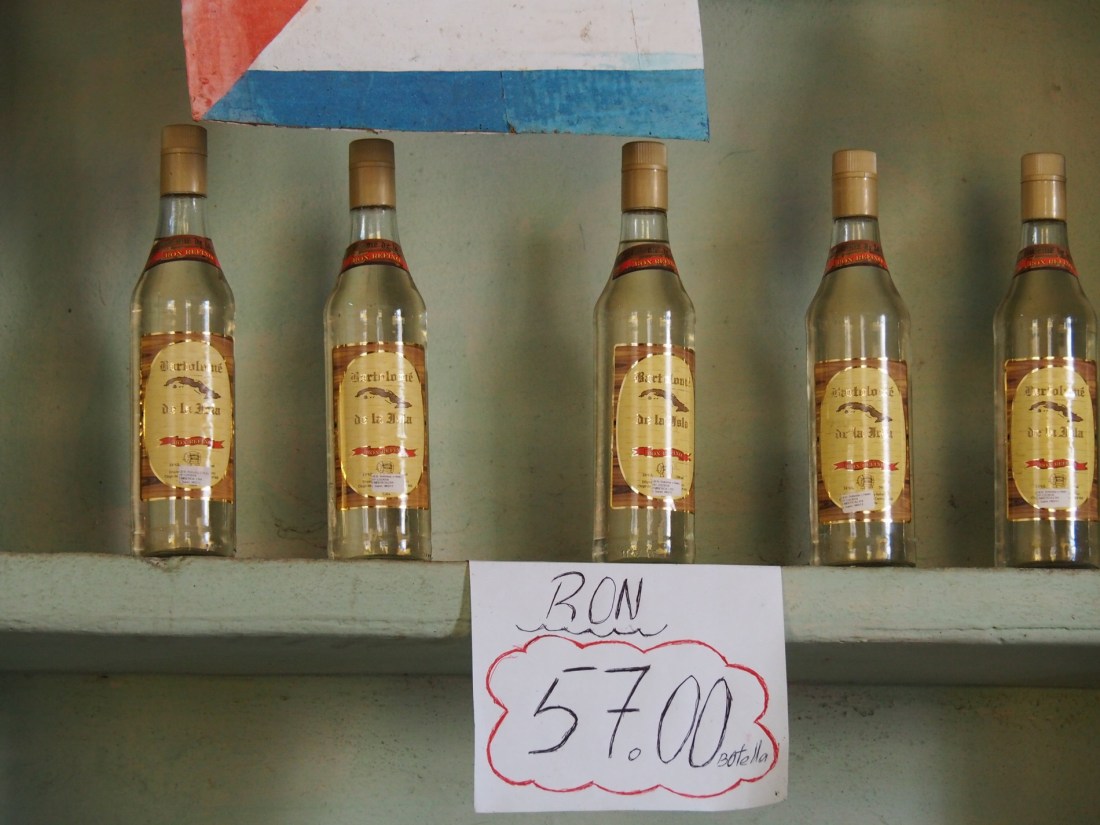
And even rum

And cigarettes!

Our tour leader, who lived through the “special period” told us that the amount of rationed food available even today is not enough for the basic nutritional needs of the people, but that it goes a long way towards supporting them (remember that people still need to PAY in pesos for the food!)

So I sit in the courtyard of the Hotel Nacional de Cuba, drinking sparkling wine, typing these notes, and remembering all the meals I have eaten in Cuba (and worrying about how many pounds I might have gained here) and remember the woman we met in Havana last week who said that she barely ekes out her pension by selling pasta that she cooks, dries, and salts to sell, and feel guilty – but, in addition happiness that we bought a few cornucopias of pasta from her!

Havana, Cuba

4/12/18

Posted 5/20/18

Union of Writers and Artists in Cuba (UNEAC)

While visiting Cienfuegos, we met one morning with 6 or 7 members of the Union of Writers and Artists in Cuba (UNEAC), and were interested to hear the proactive approach that artists had taken with the Revolutionary Government.. The President of the local union, Orlando, explained that artists were worried that they would be faced with the same types of repression that Soviet artists had experienced in Russia. Very soon after the revolution, therefore, they met with Fidel Castro and members of his cabinet to express their concerns. That was the basis for an ongoing dialog with the administration that has ensured them that the arts and artists would be

  • Separate from and not controlled by the government,
  • Able to freely express their own viewpoints,
  • Allowed to choose their membership in the Union, based upon the merits of the individuals’ work. Membership in the COmmunist Party would not be a requirement (in fact, many are not. Of the 7 members we met, only one is a member of the Party.)
  • Sole owners of their work. (Yes, when an artist sells his or her work, a 10% tax is paid the government, but the rest of the money belongs to the artist).

Orlando told us that several members of Parliament are in fact members of the Union, and that many times local politicians solicit his opinion on changes that might be made. Early on, the Union criticized the art curriculum, which omitted any mention of artists who were not pro-revolutionary. Now the schools teach about the art of all Cuban artists, regardless of their feelings about the revolution (and whether or not they have defected).

The biggest battle, Orlando, said, is to change the mentality of the people in government. For example, in the beginning there was no such thing as private enterprise, but since Raoul took over, private enterprise is encouraged. The problem is that the regulators are those who so long enforced the previous rules, and it is difficult for them to change gears and make changes that facilitate private enterprise – which is not the same in Cuba as capitalism!

After the meeting, we visited the studios of several of the artists.

I bought a fan from Annia Alonso, (the woman in the middle, shown here with two of the women in our group who also bought fans from her)

A canvas bag with the image of the blue woman of the moon from Vladimir (the only artist who is a member of the Party, and ribbed unmercifully by the others during our meeting), shown here with his wife in front of a painting on an antique Texaco sign (part of a series of similar works on which he is working for an upcoming exhibition in the US)

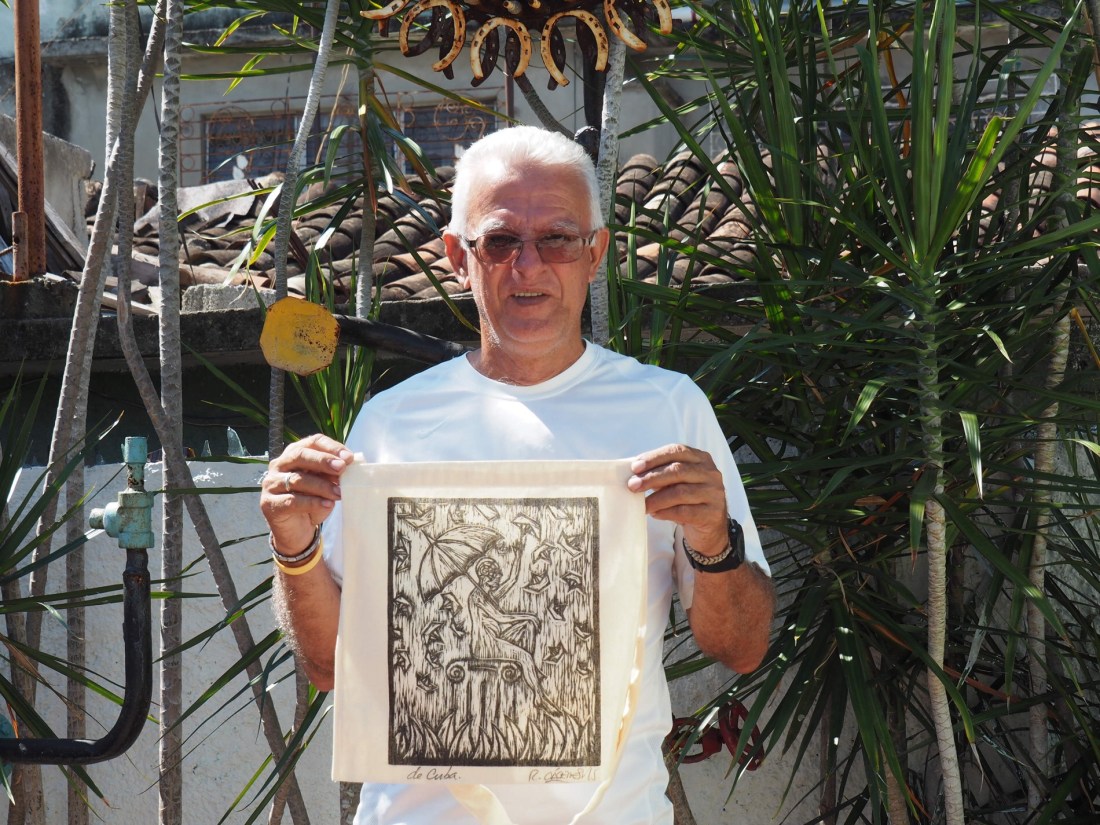
Another canvas bag with a black and white linoleum cut from Rafael,

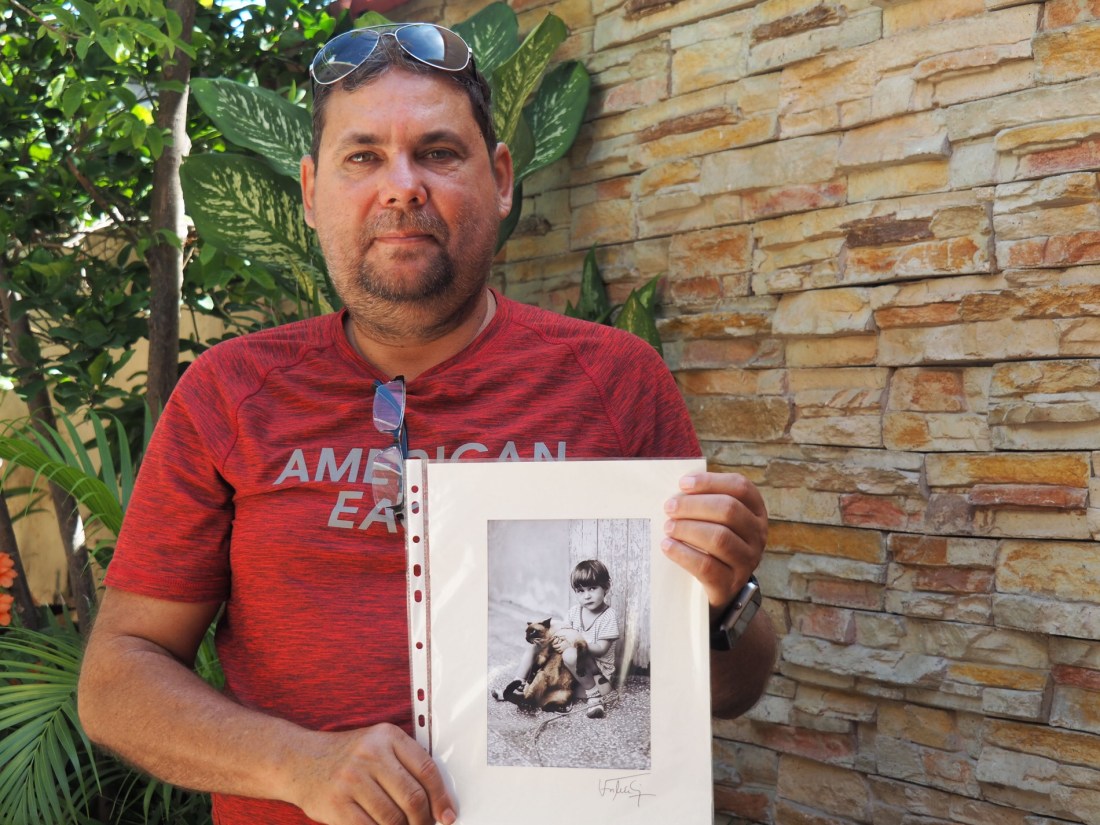
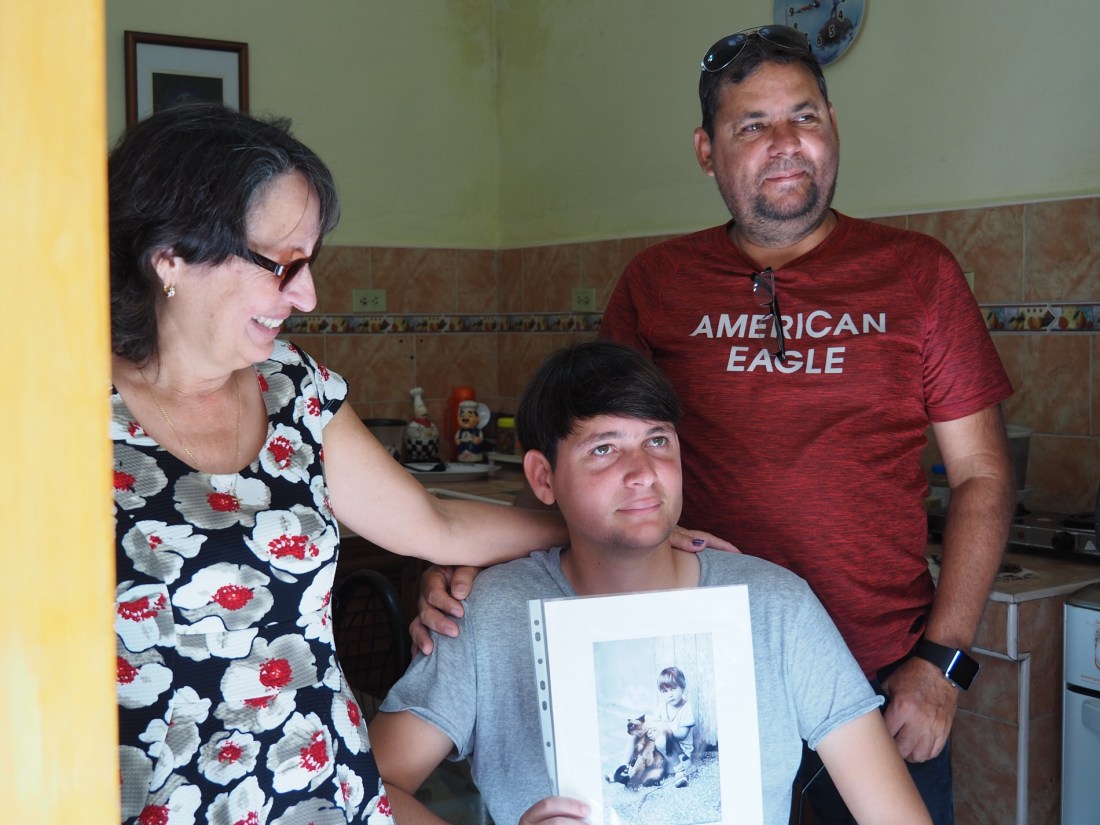
And a prize winning photo by Omar Garcia Valenti of his three-year old son, Marcel, called “the difficulties of friendship.” You can see, if you look closely, that not only the cat but also the son is unhappy – the son not least because he is sitting on the ‘potty chair.’

Here’s a picture of his parents and now 24 year old Marcel holding the photo (I’m not sure that Marcel was really happy about posing for this picture!)

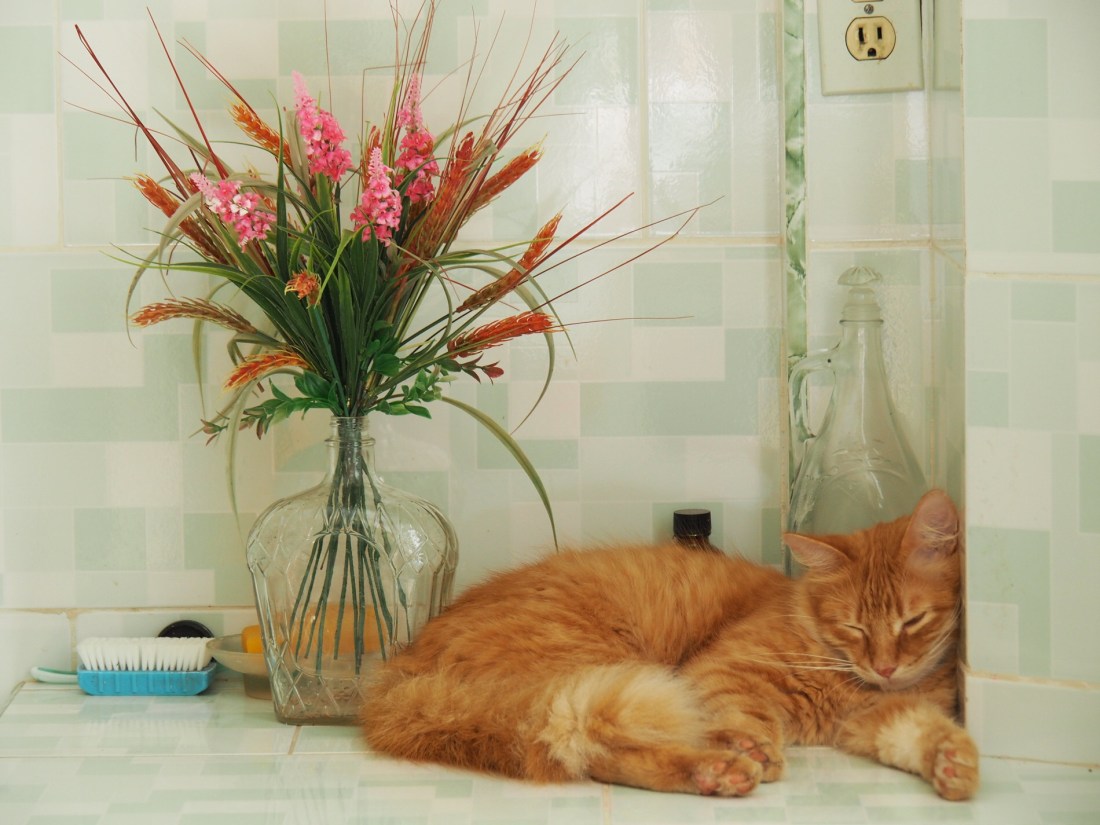
Omar is a great cat lover (7 live in his house).

In fact, one of his most famous photos is of a small cat in a canvas bag dangling from the bars of a bike on the way to be thrown in the river. Omar asked the owner to give let him photograph the cat and give it to him. And when Omar won an award with that photo, he shared the prize with the cat’s previous owner.

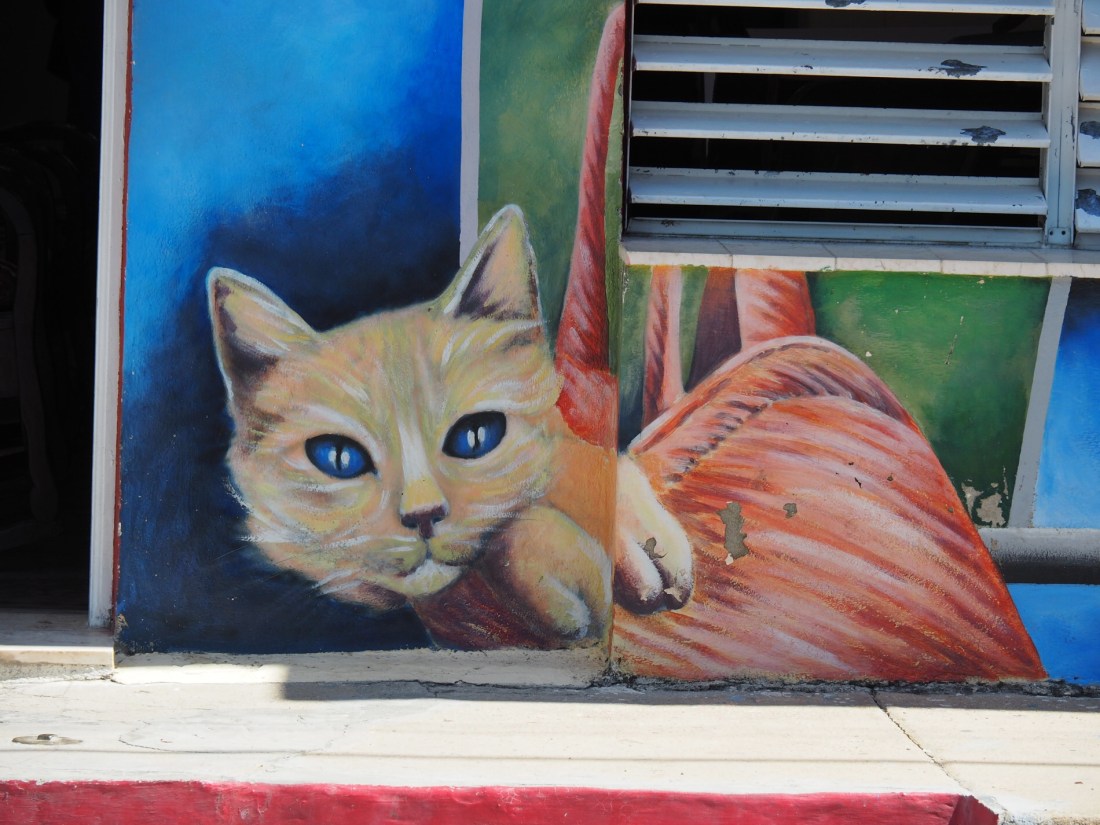
Omar’s home has been decorated with murals painted by other artists. One of them is (you guessed it) of a cat!

Cienfuegos, on the south coast of Cuba 4/8/18

Posted from Berkeley, CA 4/15/18

Rations

Each person in Cuba is entitled to a minimum ration of basic foodstuffs. This was especially important during the “special period” during the 1990s after the collapse of the Soviet Union when people literally starved (the average Cuban last 20 pounds) because of the lack of oil, fertilizers, and food that had been imported from the Soviet Union. Even now, food can be scarce, and salaries are low, so each family receives a ration book, and the ration is based upon the ages and special needs of the family members. For example, family with a young child is entitled to more milk. The food is not free – the ration allows the family to buy the food at a subsidized price, which is a lot less than the market price.

Each community has a ration store to which people bring their ration books and at which they buy the food.

We visited one such store and saw the board that lists the commodities available. Included are things like rice, cooking oil, and salt.

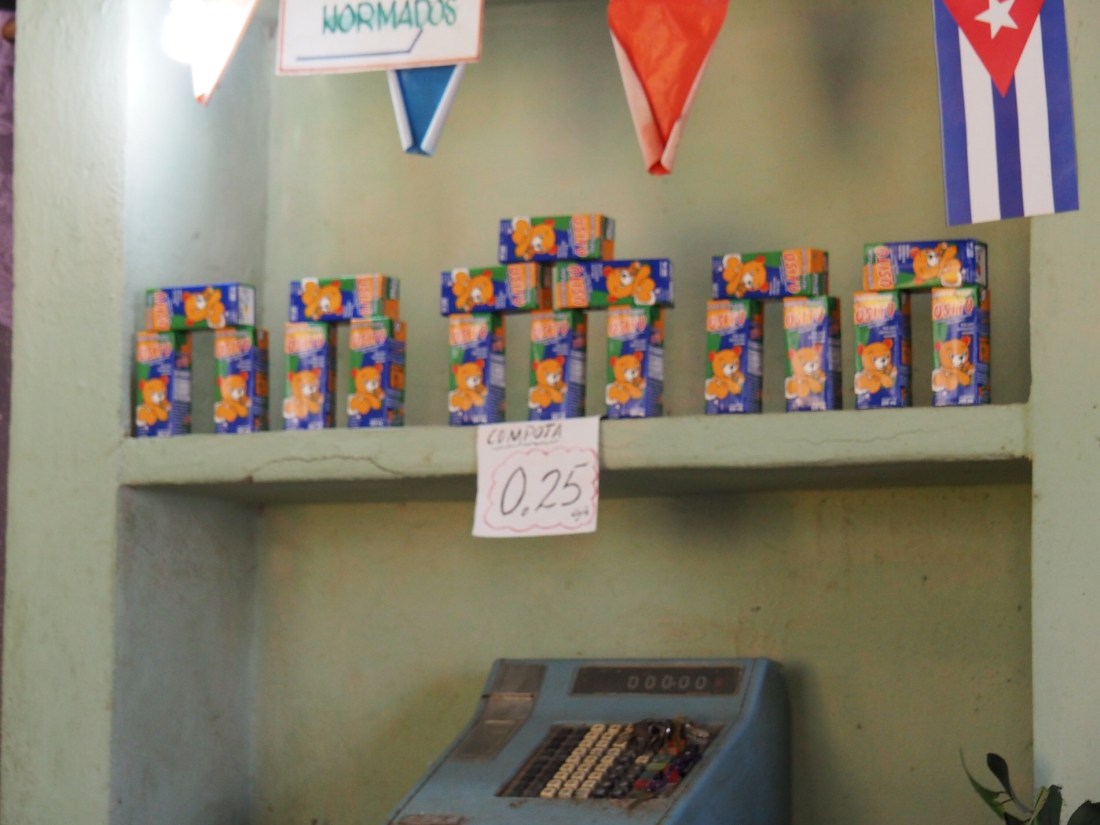
Baby Food (puréed fruit)

Bread,

And even rum

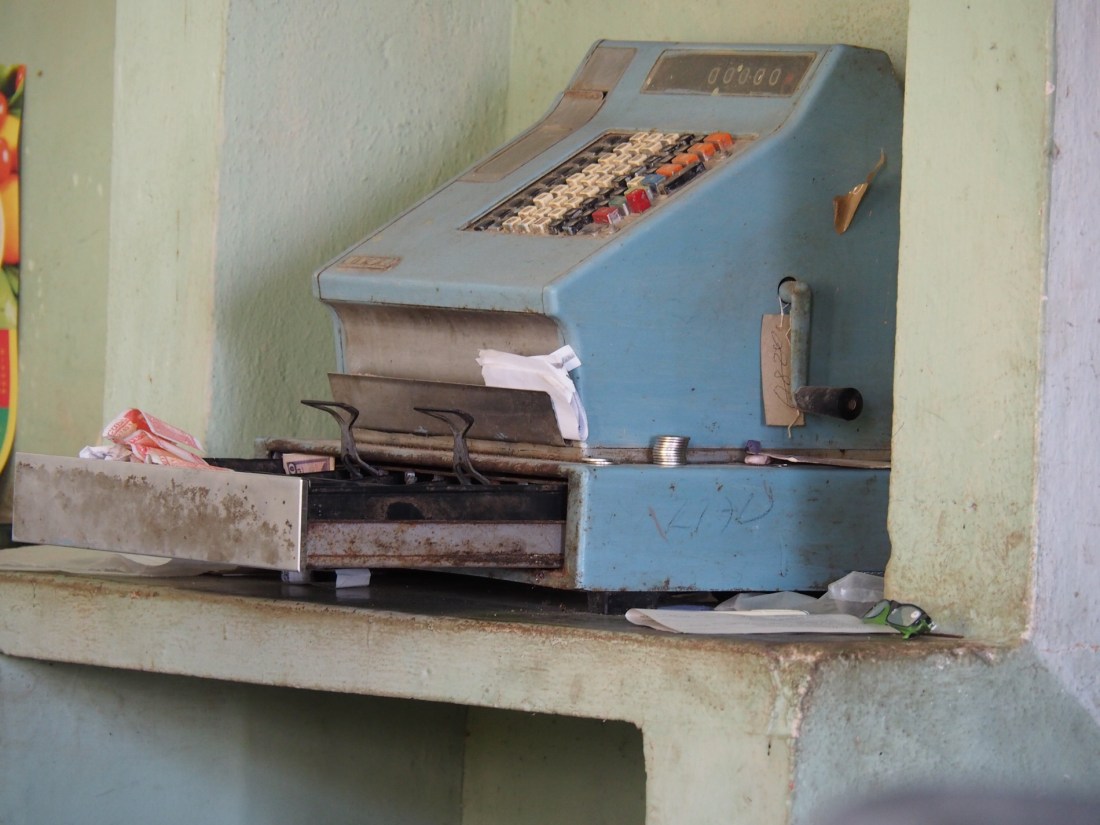
Here’s the “low tech” cash register

Our tour leader, who lived through the “special period” told us that the amount of rationed food available even today is not enough for the basic nutritional needs of the people, but that it goes a long way towards supporting them (remember that people still need to PAY in pesos for the food!)

So I sit in the courtyard of the Hotel Nacional de Cuba, drinking sparkling wine, typing these notes, and remembering all the meals I have eaten in Cuba (and worrying about how many pounds I might have gained here) and remember the woman we met in Havana last week who said that she barely ekes out her pension by selling pasta that she cooks, dries, and salts to sell, and feel guilty – but, in addition happiness that we bought a few cornicopiuous of pasta from her!

Typed in Havana, Cuba 4/12/18

Uploaded from Berkeley, CA 4/15/18

The Farmer takes a Wife

He is 84, she is 78. When she was 14 or 15, Rafael “kidnapped” Maria and took her home with him. In the morning, he took her back to her father and said that he had accepted responsibility for her and that was that – they have been married ever since. (Yes I asked – Maria had her eye on him from the very beginning, and she went with him willingly.). They have 8 children (4 boys, 4 girls) 18 grandchildren, and 10 great grandchildren (with one, Maria tells us) on the way.
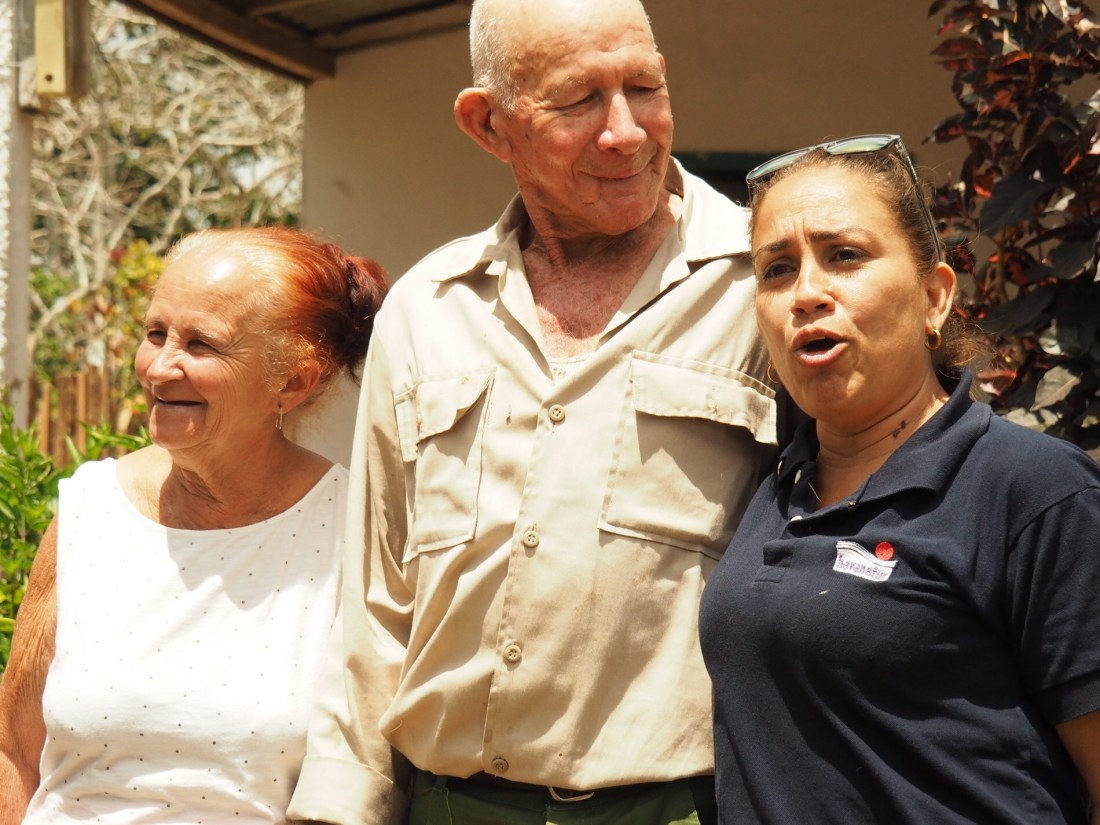
(Maria is on the left, Rafael in the middle, and Milagros, our Tour Leader, on the right)

Maria’s gardens are impressive. At home, coleus are house plants – here they live outside. I grow amaryllis inside and coddle them carefully to get them to bloom. Maria’s amaryllis live OUTSIDE and are blooming with abandon.

The house that Rafael inherited from his father is small, but spotlessly clean. Pictures of heroes of the revolution hang on the wall in places that you would normally expect to be occupied by religious saints:

The elder son, Umberto, and his wife, Marta, live next door. Umberto tell us that the house in which they now live is the third house he has built there – in the first he ‘made’ his first child a boy, and in the second he ‘made’ his second child. Apparently, there are to be no more children – he is 58 and Martha is 52. Here is a picture of Umberto with our tour leader, MIlagros, and driver, David, with one of the baskets that are used for picking.

And his wife, Martha
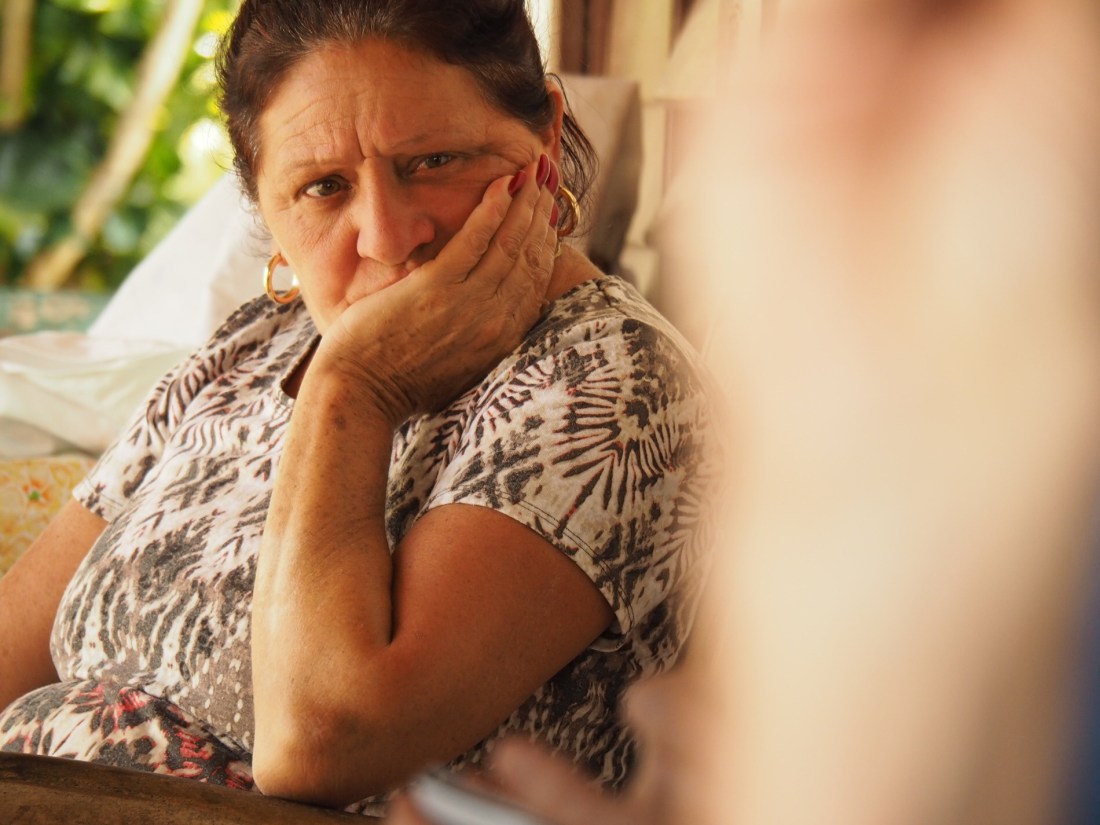
Umberto gave us some frightening statistics about the effects of global warming on the plantation.

First of all, of course, is the increasing frequency and severity of hurricanes. Irma destroyed 8,000 of his coffee plant out of the 20,000 he had in one of his ‘gardens.’. This is a huge loss, because remember that a coffee plant doesn’t start producing until it has been in the ground for 3 years and produces only for a total of 10 years. So, if he loses 5 year old plants, he has to wait a long time before he gets another crop!

But of more concern is the change in the life cycle of the coffee plants. 5 years ago, the coffee trees were continuing their normal cycle of blooming 3 times a year (and, of course, providing 3 crops of coffee berries). NOW the plants only bloom ONCE a year, so there is only one crop.

The government is the primary purchaser of Umberto’s coffee berries. They are picked when they are ripe (red) by campesinos who come for the harvest season and make more in a week than they could in a month at their regular jobs. Umberto prefers to sell the berries the same day they are picked rather than drying them himself and selling them later. He gets a little less per kilo, but he also doesn’t run as much risk – what if it rains while the berries are spread out on the concrete drying platform and they spoil? Or the winds come up and blow them away?

On the other hand, the price he gets for his berries are based upon the grade that the government assigns to his berries. This seems to be based upon the ripeness of the berries and the percentage that are ripe versus those that are green in the batch. Even though the berries are picked by hand, it is impossible to ensure that all of them are really ripe – a percentage is likely to be green So, if the government assigns a lower grade and isn’t offering enough, Umberto can tell the government buyer to take a hike, dry the beans himself and sell them later. He is obligated to sell 90% of his crop to the government, but there is a certain amount of ‘slippage’ in the remaining 10%, and he

can sell that percentage privately – say to a local paladar (private restaurant). Another benefit to waiting is that, once the berries are dried, it is impossible to tell the ‘grade’.

Umberto seems to be primary farmer of the plantation now – although his father says he works every day. I am worried that the tradition of family farming of coffee may not continue, however, because the eldest grandson told us that he has taken a course to be a lifeguard, and, of course, he makes a lot more money as a lifeguard than he could as a coffee farmer AND he doesn’t have to work as hard, AND he has the opportunity to meet many more girls….But, he says, he does help his father on the plantation when he’s not at the pool…

Typed in Trinidad, Cuba

Published from Atlanta, GA on the way home
The Tank Project

We learned that Cuba is trying to protect its cultural heritage, but that does not mean that all artists are supported by the state. It does pay people professional performers such as those who sing in the choir we heard in Cienfuegos, and to teach dance, singing, painting, and the like, but it doesn’t pay them just to create art. And, while it supports some cultural projects for children, they don’t reach everyone.

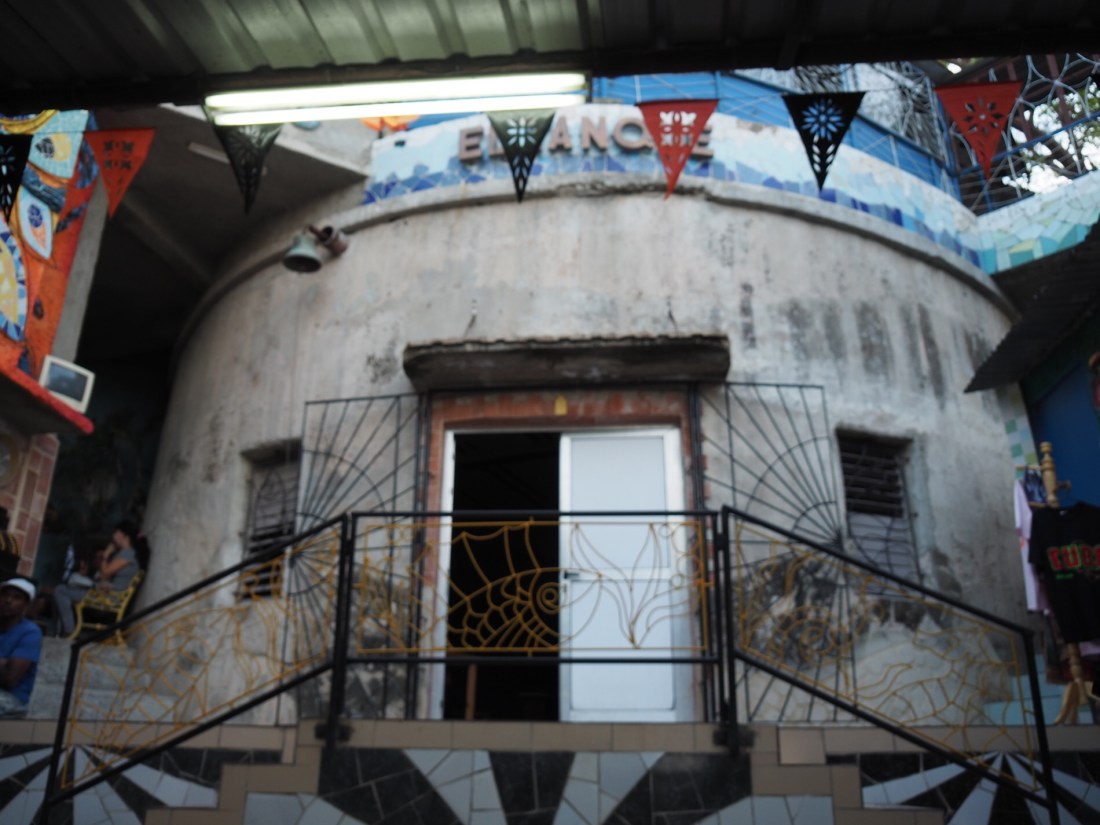
In a very low income barrio of Havana a group of artists got together to bring art to the neighborhood and its children and provide a place for artists to work. We visited the project, called Muraleando, to learn about its programs. In the beginning, the woman who teaches art told us, the after school and weekend classes were held on the street, and, of course, were suspended when it rained. Murals were painted and sculptures created and installed on the surrounding streets by the artists in the group to beautify the neighborhood.

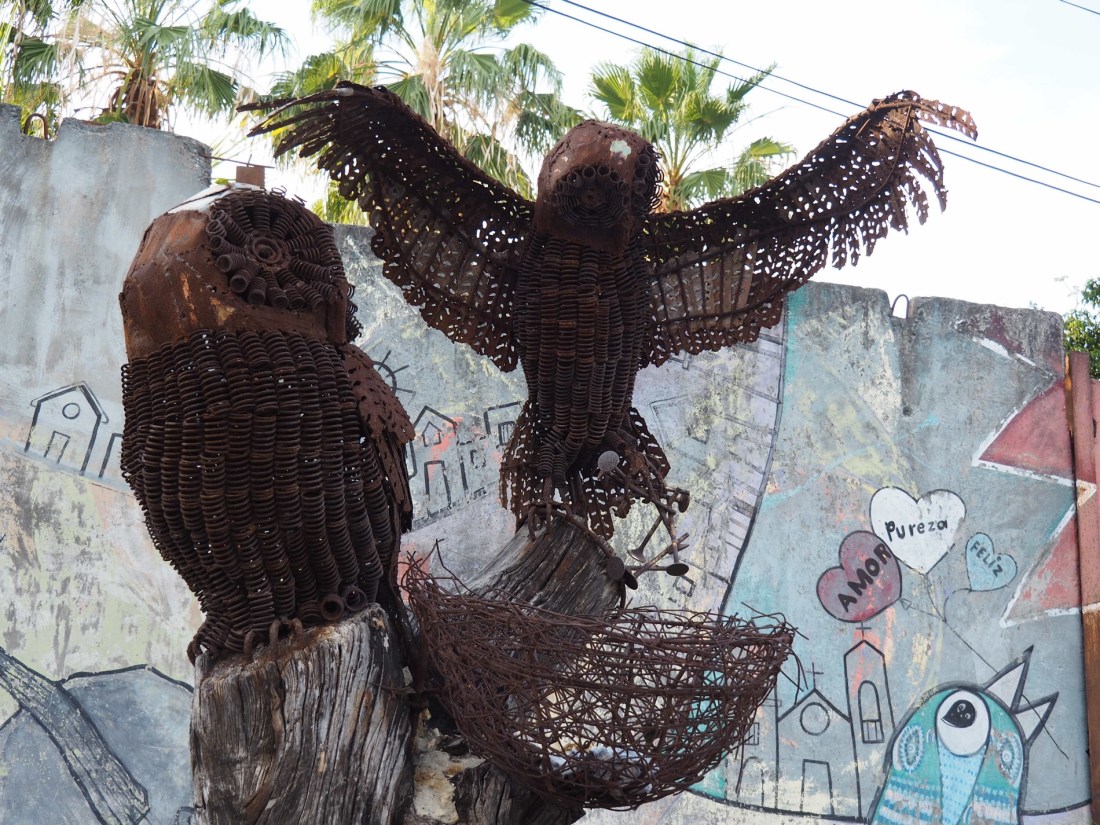
Here’s an owl family and its nest made of cast off springs

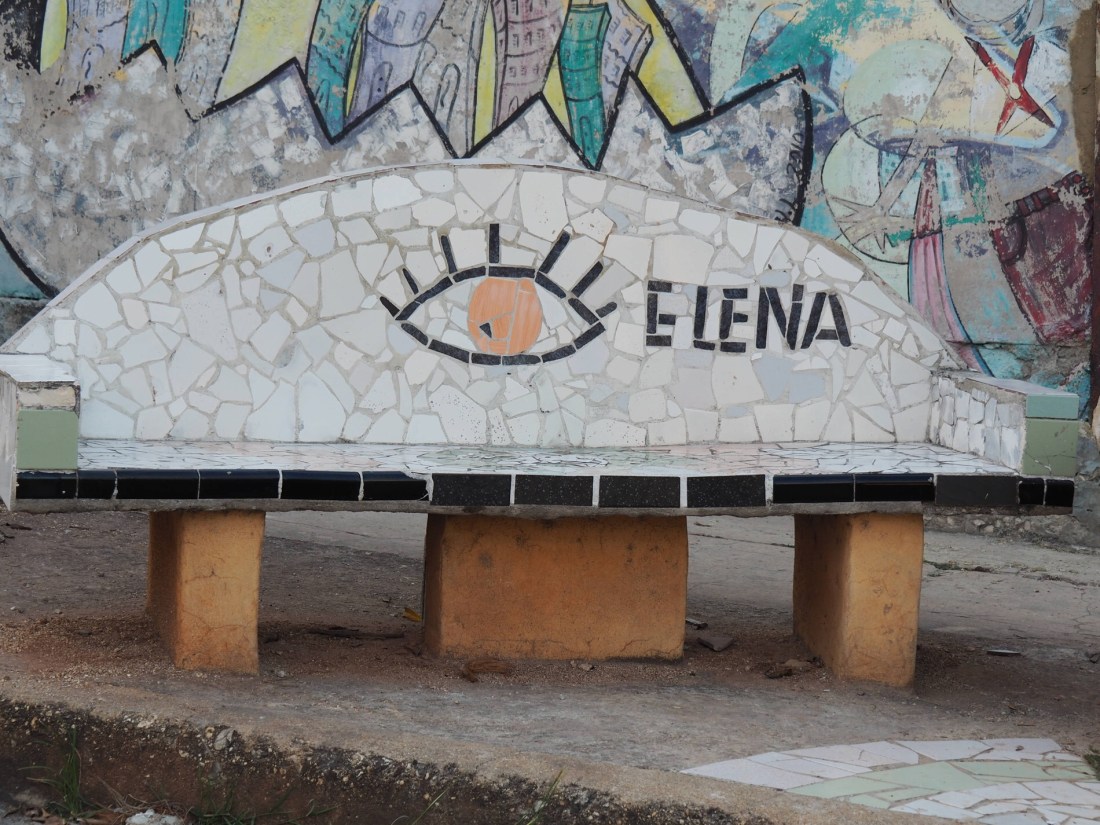
An elderly lady, whose name was Elena, came to the corner upon which the artists were concentrating and sat on a stump every day. When asked what she was doing, she replied “I am looking for my lover.” When she died (I think in her eighties) the artists created a bench in her memory.

Many of the artists had grown up in the neighborhood, and they knew that there was an abandoned concrete water tank in the midst of a vacant lot used as a dump. After some time, and many negotiations, they convinced the government to give them the tank and the lot. The community got together to remove all the garbage that had been dumped there. The government provided a backhoe for half a day – all the rest of the work was done by hand.

Then with a borrowed jackhammer a hole was opened in the tank itself, and after the stagnant smelly water rushed out, they spent many days removing the trash that had accumulated in the tank and enlarging the entrance. Next electricity and lighting were installed, and the interior painted. They now had a space in which the artists could work and to which the children could come after school and on weekends to take classes.

Over time, various terraces and patios have been added, and a paladar (private restaurant and bar) is on top the tank. All of this has been done with donated materials and volunteer labor.

Classes in painting, sculpture and other visual arts, dance and music are offered, as well as movie making. We watched a video that the kids had created that shows the history of the project. And we listened to a band made up of young adults who had graduated from the program (and danced with the students and teachers).

We had a chance to buy from the artists, of course. I bought a bracelet from Orlando

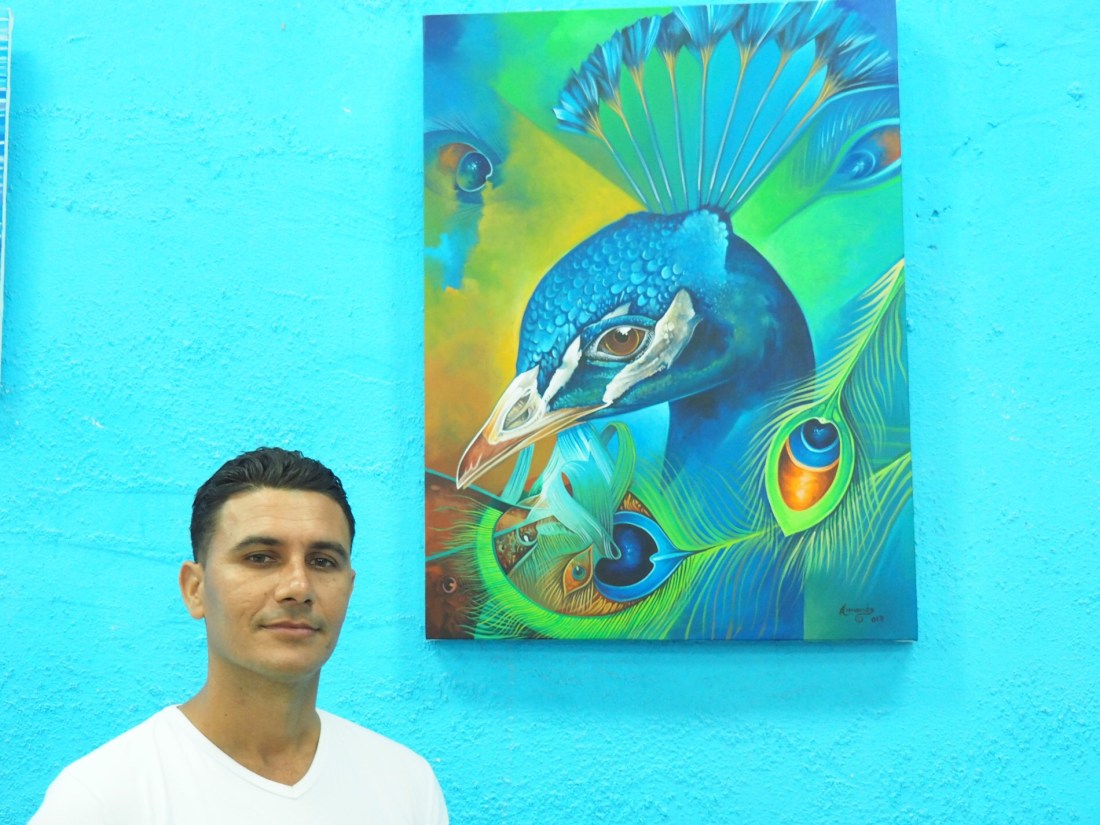
and a painting from Rafael.

The evening ended with dinner on top the tank and music by another band. Many of us just got up and danced, caught up in the joy that we felt from the community who had made so much out of so little.

Havana, Cuba 4/5/18

Posted from Delta Flight 648 somewhere west of Tallahassee 4/15/18

Azariel Santantander Alcantara

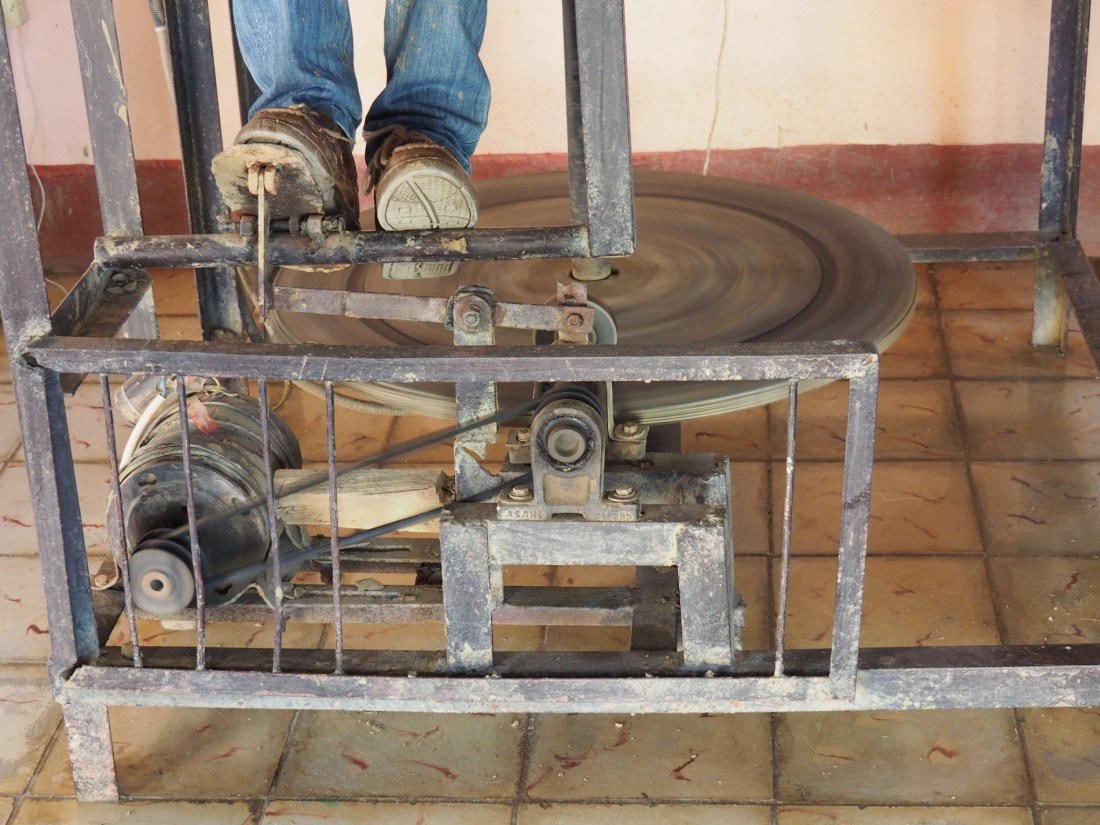
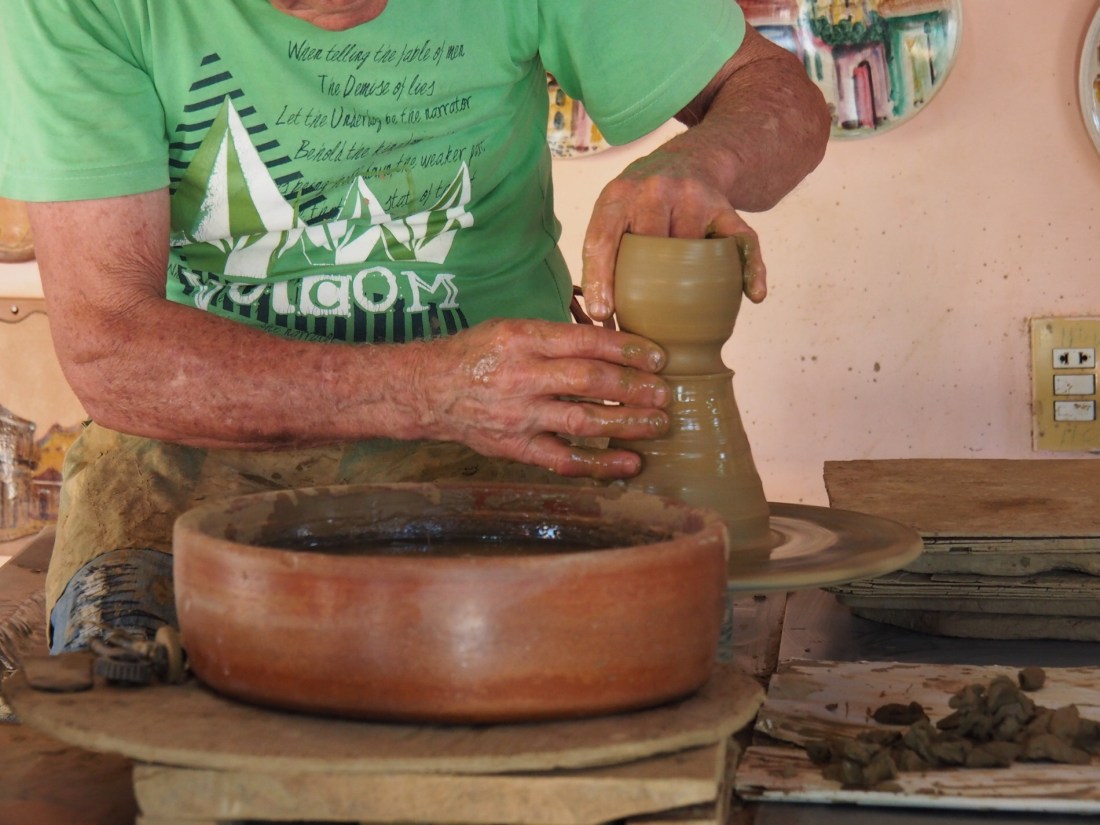
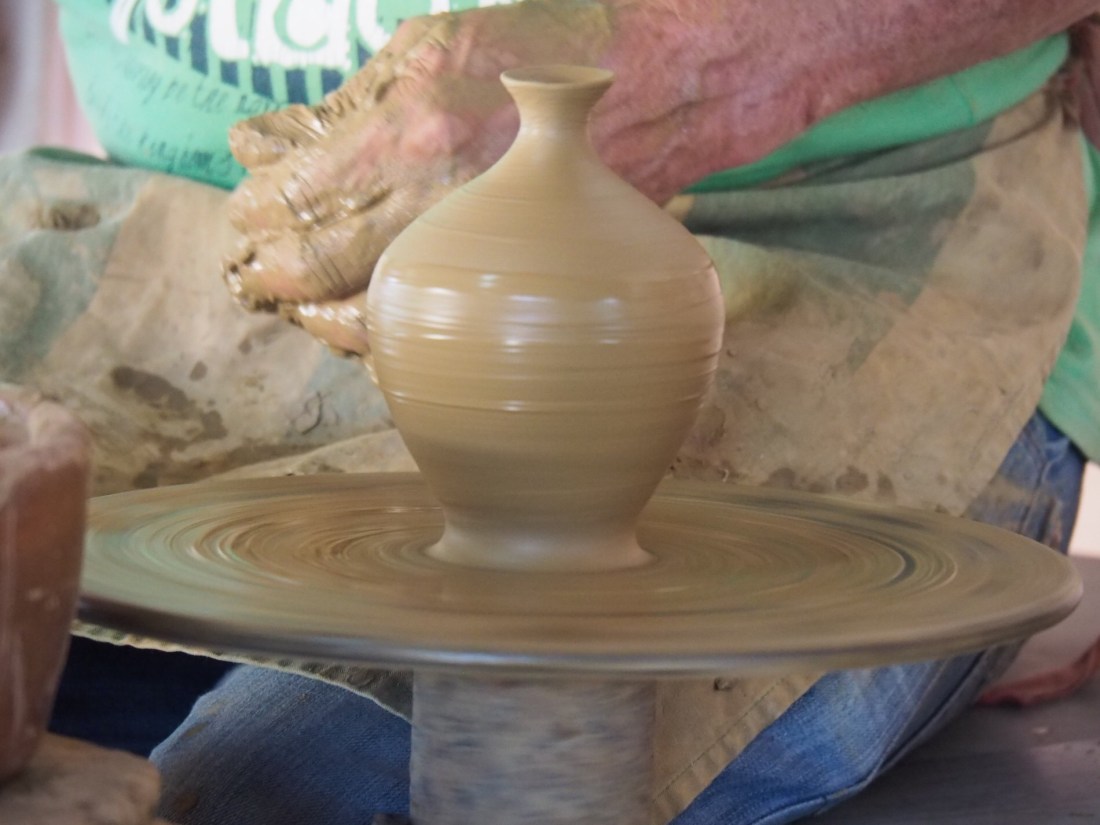
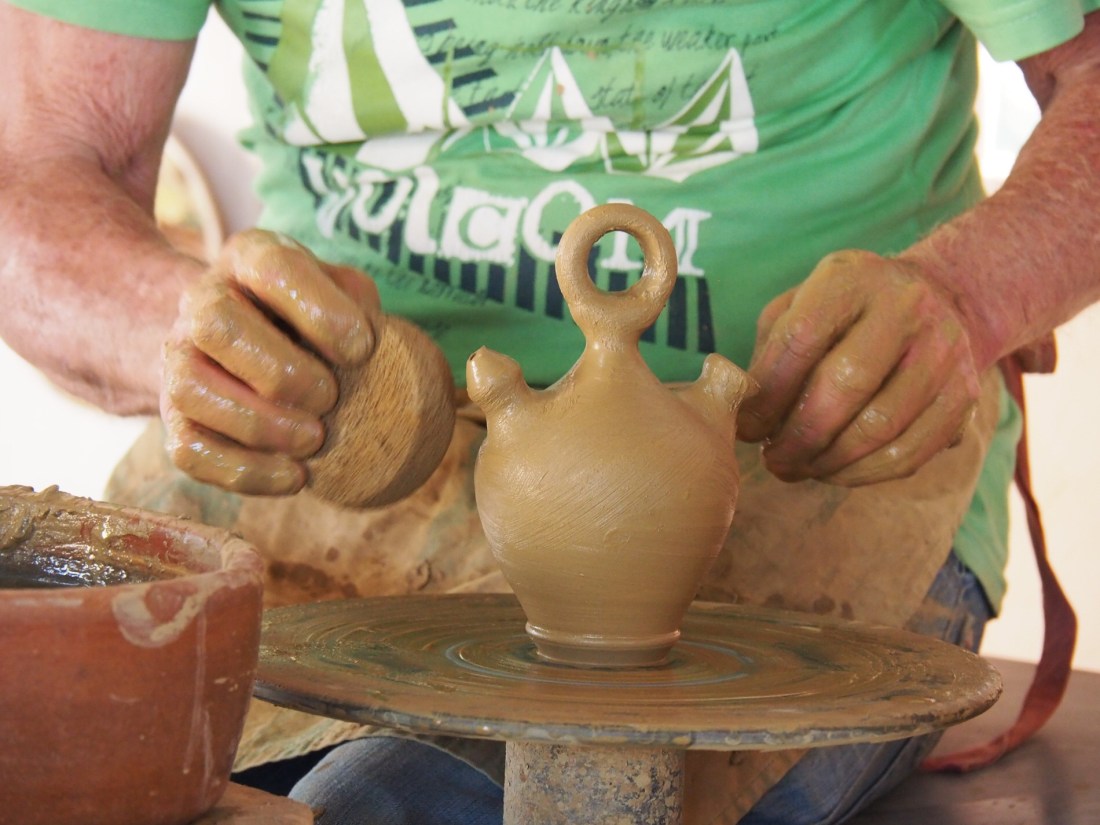
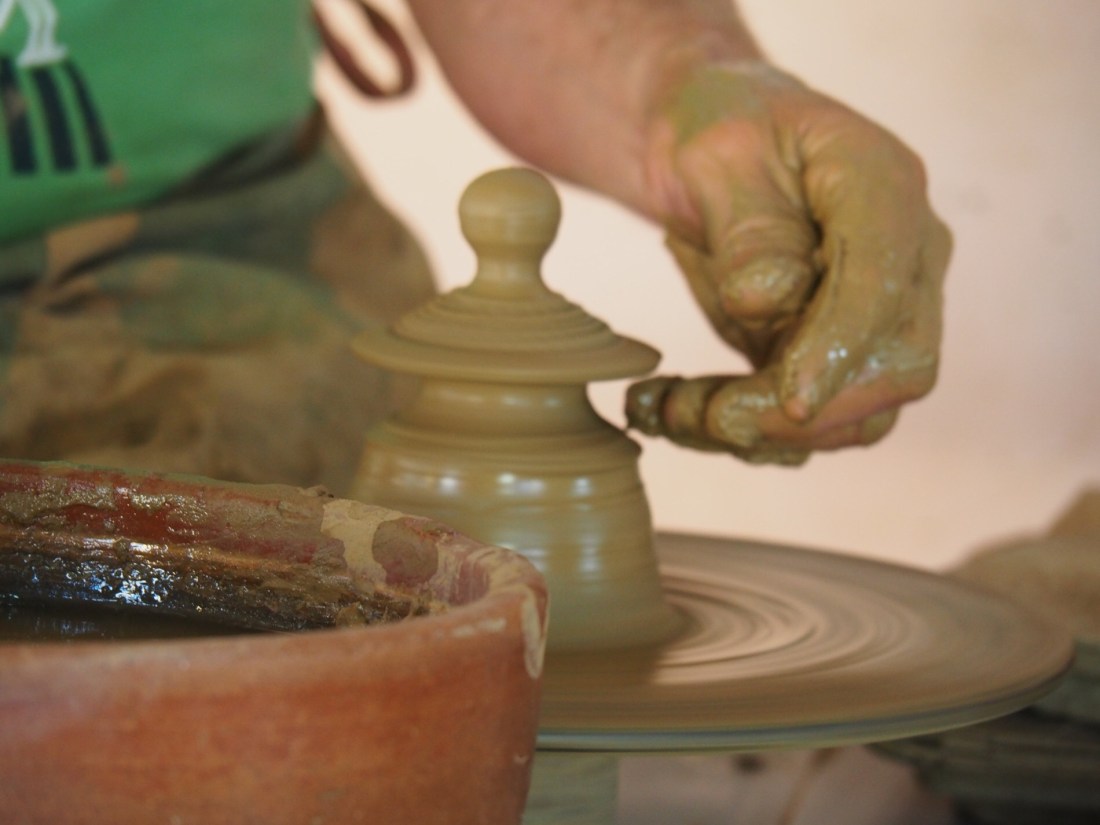
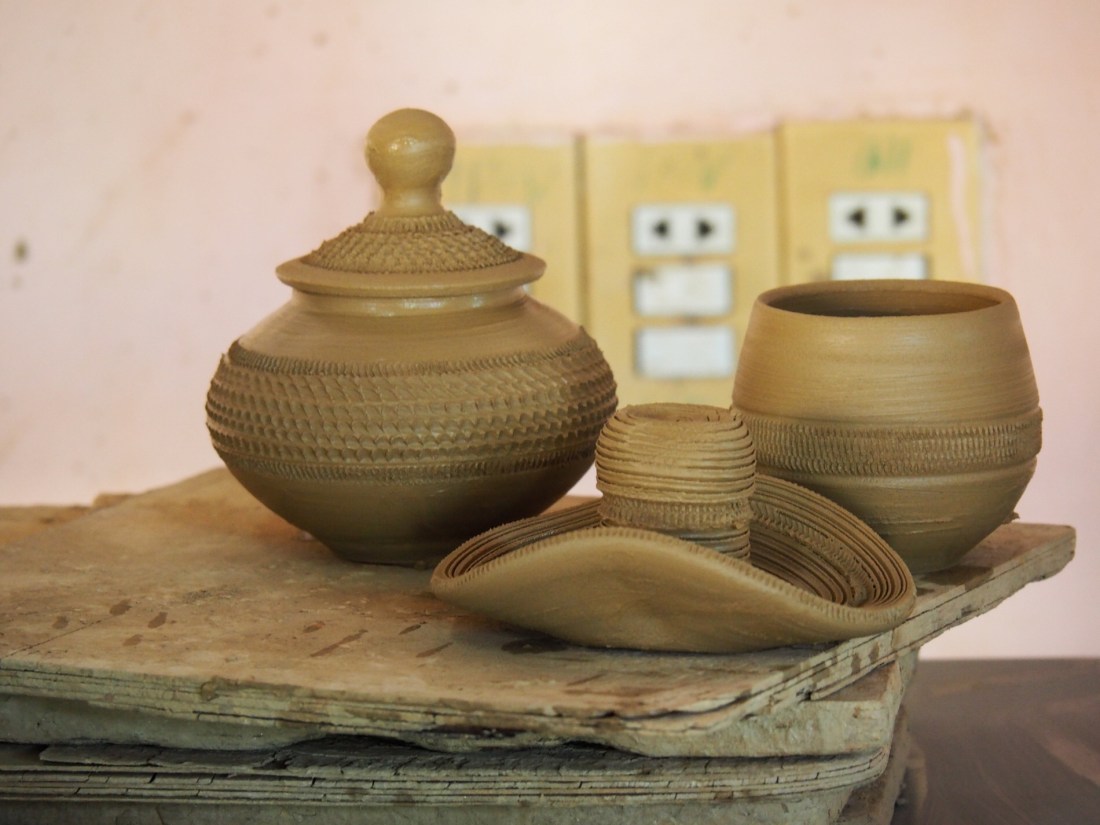
Azariel Santantander Alcantara is a master potter, following in the footsteps of many generations of potters in his family near Trinidad, Cuba. He effortlessly creates pots one after another at a wheel that is power driven

First is a small cup

What at I first thought must be a candlestick holder,

But it actually turns out to be a sombrero!

And, making several different pieces first, a pitcher

And most amazing of all, a pot

And made separately, a lid that fit exactly!

Mr. Alcantara is 74 years old, and has won many awards. He tell us that his grandfather had owned a ceramic factory that employed 50 members of the family. In 1962, after the revolution large international businesses had been nationalized, but not yet the smaller, family owned businesses. His grandfather saw the handwriting on the wall and ‘gave’ the business to the state.

He was really smart, because after he gave the factory to the government, his grandfather continued to manage it, and all of his family members continued to be employed there! Now private businesses are again allowed, and, in his private studio, Mr. Alcantara employs several family members – and is teaching is great grandson to throw pots.

Trinidad, Cuba

4/8/18

Posted from Trinidad 4/11/18

Children

We have learned that Cuba is trying to preserve its cultural tradition. One of the ways it does that is to pay people who teach the arts. An example of this is a “professor” of dance, who leads several groups of children in Cienfuegos.

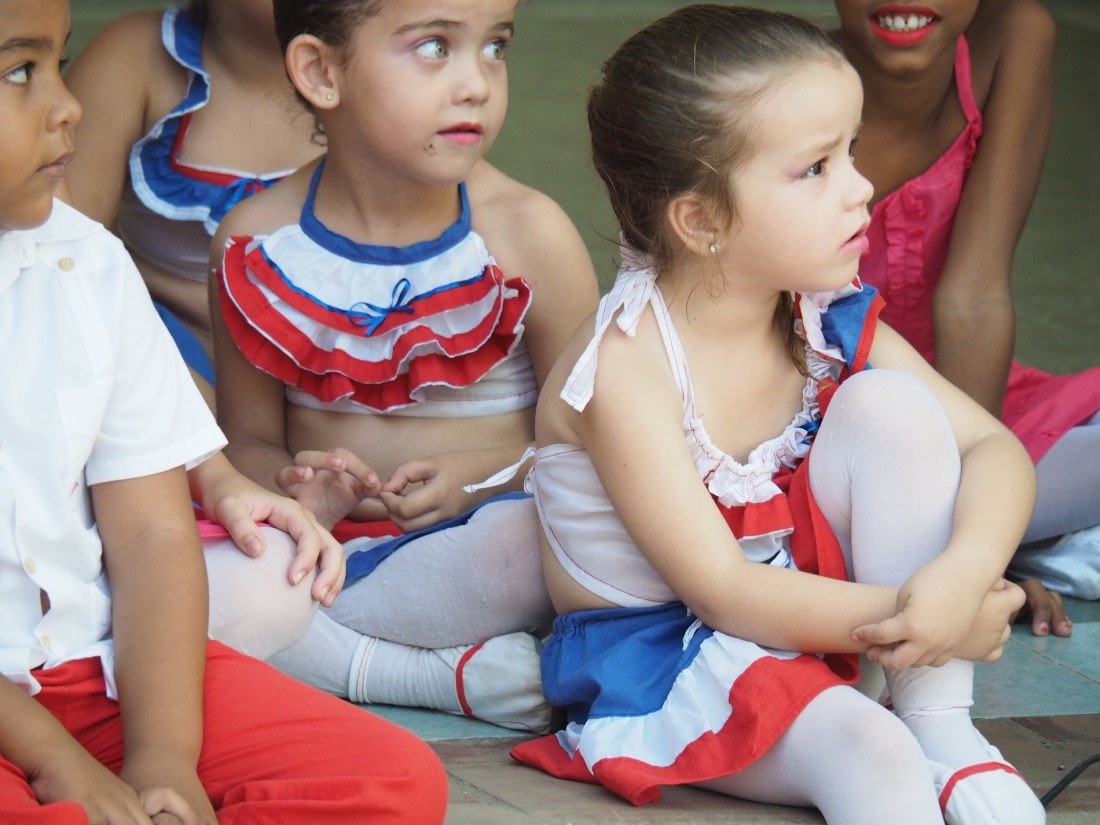
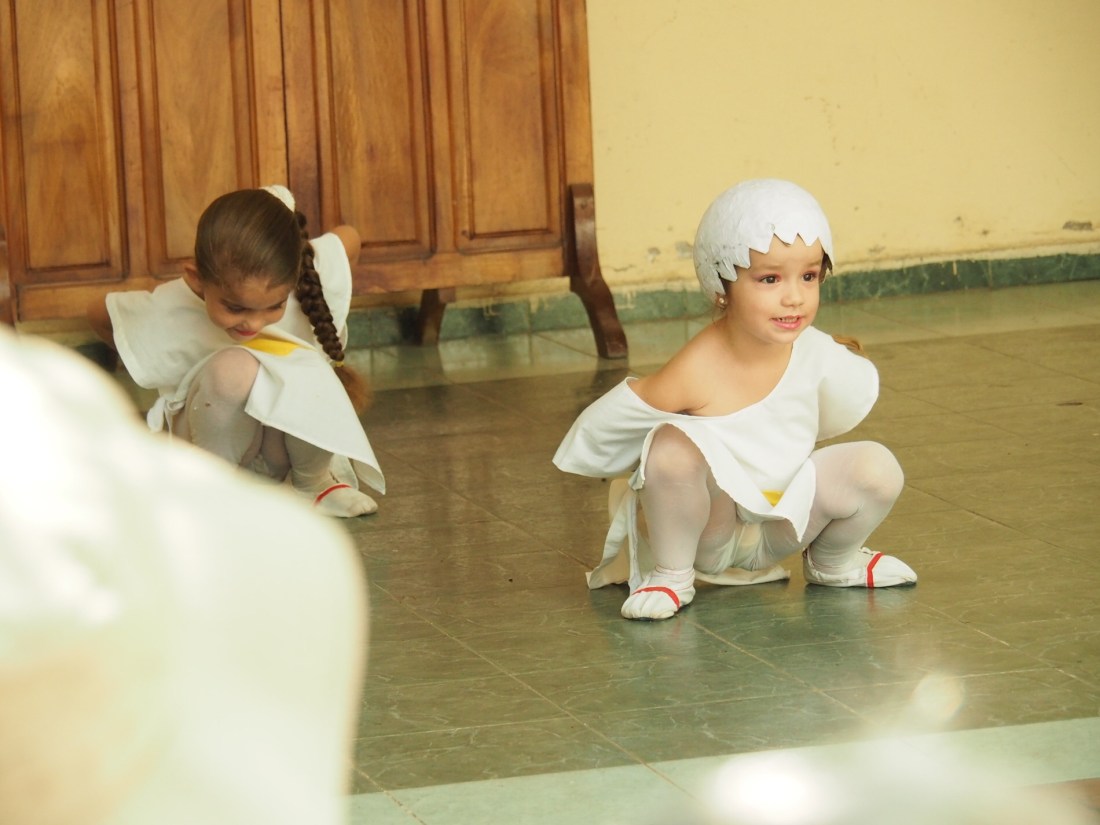
We were treated to a musical performance by one of these groups while we were in Cienfuegos one day. These children range from 4 to 8 years of age, and they are very serious performers.

The teacher explained that children come to audition to join the program. They don’t have to come with any kind of experience. What she is looking for is the child who exhibits the desire to dance or sing (although there are other arts programs the children can choose, such as drawing or ceramics. In the Cienfuegos area there are several other Arts programs.)

The funniest part of the program was the littlest children – one of whom had an eggshell on her head another who kept squatting and flapping her wings, and the third who wore a coxcomb on her head and strutted around like a rooster. The audience just couldn’t stop laughing.

And then there was the little boy who brought down the house – sitting and singing with an absolutely stone face – I am NOT going to crack a smile – there may be girls dancing around me, pretending to be chickens (and eggs) but I AM going to sing and you KNOW that I am SERIOUS!

The children sang and danced to traditional Cuban children’s songs, and they obviously were having a good time.

After the performance (and many bows) the children were asked to introduced themselves and say what they wanted to be when they grow up. Most of them said “dancer” or “singer,” but one little girl wanted to be a nurse, and another a doctor.

There are arts colleges that the children can attend after high school, and once they graduate, they are considered to be professionals. It appears that they can then audition to join professional groups. In fact, one of the young men who does the choreography for the group said that he belongs to a regional company.

So clearly, Cuba is trying to train up its talent from a very young age!

Cienfuegos, Cuba 4/8/18

Posted from Trinidad, Cuba 4/11/18

Fusterlandia in Jaimanitas

Fusterlandia in Jaimanitas

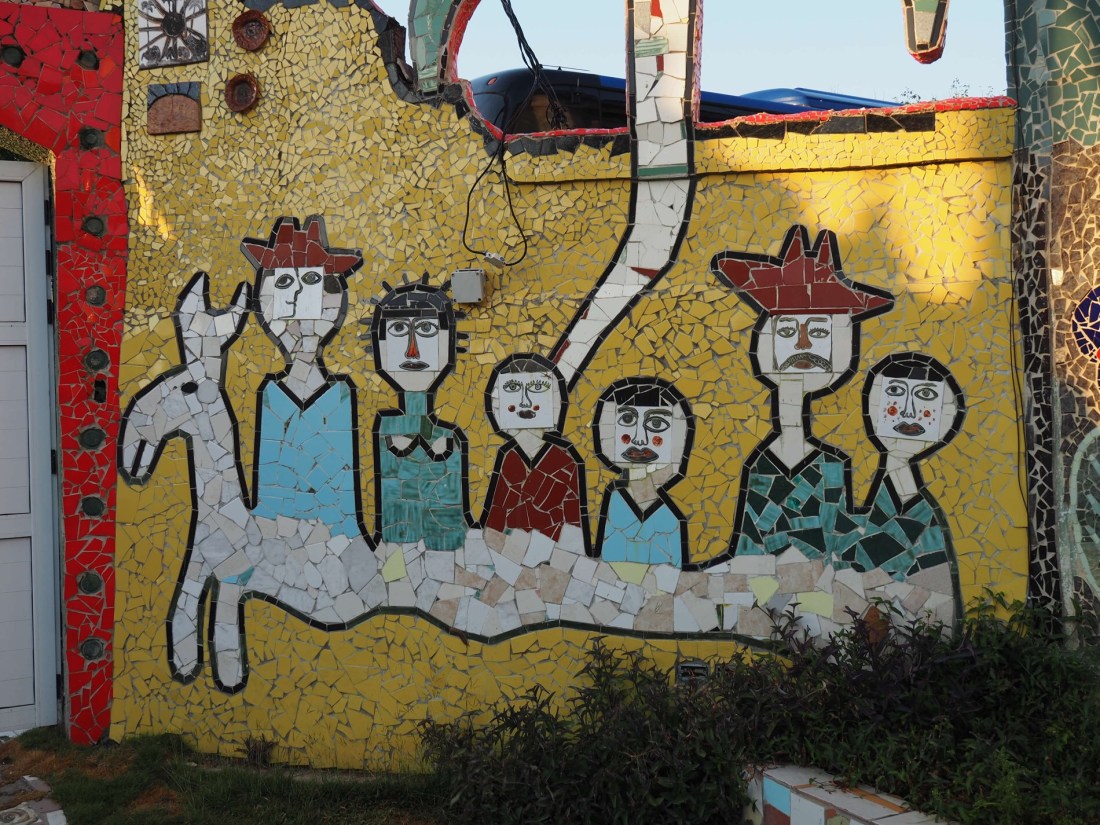
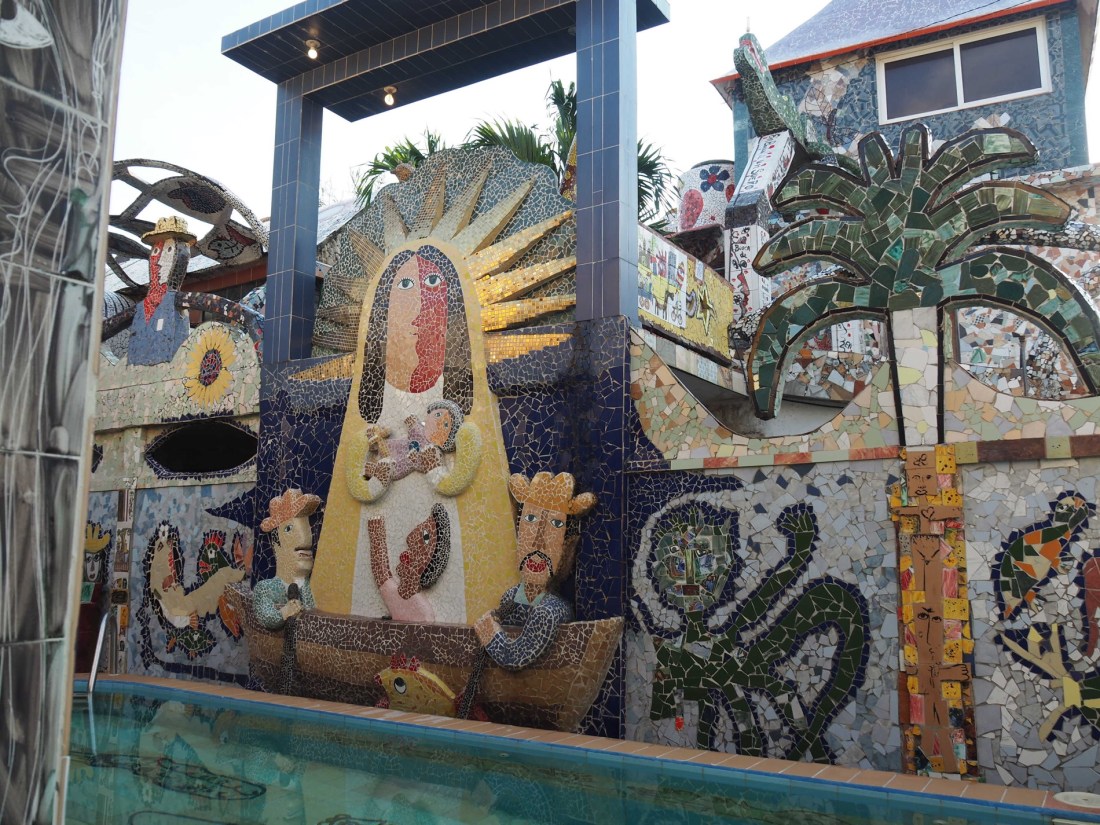
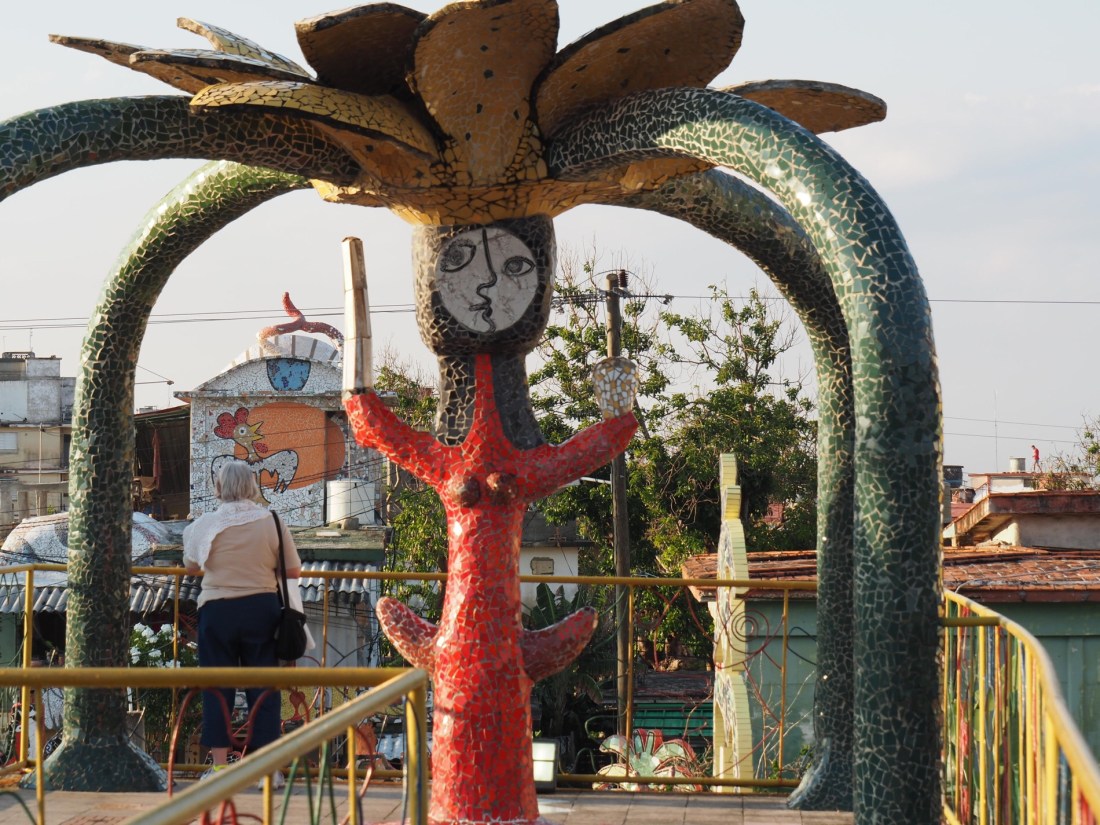
We visited Jaimanitas, a small municipality in the north eastern part of Havana that is the home of a famous Cuban artist and sculptor Jose Fuster. The artist is 71 and works every day with a team of artisans who actually execute his designs. He has decorated his home, and, with approval of his neighbors, he has also decorated more than 80 neighborhood homes. He talks to the homeowners to elicit ideas for what they would like to have for the decorations, and draws sketches. Once they are approved, he and his team set to work and the results have become known as “Fusterlandia in Jaimanitas.”
We were met by the artist’s elder son, Alex, an MD who actually seems to have devoted his life to supporting his father’s art. He said that he is a part of his father’s “team,” and was standing in for his father, who was out of the country for an exhibition.

The artist’s home is a fairyland of fanciful shapes and mosaics. Inside the front gate is what I suspect is a picture of his family – the artist and his wife, his three sons, and his son’s wife.
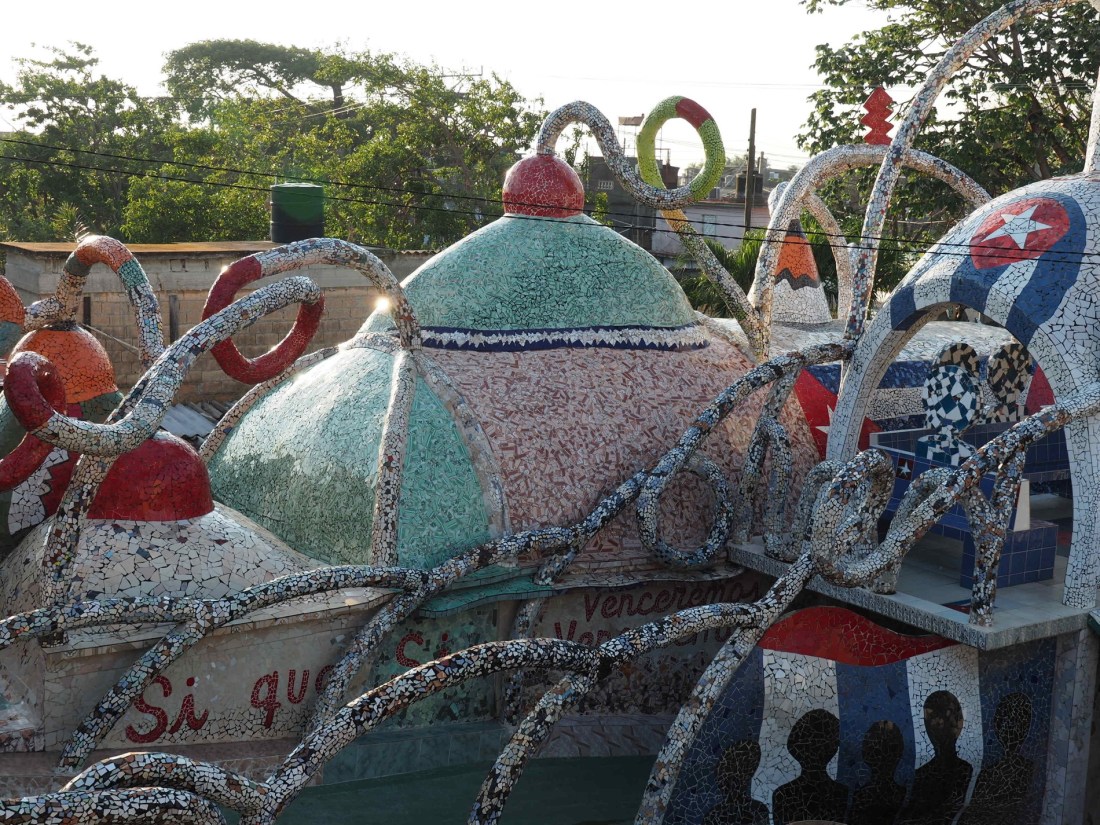
As you can see from the pictures, Mr. Fuster is inspired by Gaudi, Picasso, and Modigliani, amongst others.

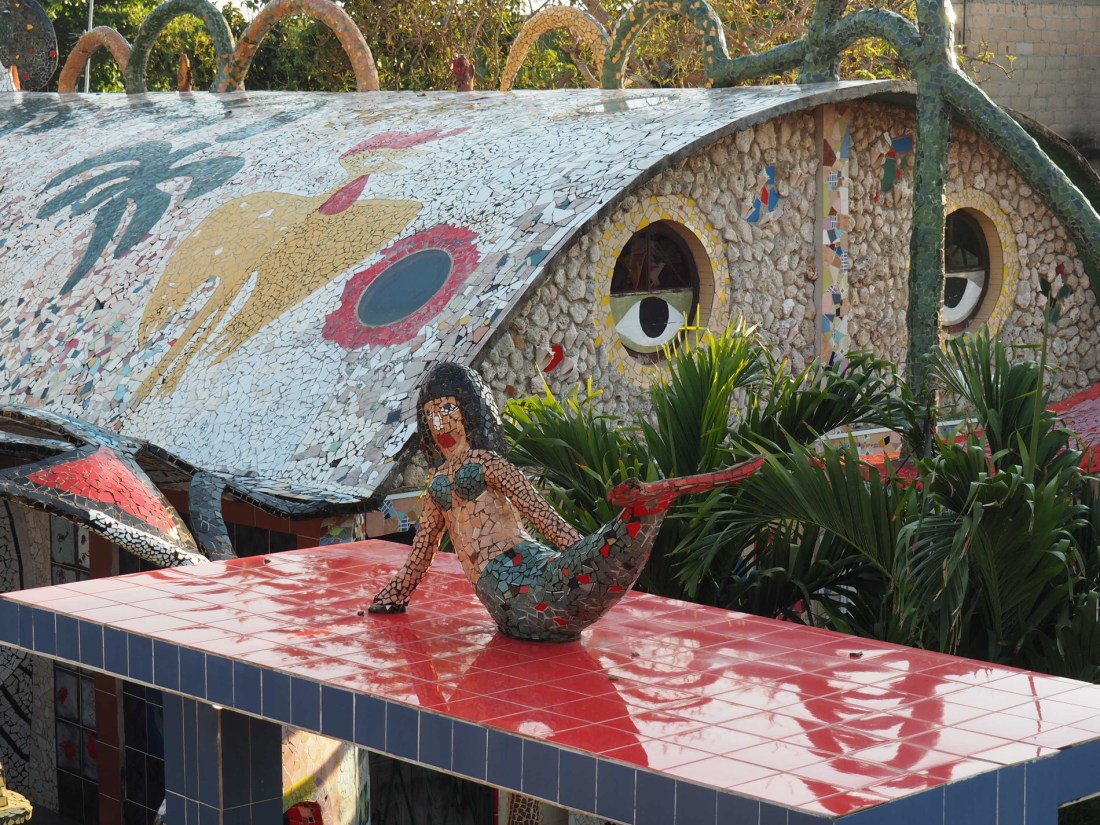
At some points you feel as though you have landed in the Mad Hatter’s tea party or Rube Goldberg’s laboratory
Everywhere there are sinuous curves and fantastic creatures

There is also a mural of Saint Charity, the patron saint of Cuba. Legend has it that fisherman were out one day and noticed a boat floating nearby. When they drew near, they found it contained a statue of a woman who became known as Saint Charity.

And a statue of Santa Barbara

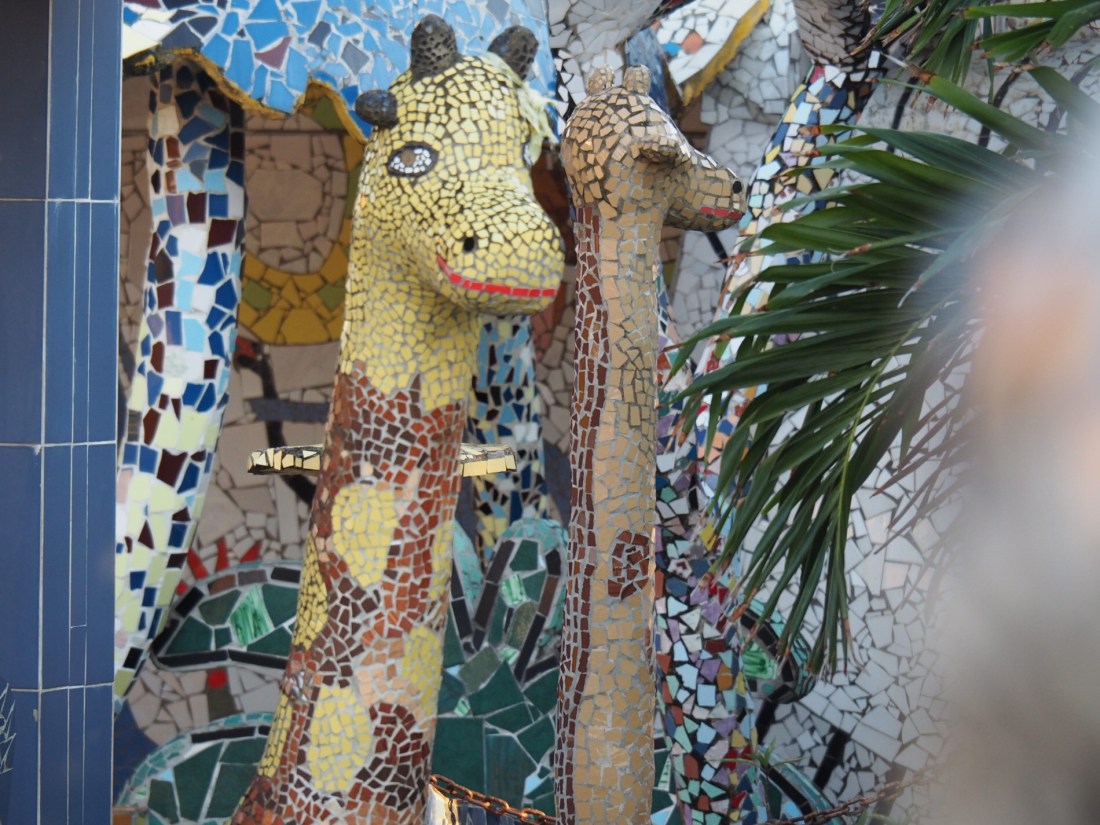
There is a pair of whimsical giraffes….

We ate dinner there under a cupola at a table covered with mosaics (but obscured by all the delicious dishes)

We all agreed that the evening was one of the most unusual we have ever spent!

Typed in Havana

Posted from Trinidad, 4/10/18 due to very bad wi-fi elsewhere!

The garden in Spring

The gardens at FiLoLi are beautiful any time of the year (as you will remember from an earlier post that showed the daffodils), but they are particularly known for their show of tulips, which usually takes place in March. The garden has a website which allows you to check on what’s blooming, and I realized that this was probably the peak time to go. So In Ja, my travel partner with whom I went to South East Asia last month, and I visited the garden today.

Here’s what we saw

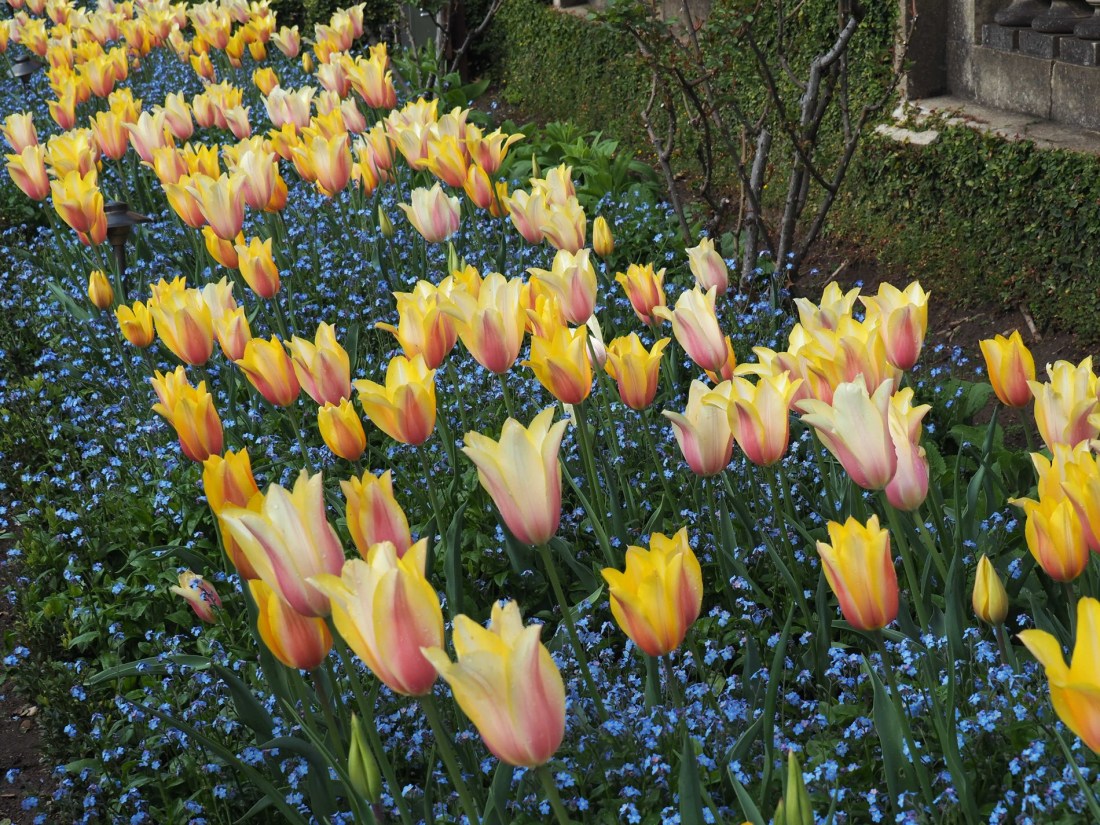
Delicately multicolored tulips inter-planted with forget-me-nots

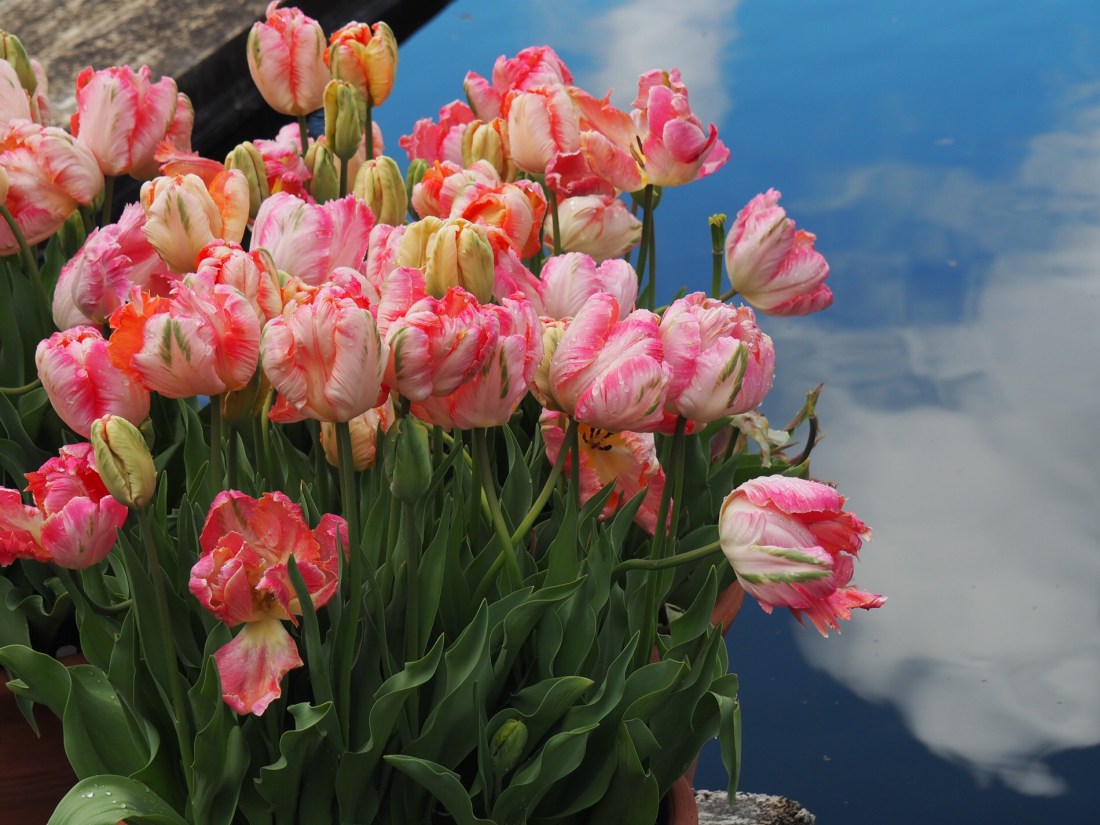
More vividly colored tulips planted in pots

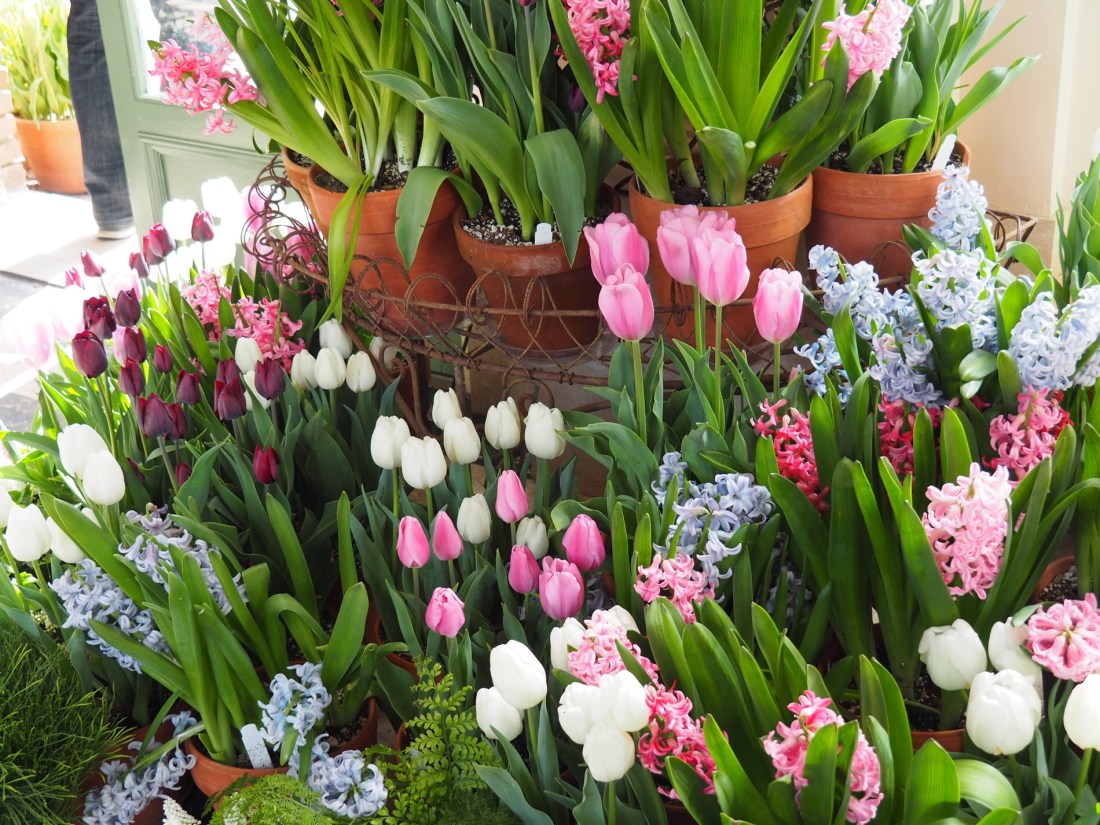
And in the garden room an amazing array of potted hyacinths and tulips (I wish I could post the wonderful fragrance in this room)

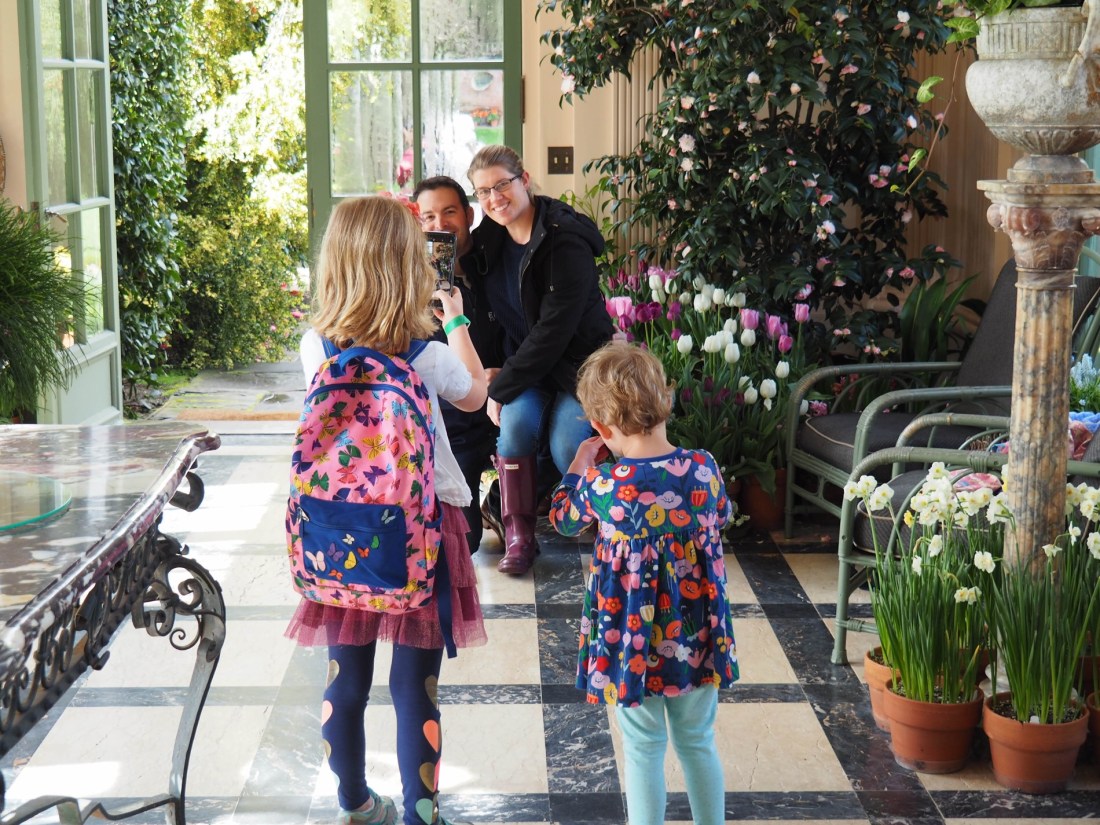
There was a family enjoying the garden room – with the children taking pictures of the parents (a switch on the usual parents photographing children)

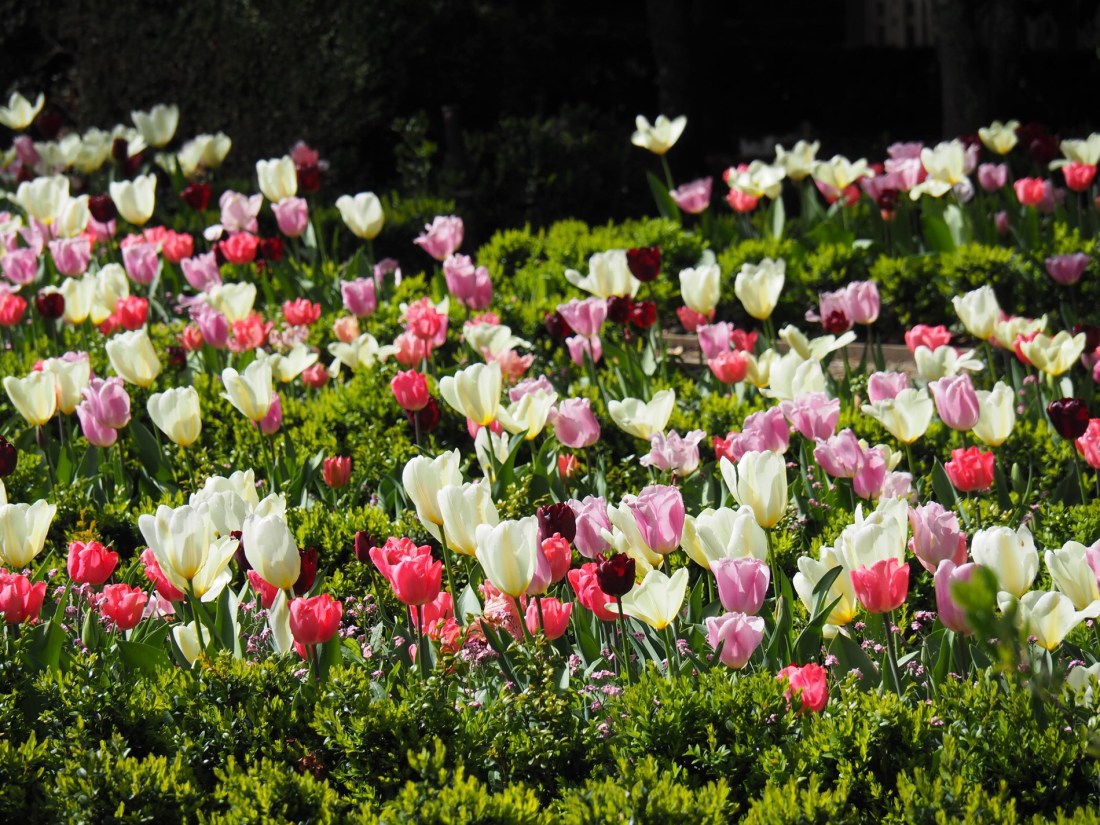
And outside, a mixed border that seemed to shimmer in the light.

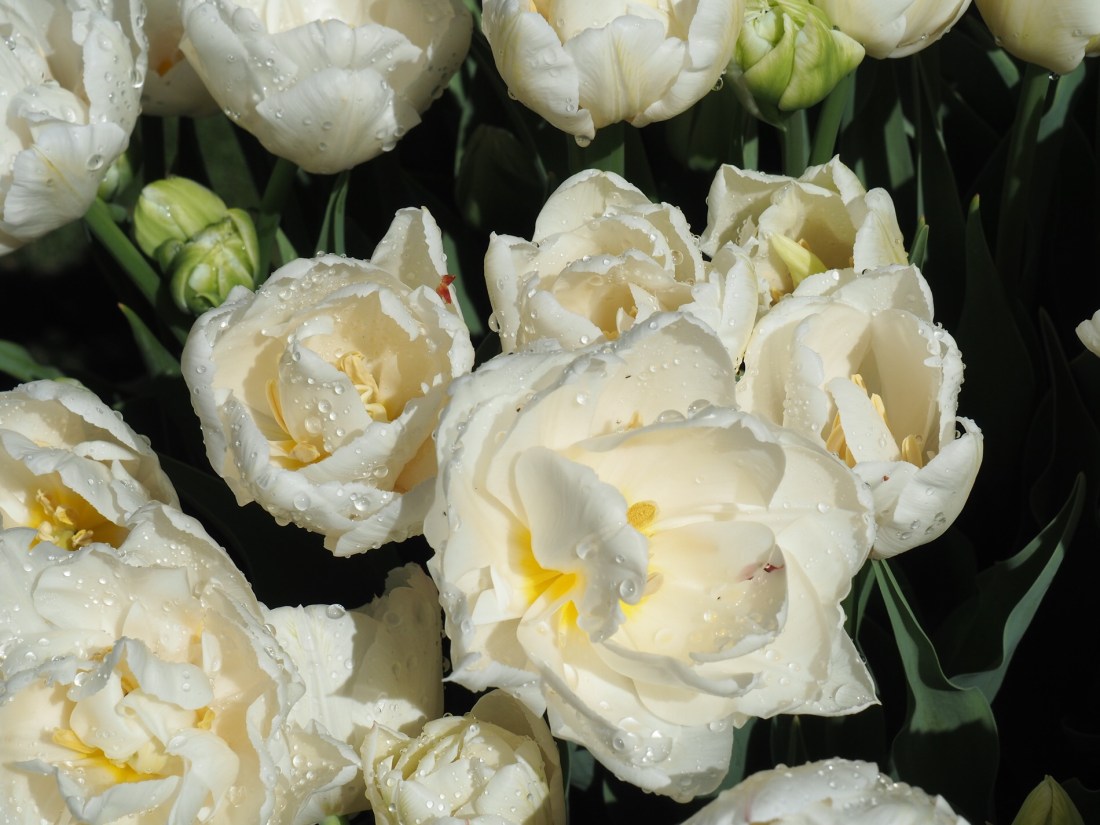
White tulips close up

And another mixed border of orange, red, and yellow tulips

Here’s a closeup of the magnificent orange, yellow and red tulips – look at the red border on the petals of the yellow one – God certainly wields a fine paint brush!

A little further on there were “double” white tulips that had opened to show many petals inside.

Here’s a purple tulip that hasn’t opened yet,

And another that allows you to glimpse the wonderful colors and shapes in its heart.

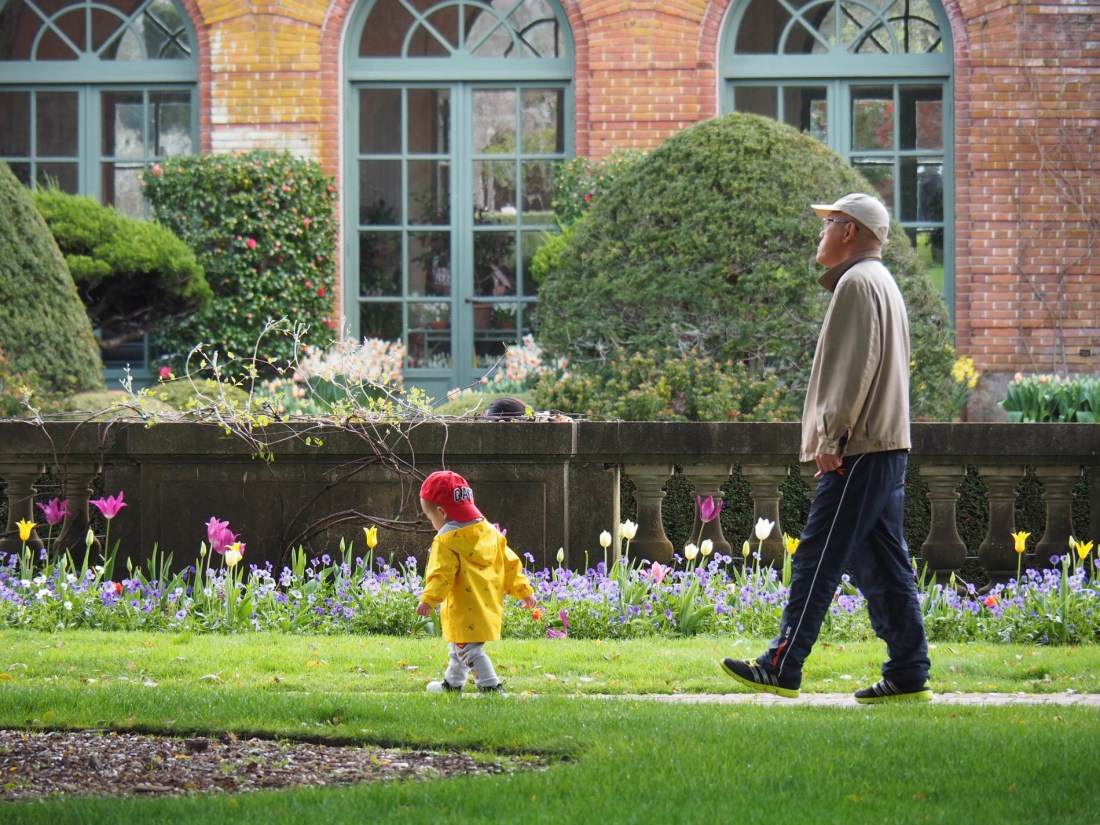
Many children were enjoying the garden with parents (and grandparents). Here’s an especially colorful one, strolling with Grandpa

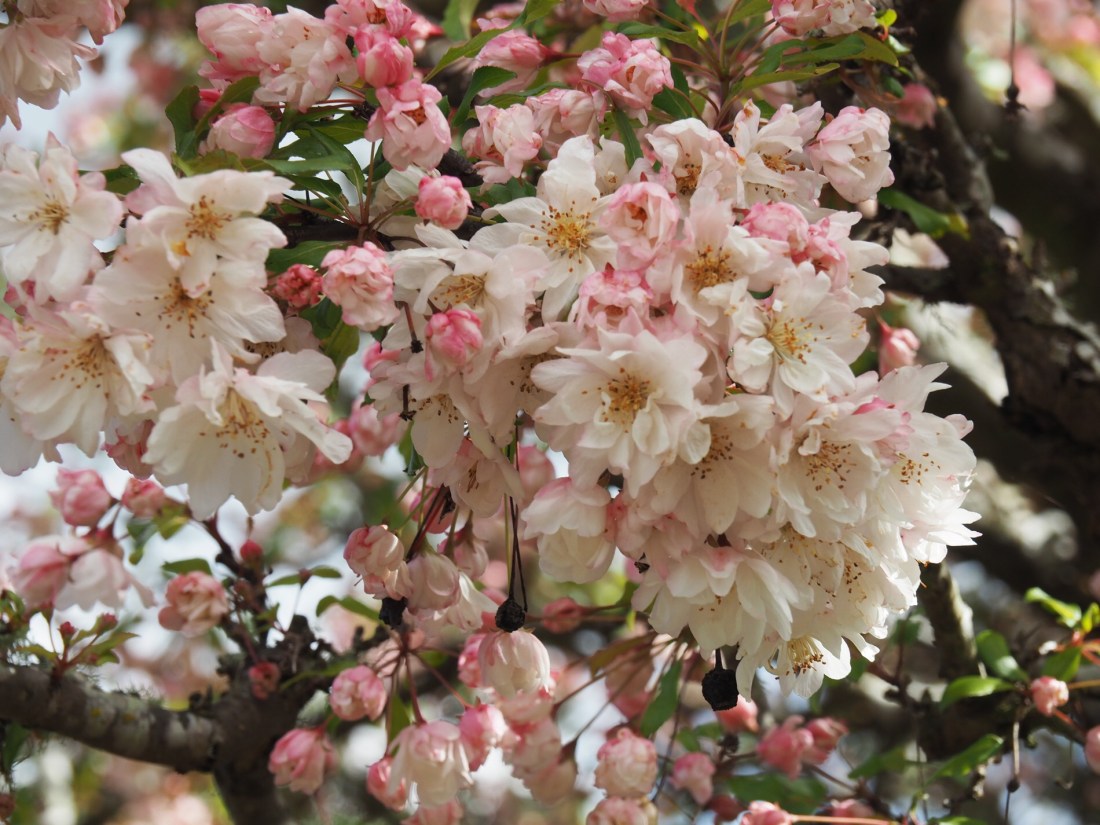
But tulips were not the only things to enjoy in the garden. This is a picture of the crabapple blossoms.

And a closeup of the leaves of Mianthemum Dilantatum (false lily of the valley) which I first thought were trilliums.

Later on, while walking the hiking rail, we found the real trillium.

What a feast for the senses!

Posted 3/25/18

Peacock

Peacock!

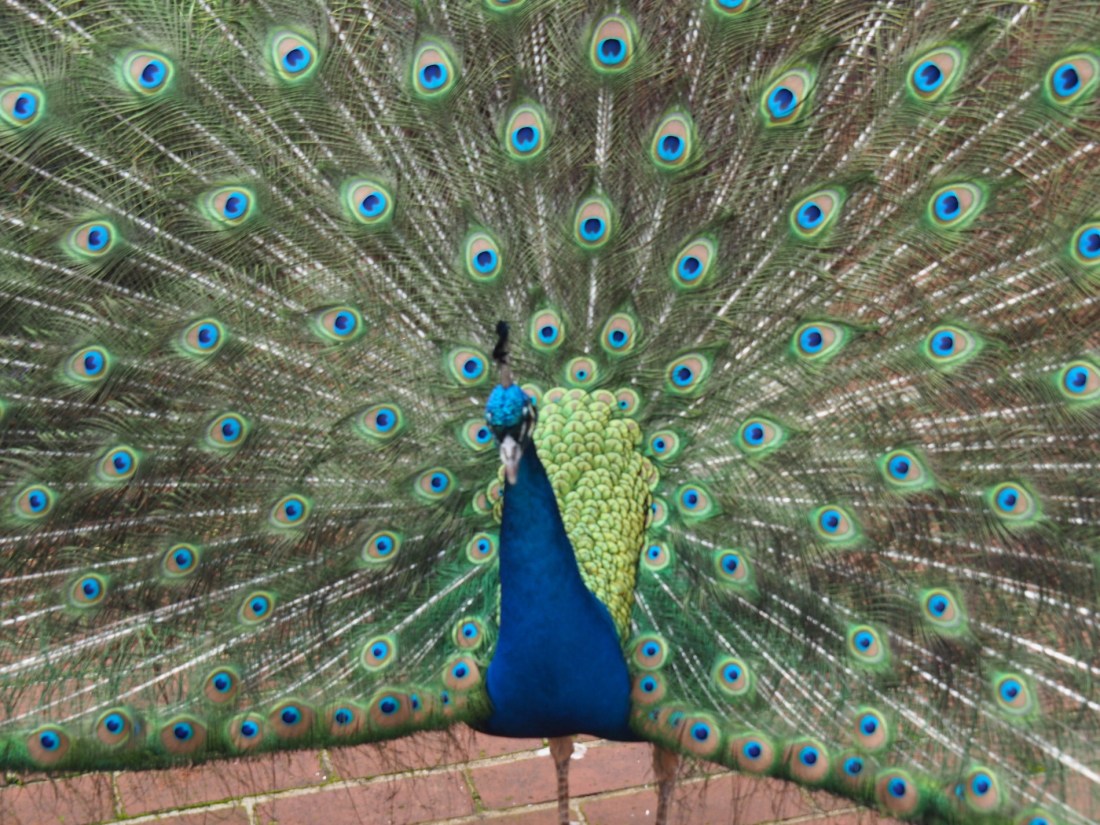
I went again today to Filoli, having first checked its website to discover what was blooming. The answer was TULIPS. But on the way in to the garden, we ran into a new denizen of the garden – a peacock. He was blocking our path as though he was demanding that we watch him strut his stuff – and strut he did!

The cock was almost dancing, as he turned and twisted, first showing us his beautiful fan of feathers,

Then turning so we could get a close up of his head,

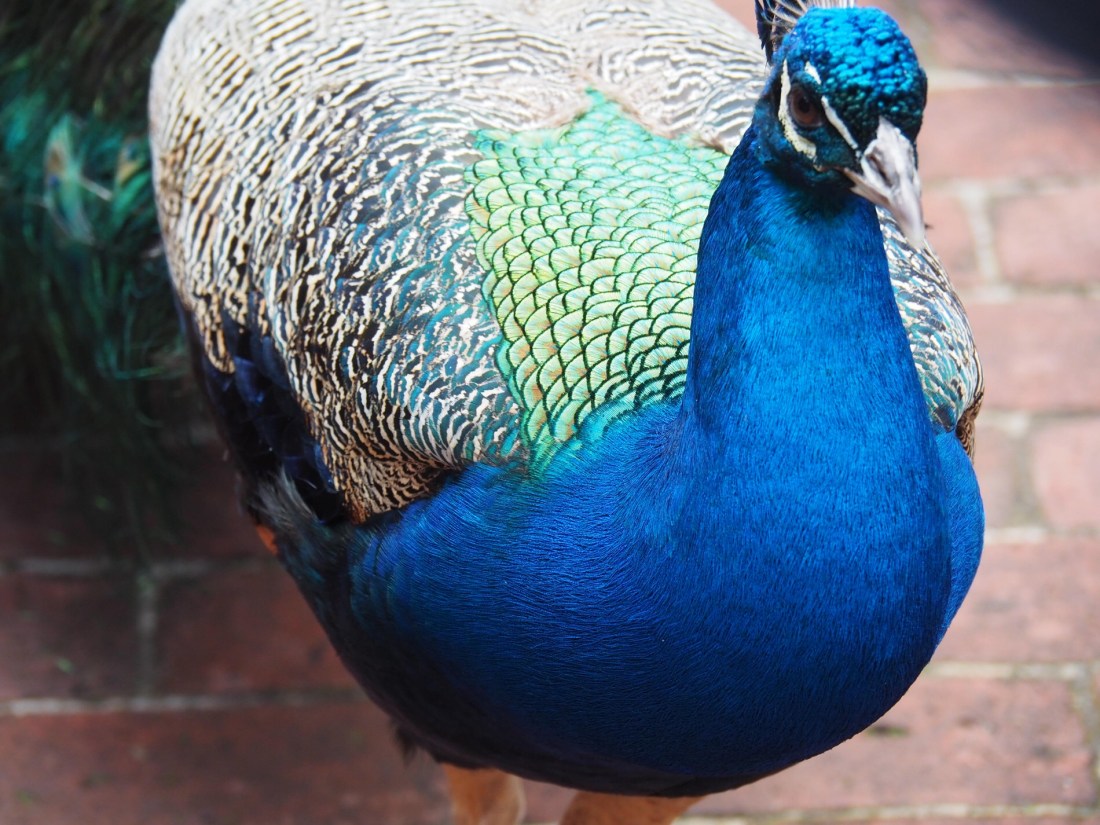
And a glimpse of the saturated blue of his chest and the detail of his wings,

And a close up of his tail as e sauntered past.

Finally, he seemed to tire of the effort to entertain the crowd that had now appeared, folded his tail, and stalked off into the plants.

What a showman!

Posted Sunday, 3/25/18