Temple of Literature, Hanoi, Vietnam

On our first full day in Hanoi, we went to visit the Temple of Literature, which was built in the year 1070CE.
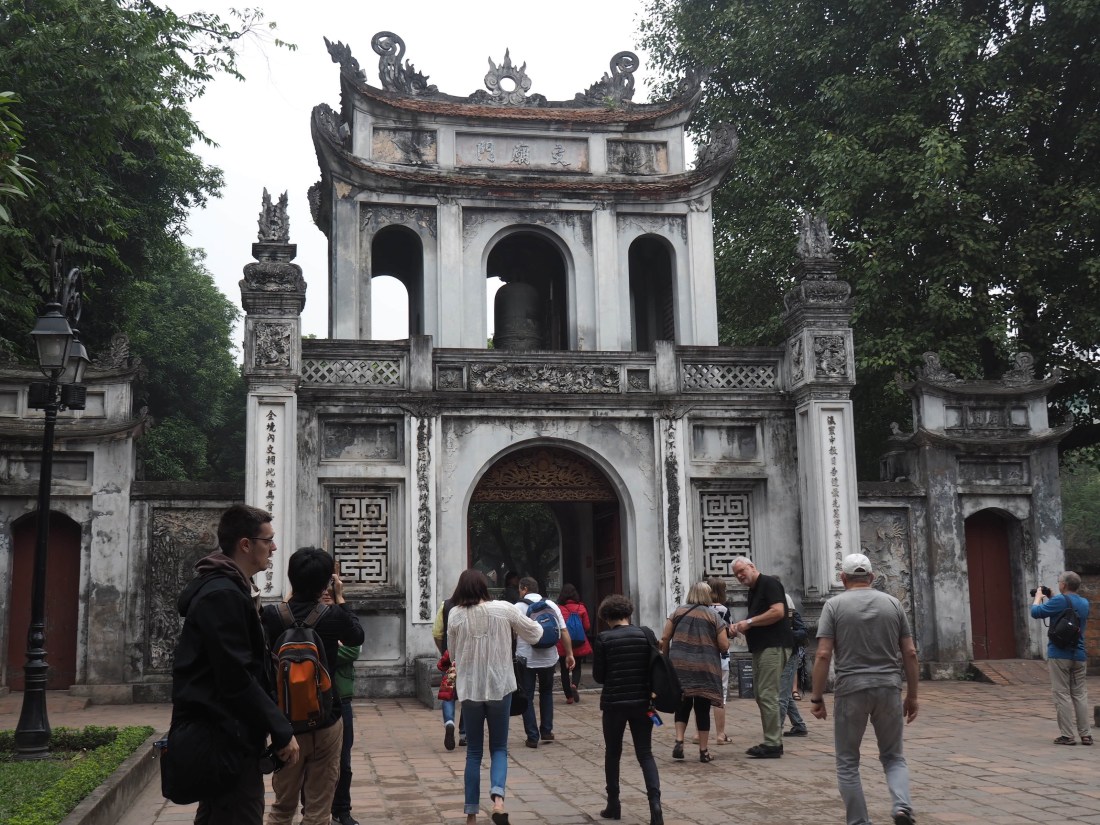
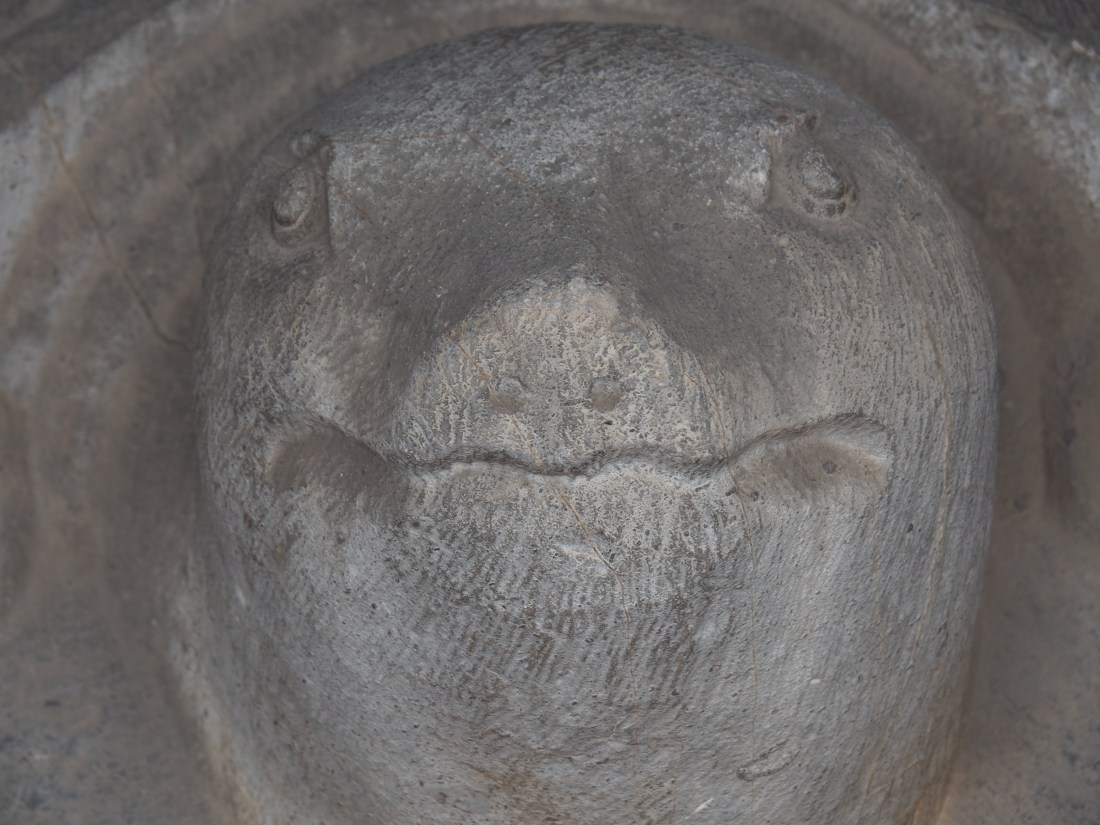
Learning has been revered in Vietnam for centuries. The temple is dedicated to Confucius, sages and scholars, and hosts the Imperial Academy, Vietnam’s first university. Scholars were awarded the degree of Doctor upon completing their studies. In 1484, Emperor Le Thanh Tong erected 116 stelae of carved blue stone turtles to honor talent and encourage study. Turtles are one of the nation’s four holy creatures (others are Dragon, Unicorn, and Phoenix), and is a symbol of longevity and wisdom.

The stelae show the names and birth places of 1307 graduates between 1442 and 1779, and thus are a historical resource.

Over time, the style of the turtles changed, and some have different faces and feet. I was particularly taken with this one, who seems to have a satisfied smirk on his face.
Children come here each year to “raise the incense” to honor the ancestor who founded their school. There was quite a ceremony with gongs and chanting.

Although the practice has been discontinued, who knows? Maybe one day a stelae will be erected with the names of these children!

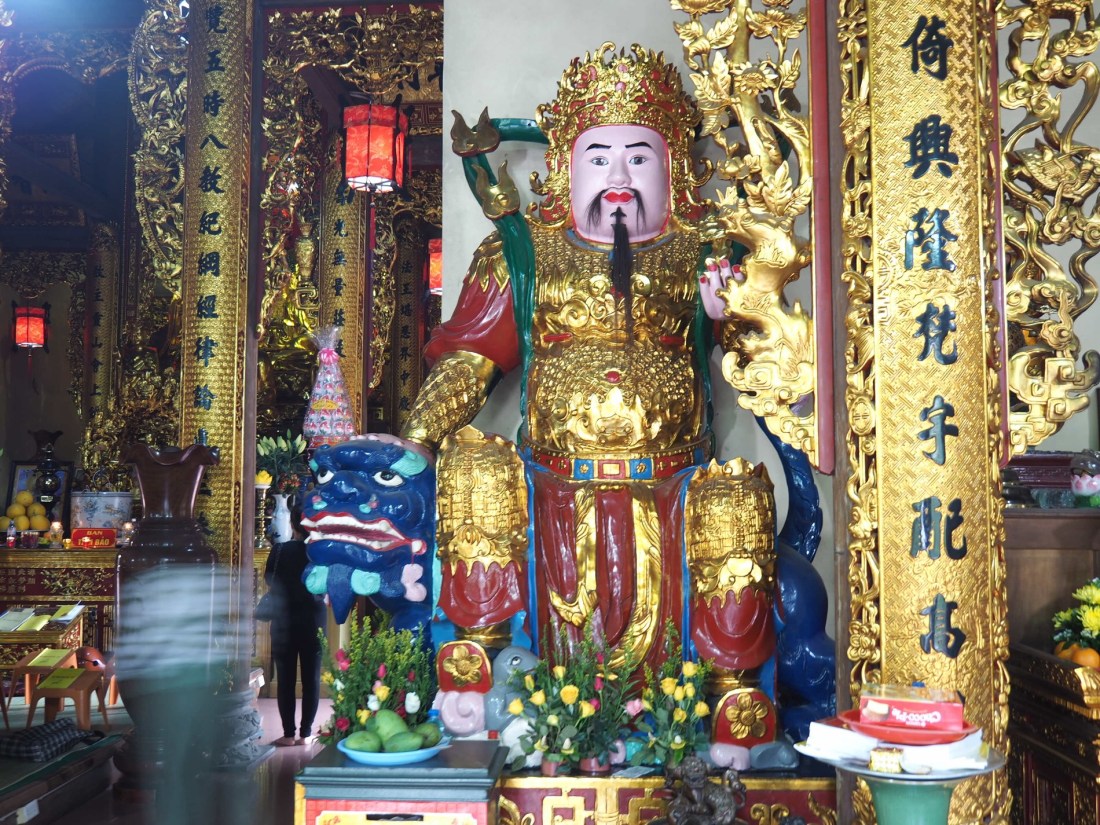
Behind the courtyard in which the children was found is a wonderful statue of Confucius.
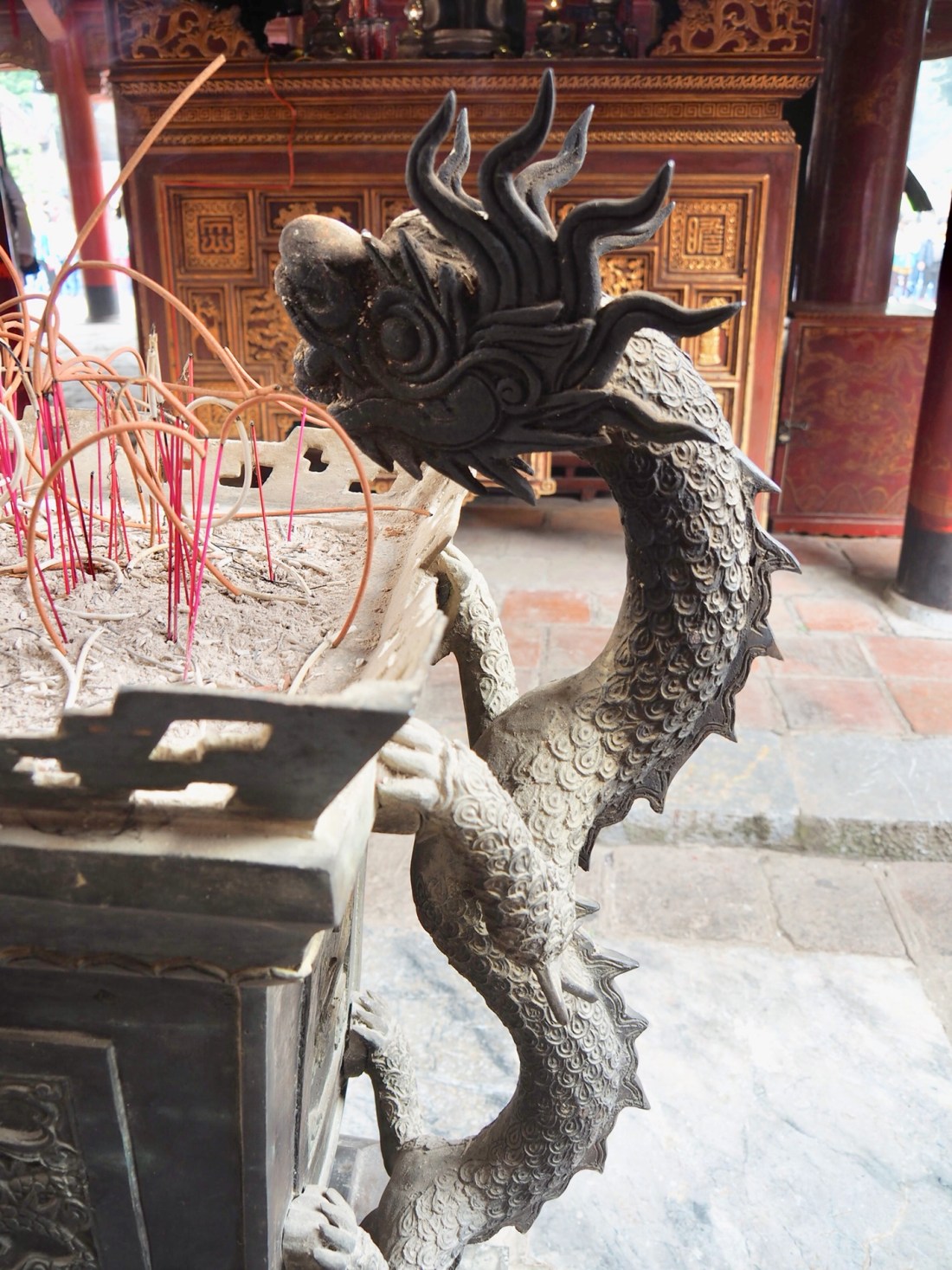
The entrance to this temple is guarded by two dragons who are twining up an incense burner. They seem to be catching the smoke in their mouths.

We later were to see many Buddhist temples, but this is the only one we have visited that honors Confucius. Clearly, learning has been revered here for centuries.

Mary

Written on board the Tanle Pandaw on the MeKong River 1/22/18

Posted from Saigon (aka Ho Chi Minh City) 1/29/18 because wi-if on the river wouldn’t allow me to upload to the blog!

One Pillar Pagoda, Hanoi

The Abbess told us that there were seven children in her family, and that she and her 5 sisters became Buddhist monks or nuns. The one son converted to Catholicism. He has 5 children, all of whom have converted to Buddhism. She entered the monastery at age 13, and now, at age 63, is head of the monastery we visited.

She rises at 4, worships for an hour, then has breakfast, followed by an hour of meditation and 2 hours during which she preaches. Lunch is followed by a siesta, and the afternoon is taken up with management. Lights out at 9.

The monastery, One Pillar Pagoda, has obviously prospered under the Abbess’ leadership. She has rebuilt the main altar building and added an orphanage. People bring the children they cannot support and leave them at the gate. There are two new infants who were just left there, plus another 15 pre-school age children. All of them were taking their afternoon naps, watched over by several women, one of whom was cradling an infant who was fussing unhappily. There are 30 other children who go to school during the day. Children can stay until age 18. The Pagoda also takes in elderly homeless people, of whom there are currently another 15 or so.

(Sorry for the fuzzy pictures – my camera settings had gotten off kilter!)

The Abbess’ face is calm and unlined, and she appears both to be very happy and also serenely peaceful. She told us how happy she was to see us “because we have happy faces.” And she congratulated us on living in a “paradise”, which she has visited several times.

Asked for a blessing for a sick friend, the Abbess responded with a smile that the Buddha is everywhere, and simply asking for the blessing would cause it to be granted.

As we left, she stood erect in her saffron robes, gently waving goodbye, before she turned and went back to continue her day.

Typed 1/21/18 on the RV Tonle Pandaw, but not published at that time because of very weak wi-if.

Published 1/29/18 from Ho Chi Mihn City (aka Saigon)

Angkor Wat, Siem Reap, Cambodia

A lifelong desire to see Angkor Wat is what drove me to come to Cambodia this year. Yesterday, we visited two lesser temples, Bayon, and Ta Phrom (famous because of the movie “Tame Raiders”). But neither of these prepared me for the reality of Angkor Wat. It is 1 mile across in each direction, and took 20,000 people 37 years to construct. It was built in 1113 AD (also known as 1113 CE).

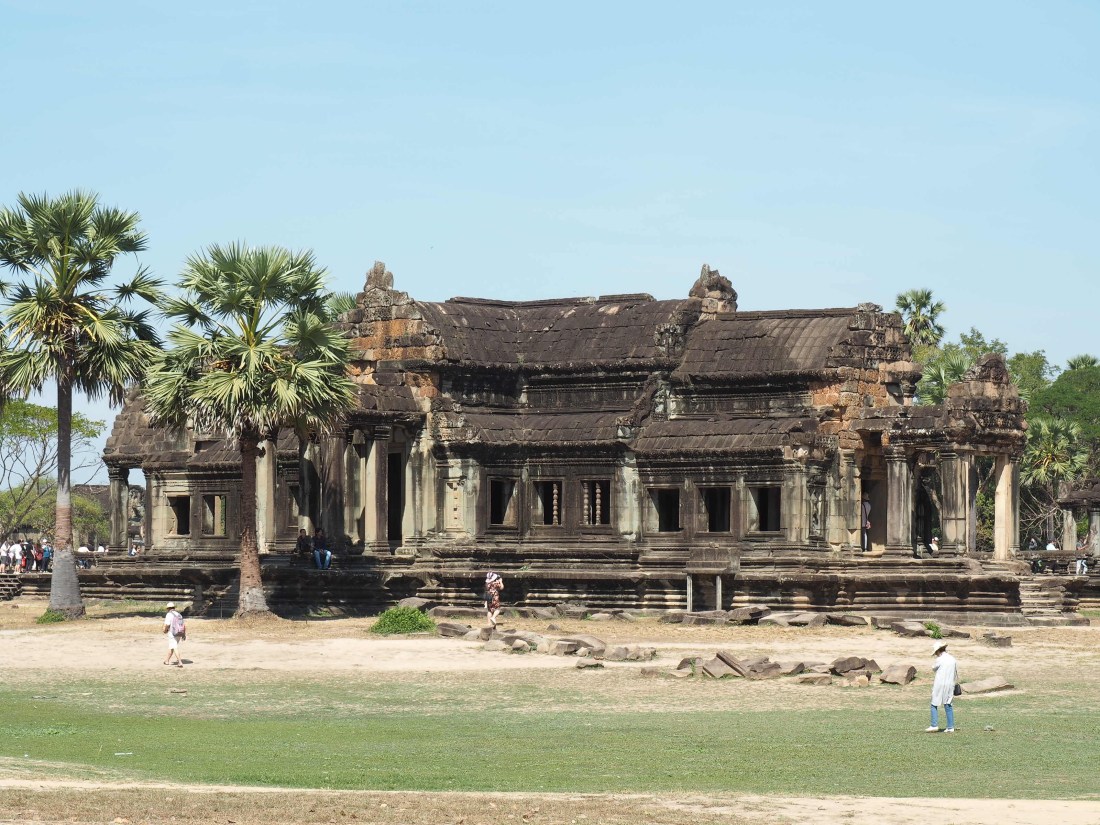
It is surrounded by a moat (which stabilizes the sandy soil) and a wall that is pierced by 4 gates, one on the west, one on the east, one on the south, and one on the north. But when you enter through the gate (we entered through the west gate ) you are faced with a large open space – not the huge temple you expected. Rather, there are two libraries,

And a large open space, intersected with paths, that lead to the temple itself. Current archeological investigation has determined that this open space was actually take up with a city – many houses, mostly of fairly wealthy or influential people, but also of the priests and their supporting staff.

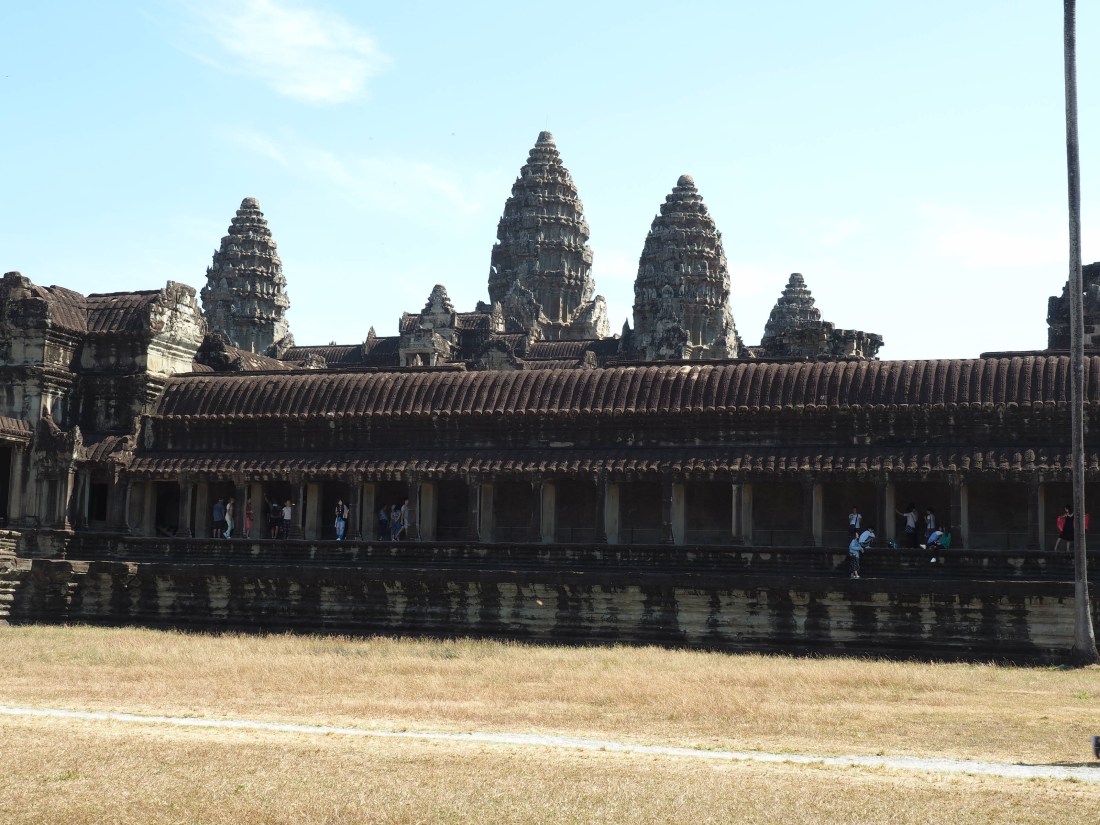
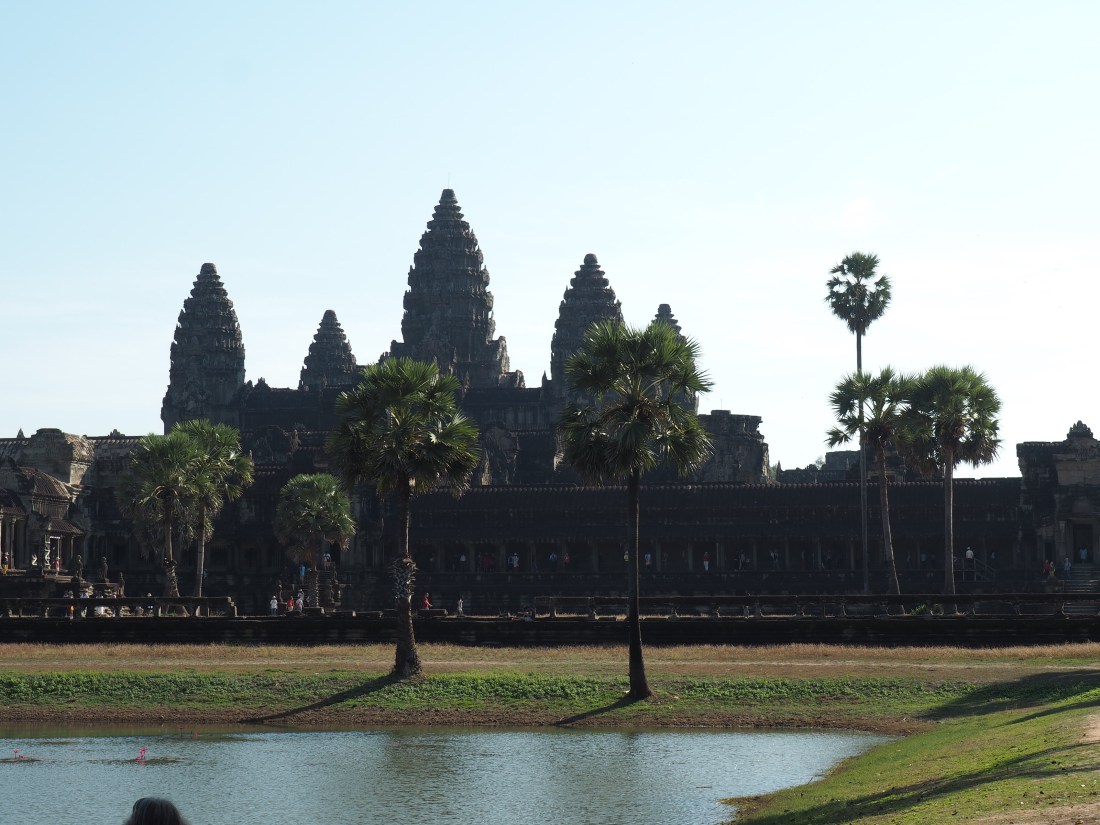
But your eye is always drawn to the temple itself:

And its towers. You climb up to the first level and discover a gallery which is home to spectacular carvings.
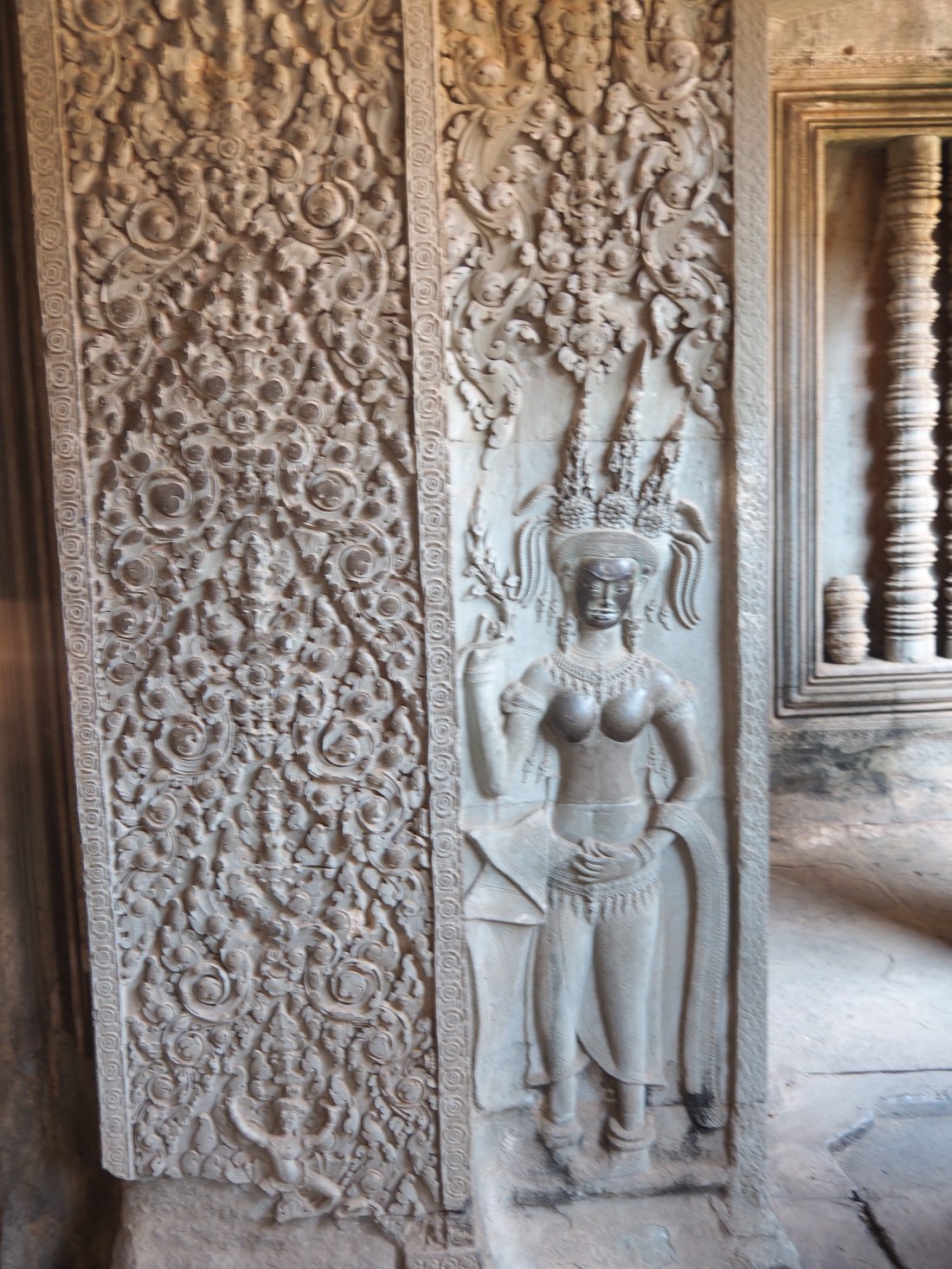
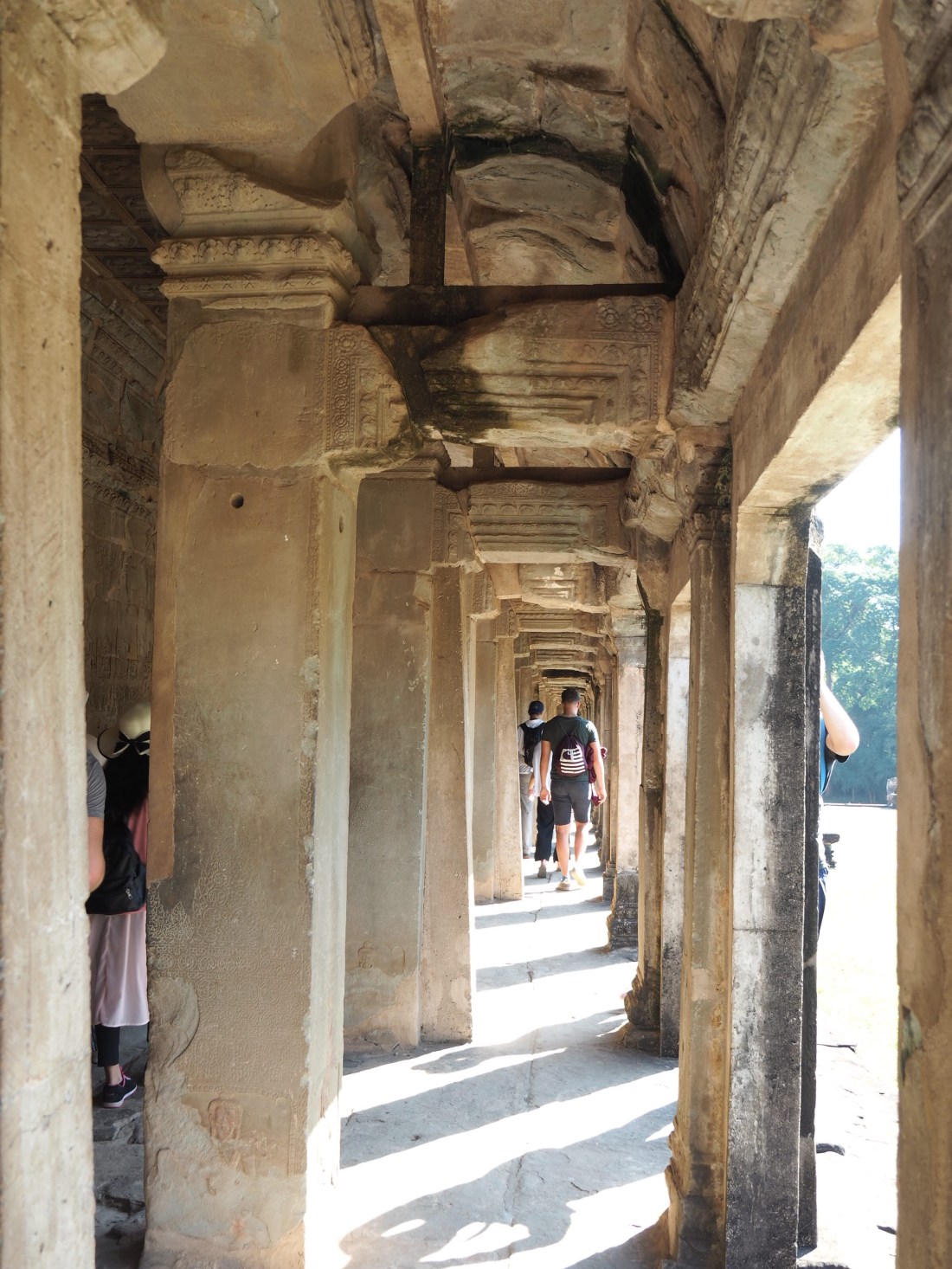
that cover every piece of sandstone. The temple is constructed to a volcanic rock cut in blocks and faced with sandstone, which is meticulously carved. Some carvings show what happens when you sin, others what happens when you don’t. (The penalties for sinning don’t bear thinking about).

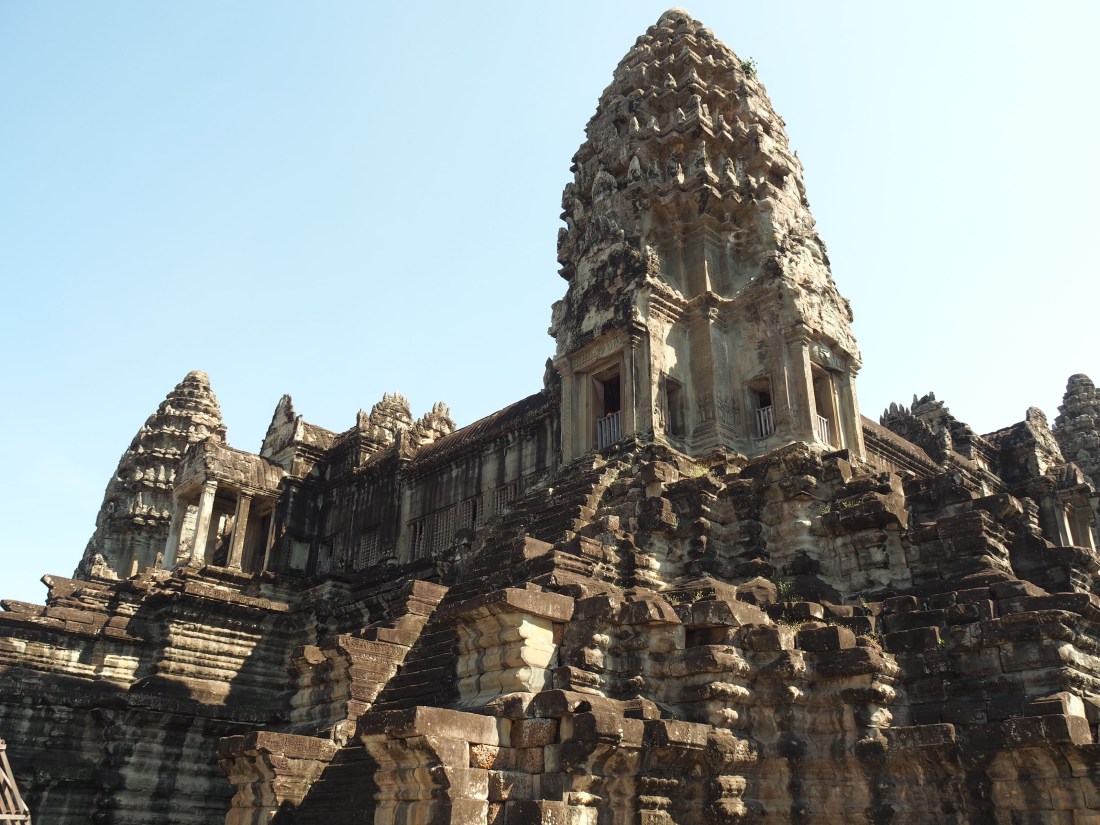
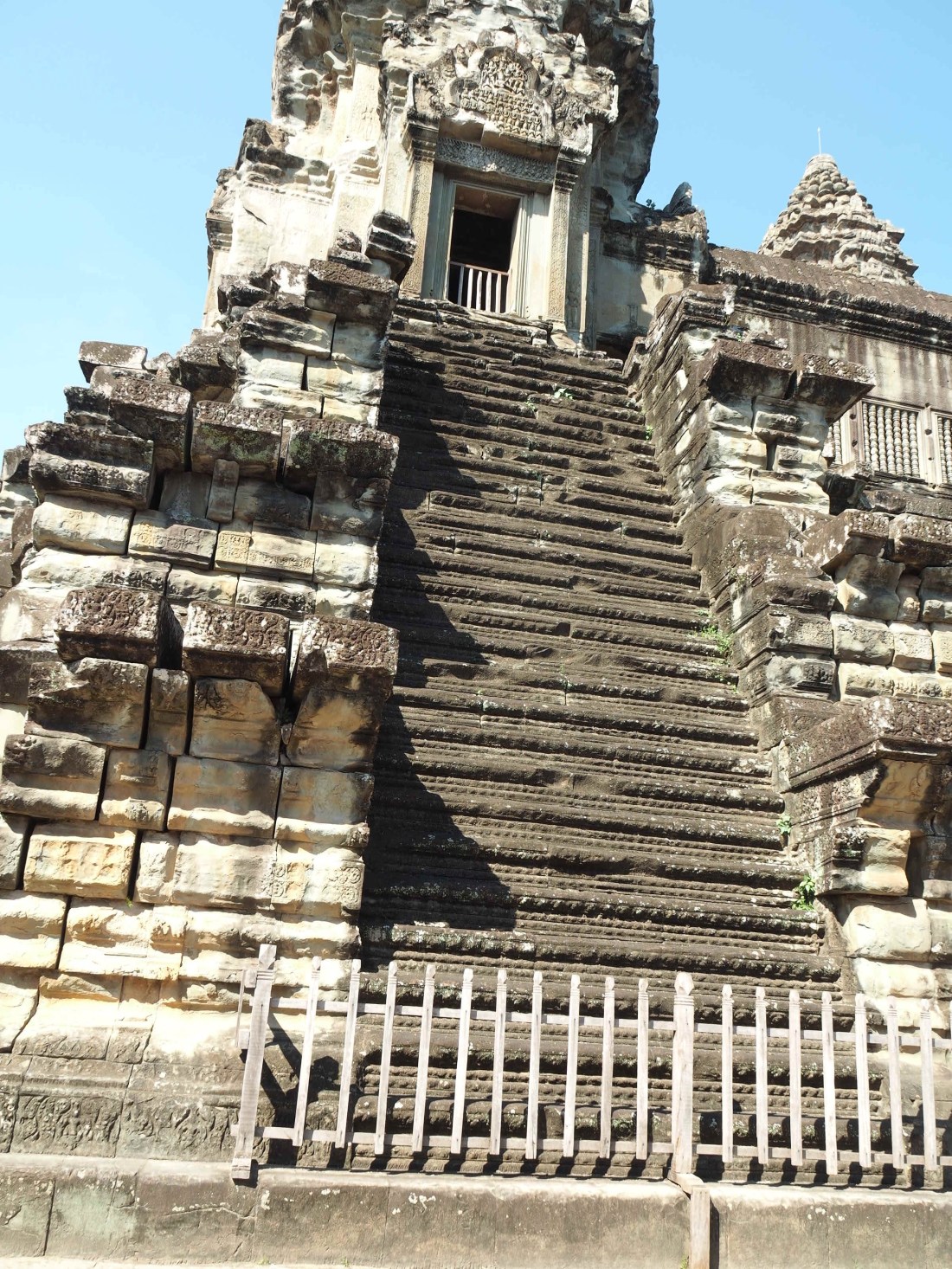
Climbing many steep stairs (no handrails) brings you to the second level, where you begin to see the temple details:

And the steps that worshipers used to get to the top level:

Which are closed now to tourists – it is said that they were negotiated by climbing on hands and knees – both upwards and backwards! We decided NOT to climb to the 3rd level – the steps are VERY steep and the wait to climb them is about an hour and a half.

But we greatly enjoyed investigating this level of the temple

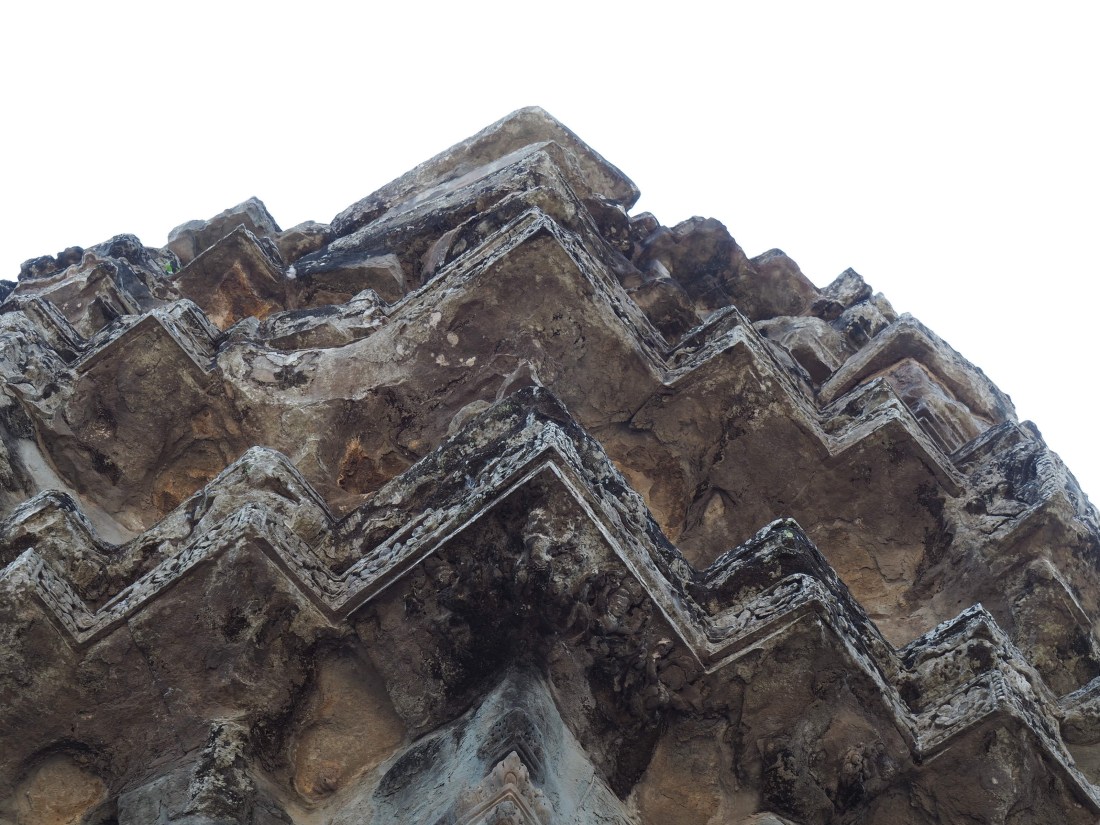
And pointing our cameras upwards to take in the details.

Then we climbed back down two wooden (modern staircases) and enjoyed one last look at Angkor Wat

M

Ma

Mary

Posted in Siem Reap, Cambodia 1/20/18

Organ Concert

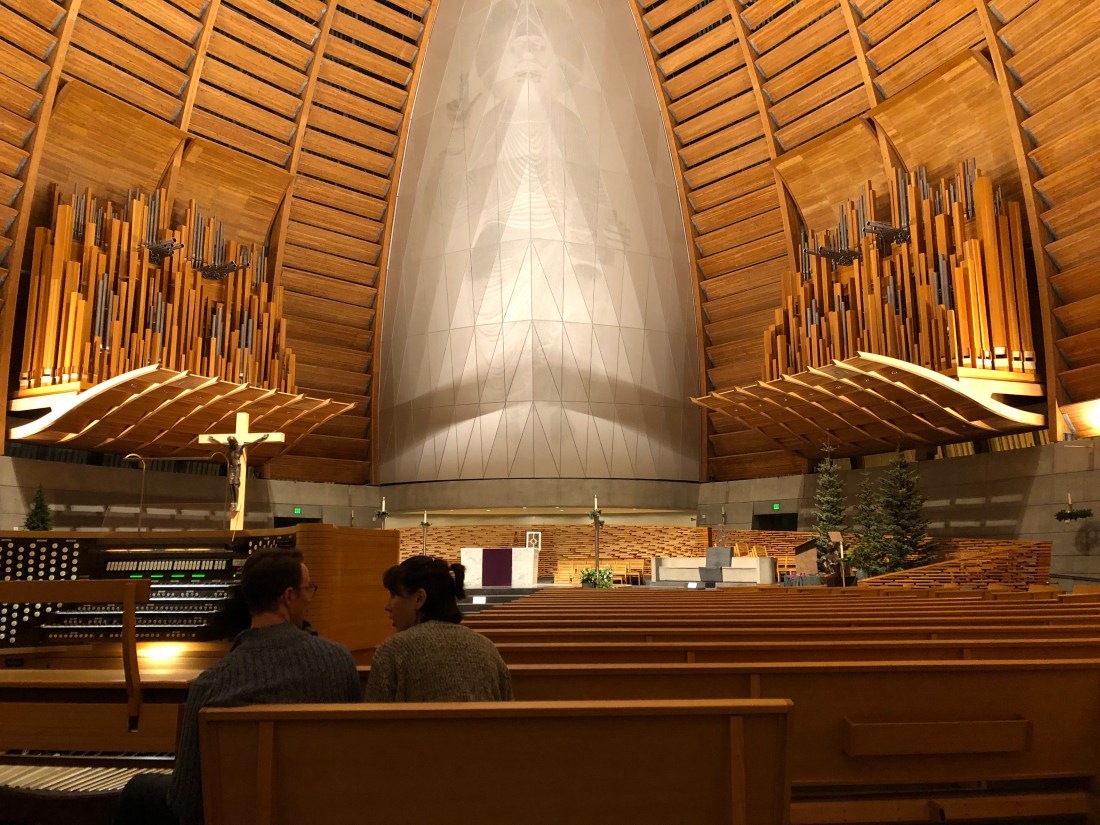
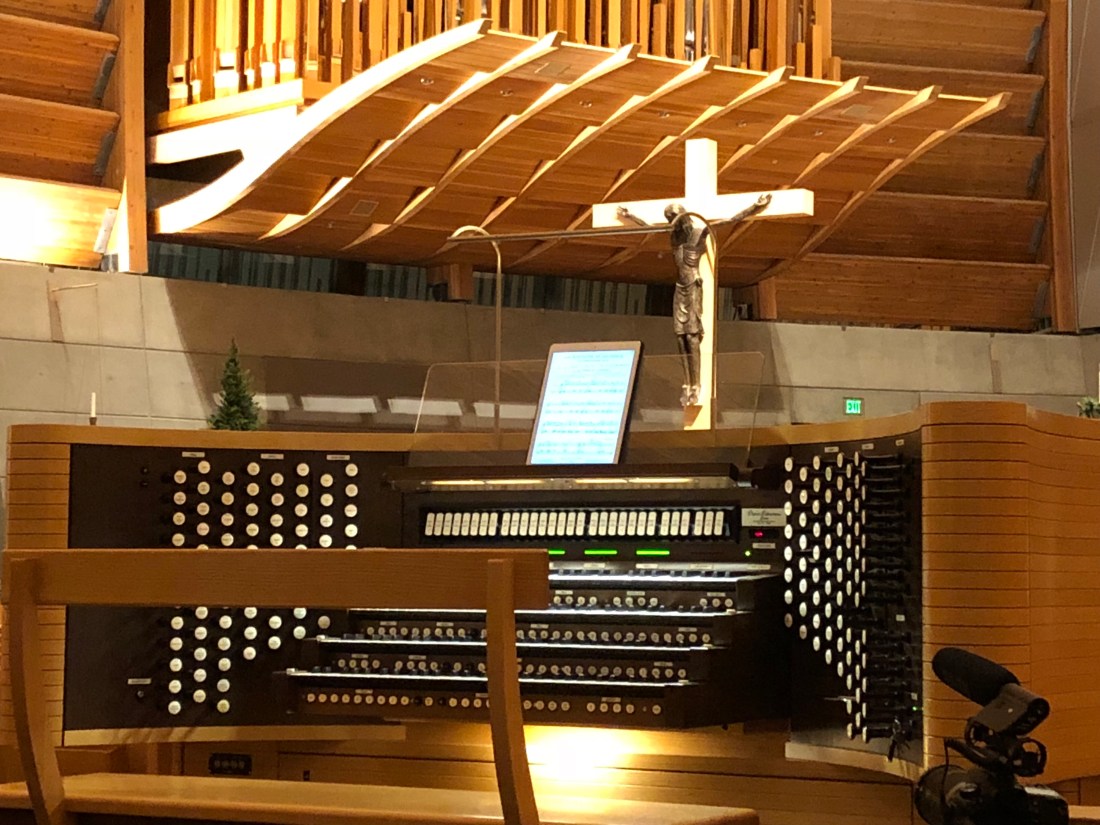
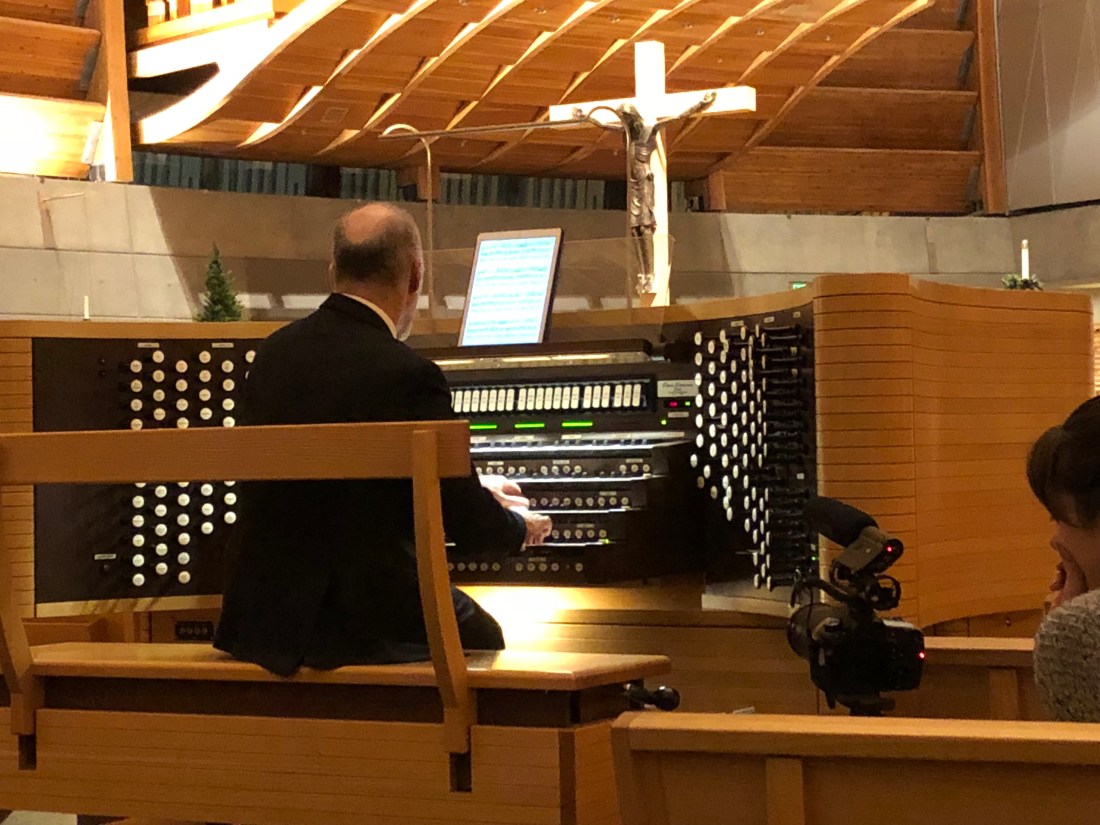
The Conroy Memorial Organ at the Cathedral of Christ the Light in Oakland is a magnificent instrument.

It consists of 5,298 pipes, controlled by four manuals for the hands and a set of pedals for the feet. It has 94 stops, and its longest pipe is 32 feet. When the organist accesses that pipe, you not only hear the note, you feel it, rumbling through your feet.

I had the privilege of attending a concert played on the organ by Jonathan Dimmock, in which he played a work entitled “La Nativite due Seigneur” – The Nativity of the Lord.

The work consists of 9 meditations on His birth including the music of the angels, and the adoration of the shepherds. It is truly a work that is best experienced in a cathedral like this where you are surrounded by the music and the light.

Posted in Berkeley 1/7/18