Bicycles

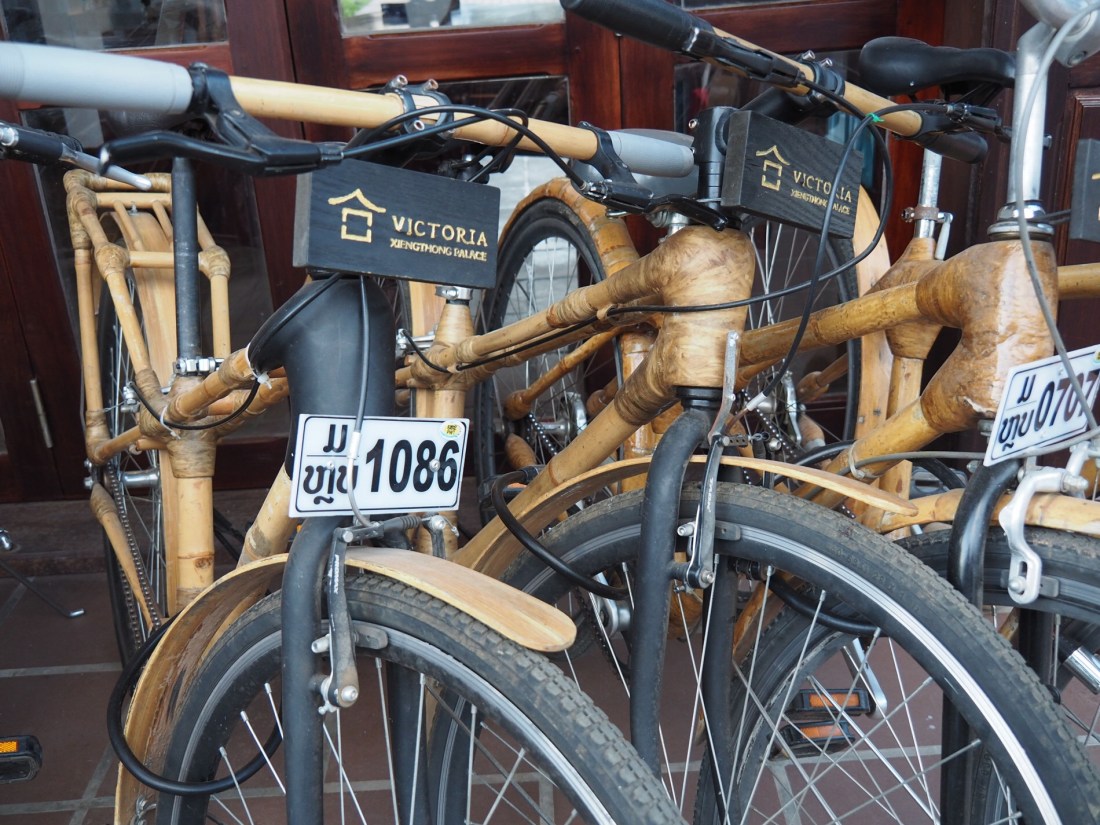
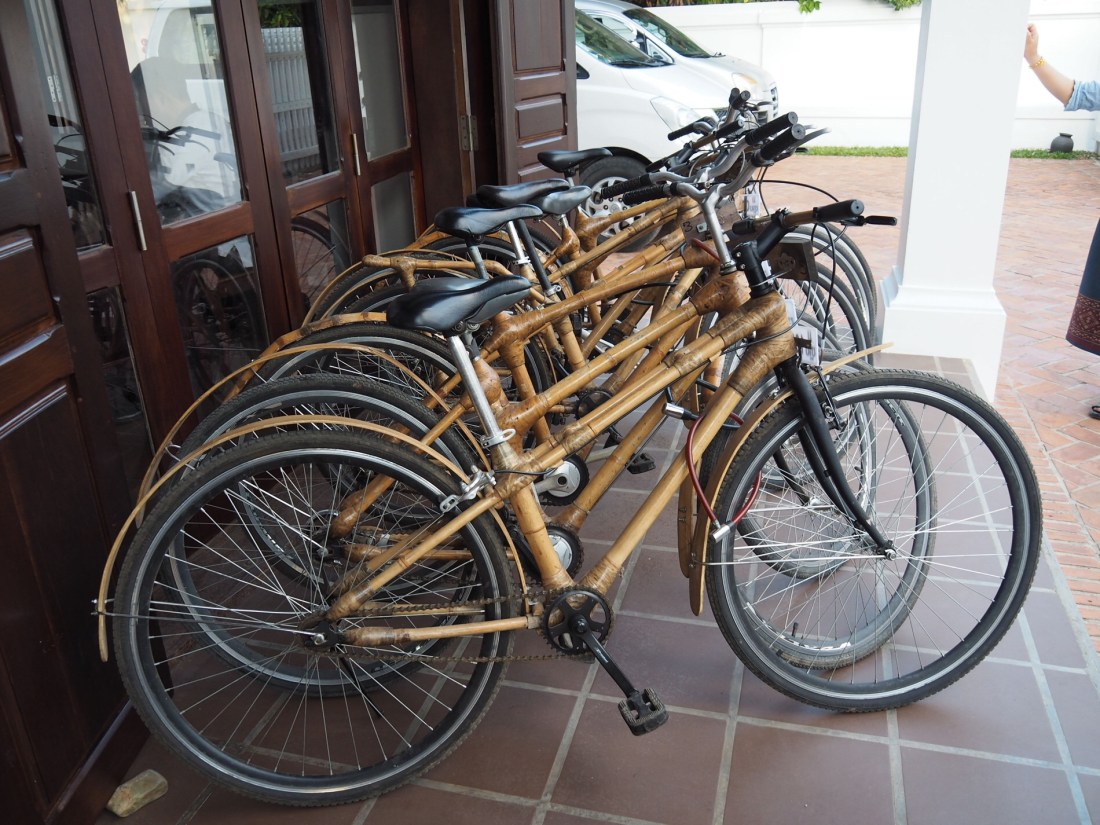
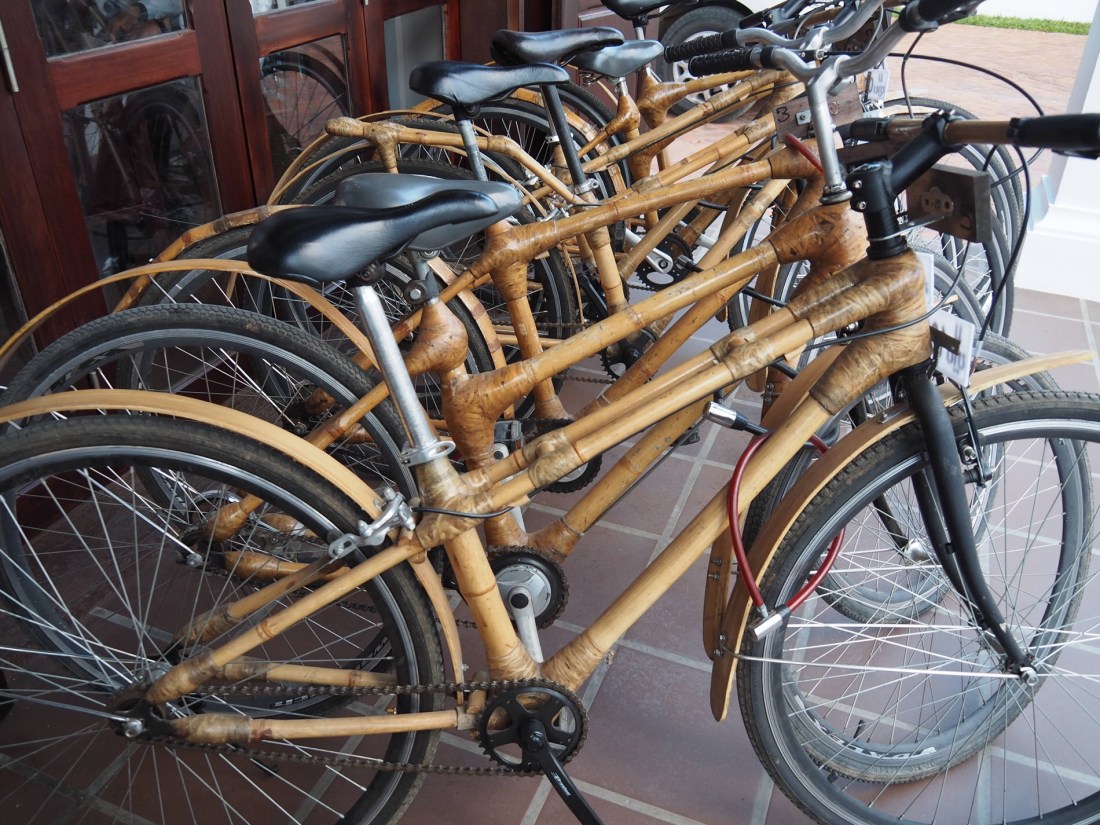
When we arrived at the hotel in Luang Prabang, we were met with an array of bicycles, which are provided for guests to use.

At first glance, they look like an ordinary bike

But close inspection reveals that the frames are made of bamboo!

Given that racers are always looking for lighter frames, and knowing that bamboo is both strong and light, I wonder if this is the next best thing in racing bikes?

Luang Prabang, Laos

2/1/18

Giving Alms

Giving alms is a tradition in many countries. It is felt that the giver receives as much merit as the recipient. You give what you can, but the merit is the same whether it is a lot or a small amount. In Luang Prabang, we are living next to one of the more beautiful temples, (there are apparently almost 100 in the city) and faintly hear the morning gongs at 4AM. The monks get up to worship and meditate, and then, at about 6, they go through the streets begging for their breakfast. They walk barefoot, carrying their begging bowl.

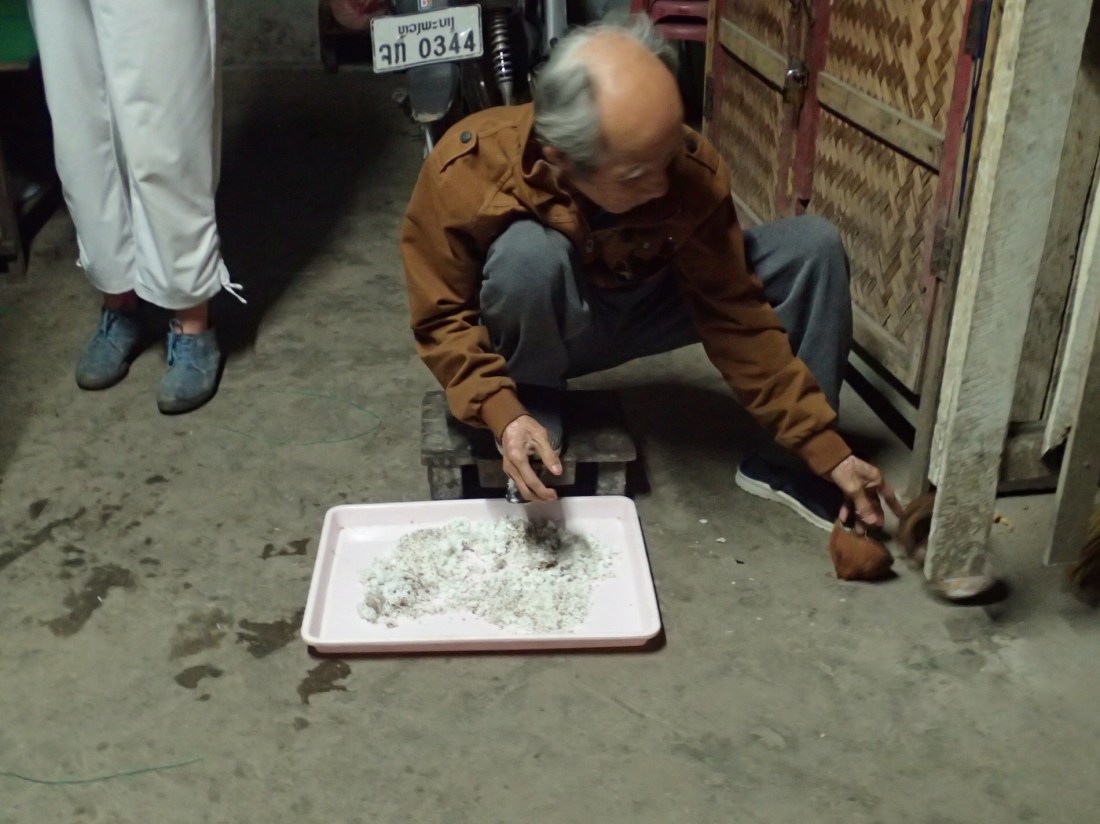
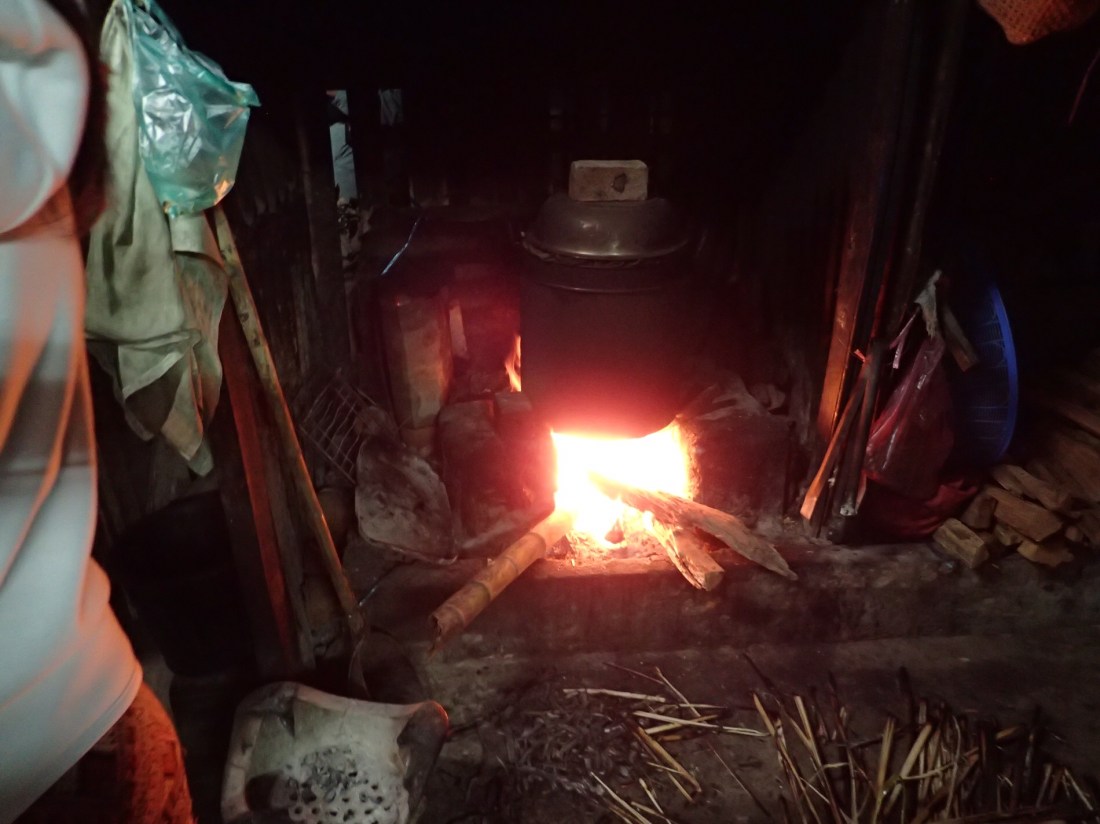
We got a little more sleep: We arose at 5, left the hotel at 5:30 and walked through the sleeping town, hearing only the sounds of roosters, and seeing only early risers – women sweeping their steps, and a man grinding coconut and cooking sticky rice over an open fire. His wife combines the coconut and the rice, and makes cakes, which she then dries in the sun to sell. The husks of the coconuts are used for fire another day. (We have learned that here, nothing is wasted.)
Soon, we come to a row of little seats set on a woven mat, with baskets in front of them, topped by a shawl.
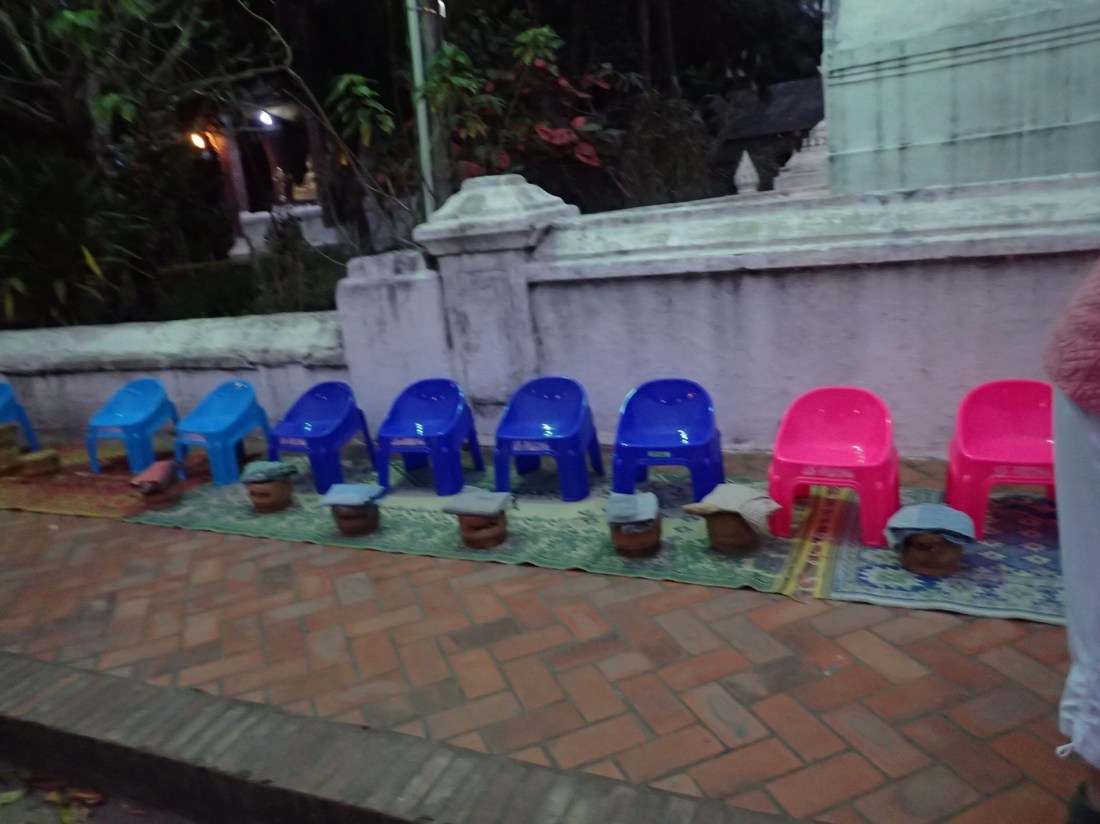
We are instructed to remove our shoes, and helped to wrap the shawls around ourselves. Then, we remove the lid of the basket and start to make little balls of sticky rice, placing them in the upside down lid until it is full. Then we put the balls back into the basket and replace the lid, so as to keep the rice warm.

We wait patiently, and then we hear drumming from the temple, and soon a line of monks arrive. Each pauses in front of you briefly, and holds his bowl so that you can drop in one of the balls of rice.
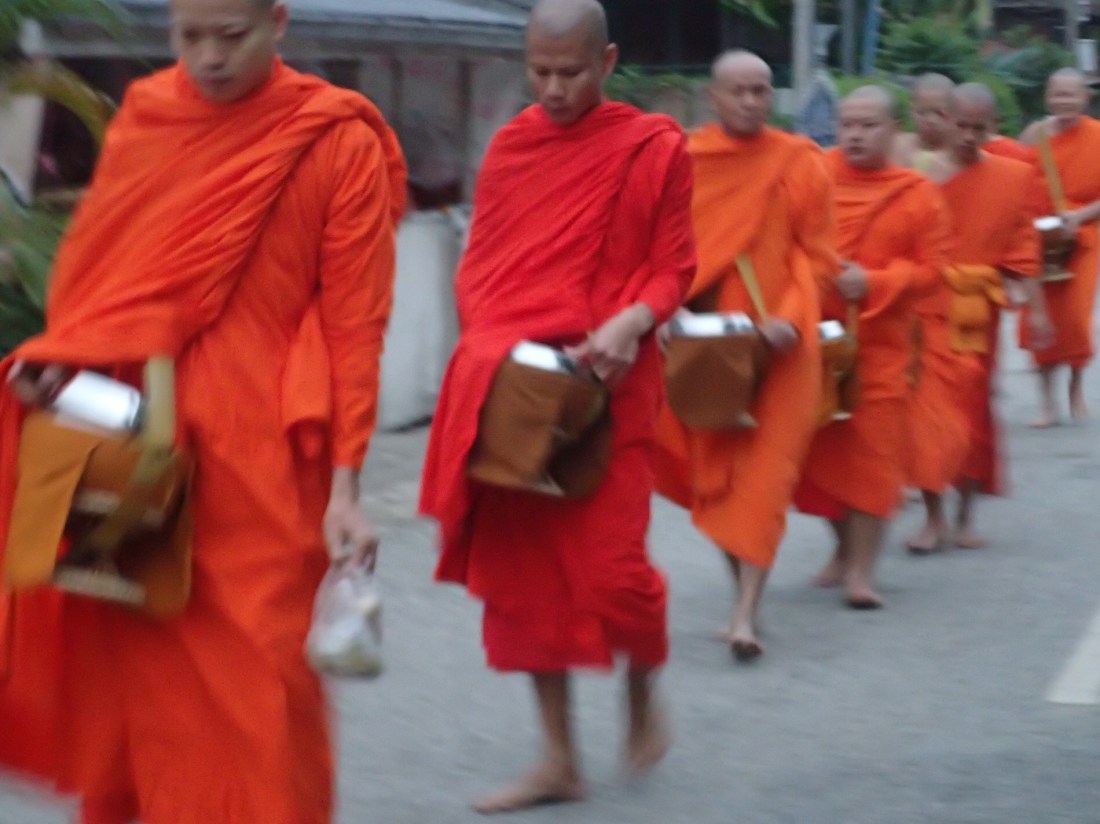
Soon, more monks arrive and we run out of rice balls, then frantically dig in the basket to pinch together a few grains of rice to deposit into the bowls.

We are not the only people giving alms. Local townspeople have also congregated to give rice. Some of them also give small bananas and also wrapped cookies or candies, or cooked food.
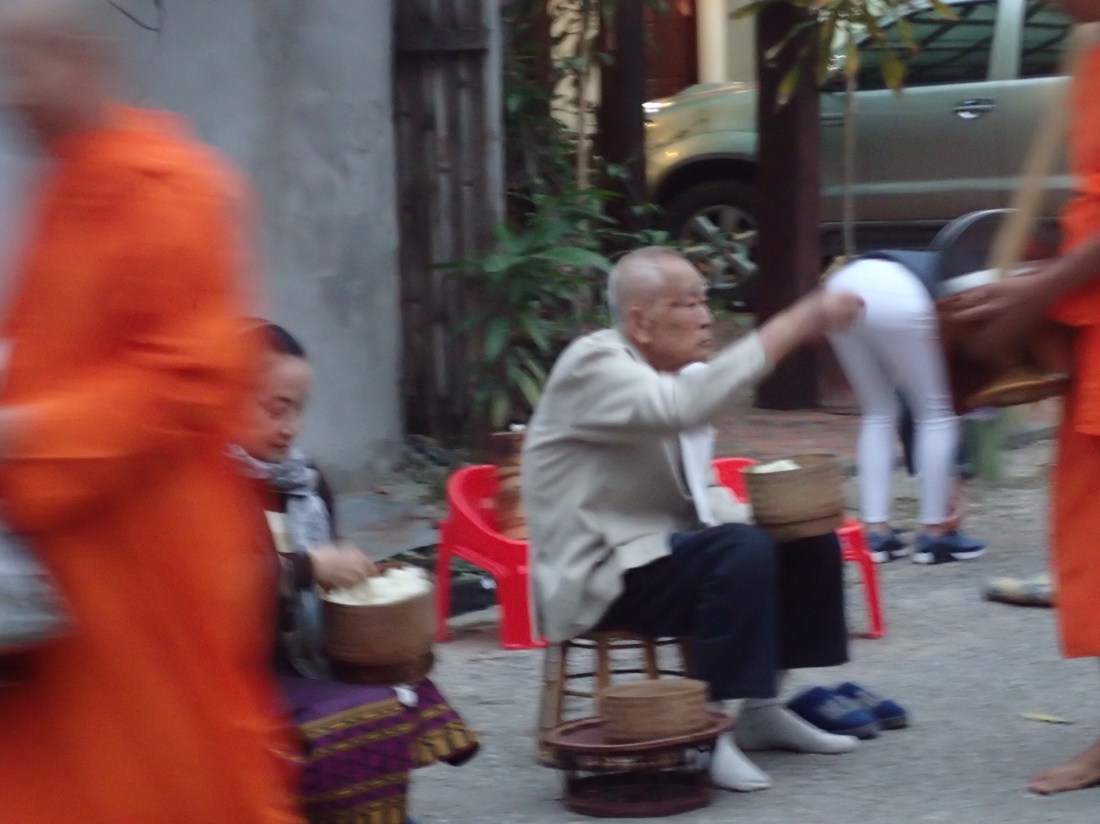
Some of the monks are elderly, but there are also young novices – young boys can enter the monastery at 9 or 10. Most of them are very thin. We learn that the monks eat only twice a day – breakfast in the morning after they return from begging, and then lunch. After that they can drink, but not eat. This must be really difficult for the young men. We all know how much growing boys can eat!
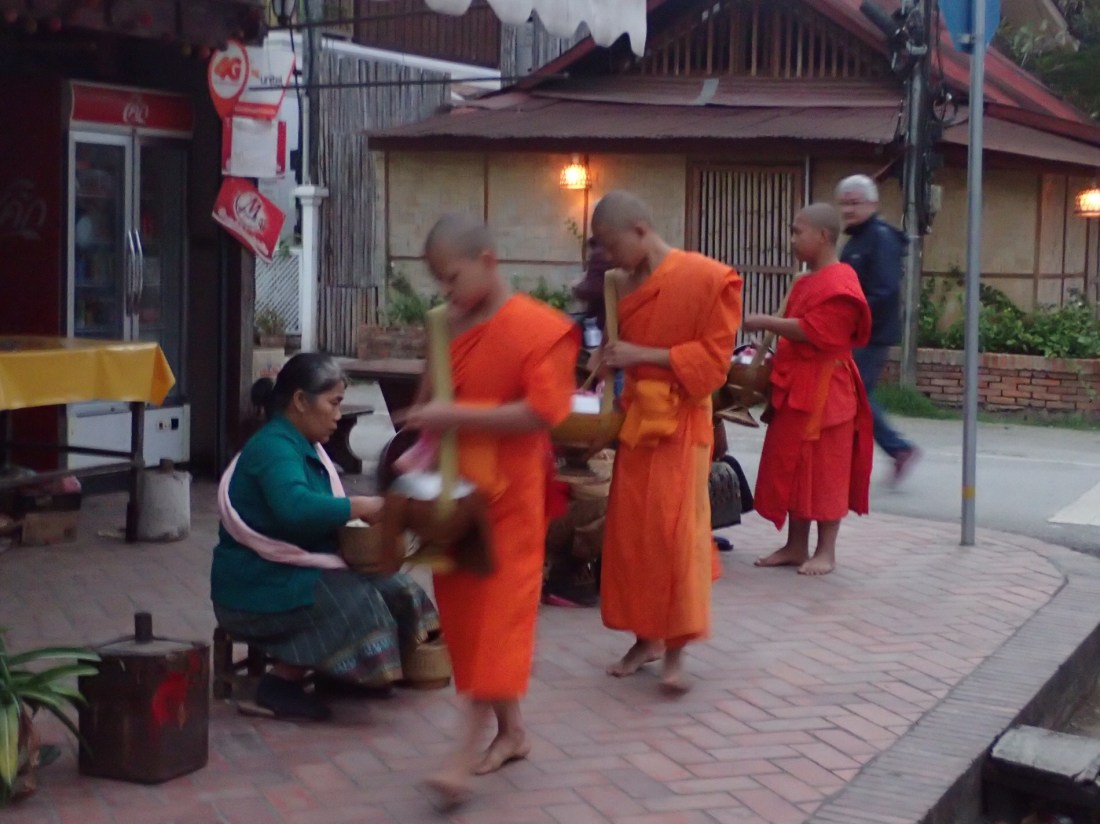
When we are almost out of rice, we gather together the balance into one basket and take it into the temple, where a monk receives it and gives us a blessing.

We go back to the hotel, eagerly awaiting our breakfast, which is obviously a lot less meager than that of the monks!

With apologies that some of the photos are out of focus – the monks move quickly! – posted from Luang Prabang, Laos 2/1/18
Rules for Crossing the Street

In the countries we have been visiting, the vehicle and pedestrian traffic is very heavy, and crossing the street safely is a serious challenge.

Here are the rules we were told to follow:

• Whenever possible, wait until a local person looks as though s/he wants to cross the street in the same direction. Squeeze in behind that person as though s/he were a best friend.

• Realize that vehicle drivers view traffic lights as ‘indications’ not ‘requirements.’

• Step off the curb as though you know what you are doing.

• DO NOT close your eyes – keep them open so as to know when someone is bearing down on you on their scooter, and hope that they realize you are firm in your decision to cross here.

• DO NOT stop – you might hesitate a bit if the driver seems intent on ignoring you, but always keep moving slowly.

• DO NOT run, and DO NOT turn around and reverse direction.

• And above all, PRAY that following all of these rules will see you safely across the street.

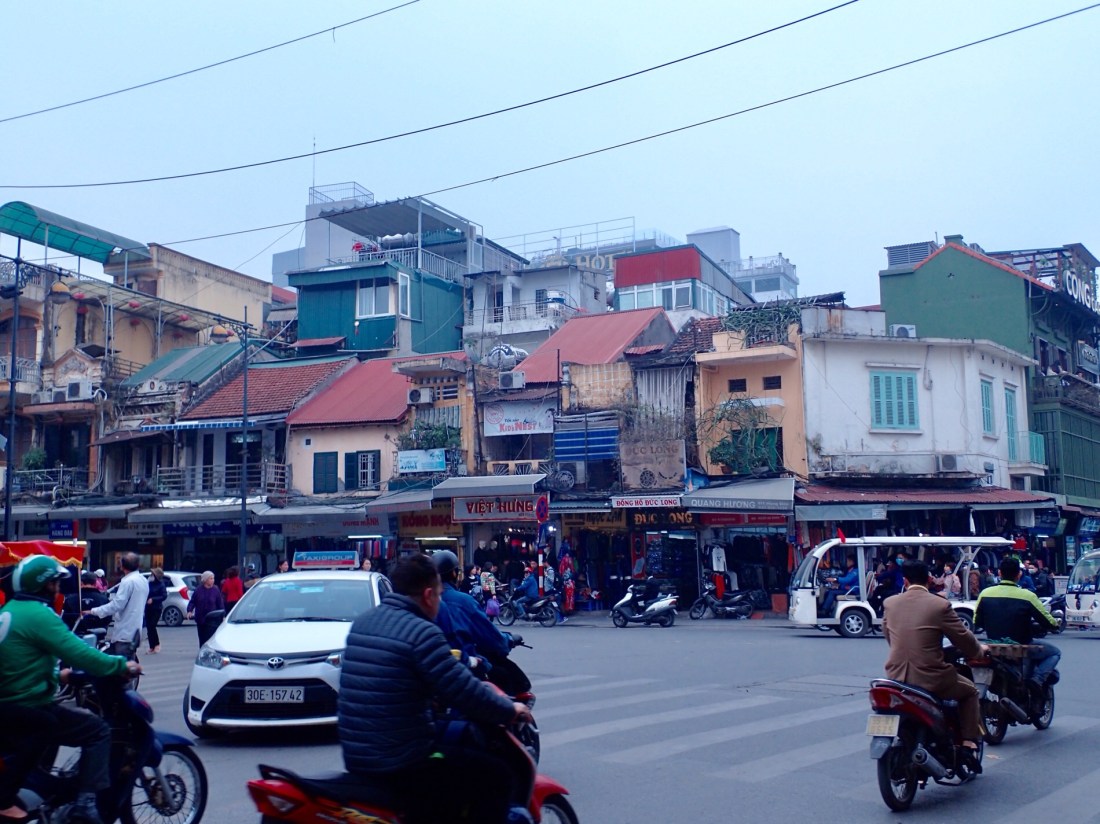
The picture below displays what you see from street level. Yes, people are traveling in diverse directions, criss crossing each other’s paths, and yes, there are cross walks, but they more honored in the breach than in the observance….

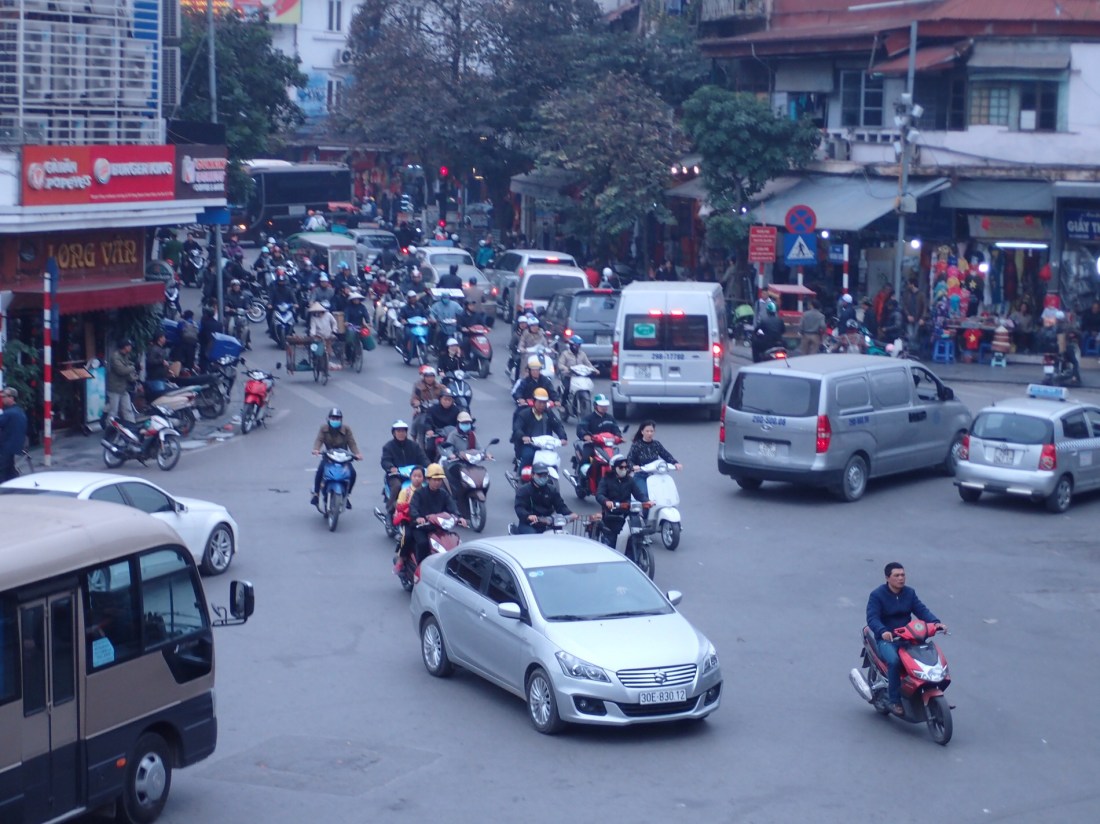
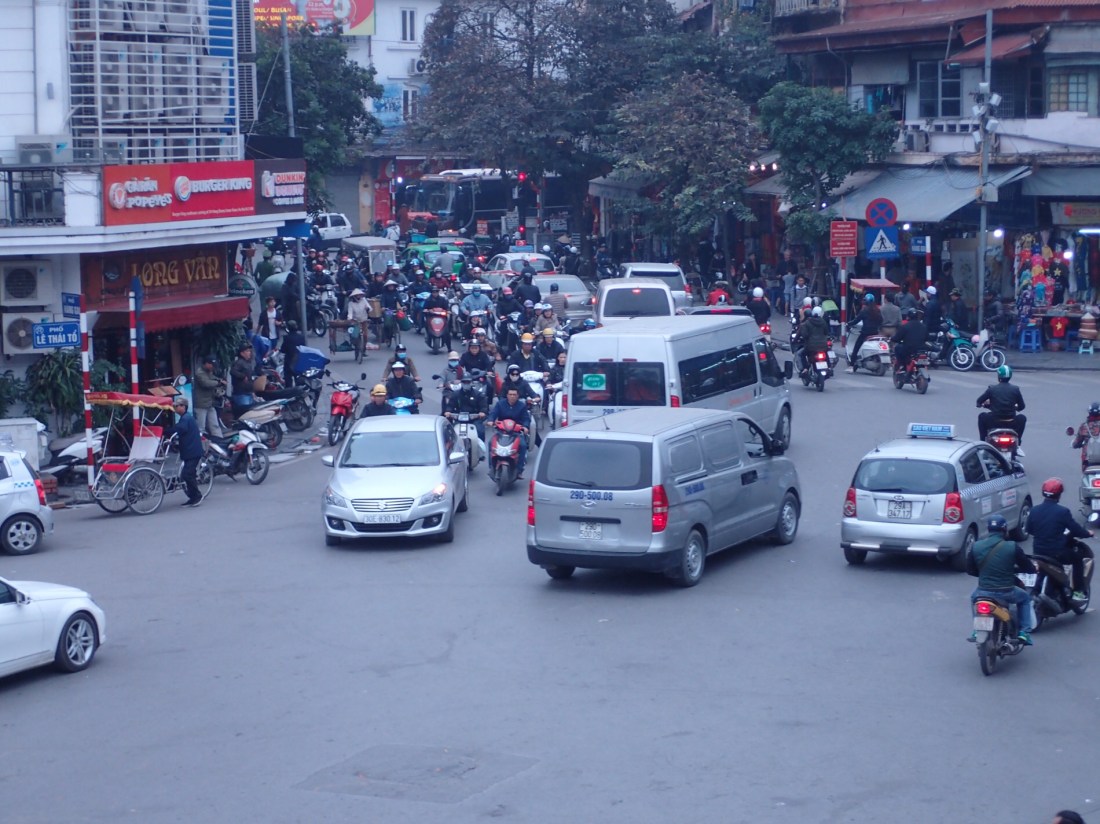
The following pictures show you what the street looks like from above (we had repaired to a third floor beer garden to fortify our nerves after crossing the intersection you see)

Pictures taken in Hanoi, Vietnam, but the same scenes are repeated everywhere. Happily, traffic in Luang Prabang, which we are currently visiting, is not so heavy, there are fewer cars, more bicycles, and bigger gaps between vehicles. This makes for much fewer frayed nerves….

Published from Luang Prabang, Laos 1/31/18, during an afternoon off.

Water Puppets, Ho Chi Minh City, Vietnam

We were treated to a water puppet performance in Ho Chi Minh City (aka Saigon). Water puppets apparently originated in the rice farming areas of Vietnam. During the break between harvesting one crop and planting the next, the villagers took to carving puppets and using them for telling stories.

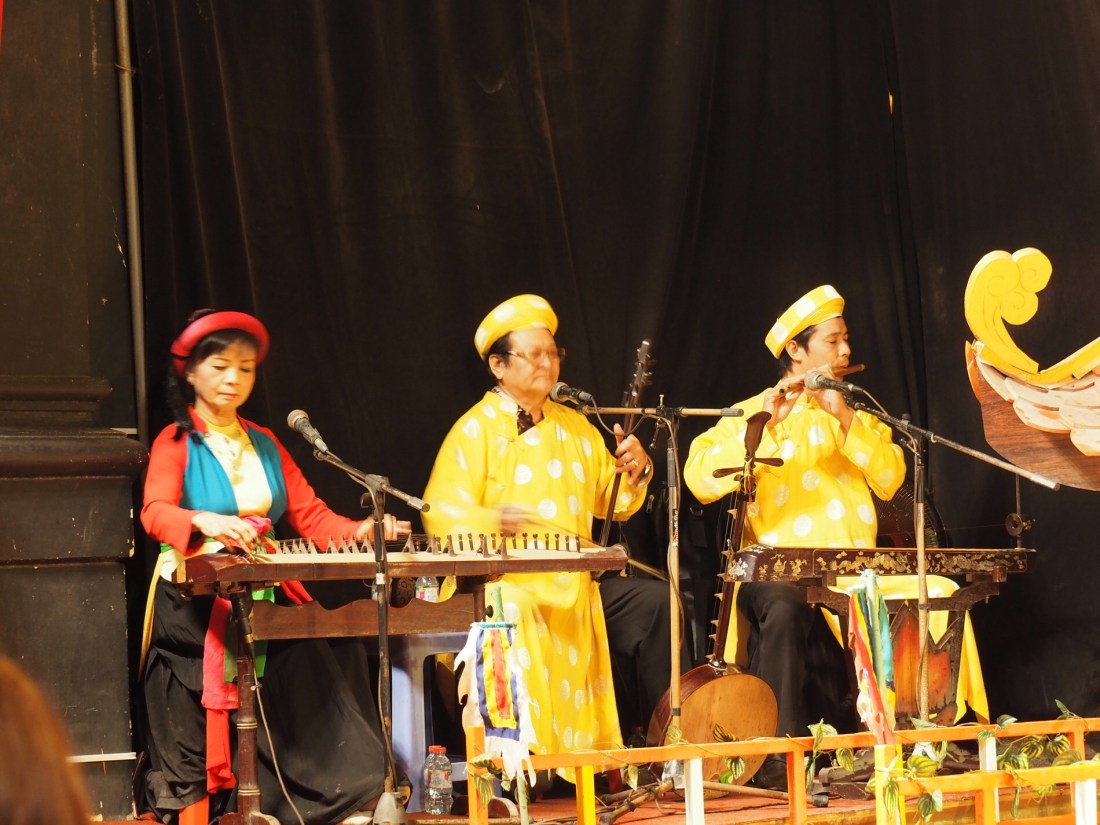
The performance we saw was set to live music, and there were a total of 6 musicians playing traditional instruments.

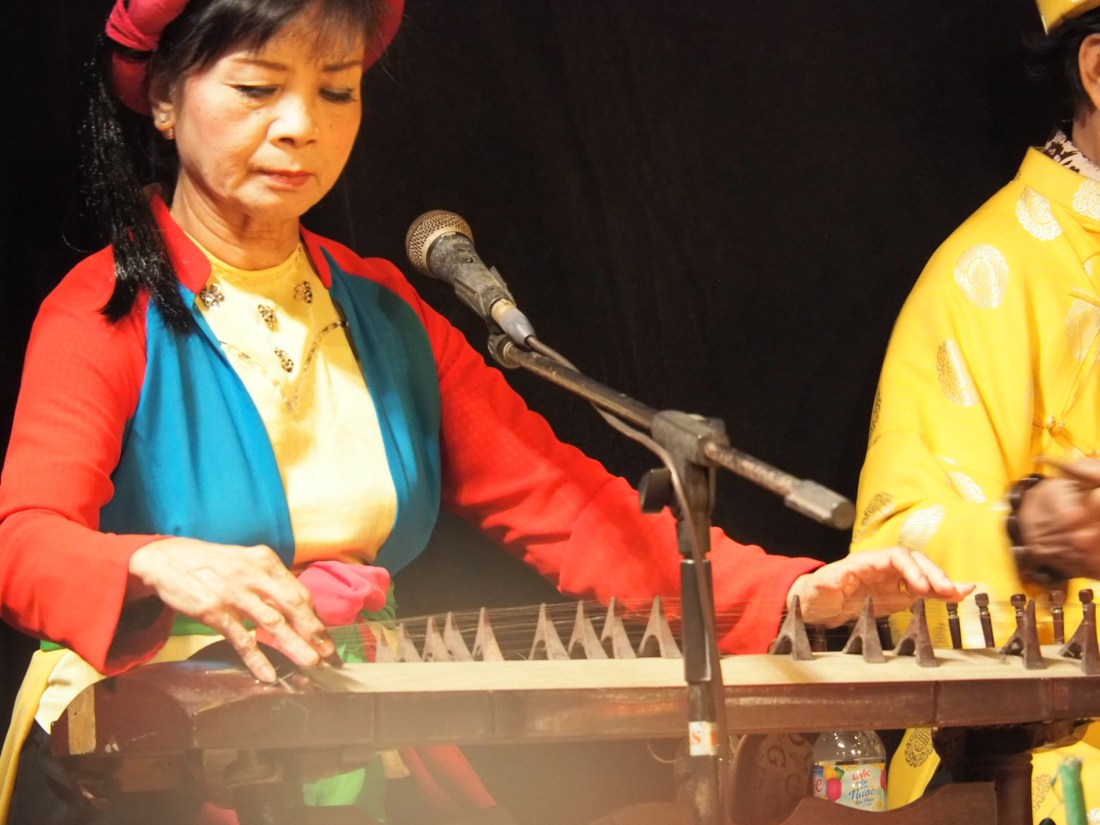
I was particularly interested in the woman playing an instrument net that faintly resembled a dulcimer

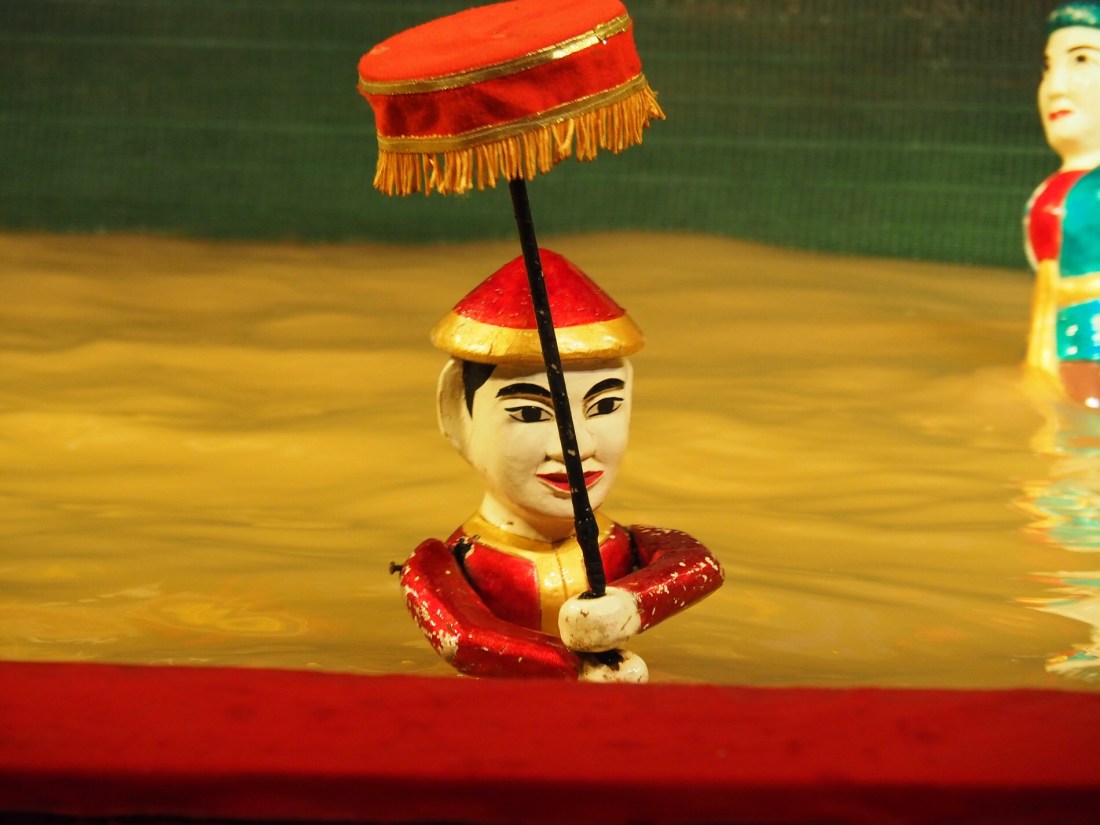
The performance consisted of a series of vignettes – some of village life, some of mythical animals. In one sequence, the king appeared riding in a dragon boat, preceded by his attendants.

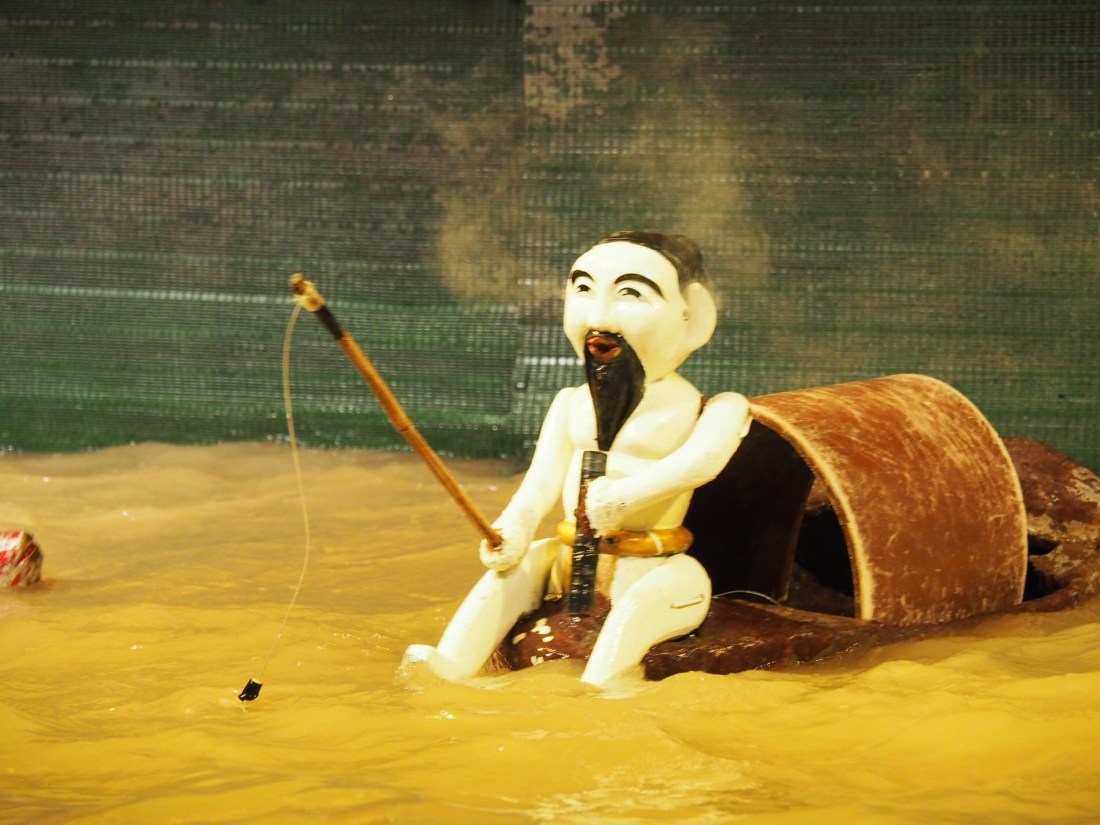
In another, an elderly gentlemen perched in his sampan sailed by fishing and smoking his cigar.

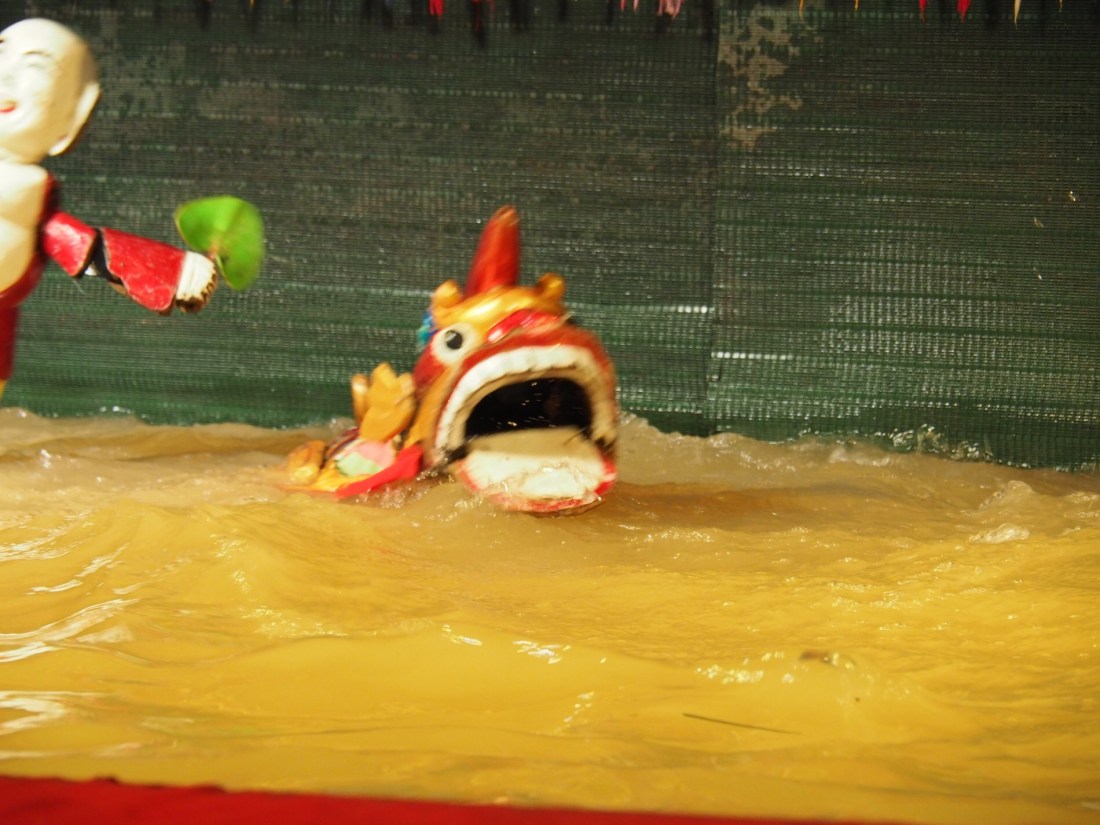
There was also a fearsome fish who chased people and other water creatures

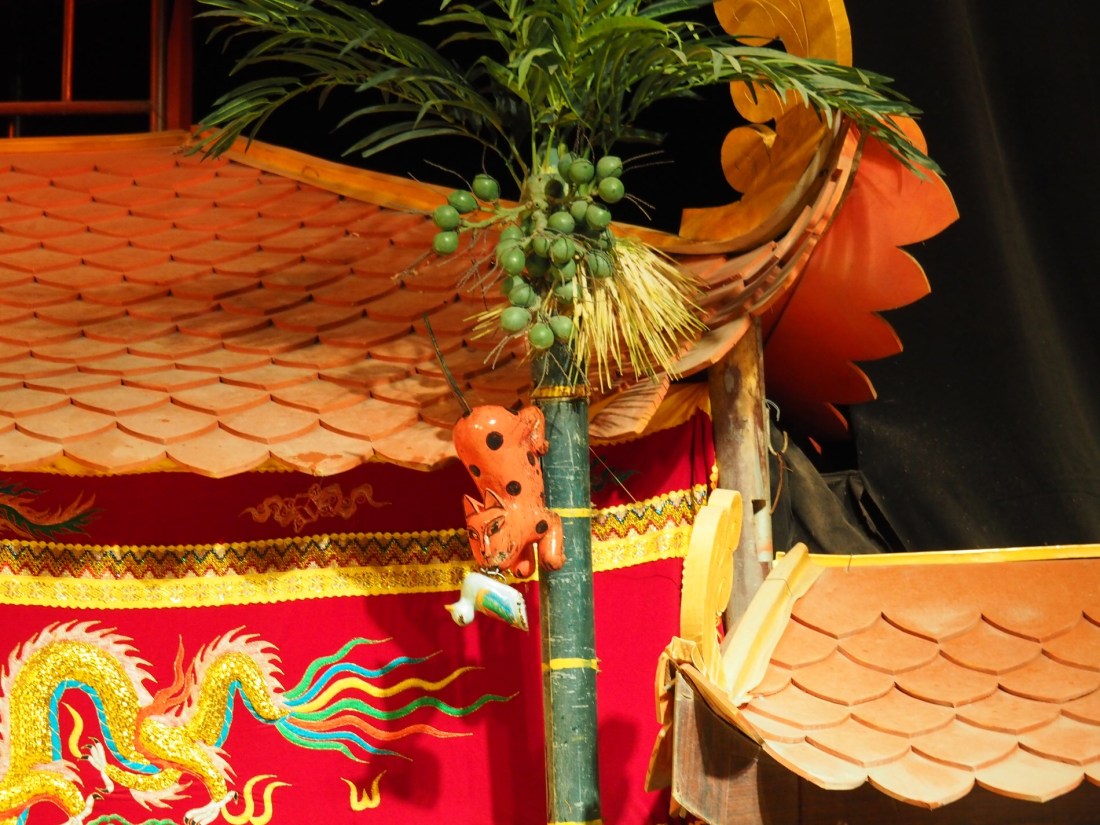
and scared a cat up a tree!

And as the grand finale, there was a fire breathing dragon!

Great fun was had by all. Although there was no dialogue, we got all the jokes, laughed at the right times, and applauded enthusiastically at the end.

Posted 1/31/18 from Luang Prabang, Laos
Street Vendors, Hanoi, Vietnam

We arrived in Hanoi a day before the rest of our group, and we set out to do some exploration. One of our friends wanted to shop (she is a professional shopper, we decided) and knew of a street that offered silk. While she shopped, I and another friend (In Ja) surveyed the business being carried on on the sidewalk.

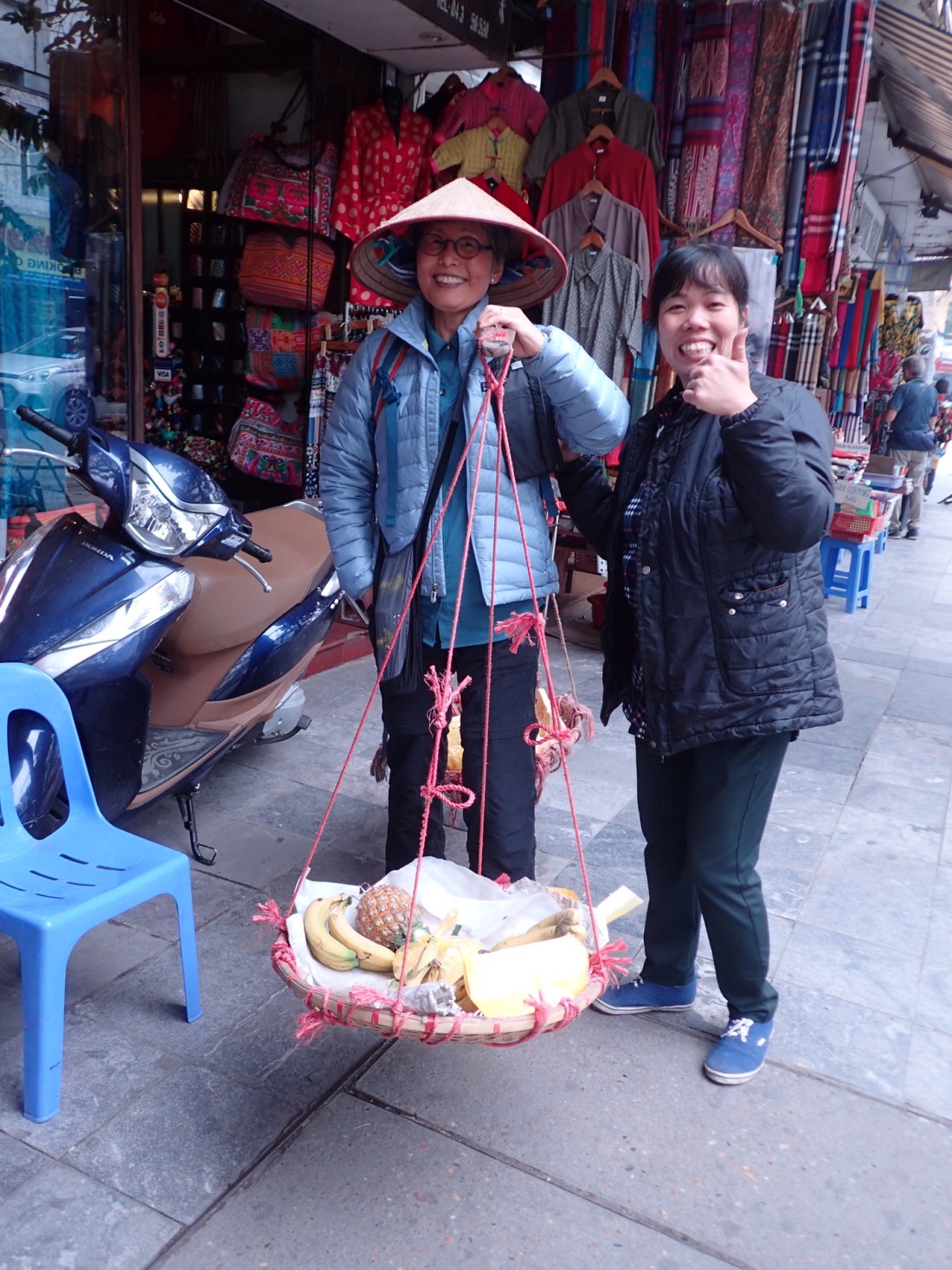
Many women carry their business, literally, on their shoulders, as In Ja is demonstrating in this picture, with the vendor standing by.

I did not realize how heavy the pole is until I tried to stand holding it for more than just a minute or two (My professional shopper friend, Joanne, is standing to my left, watching in amazement.)

This woman was selling bananas and pineapple, which we bought (but we didn’t eat the pineapple – it had already been peeled, and the rule is not to eat something you haven’t peeled yourself).

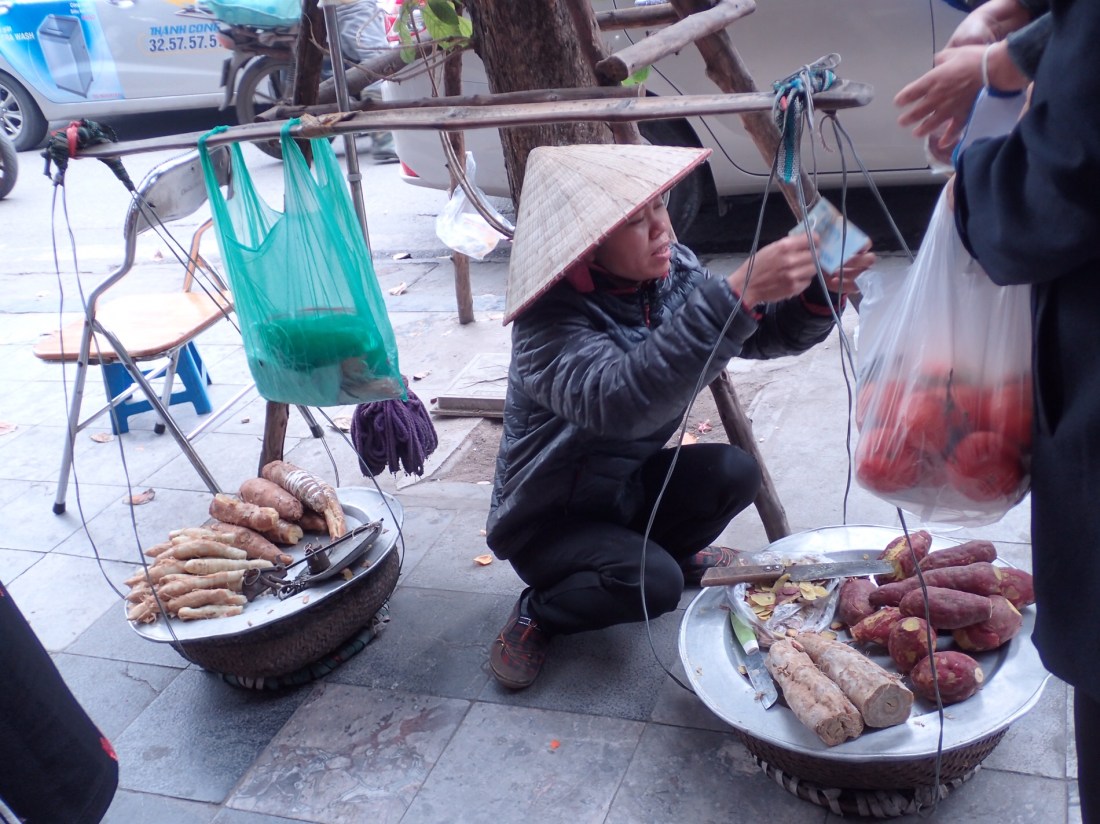
The “carrying pole” is made of bamboo, and two trays hang from it. The wires supporting the trays are stiff, so when a buyer signals that something on one of the trays looks good, the vendor sets down the entire outfit, and is ready to deal.

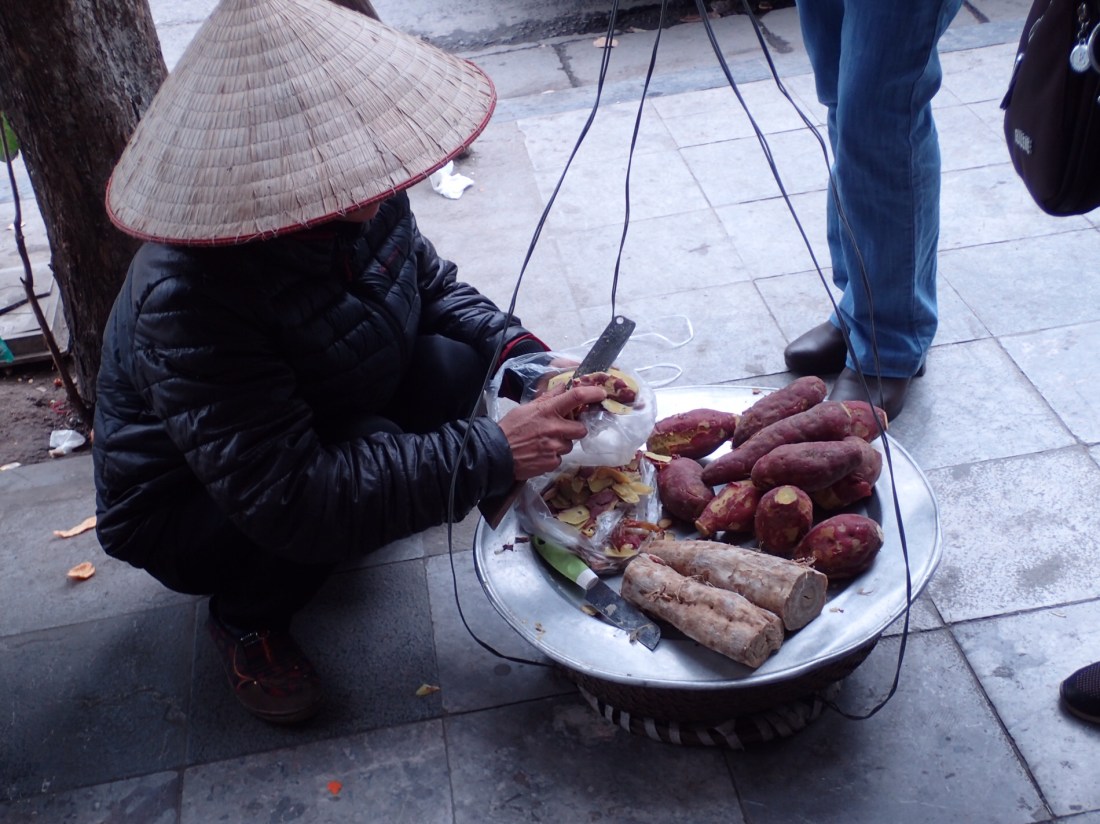
This vendor was selling roasted potatoes and taro root, and she peeled the potato for the buyer, before handing it over to be consumed on the spot.

This woman did a brisk business for several minutes. Then, when no more customers came along, she stood up, shouldered the carrying pole, and set off in search of the next buyer.

Posted from Luang Prabang, Laos 1/31/18
Mekong Engineering

We visited a Cham village while on the Mekong Delta, south of Phnom Penh. The people are Muslim, which is unusual in this country where the majority of people are Buddhist.

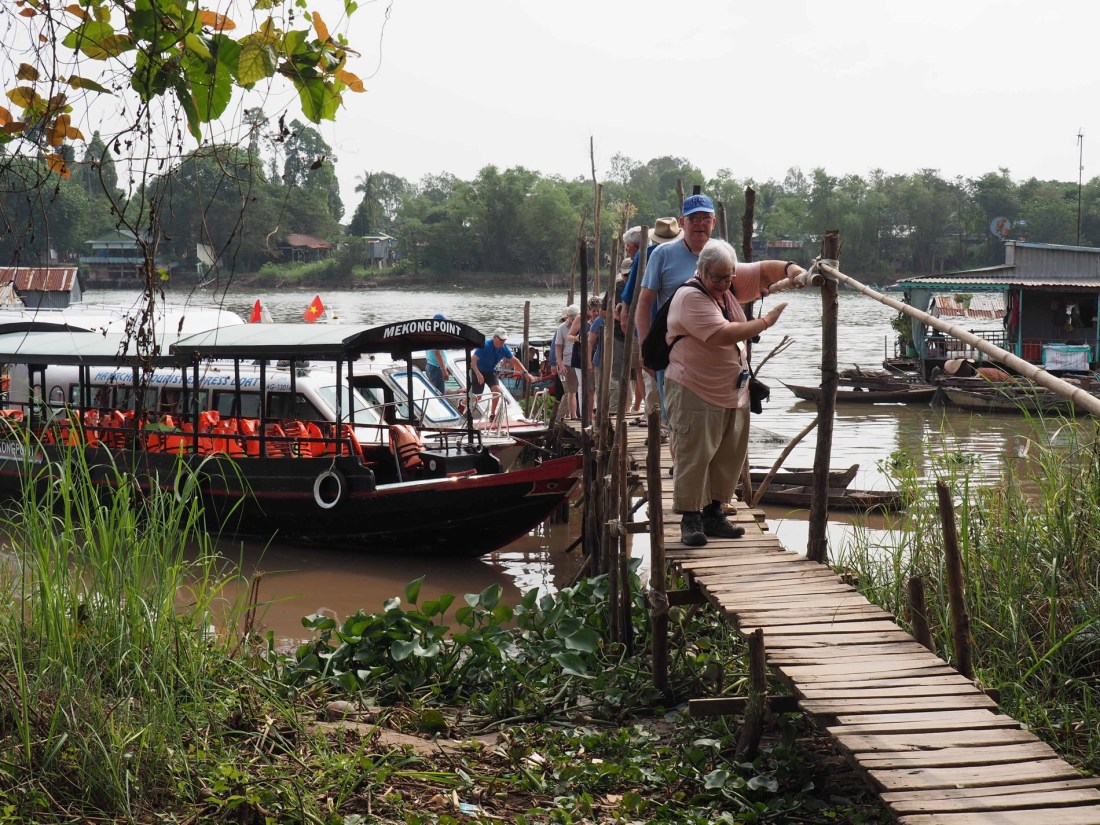
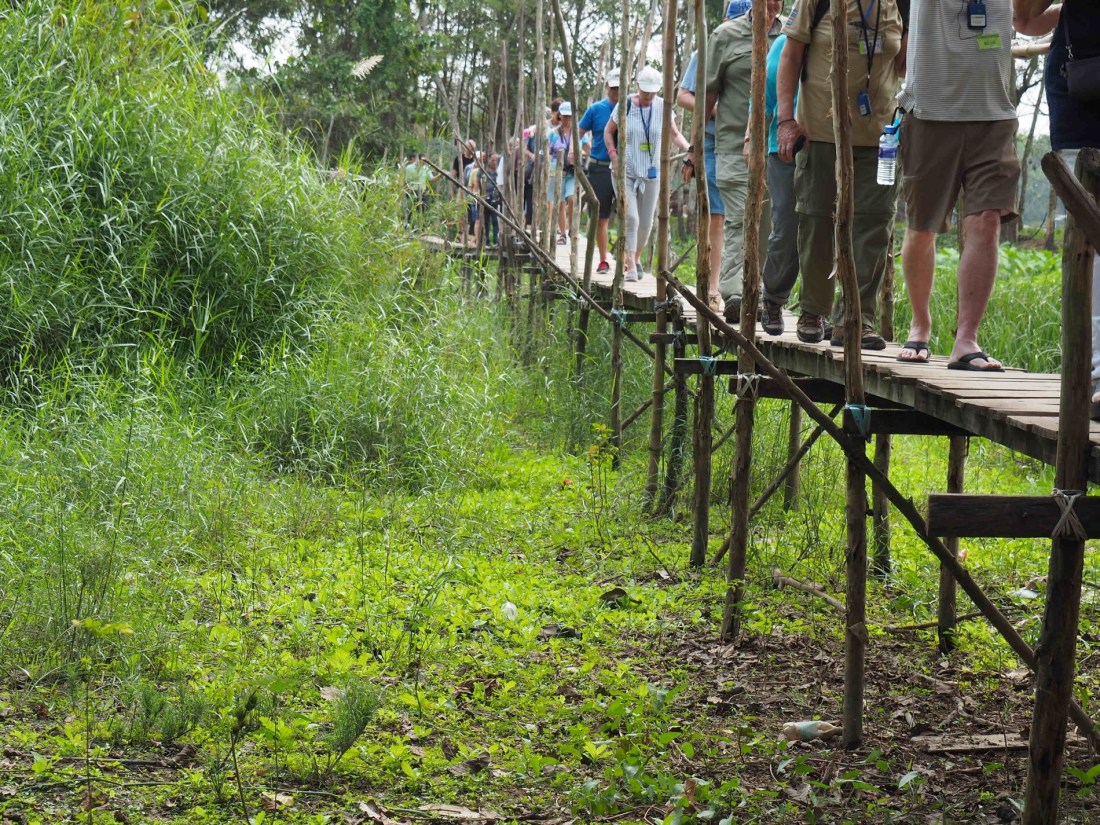
To get to the village, we took a small tour boat from our ship, and pulled up at a board walk that consisted of bamboo uprights and worn planks of various sizes (and ages). Our tour leader assured us that the board walk was sturdy, so we gathered our faith together and set off, grimly grasping the handrail (yes, there was one) and trying not to step in the gap between the boards.

The boardwalk led from the ship to dry land and then crossed over several stretches of water filled with water hyacinth plants.

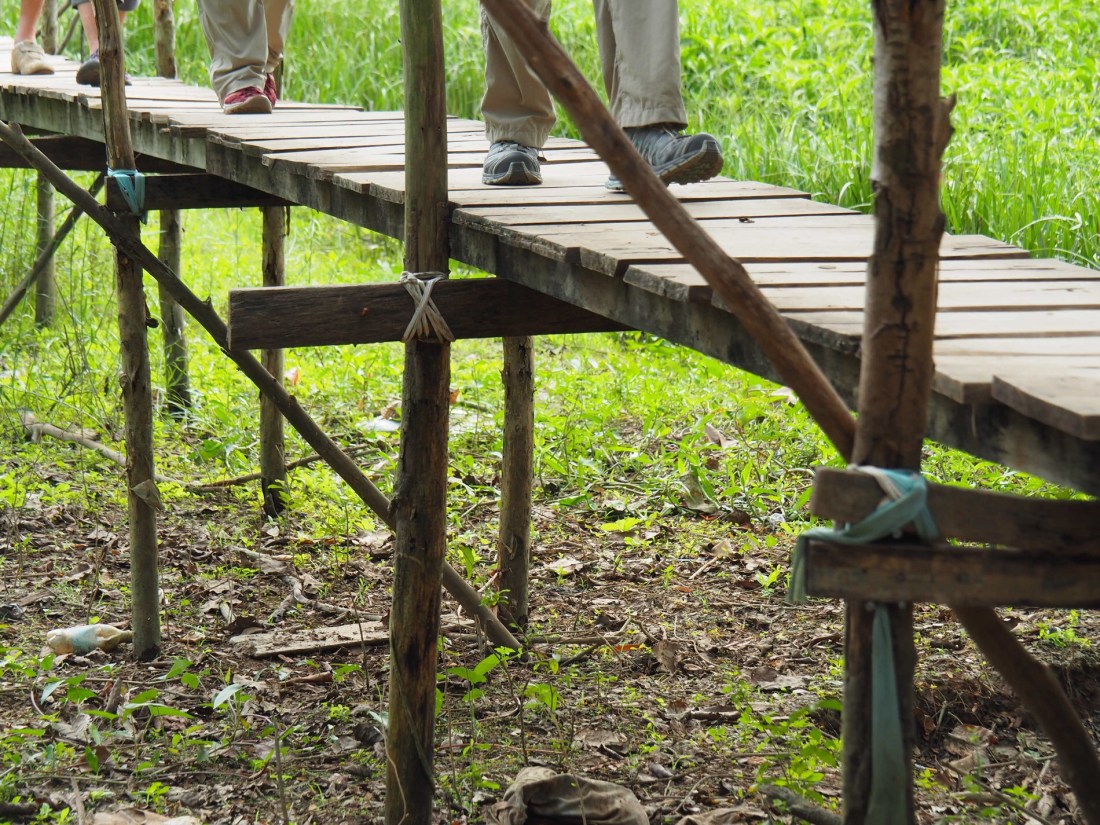
It was only after we got across the second board walk that I realized that, although the planks seemed to be nailed down, the rest of the structure was simply lashed together with strips of cloth, and in some places, wire.

On the way back to the boat, I stopped and took a picture of the water hyacinth flower, which truly looks like the hyacinth I am used to growing!

Bamboo is used through Asia for scaffolding because it is both light and strong. Clearly, the board walk was a good example of bamboo’s usefulness – AND, we were assured, when the monsoon blows it down in the wet season, it is cheap to replace!

Published 1/31/18 from Luang Prabang, Laos
Party!

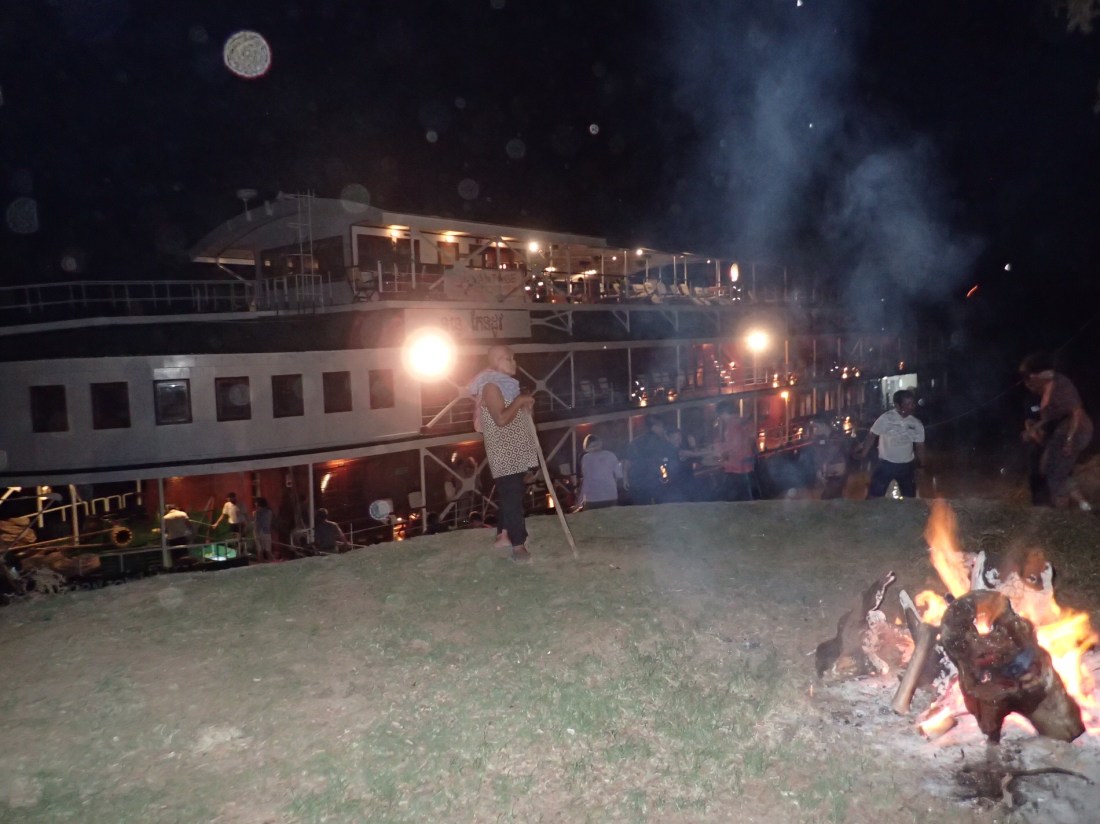
One night, we brought a party to a small village south of Prek Kdam, and north of Phnom Penh, Cambodia.

The crew of our ship had chosen a small village on the banks of the Mekong and told the people that we were bringing a party..

We tied up to the bank and the crew started carrying the party to the shore: firewood, fire starter, tables, speakers and Hi-Fri equipment, stacks of soda water and cookies, plus adult beverages and appetizers for the passengers. Then we came ashore and were met with the children (and their parents) who were excitedly awaiting our arrival.

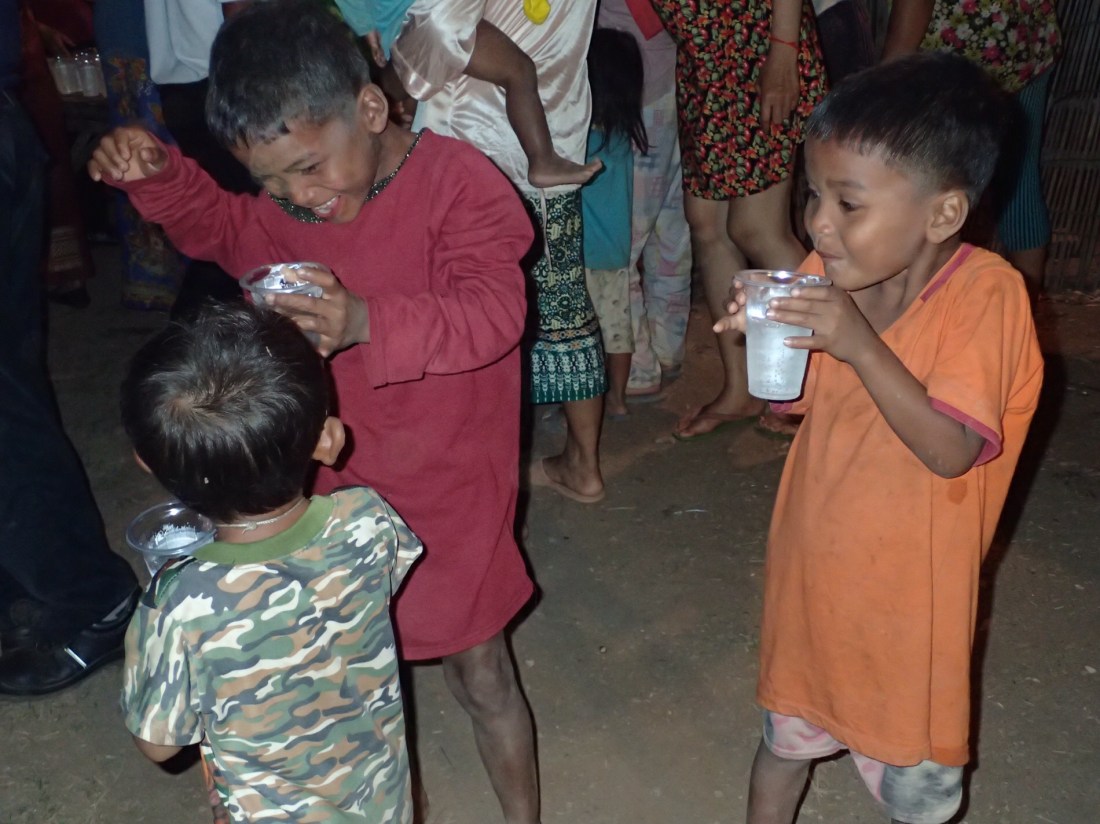
They drank the soda and devoured the cookies,

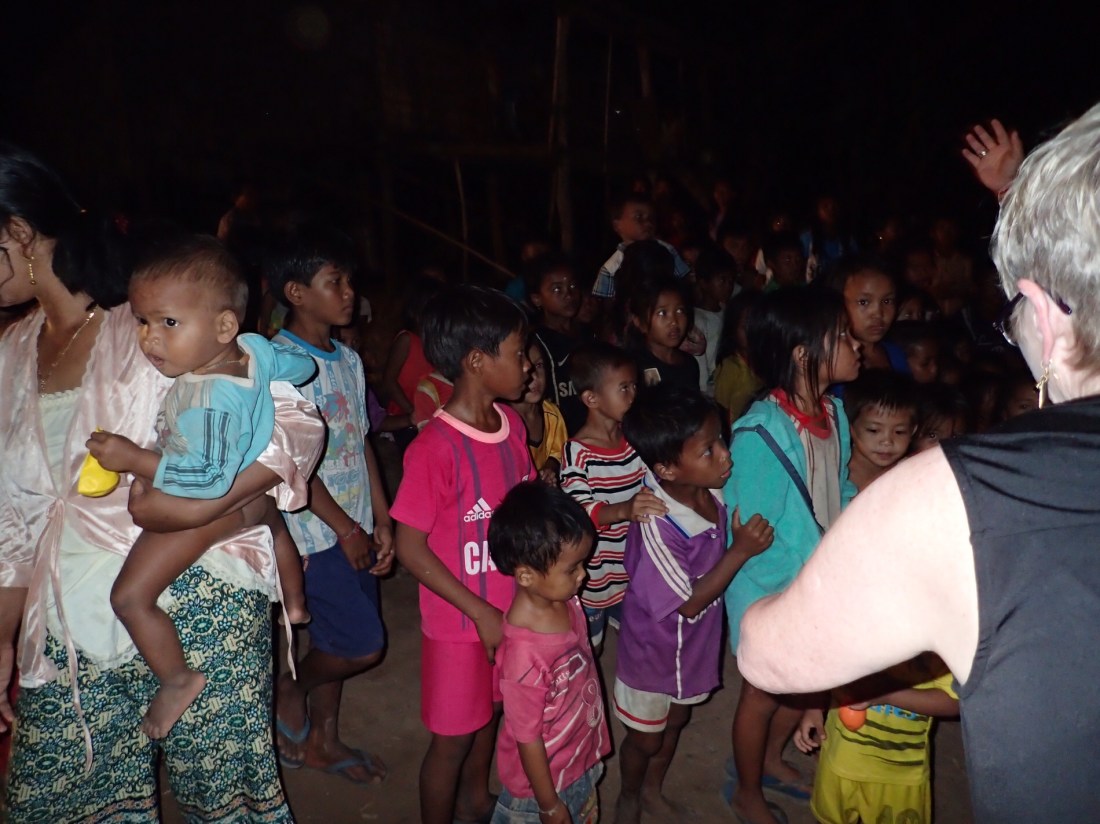
They danced with us

They blew up the balloons I had brought,

And one little girl, given a book by another passenger, kissed it with shining eyes at receiving such a treasure.

I will remember that night for a long time, and I suspect that the children will not soon forget it!

Posted from Luang Prabang, Laos 1/31/18
Market in Cai Be, Vietnam

We left the ship on which we sailed the Mekong River on a smaller boat to travel on a tributary of the Mekong River to visit the town of Cai Be. It is known for two things: The house made famous by the novel (and movie) “The Lover” and its regional market.

This market included many fruits and vegetables that are known to me, plus some that I had not seen before.

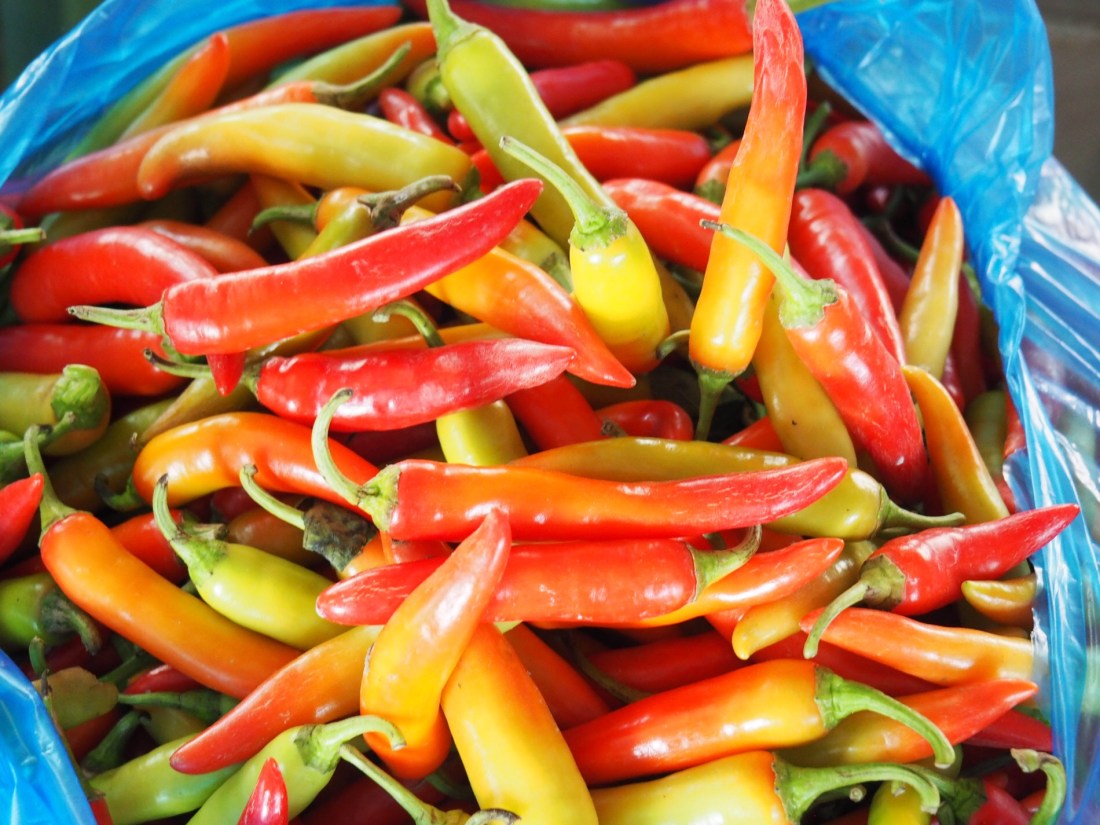
If course, things like chilis were familiar.

Onions, too, were familiar, but these had been pickled in some way.

At first I didn’t recognize shallots because of the way they were bundled together.

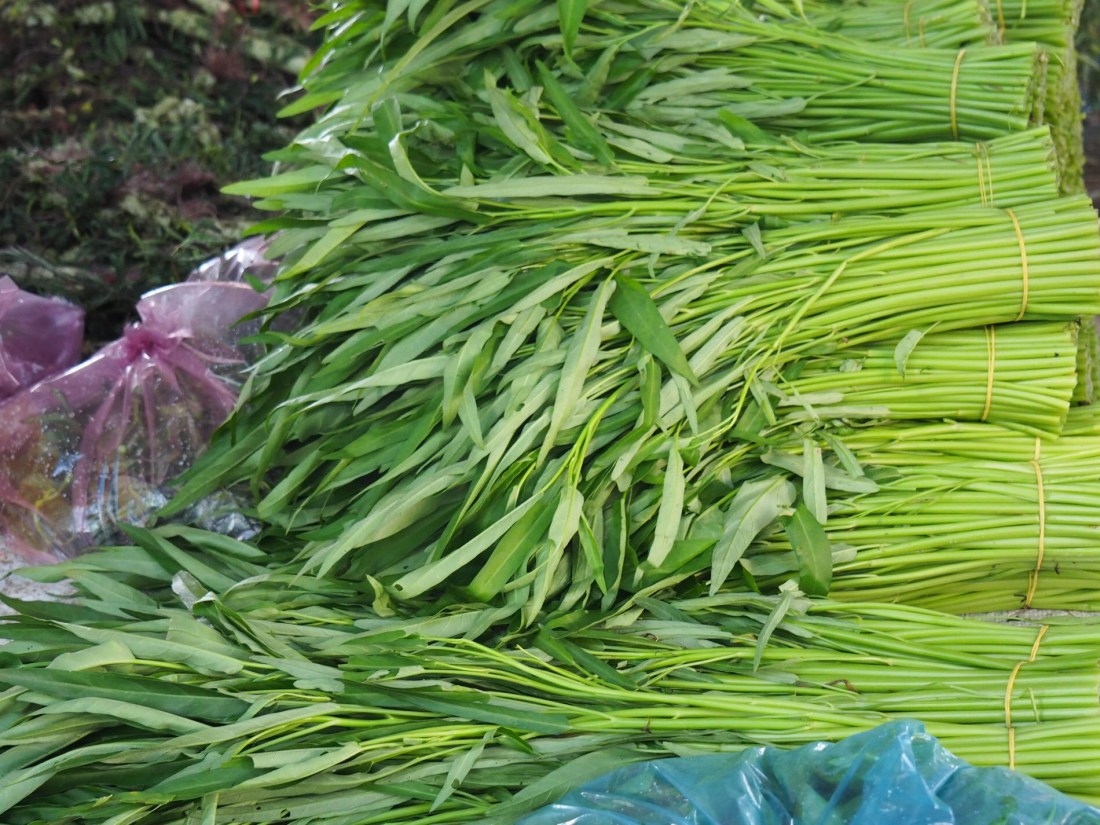
And there were lots of different greens, including these morning glory vines (apparently very good in soup).

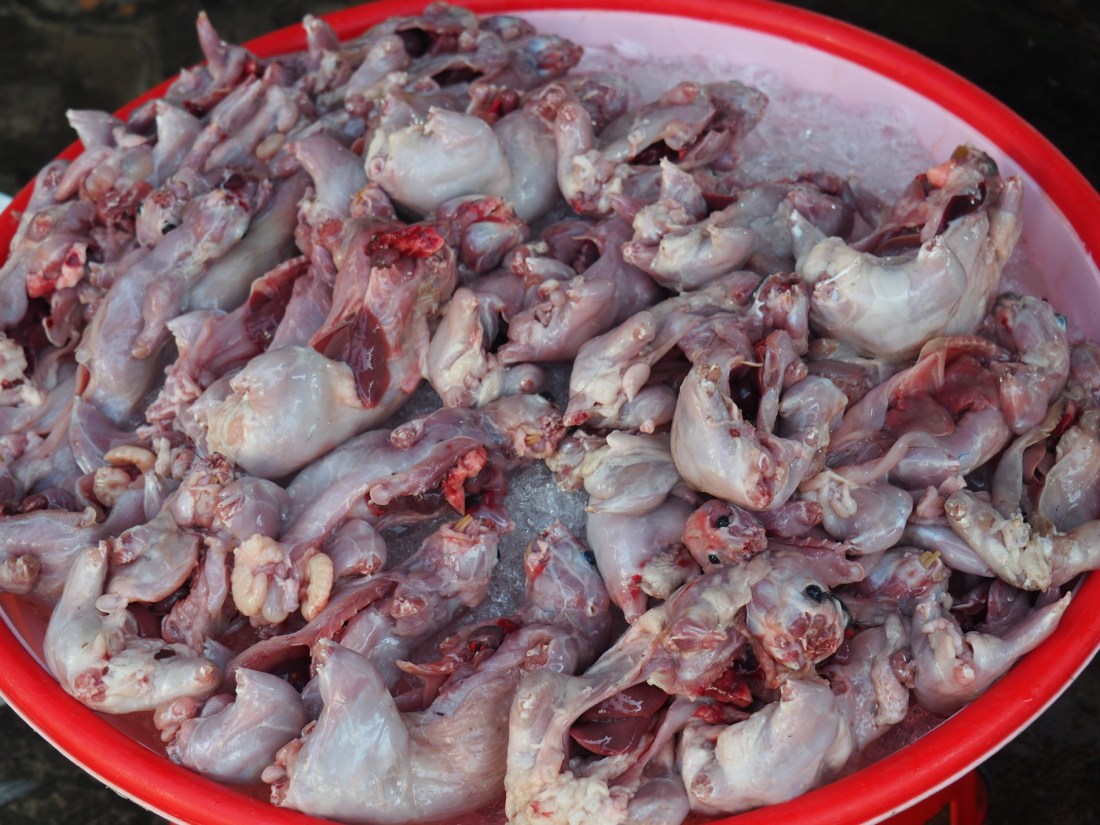
Our leader pointed out a regional delicacy: Mekong Rabbit aka RAT. Apparently, the most tasty are pineapple rats, followed by rice rats. You guessed it, the type of rat is based on what the animal eats…. You’ve heard the old saying, “A good Chinese chef can make a gourmet meal out of anything edible…..and many things inedible as well.” I suspect this applies to any chef in this part of the world!

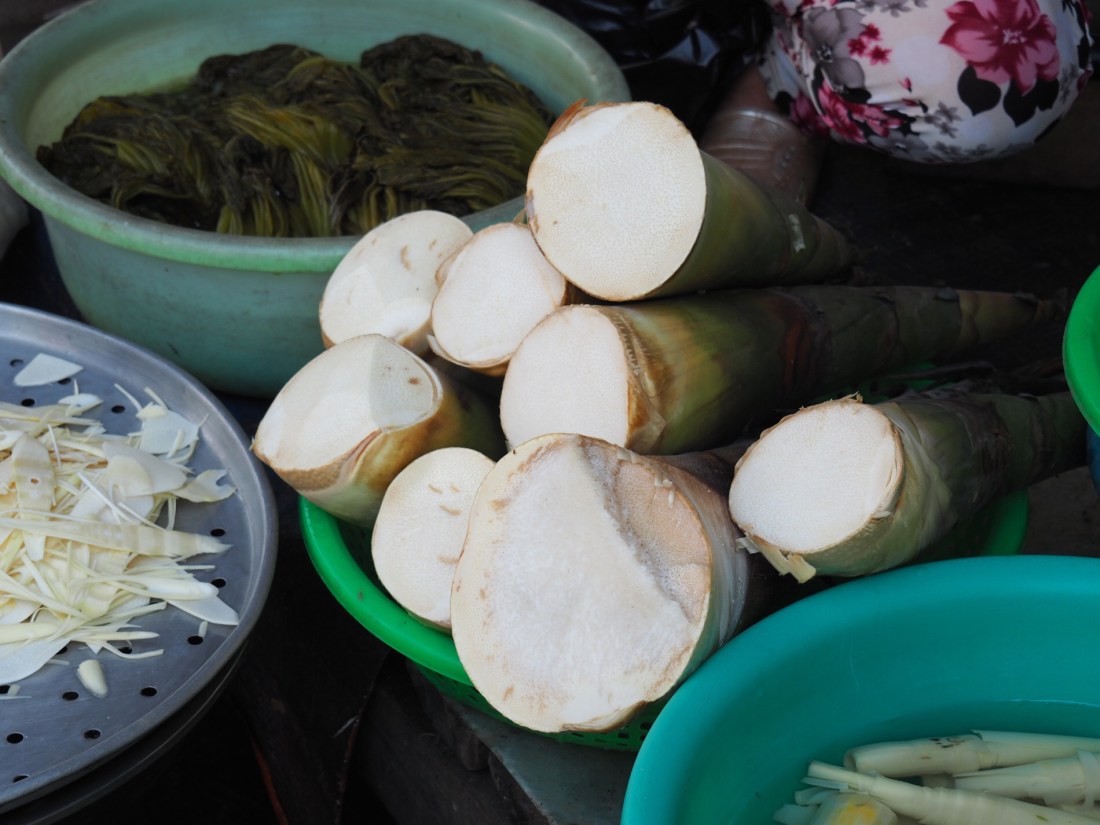
Bamboo shoots are available sliced or whole.

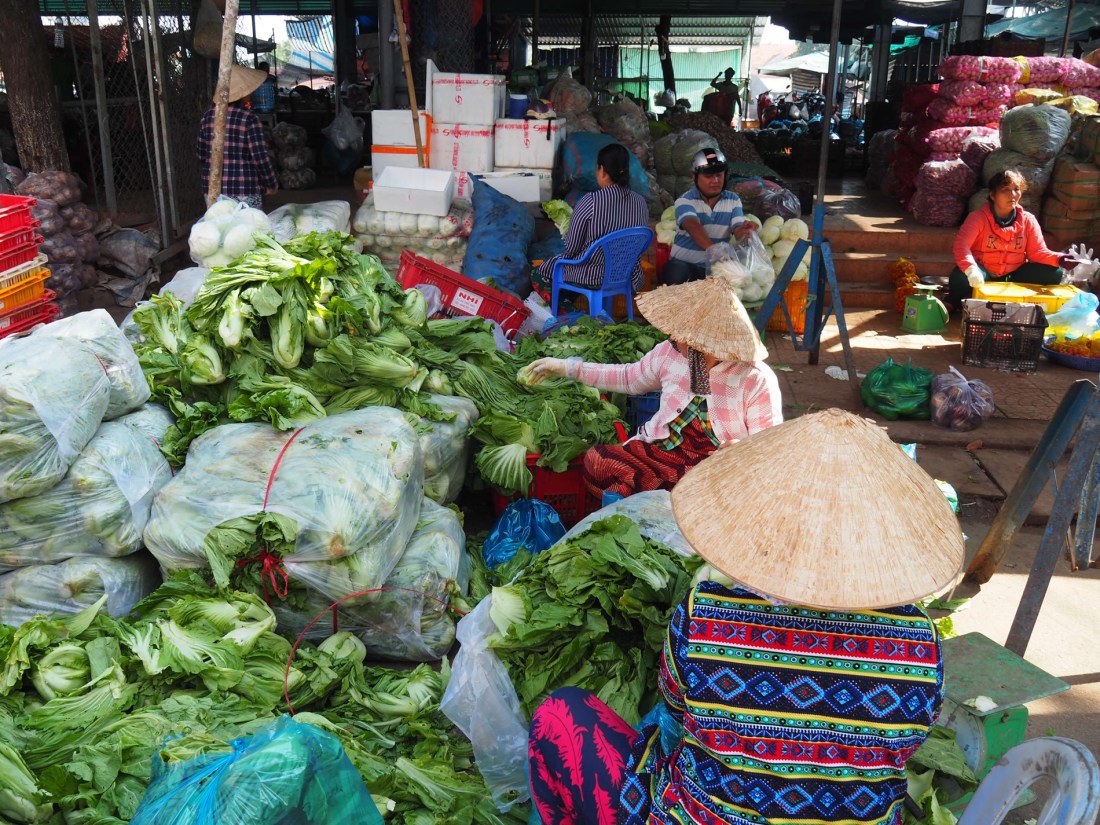
This picture gives you an idea of the many vendors working in the wholesale part of the market, which is just a small part of the whole.

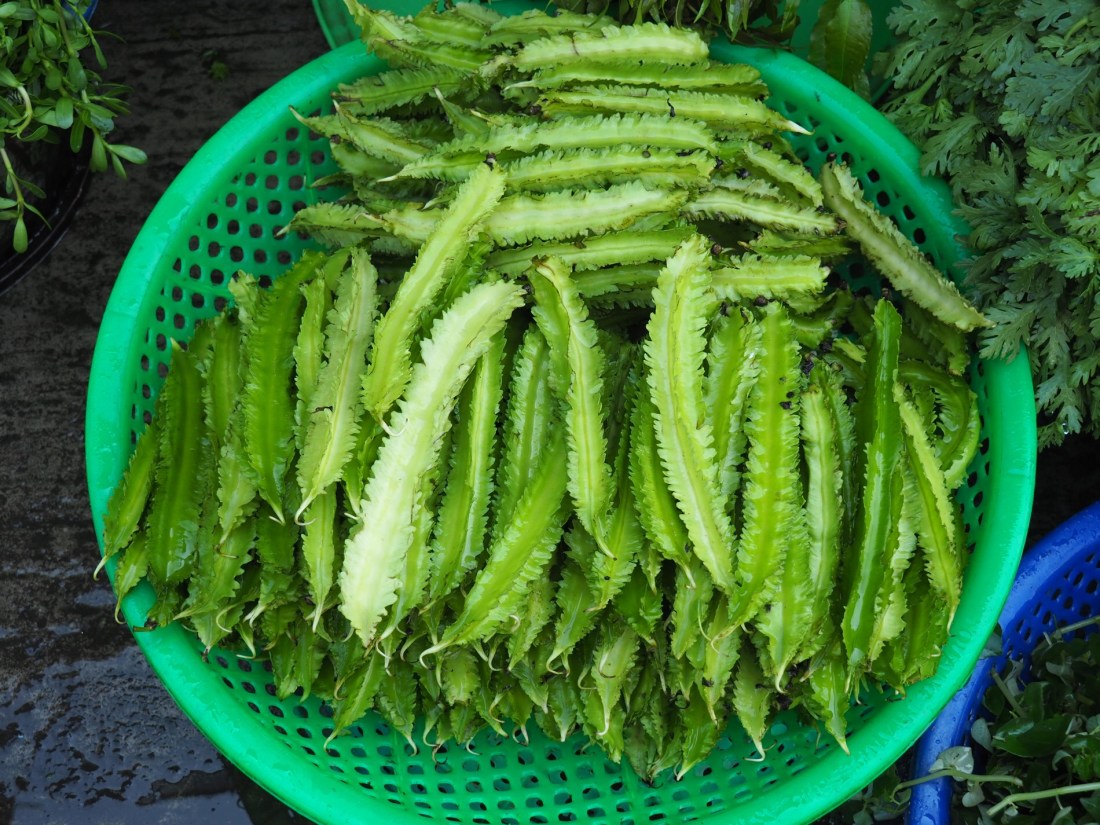
I had never seen this vegetable before: It’s dragon bean (perhaps because it seems to have spikes like a dragon?) and our leader says he likes to eat it raw, dipped in sauce.

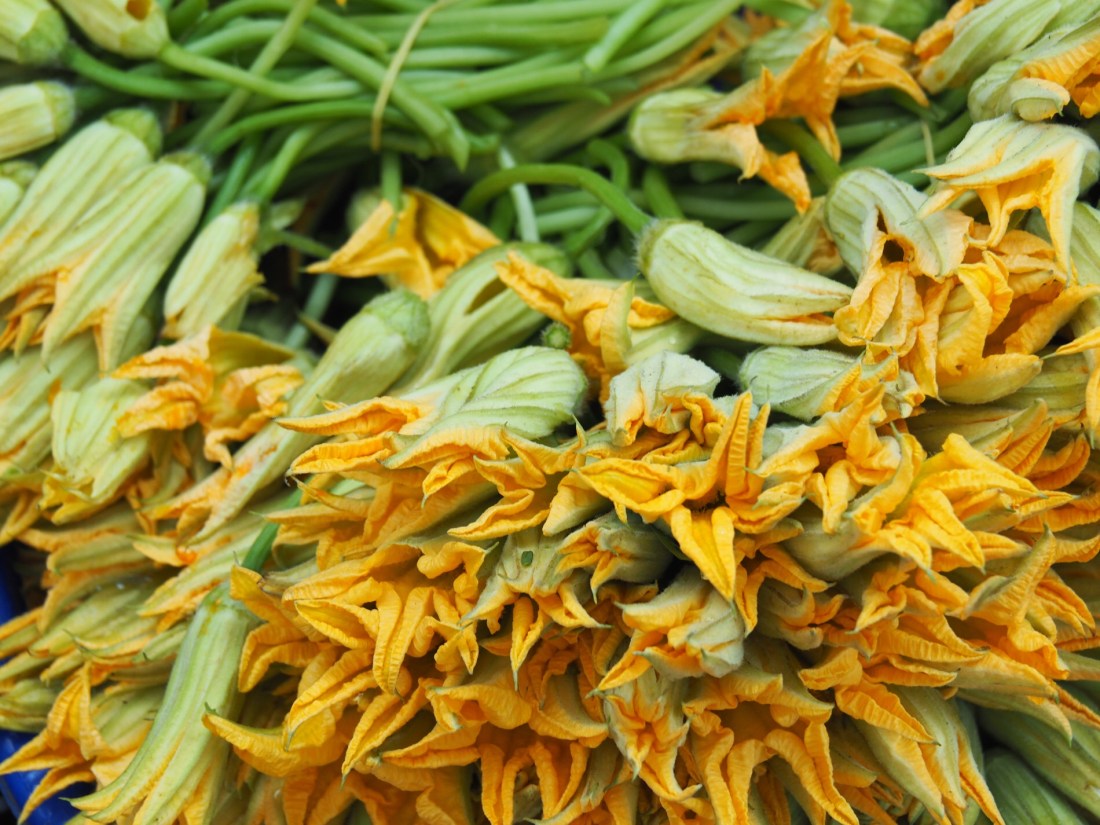
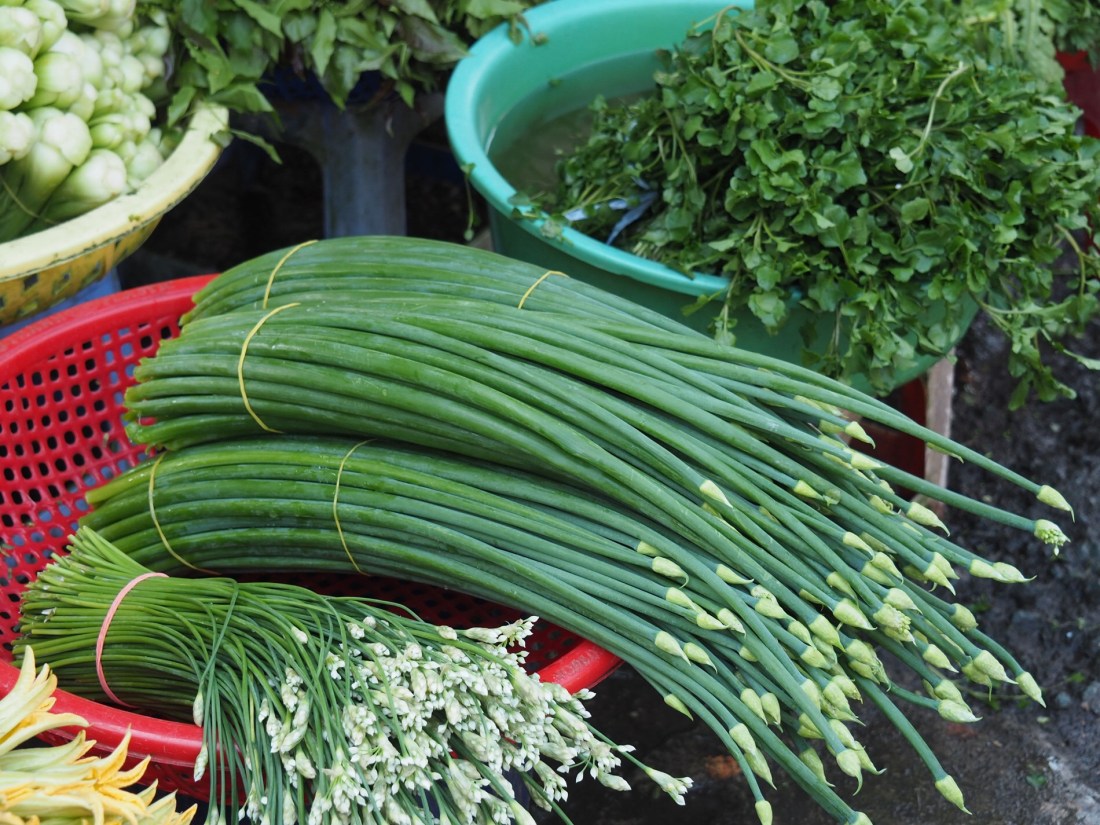
Squash blossoms, chives, and watercress were familiar.

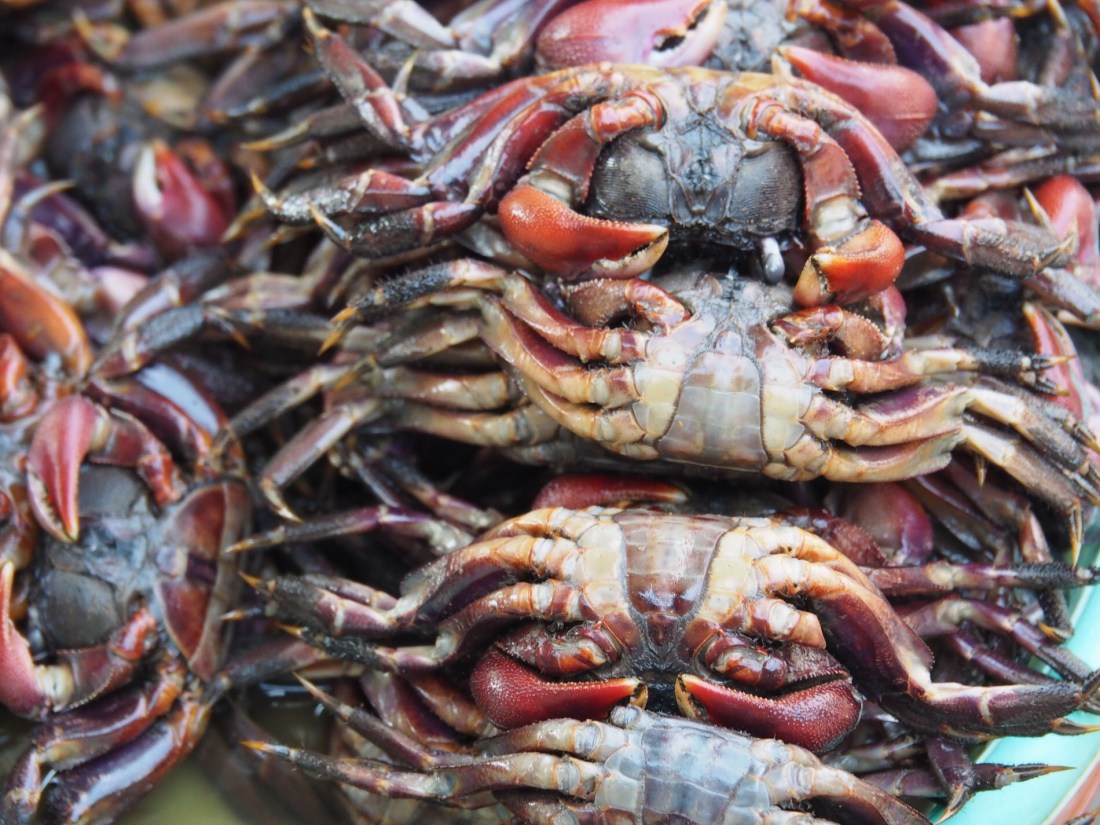
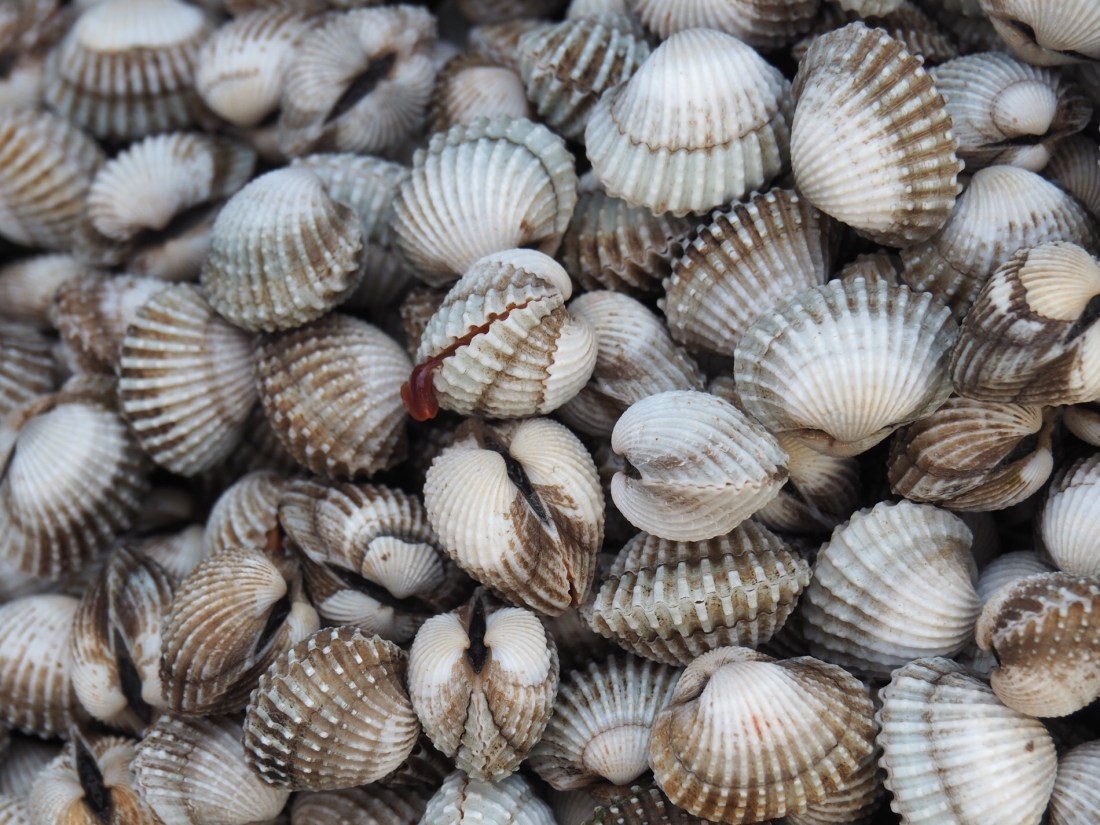
There was, of course, lots of seafood, including crabs and clams:

And dried fish, as well:

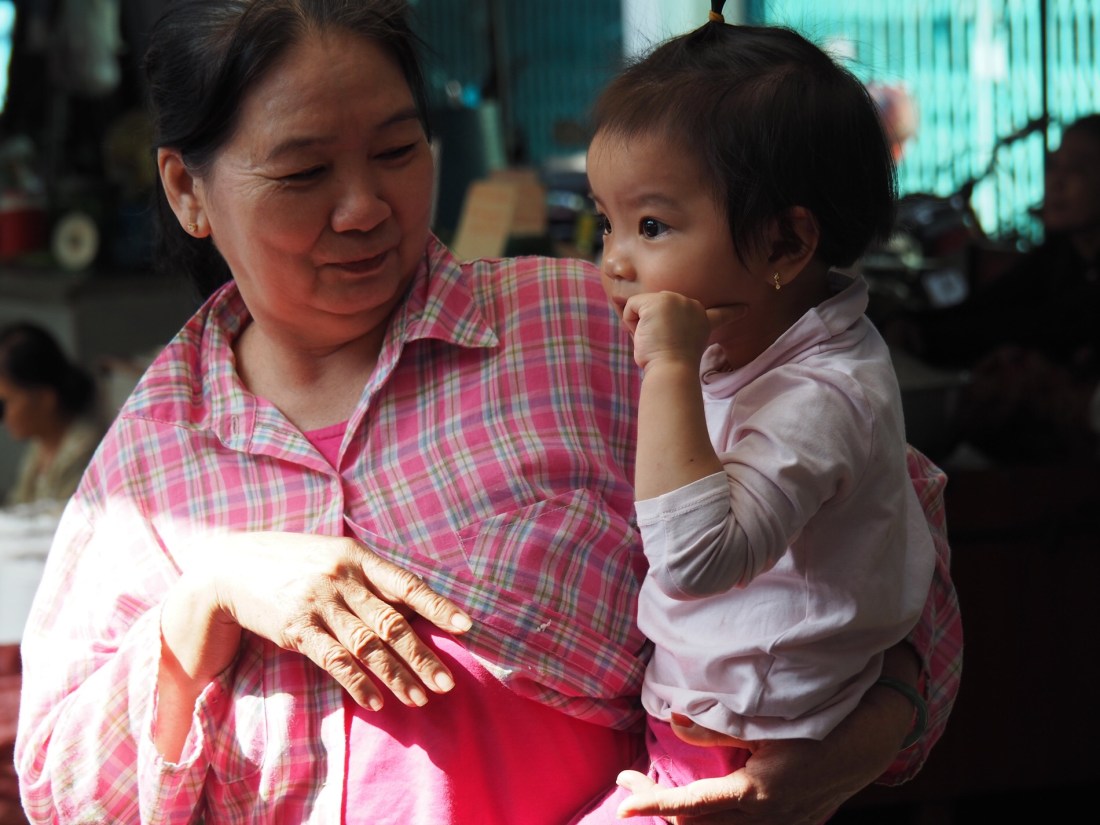
As we were leaving the market, I stopped to talk to one vendor who was selling vegetables, while tending her daughter…

One can only wonder with the rise in large businesses, whether the daughter will be able to have a market stall in the future.

Written on the flight from Saigon to Bangkok, posted from Luang Prabang, Laos 1/31/18

Bayon Temple, Angkor Thom Complex, Siem Reap, Cambodia

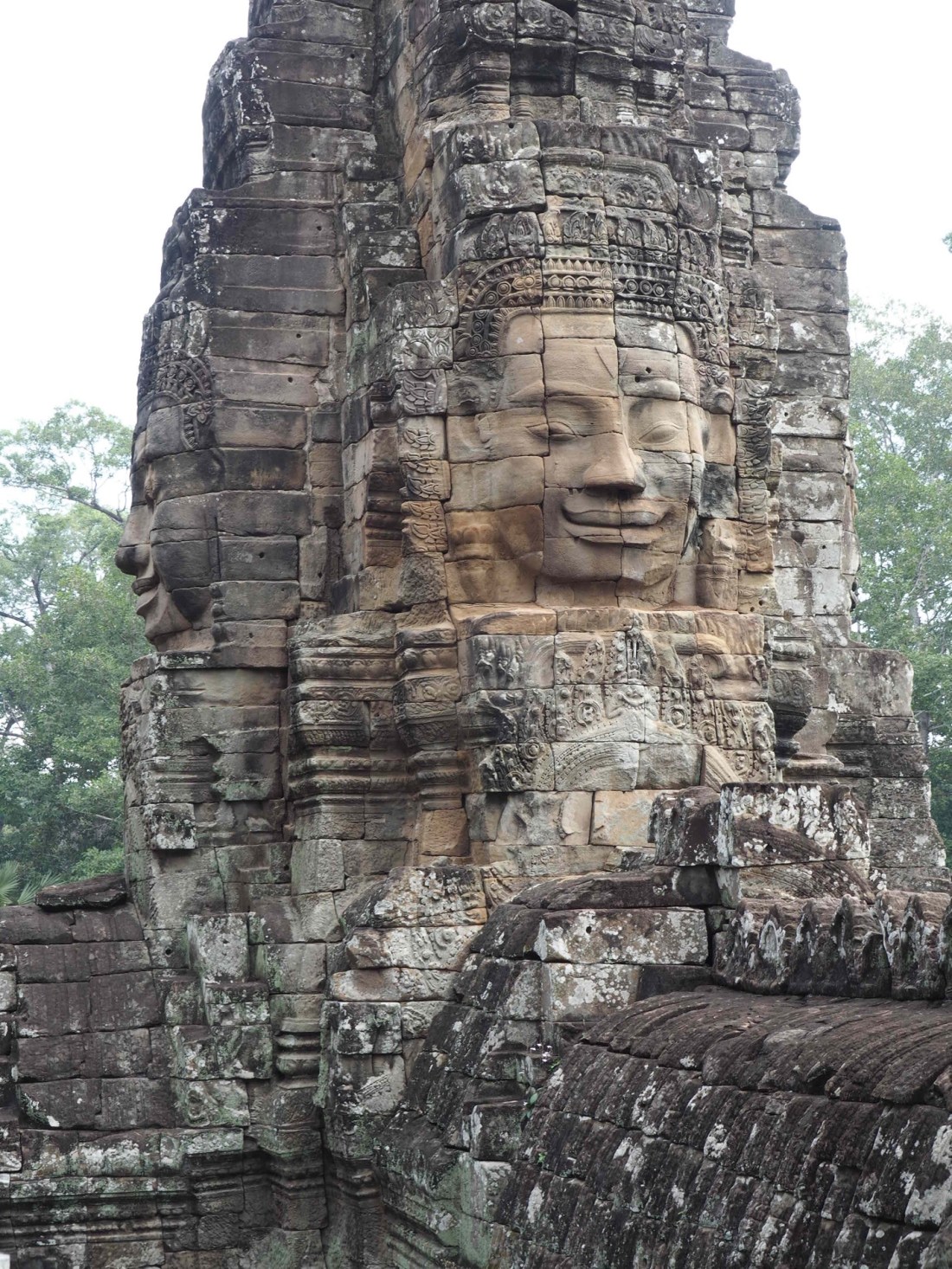
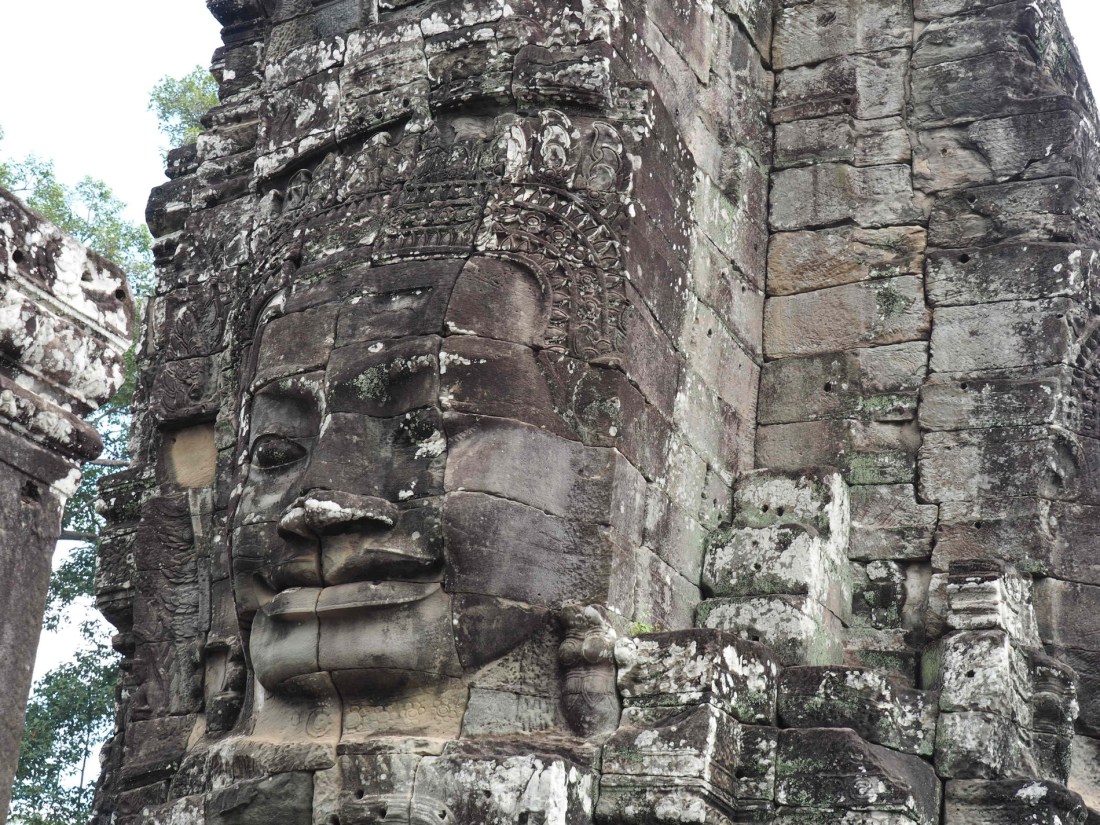
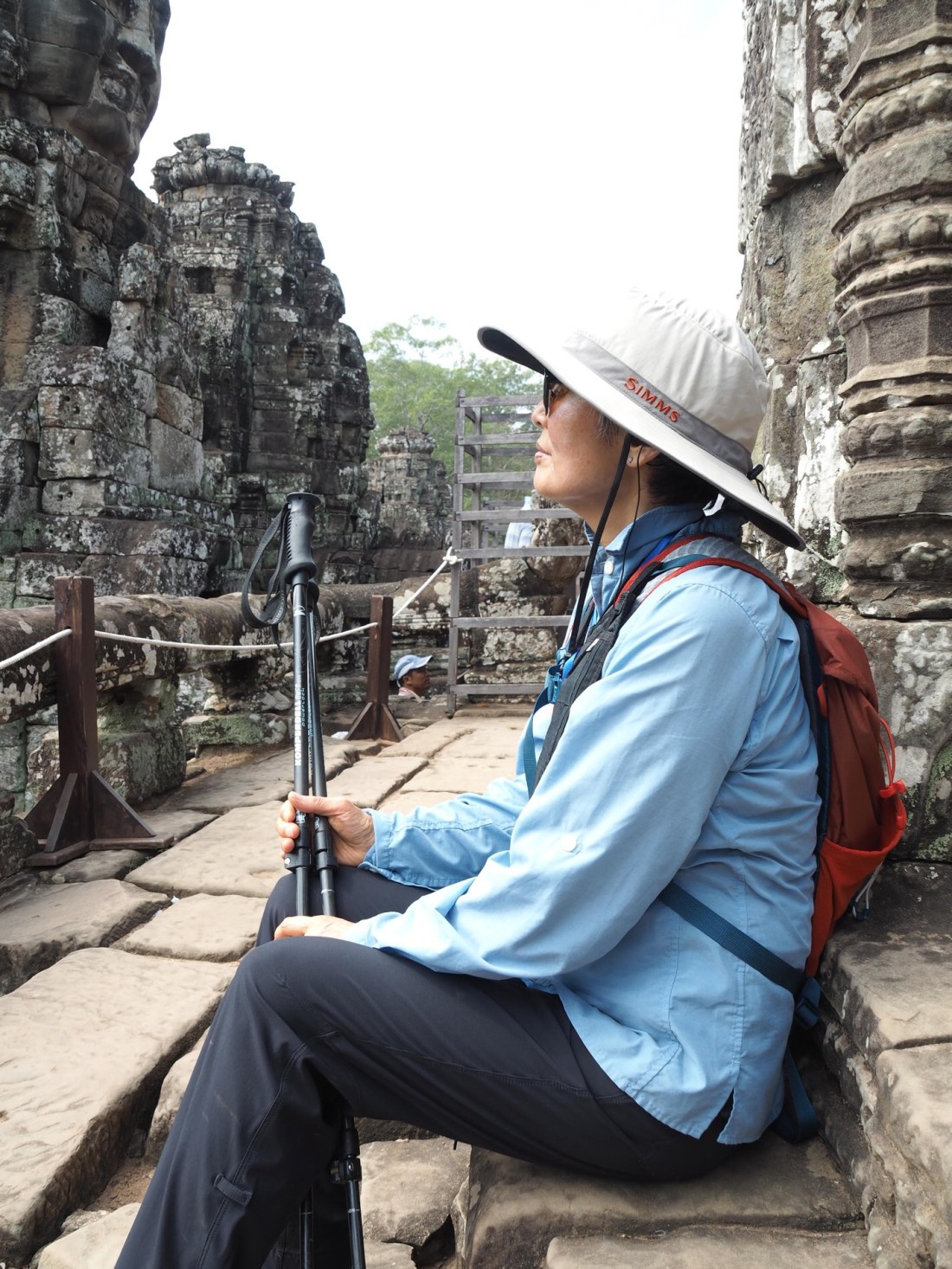
This is the second temple that we visited in Siem Reap. It was built in the late 12th or early 13th century by King Jayavarman VII, as the official state temple of Mahayana Buddhism. It was located in what was then the king’s capital city, Angkor Thom. It is famous for the many heads (216 in all) of Buddha that ornament the many towers of the temple.

What I had not known before, however, is that after Jayavarman’s death, the state religion was changed to Hinduism (and later to Theravada Buddhism) and with each change, the subsequent rulers made changes to the temple and its images.

Thus, during the Hindu period of workshop, a third eye was added to the face to change the image to that of Shiva, as you can see from the picture above (obviously the carvers were not as skillful as the original ones because the third eye just looks like a dent in they image’s forehead).

But irregardless of later changes, the faces radiate peace and serenity, and invite you to sit and meditate.

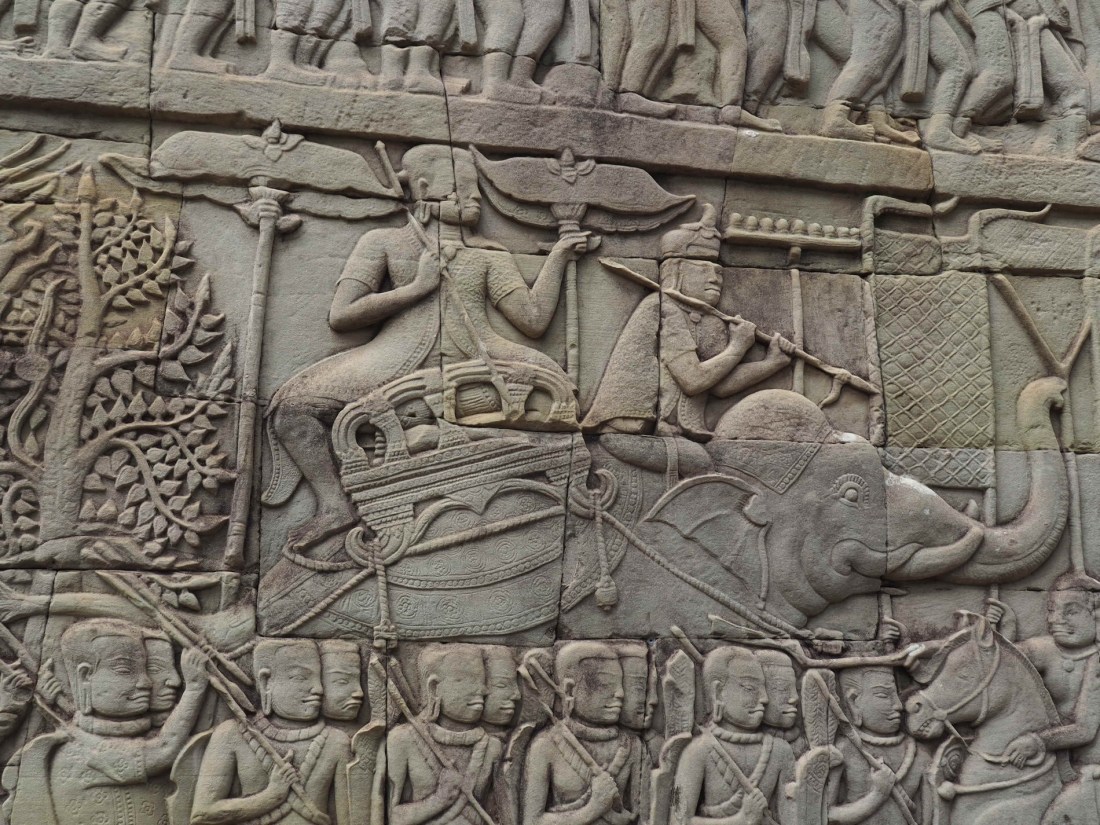
Elsewhere, there are bas relief carvings showing historical events (Apparently, the king was celebrating a great victory in these scenes!)

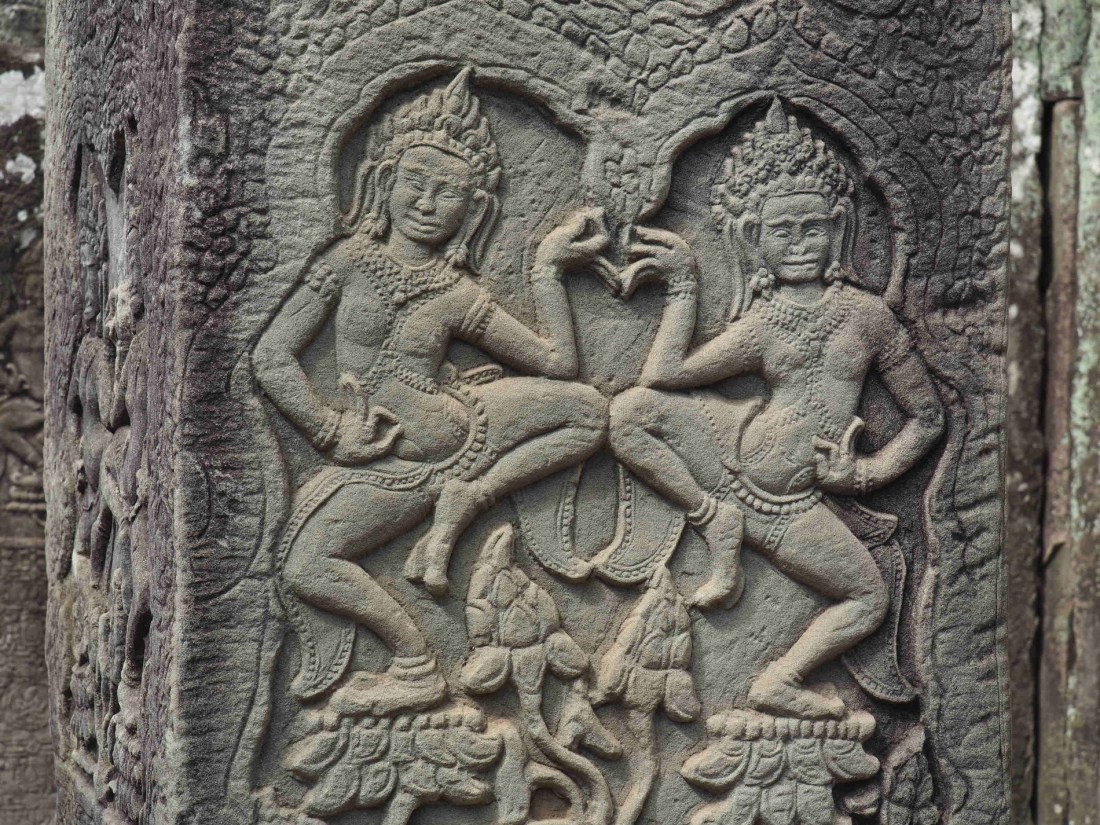
And there are some exquisite carvings of dancers and lesser deities

We learned that the temples were built of volcanic rock with sandstone blocks facing them. Once these were in place, the blocks were carved. So I suspect that any carver who made a mistake paid a heavy price – how do you remove and replace a block amongst this multitude of blocks?

What is amazing to me is also the condition of the carvings. Those of the battle are under a gallery, and thus protected from the rain. Many of the others, however, are exposed to the elements.

Visited 1/19/18. Post published from Ho Chi Minh City (Saigon) 1/29/18

Ta Phrom, Siem Reap, Cambodia

Ta Phrom is the first temple we visited in Siem Reap, and it certainly lived up to its reputation as one of the most atmospheric of the temples here.

Next to Angkor Wat, the temple of Ta Phrom may be the most famous – mostly because it was the setting for the movie “Tomb Raider”, but also because it has been left in a somewhat overgrown state, giving the visitor an idea of what the temples looked like when they were first “rediscovered” by French archeologists early in the 20th century. They had been abandoned for 400 years, and the jungle had reclaimed a lot of them.

To visit this temple, built in 1176 CE and founded by Khmer King Yayavarman VII as a Mahayana Buddhist monastery and university, you walk through very heavily forested grounds (about 650,000 square meters) until you come to your first sight of the temple – in fact, its library, with what looks like a Spung (silk cotton) tree growing out of the top of it.

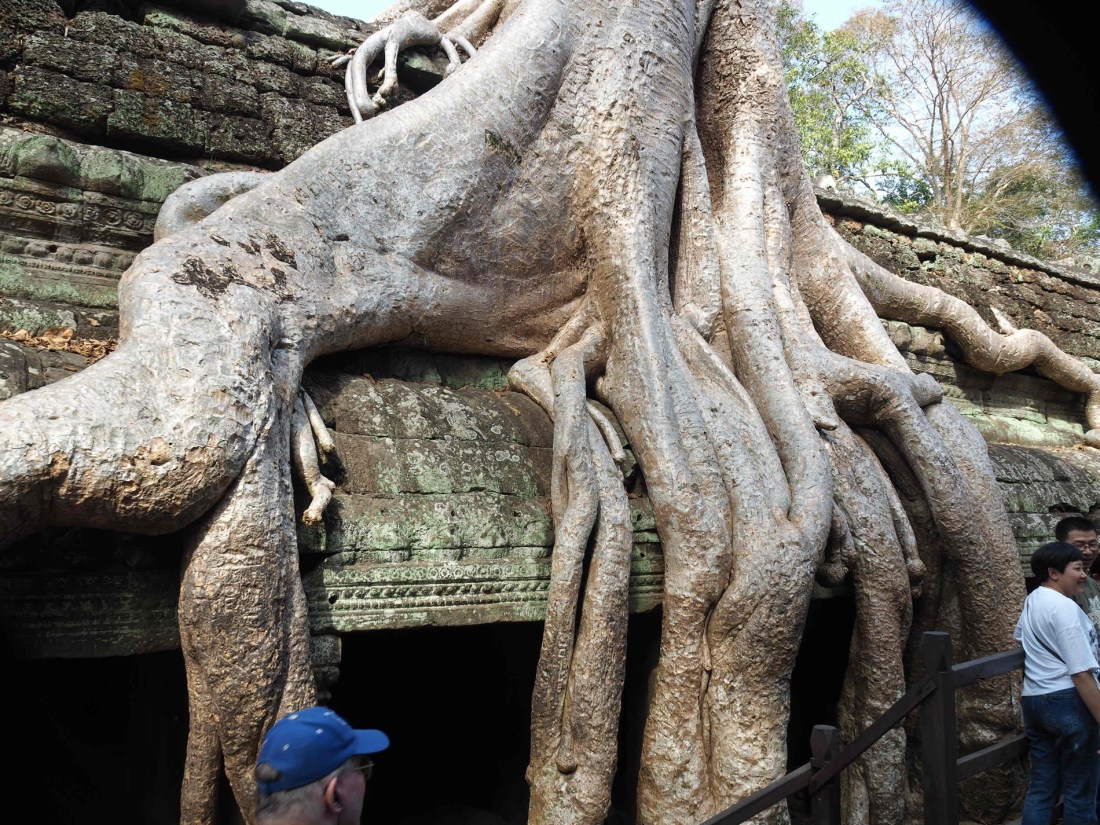
As you continue to explore, you find tree roots wrapped around huge blocks of stone. Some of the roots, in fact are larger than many trees with which we are familiar.

Some of the roots are so heavy that they have been shored up with scaffolding, so as to keep them from crushing the rock.

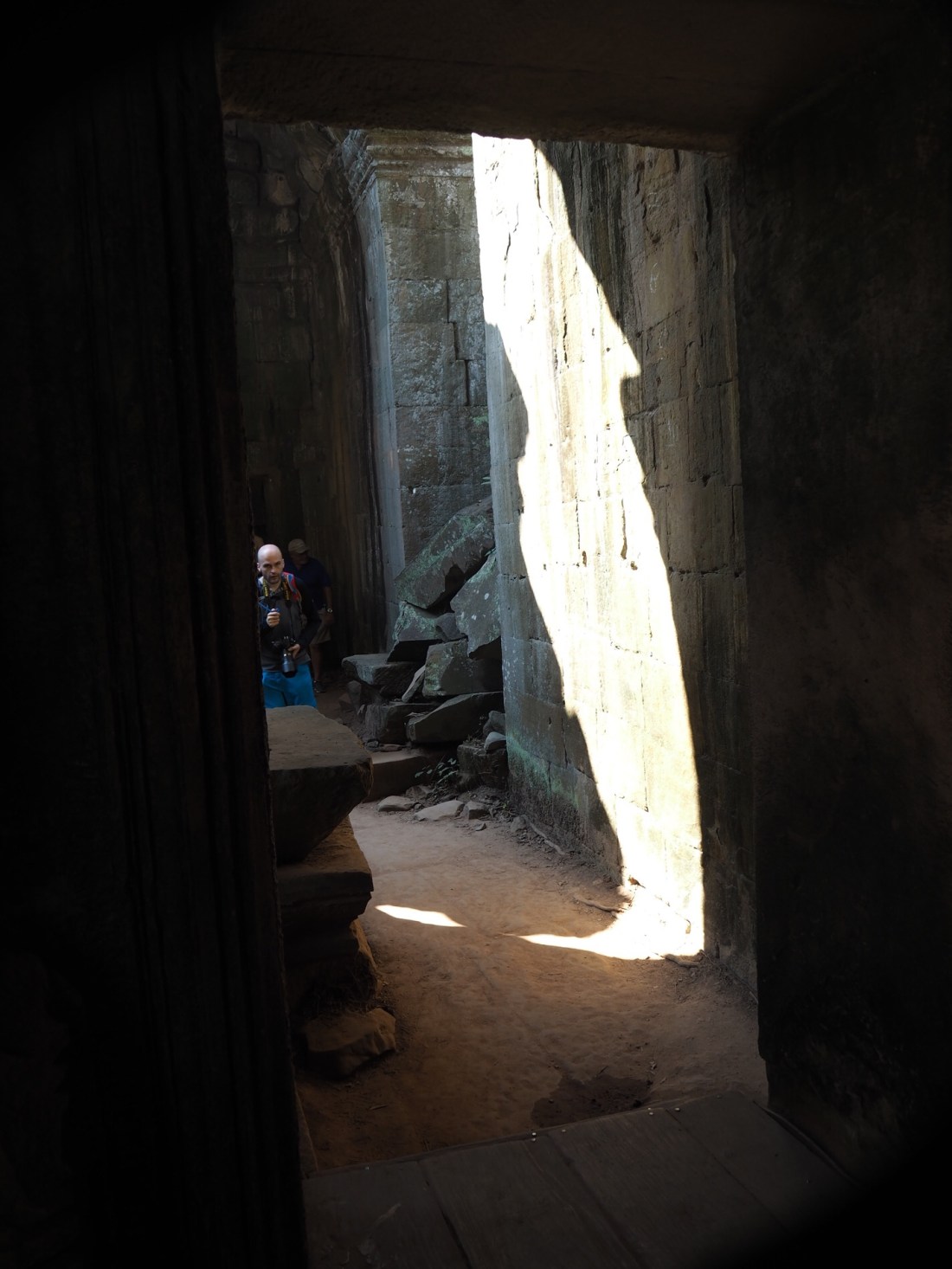
And you come across passage ways that are blocked by fallen rocks that you are sure must lead to somewhere, if only you could get there….

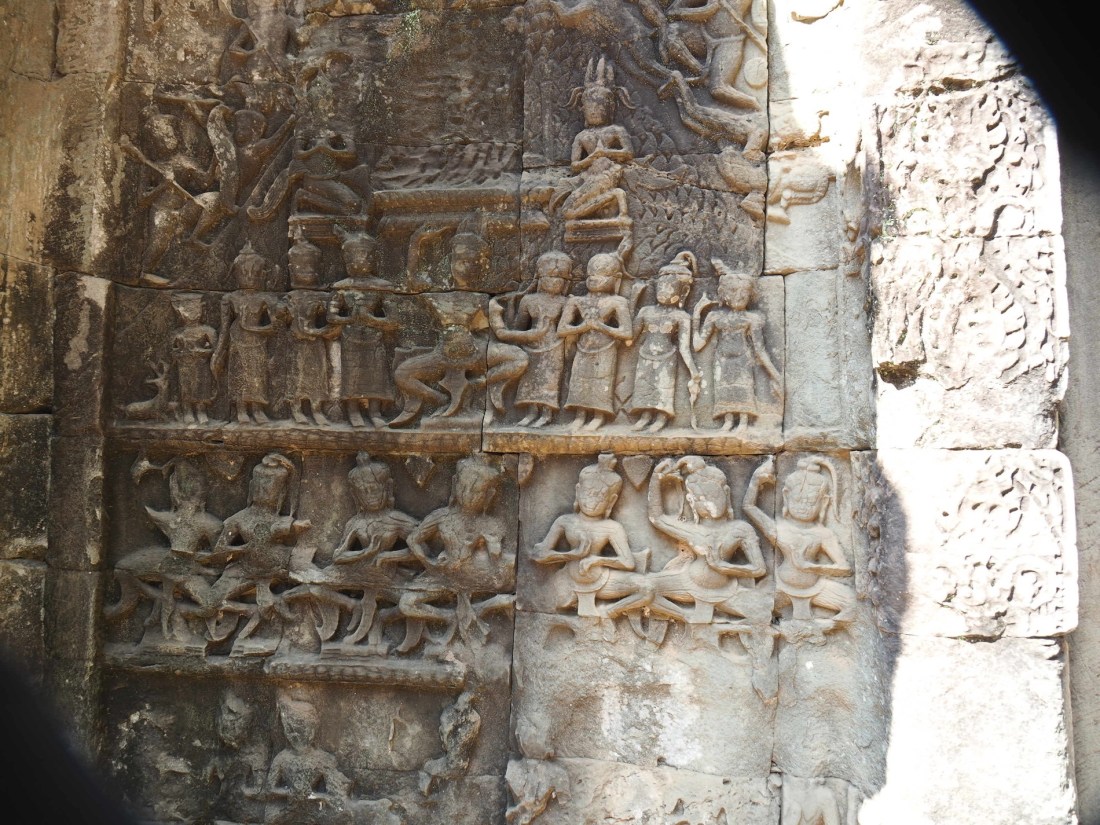
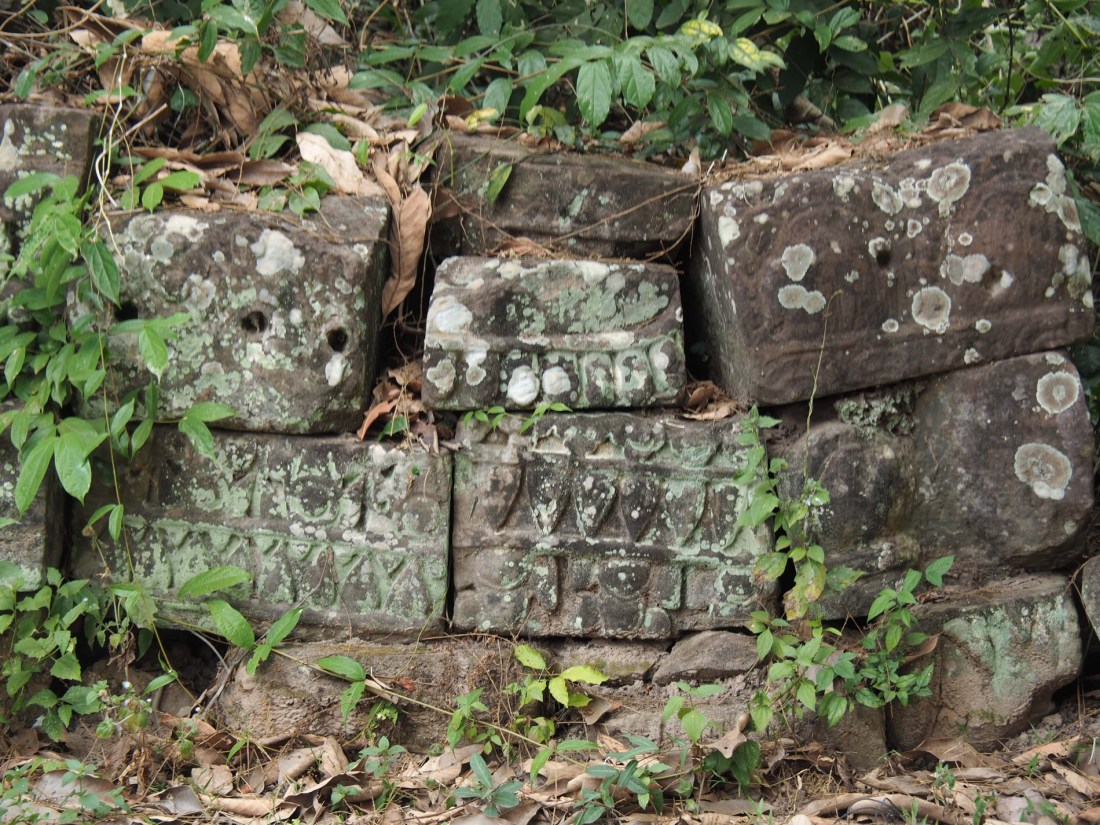
There are also exquisite carvings on some of the walls, and on blocks of stone that have fallen haphazardly over the centuries.

Temple Visited 1/19/18

Post published in Ho Chi Mihn City (aka Saigon) 1/29/18