Balloon over Morocco

The first passengers to travel by hot air balloon were a sheep, a duck, and a rooster. That was in 1783. This year, I took my fifth trip on a hot air balloon, accompanied by three friends who had never traveled in that mode before. This trip took place just outside of Marrakesh, Morocco.

We left our riad at 5:45am, walked through the narrow alleys of the Médina to the main square and our car, then traveled along streets mostly devoid of traffic (unusual for Marrakesh). We drove through the darkness on roads that got more and more narrow, finally shrinking to what was probably wide enough for a one way street, but which allowed two way traffic – oncoming cars move over so that they are half on the pavement and have on the gravel ‘shoulder’ along side.

We arrived at the lift off site to find a fire awaiting us and cups of hot tea or coffee to sip while enjoying the stars overhead.
Soon, we heard giant fans begin pushing air into the ‘envelope’ of the balloon, and then the roar of the propane burners made it clear that hot air was going to be next!

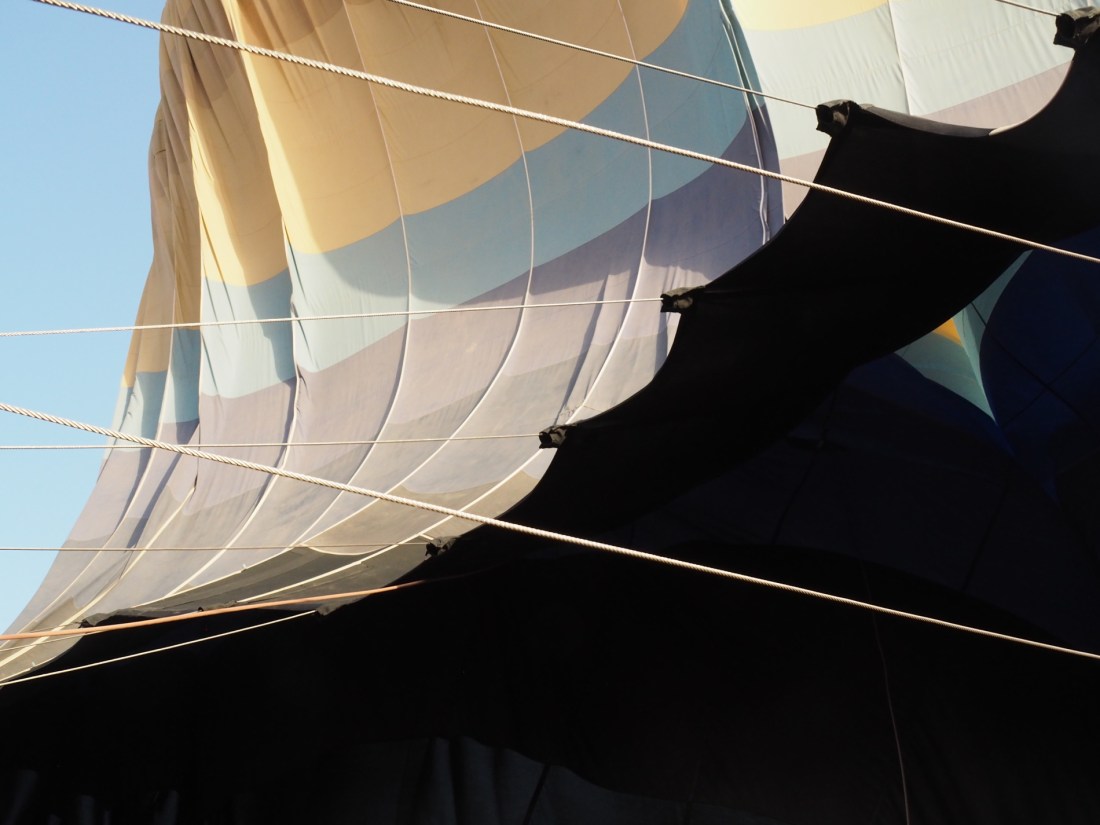
The basket was attached to the balloon while laying on its side, but as more hot air was added, it tipped up,
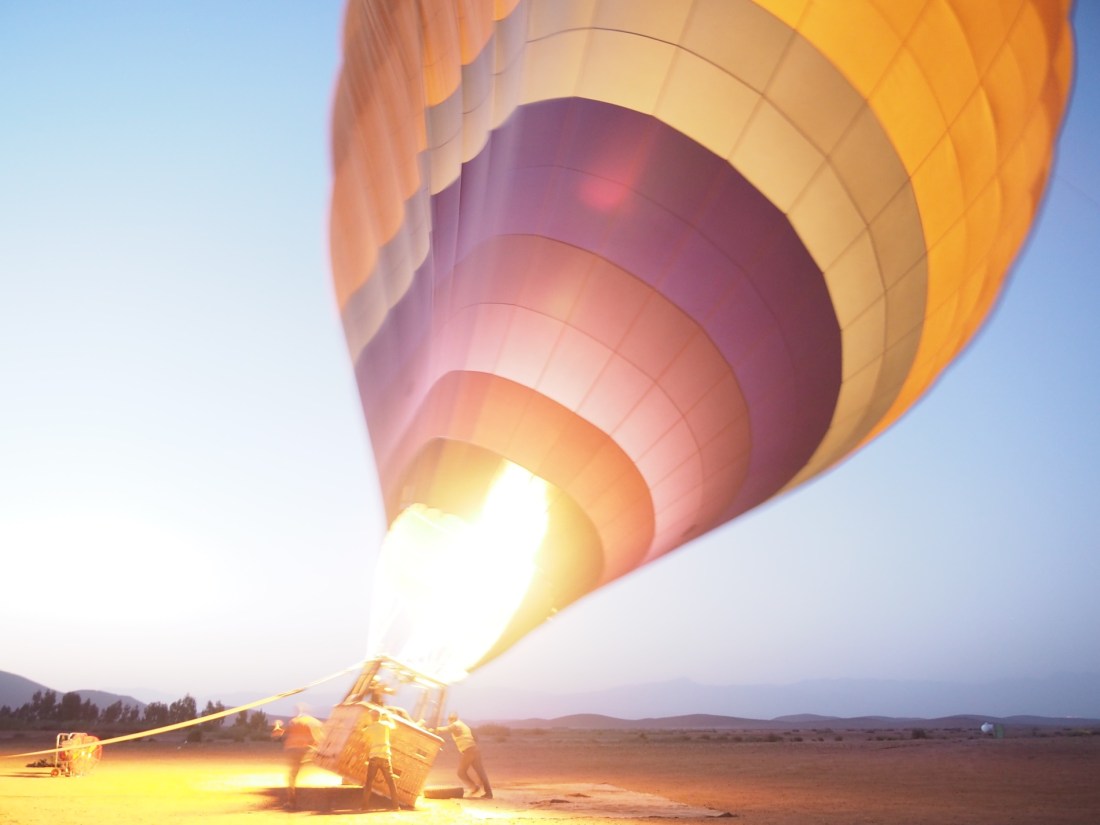
and soon we were invited to board. This involved climbing up the outside of the basket, using the foot holes placed in the sides (and, for me, getting an appreciated “boost” from one of the team members below).

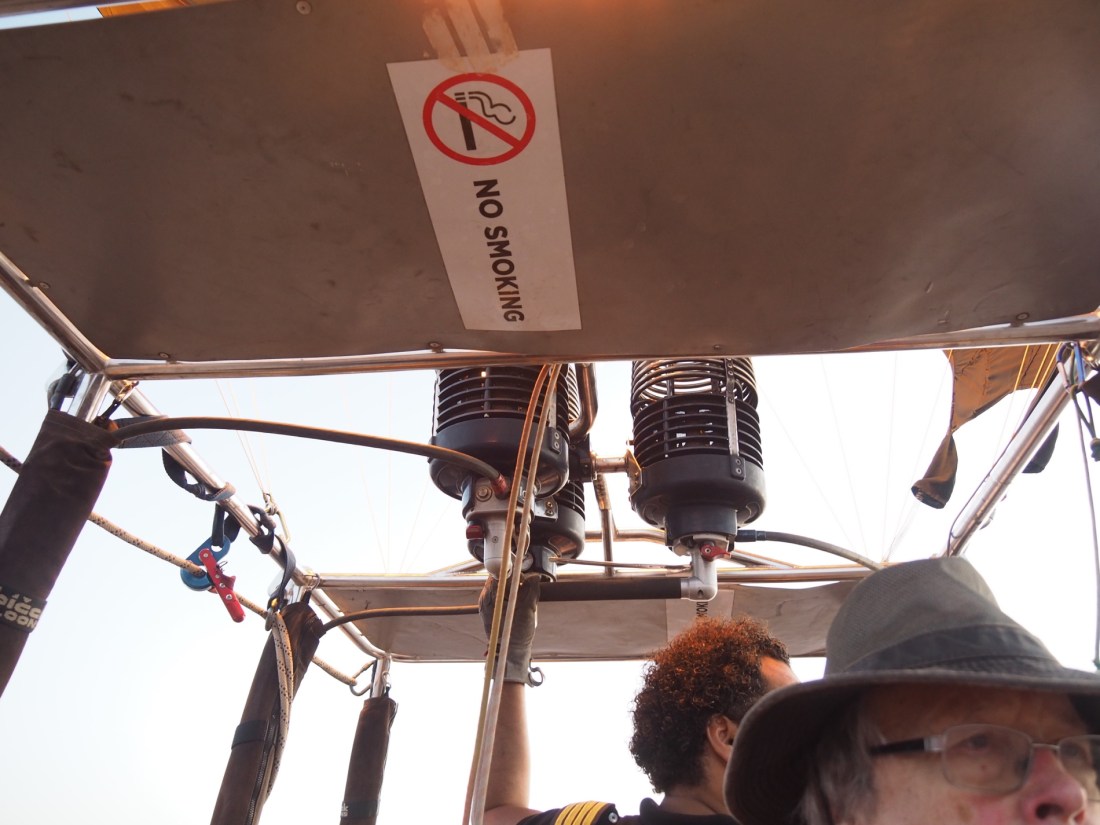
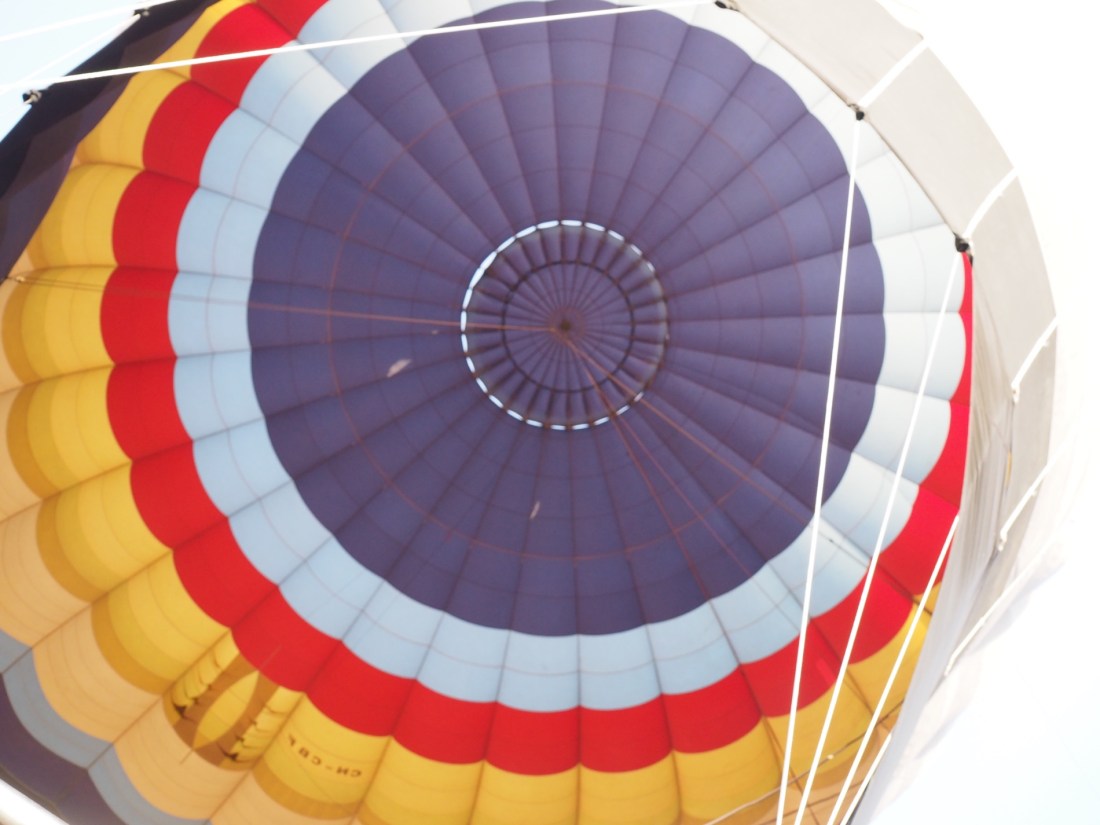
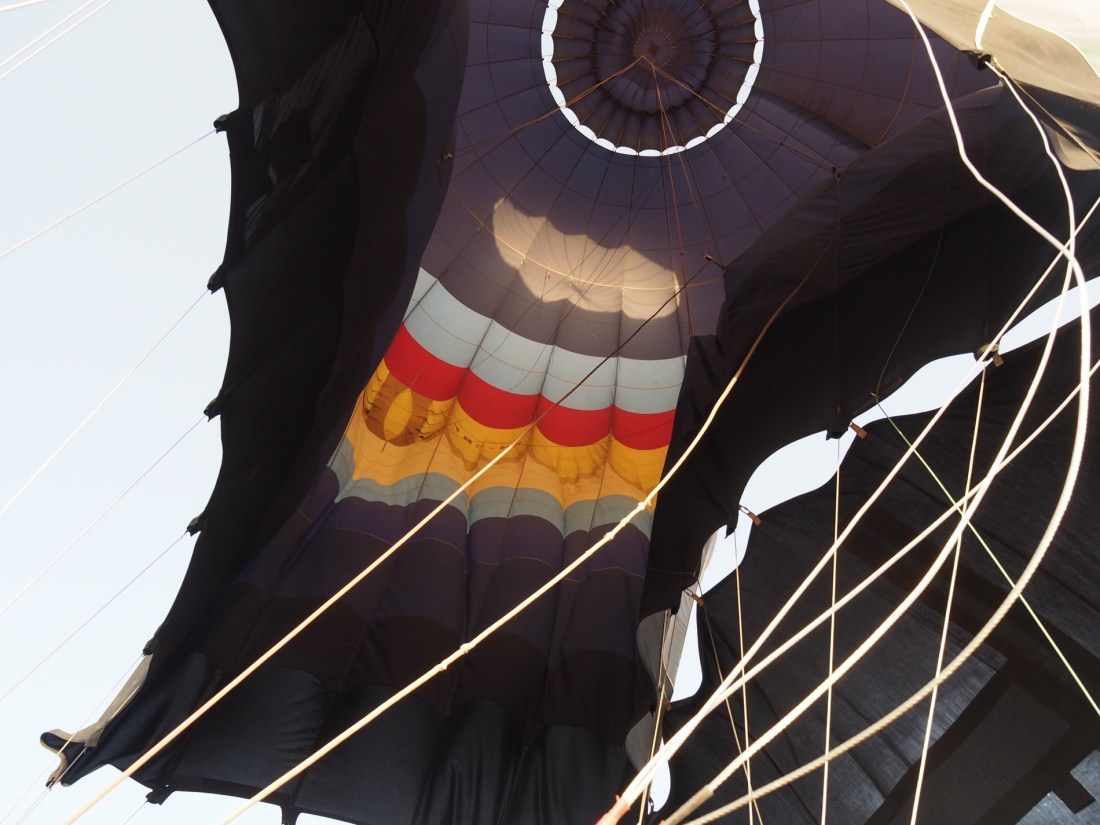
After a short time, the pilot, Ragab, called for the ropes that were tethering the basket to a tractor to be cast off, and we lifted into the air. This is what you see if you look up above your head at the burners:
And, of course, when the burners are ignited, here’s what you see:

(Why doesn’t the balloon catch fire? Because the flame is not directed to the fabric of the balloon, only to the inside of it.)

When the burners are not ignited, you see only the balloon above you, and hear only the sound of silence.
Then you turn your attention to what is happening outside the basket. Another balloon that has taken off before you:
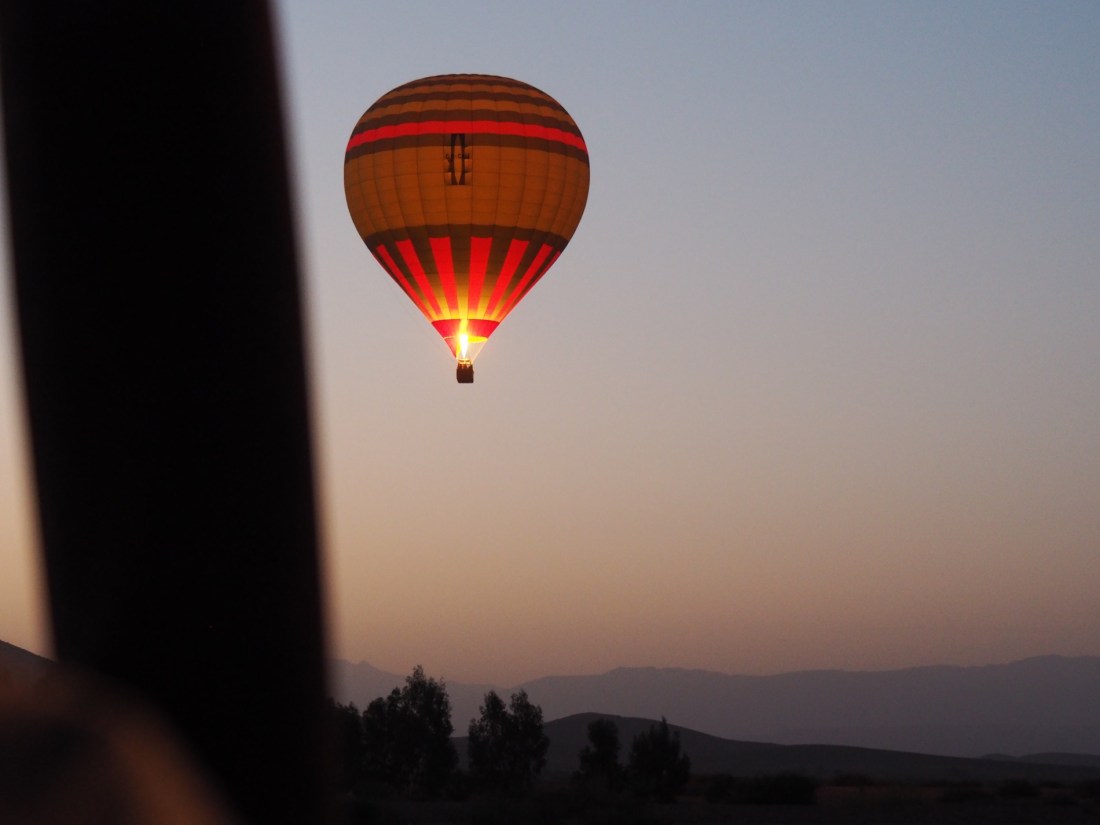
And the emerging sunrise. (Unfortunately, because of the wind yesterday, there was a lot of dust in the air today, so the sunrise was not very spectacular).

Of course, everyone has their cameras/iPhones out!

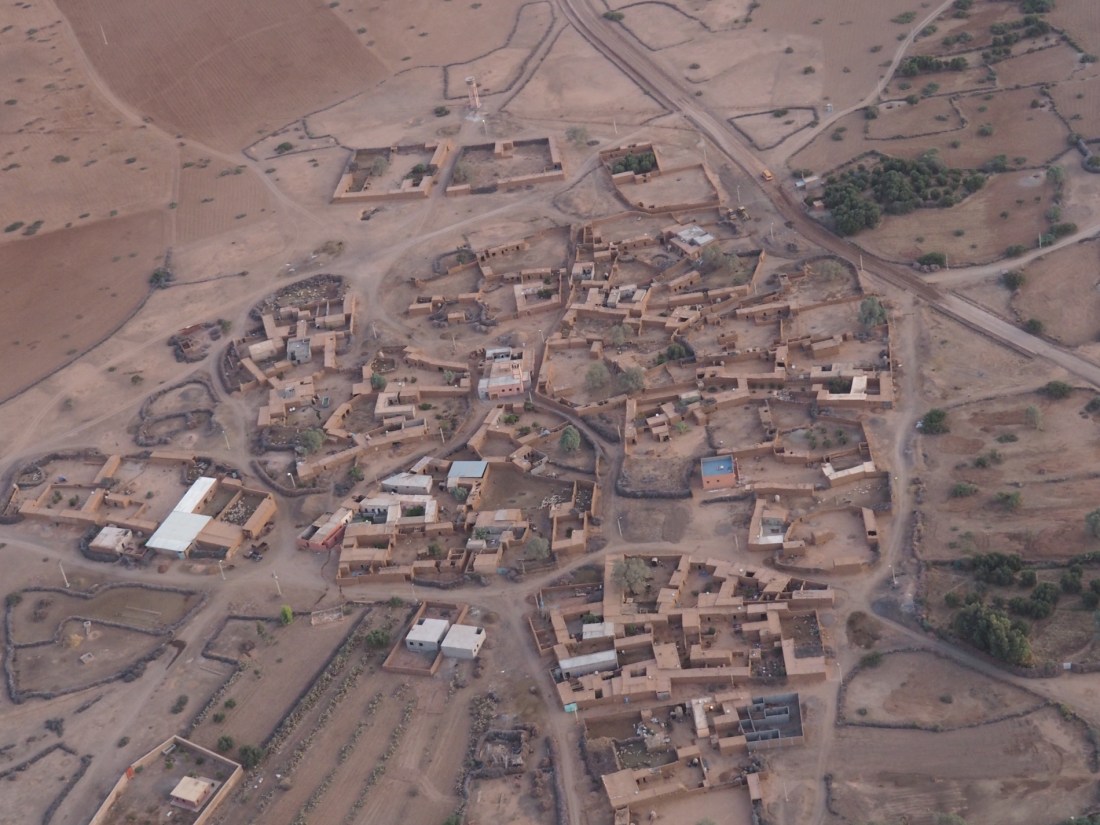
Immediately, you get a much different view of the villages we have been passing over the last several days:
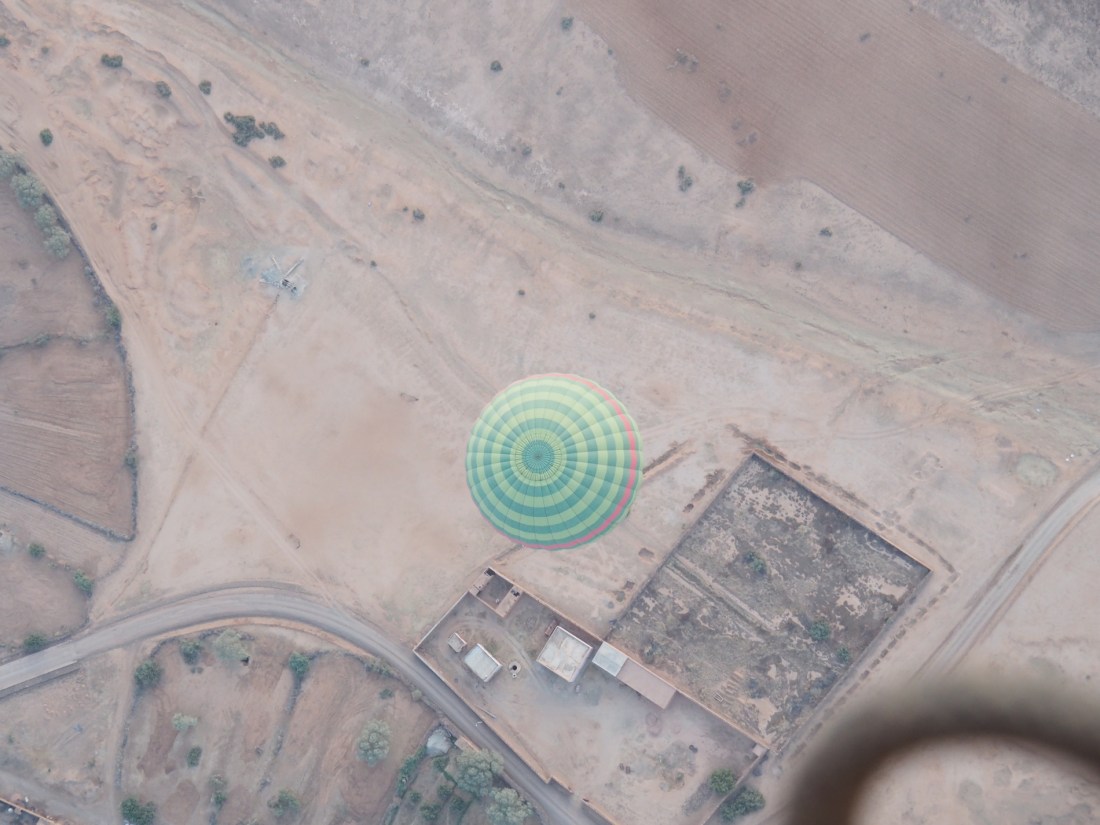
Our pilot takes the balloon up to 5,000 feet, which is the legal limit, and soon we are looking down at other balloons.

The pilot ‘reads’ the layers of air, using that information to find an air current to take us back towards the lift off site, and all too soon we are landing again (flight was actually an hour and 10 minutes).

Members of the crew, who have been ‘chasing’ the balloon in a car, dash over and start ‘spilling” air from the balloon.
The pilot, Ragab, takes a well deserved bow
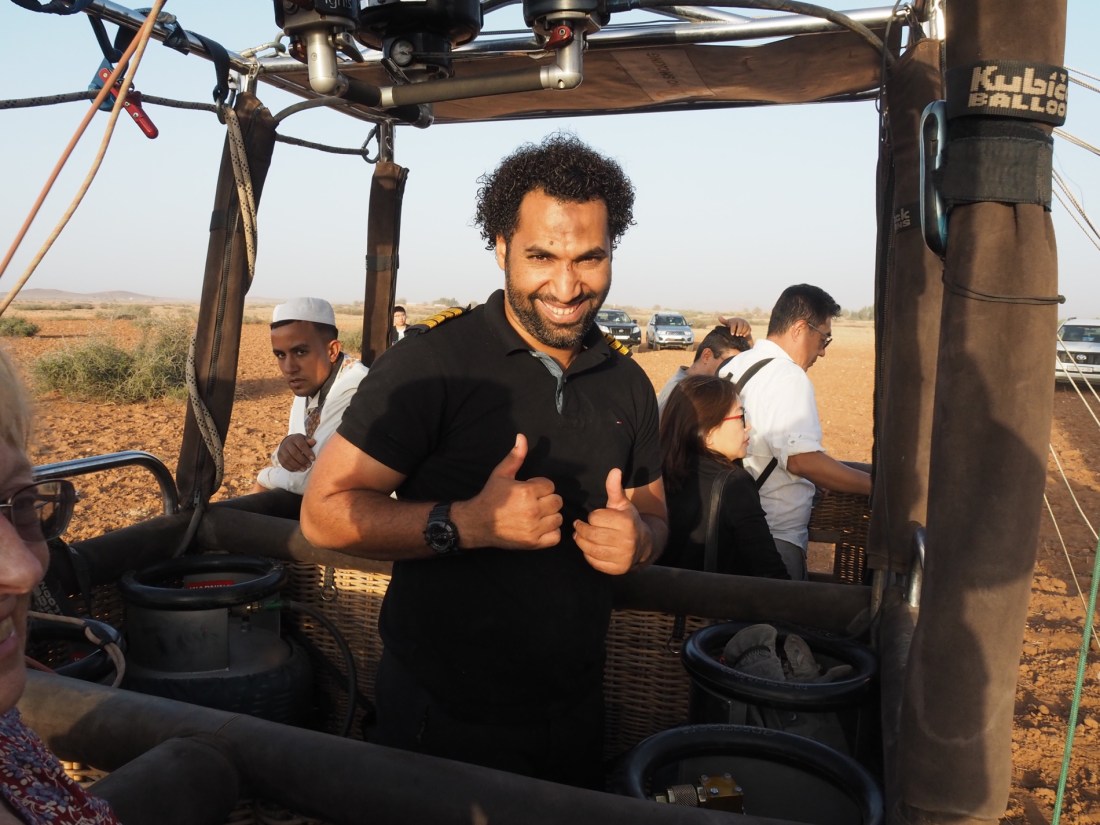
And then we are helped out

And turn to watch the crew beginning the process of packing everything up.

Here’s a picture of your friendly blogger/photographer, taken by a friend who went along for the ride with me:
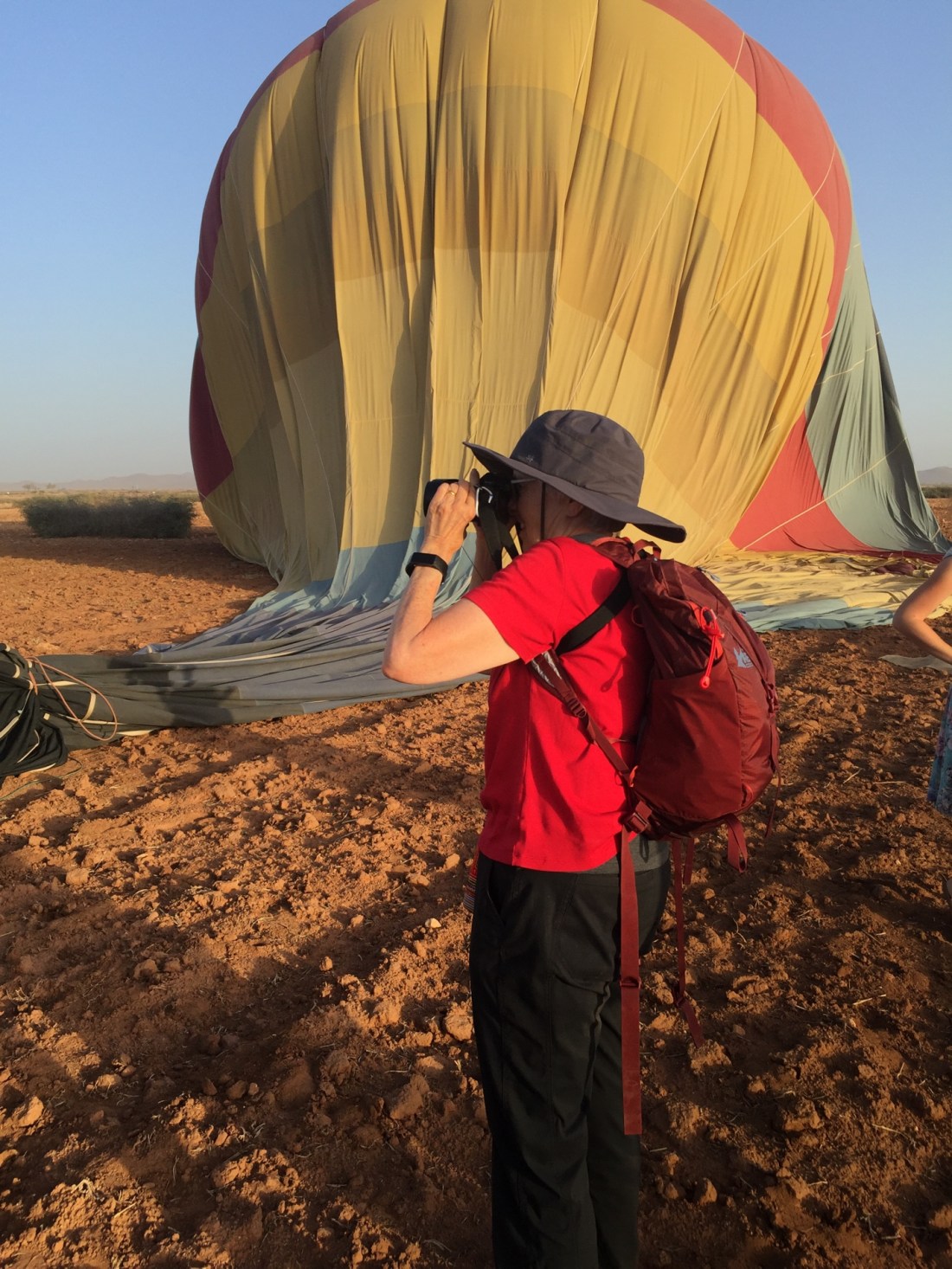
Mary

Marrakesh, Morocco 10/2/19
Idriss

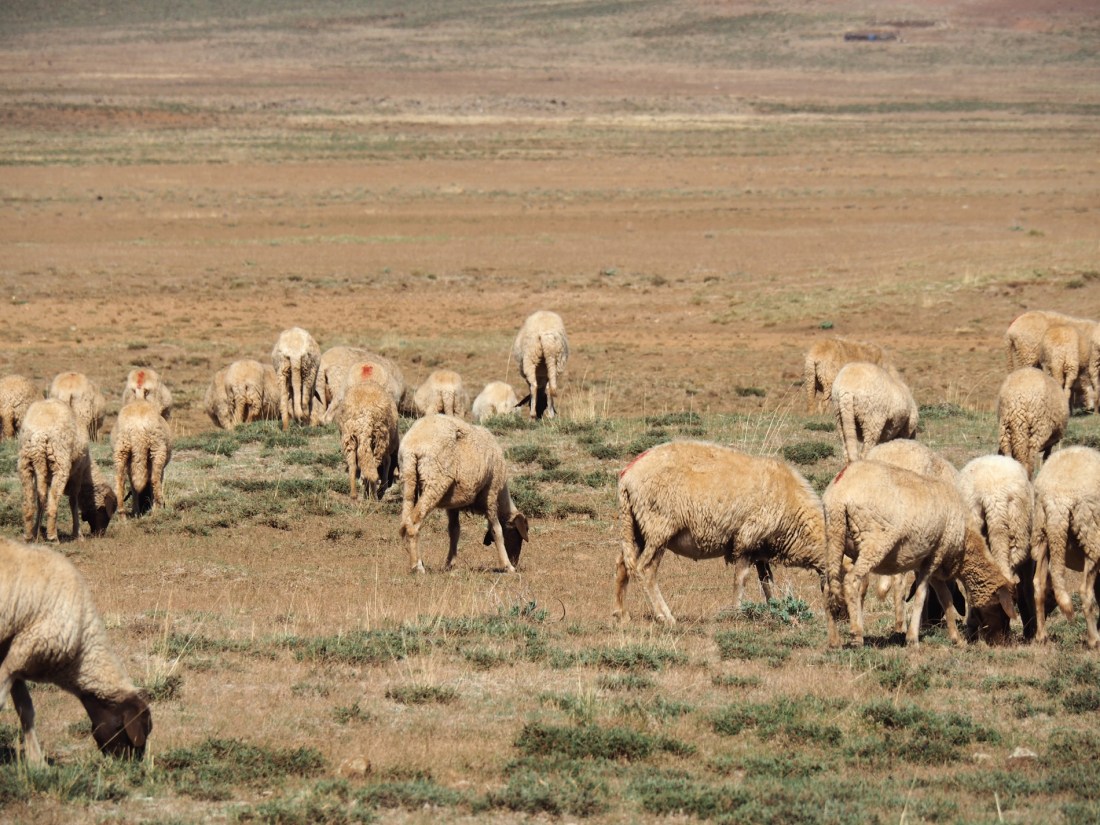
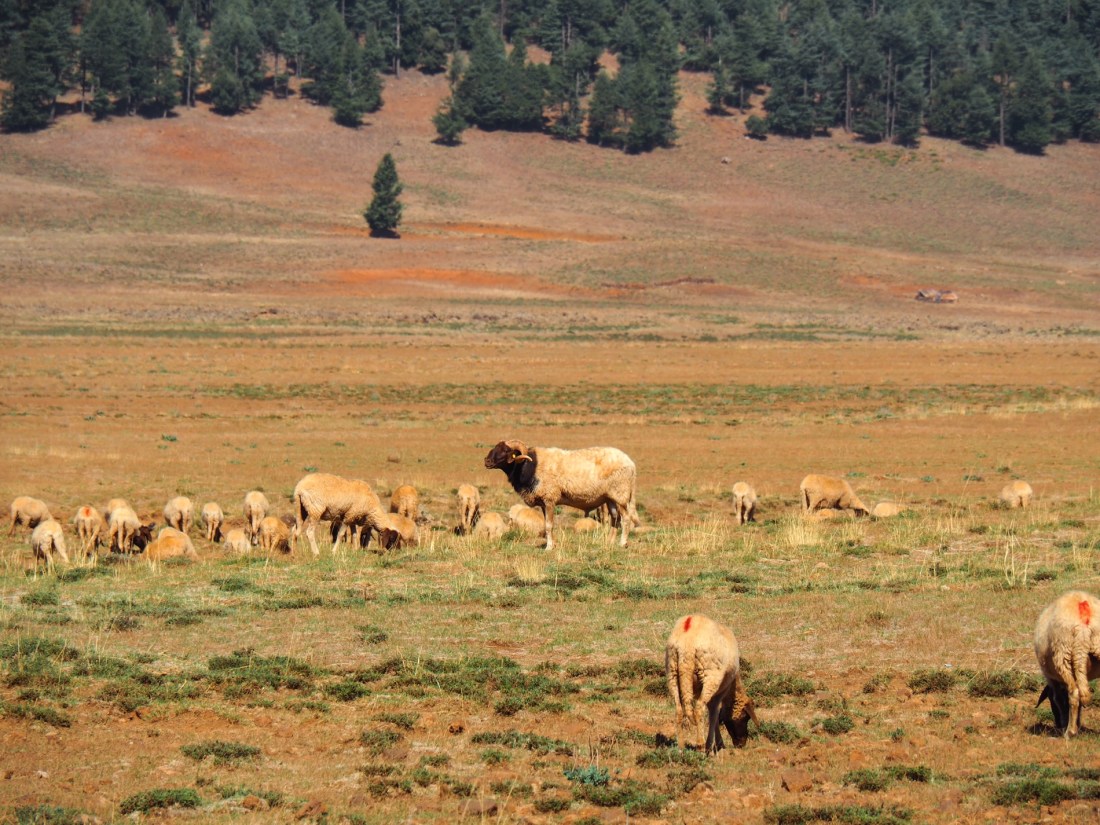
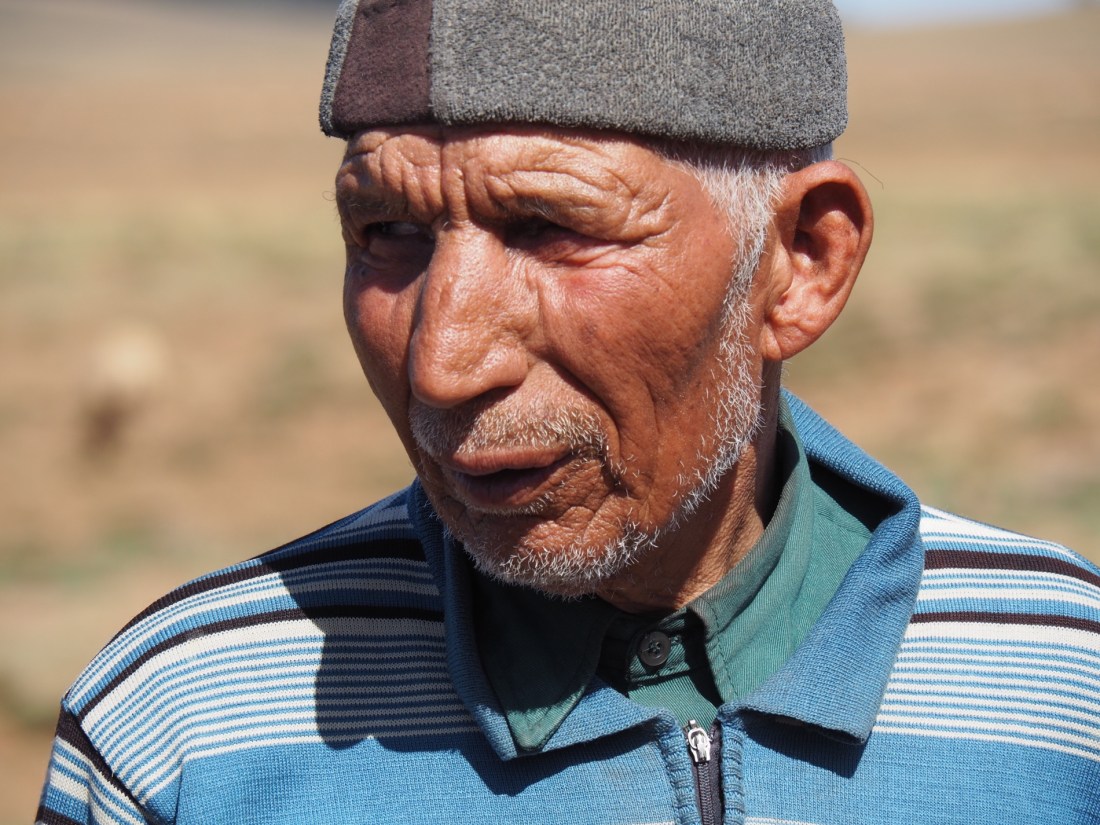
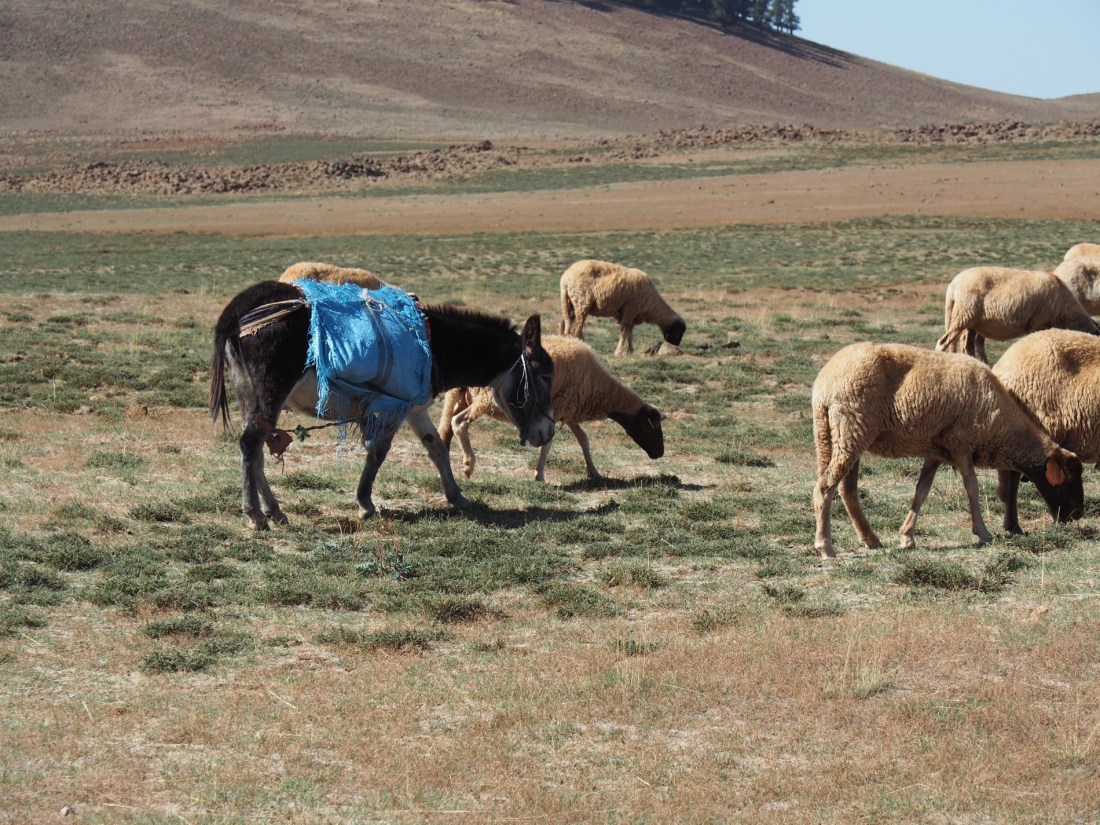
We met Idriss one day while driving south towards the Sahara through the Middle Atlas Mountains. No, not Moulay Idriss I who was a great king, the religious and secular founder of Morocco, and possessed great wealth in animals and land, but rather a semi-nomadic Berber who was not rich by any standard. He told us that he was herding 160 animals, 120 of which are his, and 40 of which he herds for others. At the end of the season, when the sheep are sold, he splits the profits on the 40 he doesn’t own with their owners. After all, he has done all the work to care for and protect them.

We learned that the Berbers here are semi-nomadic in that they do not wander all year. Rather, they take their flocks to the Middle Atlas Mountains for the summer to graze on lands that are owned collectively by the tribe, and then take the flocks down to lower valleys (2 days travel on foot, perhaps) for the winter. In the lower (winter) areas, the families own their land. In each place, the families have a home, although the home in the summer area is fairly temporary, but the families return to the same home site each year.

Idriss has a donkey which carries his food and water while he is out herding the sheep, but, unlike shepherds in many other parts of the world, there are no sheepdogs. His dogs, he explained, were back at his home, taking a rest. They have to stay up all night to guard the sheep from the jackals.

Idriss and his wife have a summer home near the area that belongs to his tribe for grazing. The herds are put into an enclosure at night, but it is not very sturdy. Hence the need for dogs to guard the sheep.

The herd consists almost exclusively of females (there are two males), and those that are pregnant are marked with red dye on their rumps. These ewes are given extra feed and salt in the morning before they and the rest of the herd are let out to roam and graze for the day.

It is hard to understand at first how the animals can survive on what looks like very meager vegetation. But, upon looking closely you see that there actually are small plants and grasses.

We learned that Idriss has three sons and two daughters, all of them independent now and also leading a semi-nomadic life. He has been herding animals all his life.

He is 75 years old. His children are carrying on the semi-nomadic tradition. But who knows whether his grandchildren will lead the same type of life?

Written on the road between Fez and the Sahara, in the Middle Atlas Mountains

Posted from Marrakesh, Morocco 9/29/19

Market on the Way to Fez

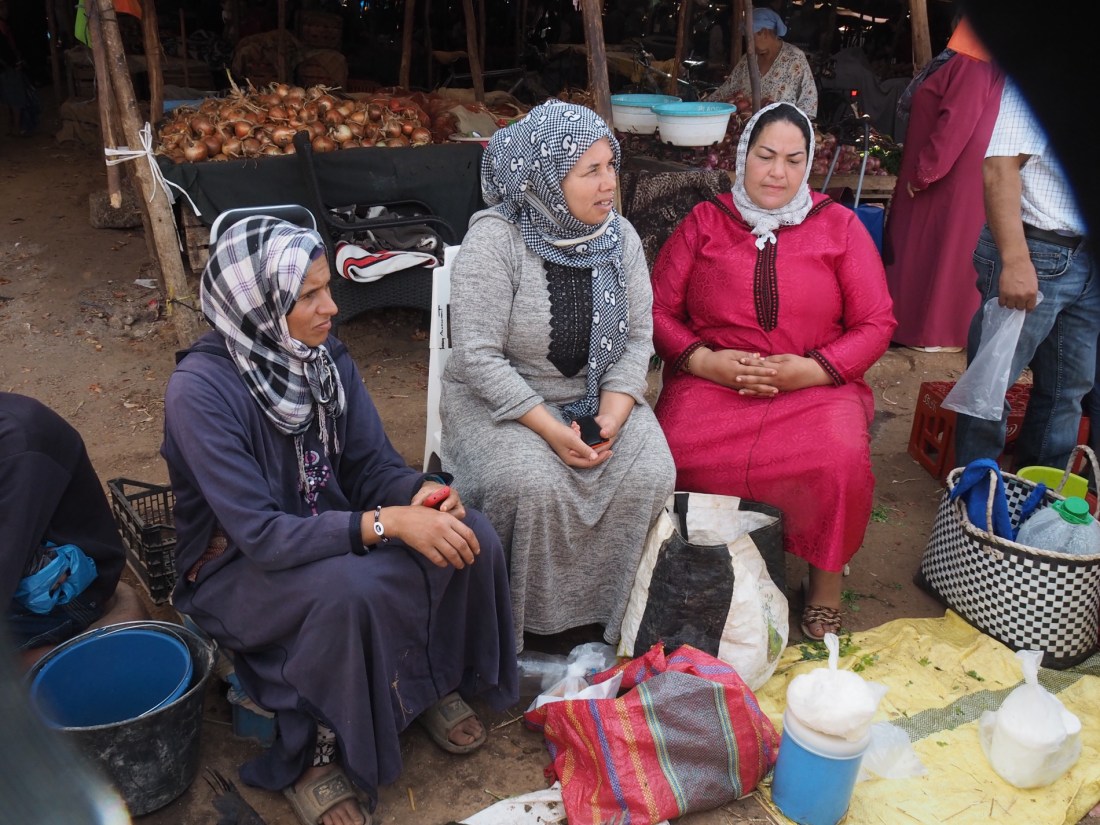
We stopped in a local market in Khomissate, on the way to Fez from Rabat. Our tour leader has forged a relationship with three of the women there, and the idea was to support them by buying a few things.

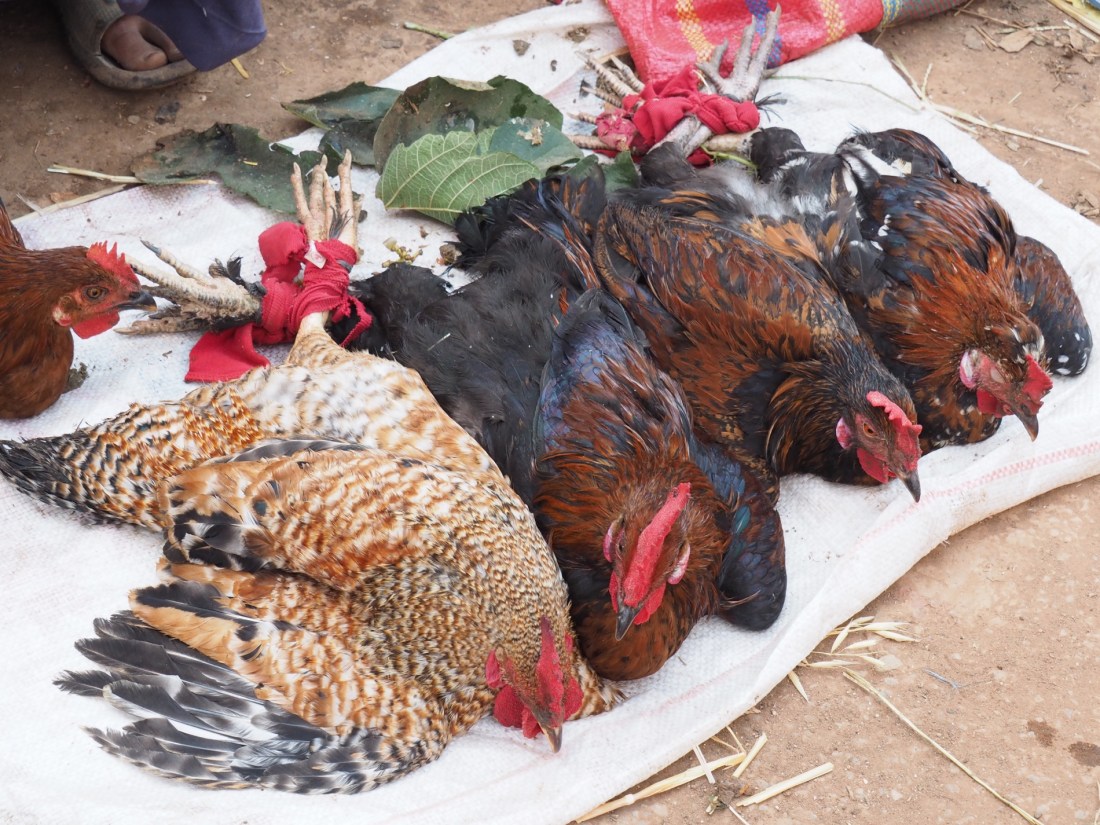
They had brought several things to sell – chickens, who seemed resigned to their fate,

Free range eggs (which we bought) and ghee, which they make in their homes.

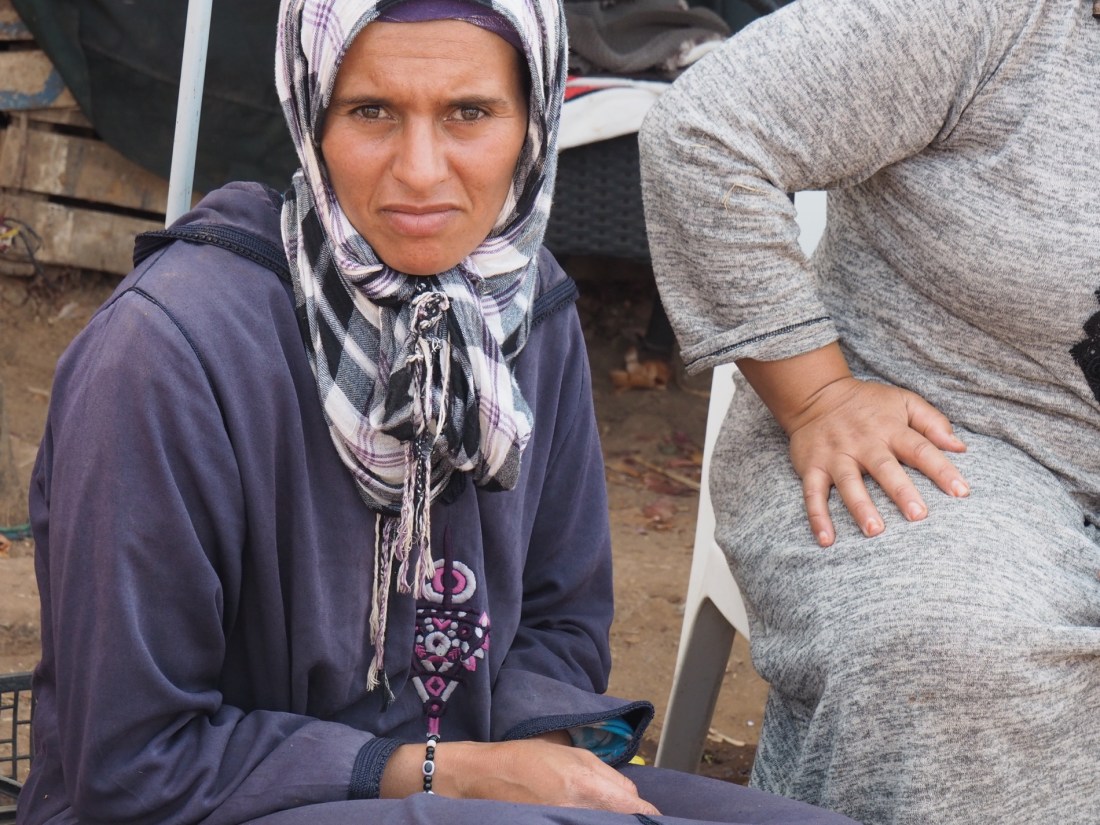
They were very willing for us to take their pictures. The younger woman’s face and eyes were especially captivating. (Fatima)

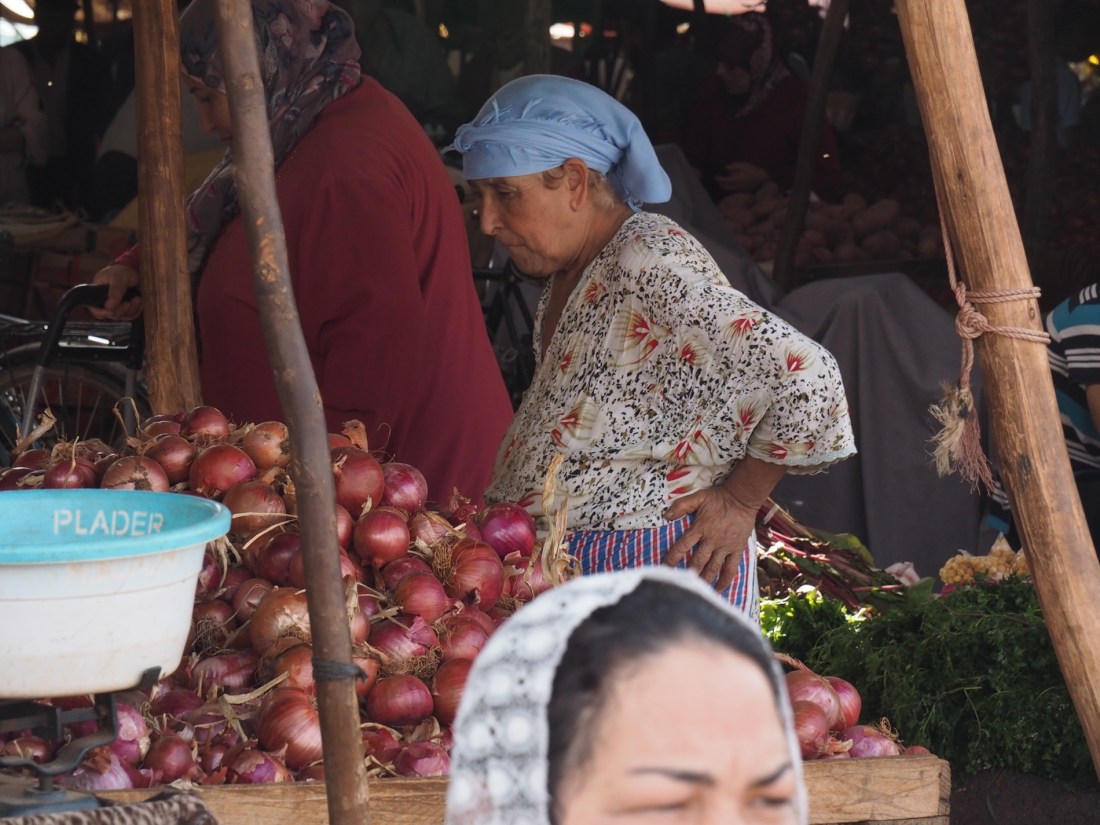
There were other people in the market of course, such as this woman who was standing behind our group of women, and had a huge pile of onions to sell.

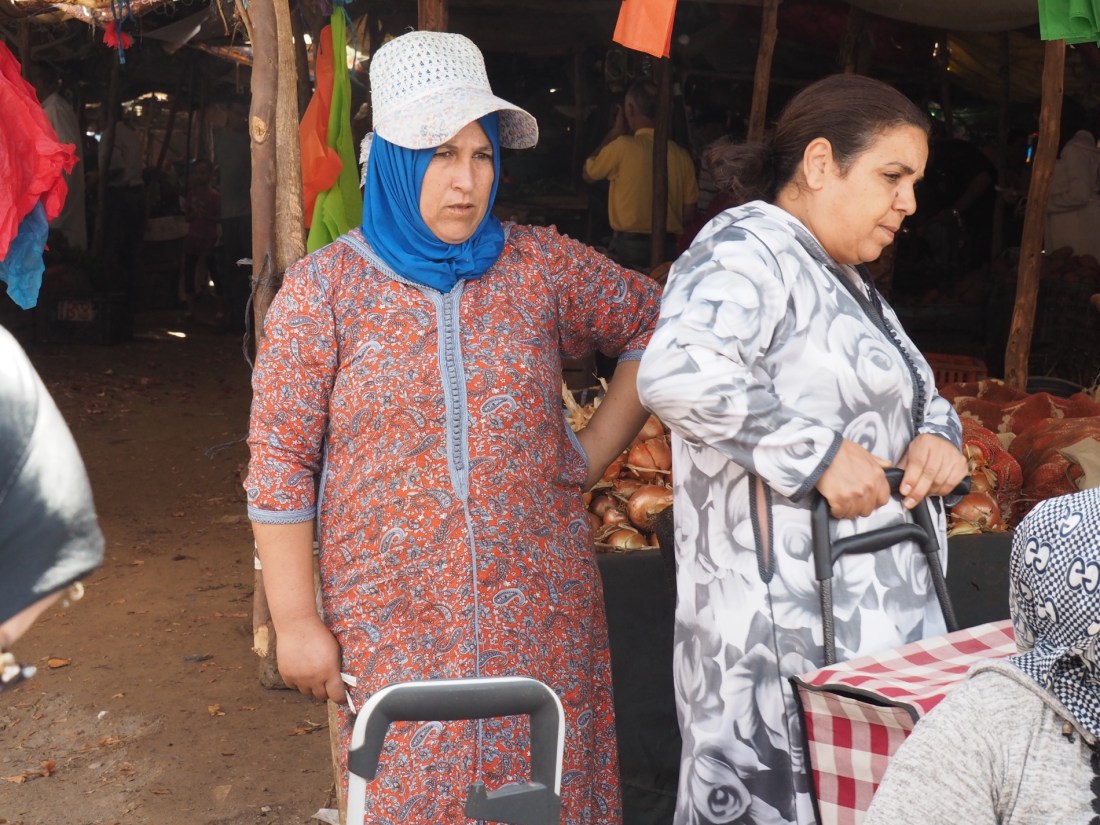
This woman was wearing a hat over her scarf which seemed to be crocheted

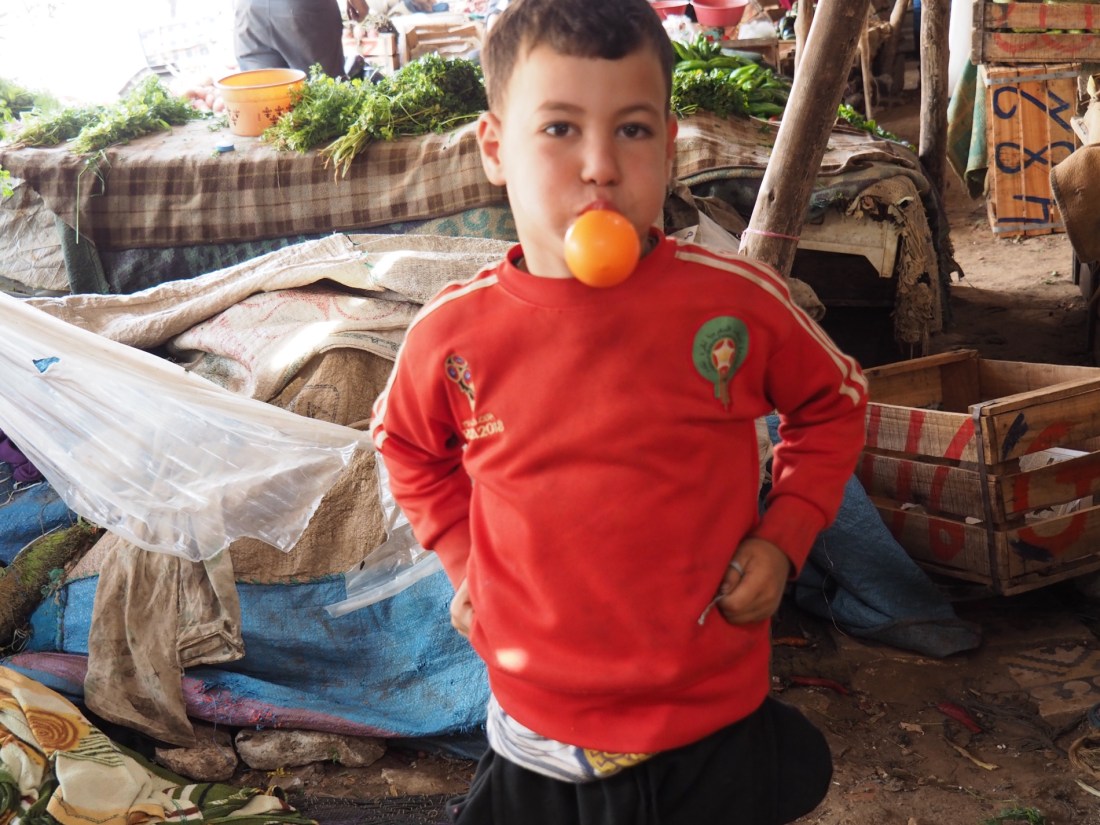
And then there was a little boy to whom I gave a balloon (after asking permission from his mother). He immediately started huffing and puffing to blow it up!

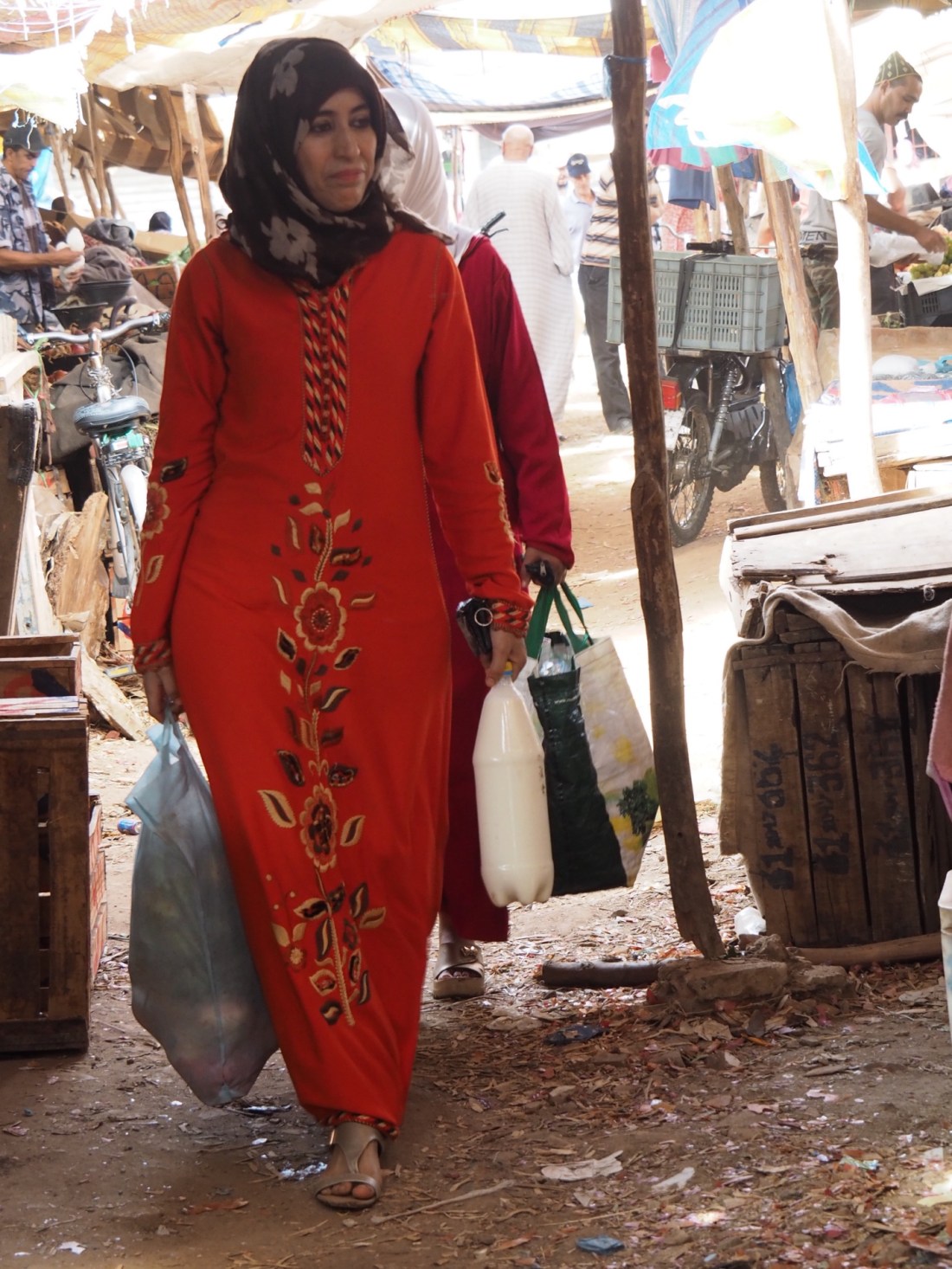
This woman was elegantly dressed in an orange caftan, and had obviously had a successful shopping

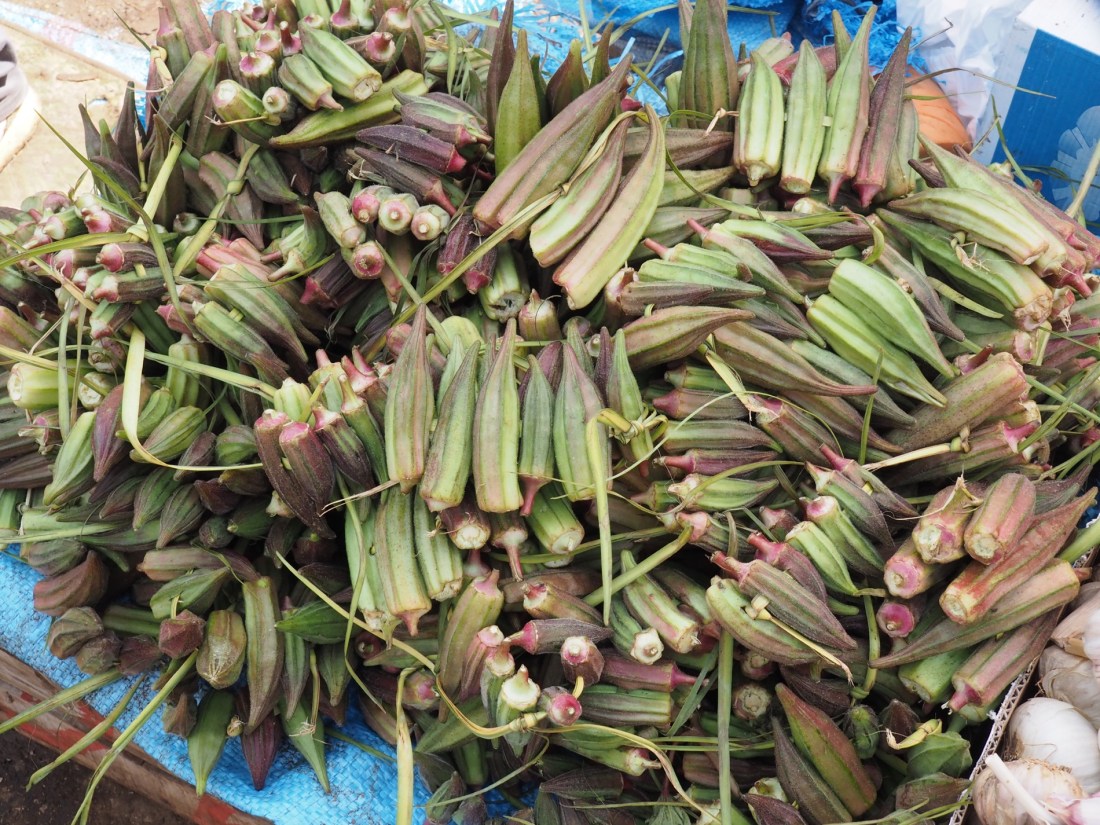
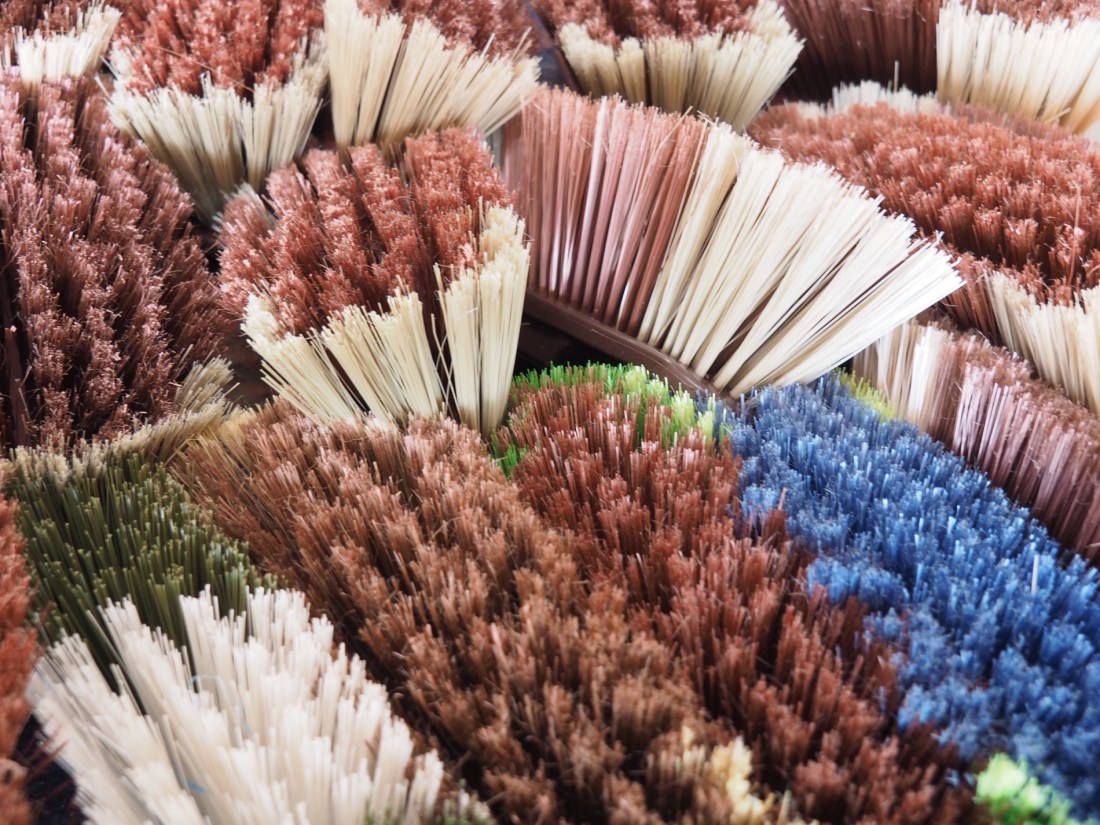
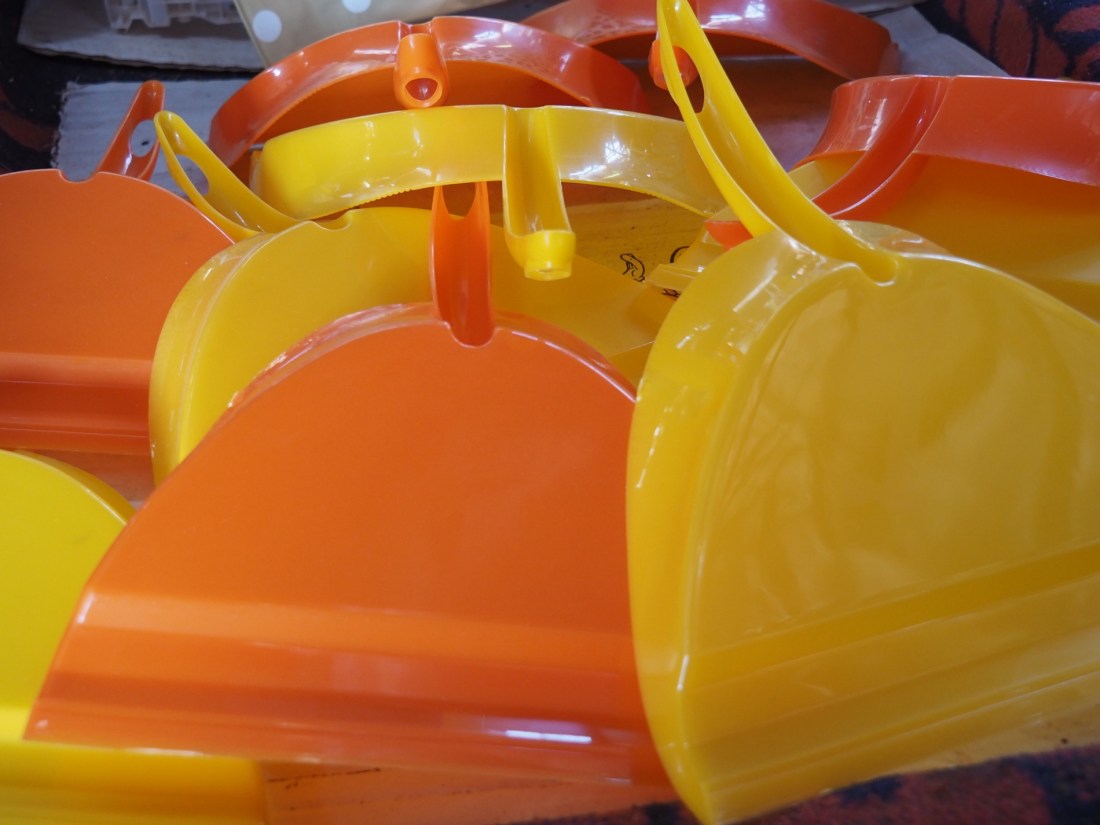
I took some pictures of the products being offered for sale which seemed especially photogenic:

Okra

Pomegranates (at their peak right now)

Brushes

Dustpans

Early on, I had noticed an elderly gentleman who I glimpsed behind other peoples’ shoulders. He is obviously quite elderly, and wore a straw hat and what looked like a white shirt and a coat.

Later, I got a better look at him and realized that he must earn his living pulling a handcart to carry groceries or other products for people. This may be considered a menial job, nonetheless he was preserving his dignity by the mode of his clothes and his gentle smile.

Mary

Written on the road between Meknes and Fez 9/23/19

Published from Ourzazate, Morocco 9/29/19

Realization of a Dream

A group of women in a small village called Ait ben Haddou near Ourzazate, in the valley between the High Atlas and the Anti Atlas Mountains, had a dream in 2012 of taking charge of their lives by forming a woman’s association, which they called “Step by Step.” The original group was made up of 15 single and 1 married woman. Families of the women (and husband of the one who was married) were against the idea – it was against tradition – a woman’s place is in the home, she doesn’t need education….we’ve all heard those ideas before!

But they persevered. One of the women had a small property which she let them use. And so the group started sharing the skills they had – teaching others, for example, to make couscous, bake cookies, weave rugs…. And selling those items to local hotels and other food establishments. Many of the older women who came were illiterate, and so those who were literate held classes for them.

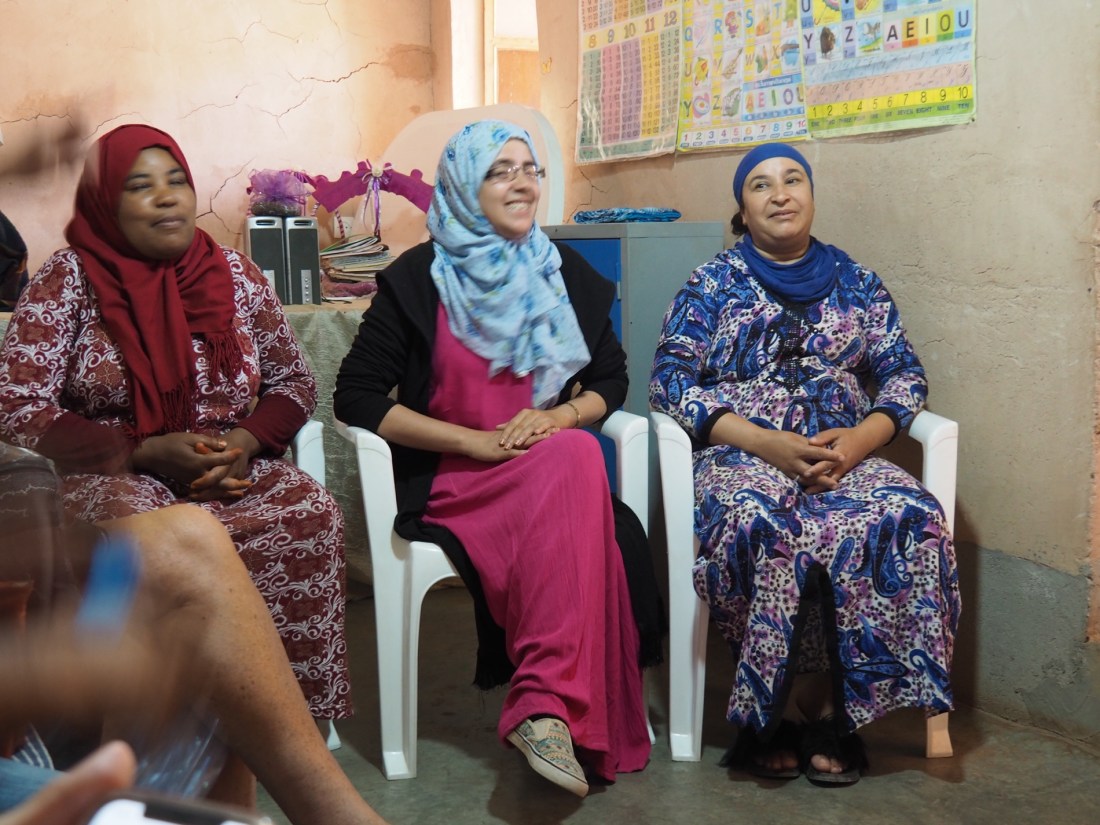
These women make up the board of directors of the Association.

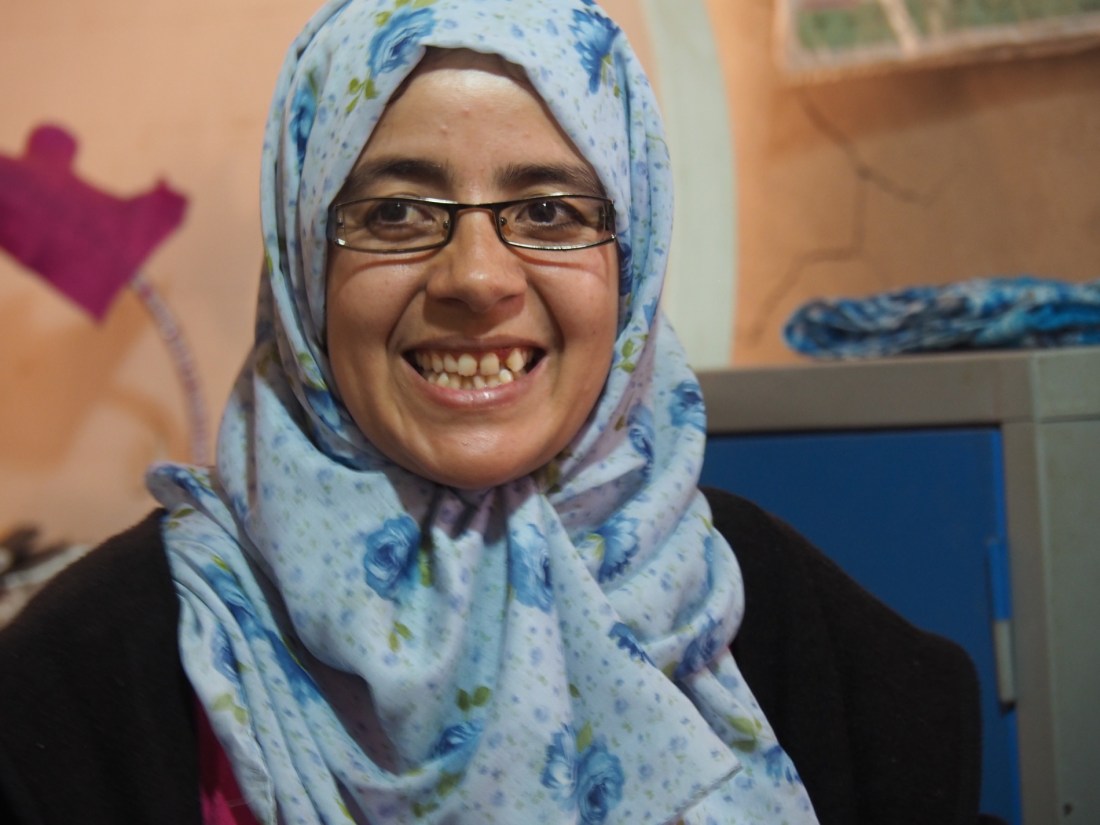
This is a picture of Fatima, who is the President of the Association. She talked about the history of the association in Berber, and our tour leader interpreted for her. It was only later that we learned that she speaks very good English!

Another, younger woman, Houyara, explained that, when she finished school at 17, she was expected to stay at home, cook, clean, and ‘vegetate.’ When she told her father that she wanted to join the Association, he was vehemently against it. She was expected to stay at home like a dutiful daughter until she got married.

Talking to her father, she said, was like talking to a wall. So she handed the task over to her mother, who was finally able to convince her father that this would be a positive thing, and he grudgingly allowed her to do it. Houyara related this story to us in perfect English. When we asked where she learned English she said “at the Association.”

The Association has survived the resistance of the local tribes and families. One of things it has done is to be involved in supporting other issues as well – for example, a group of medical professionals came to the area, and the women organized meals and logistics for them. This gave them an important presence in the community, and they came to be respected. Men in the area soon realized that an association would benefit them as well, and formed their own.

There are now 40 members, 32 married and 8 single (shift from the make up of the original membership!) and the Association is flourishing. They produce many kilos of cookies and couscous each day. (Couscous is actually a pasta made of flour and water, and is very hard to make, we learned, from a demonstration, and so many local women prefer to buy it from the Association.)

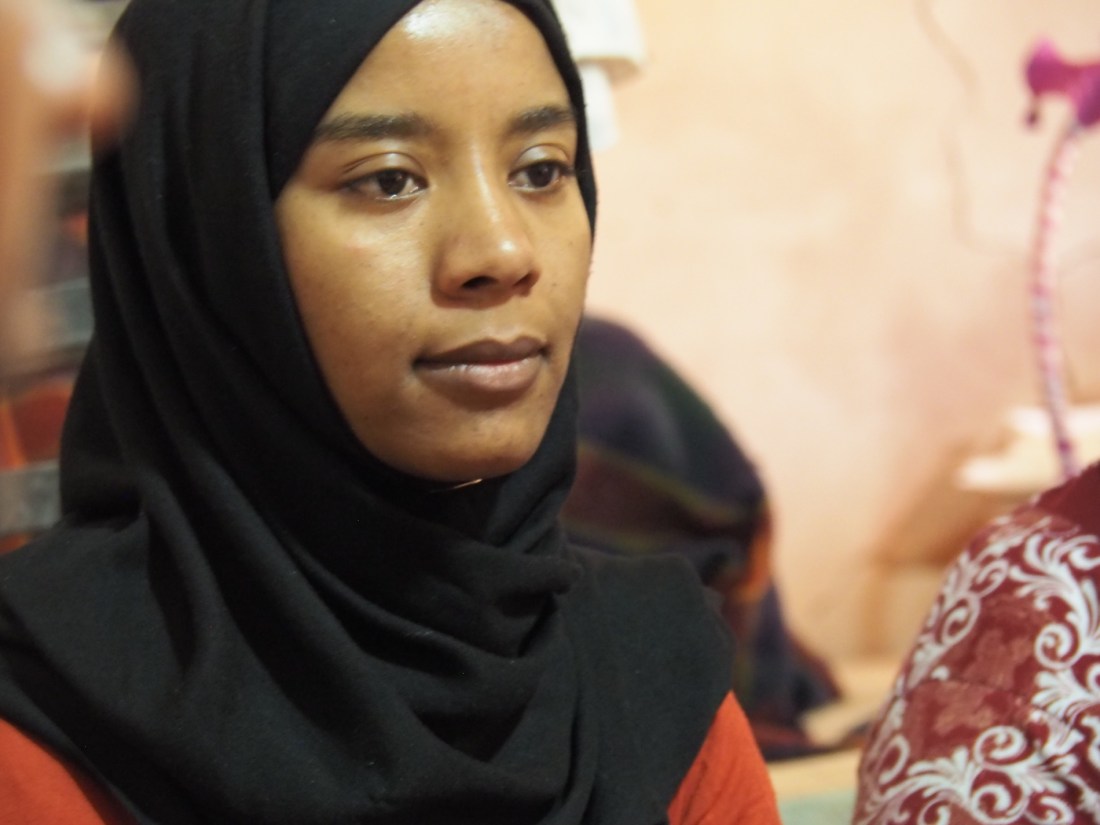
And they have started a kindergarten for children of the women who want to take part but don’t have childcare at home. Here’s a picture of another of the members.

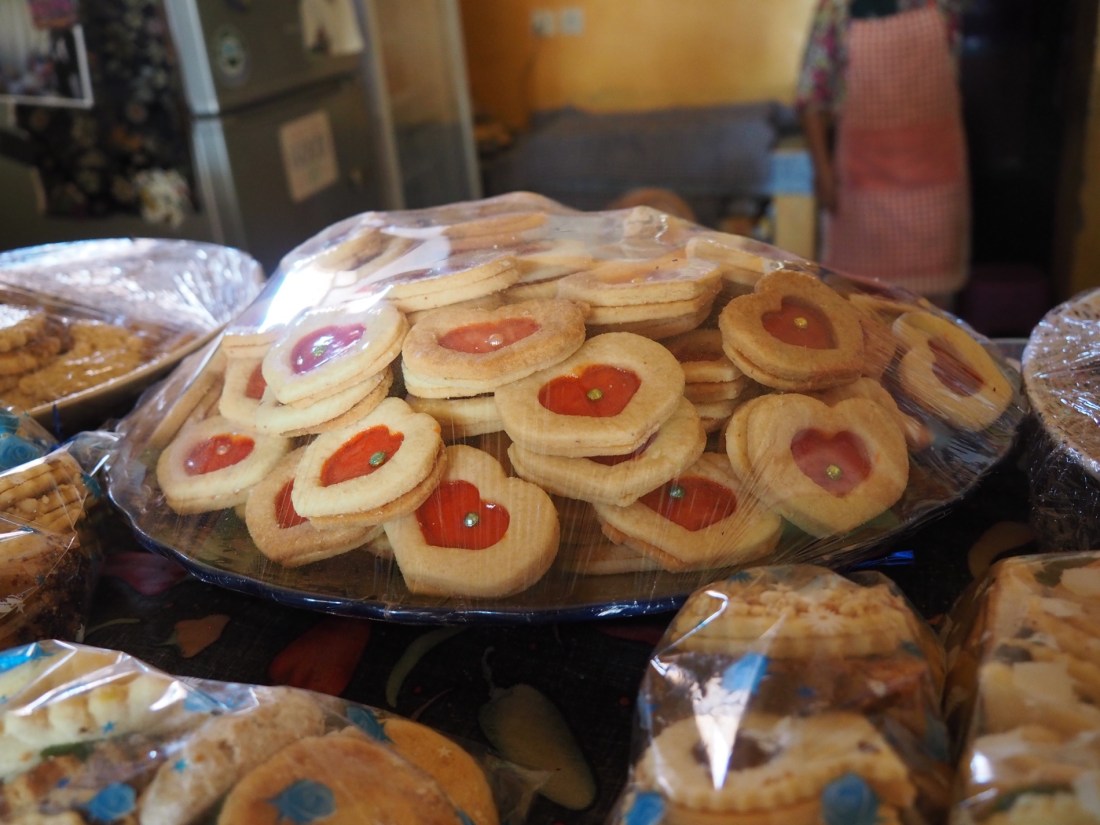
As you can see, the women work under really difficult conditions, but I can attest that they turn out really beautiful and delicious cookies.

One of the things that has helped the Association grow was a chance meeting with Grand Circle Foundation, a Foundation supported by Overseas Adventure Travel, the company which which I am traveling. A representative of the Foundation had heard of an association in the area, and came to make contact, thinking he would be meeting with the men’s association, but found instead that he was meeting with Fatima and her board members!

The Foundation is now supporting the Association. The Association convinced the local tribe to give it some land, and a two story building is going up with Foundation funds. It will have a proper kitchen, a coffee shop (great source for revenue) space for the kindergarten, classrooms, Association office, and meetings. Here are members of our travel group, standing outside the building. It was designed by a woman architect in consultation with the women, who called out exactly what features were needed.

That is certainly one realization of the dream that Fatima told us about. In addition, Houyara happily told us that her father is now extremely proud of her and talks to everyone about the accomplishments of the Association.

And Fatima, who recounted to us that she had twice dropped out of school earlier in her life, told us that she is now going to law school!

Realization of the dream, indeed.

Mary
Ourzazate, Morocco

9/29/19

Mausoleum of Mohammed V

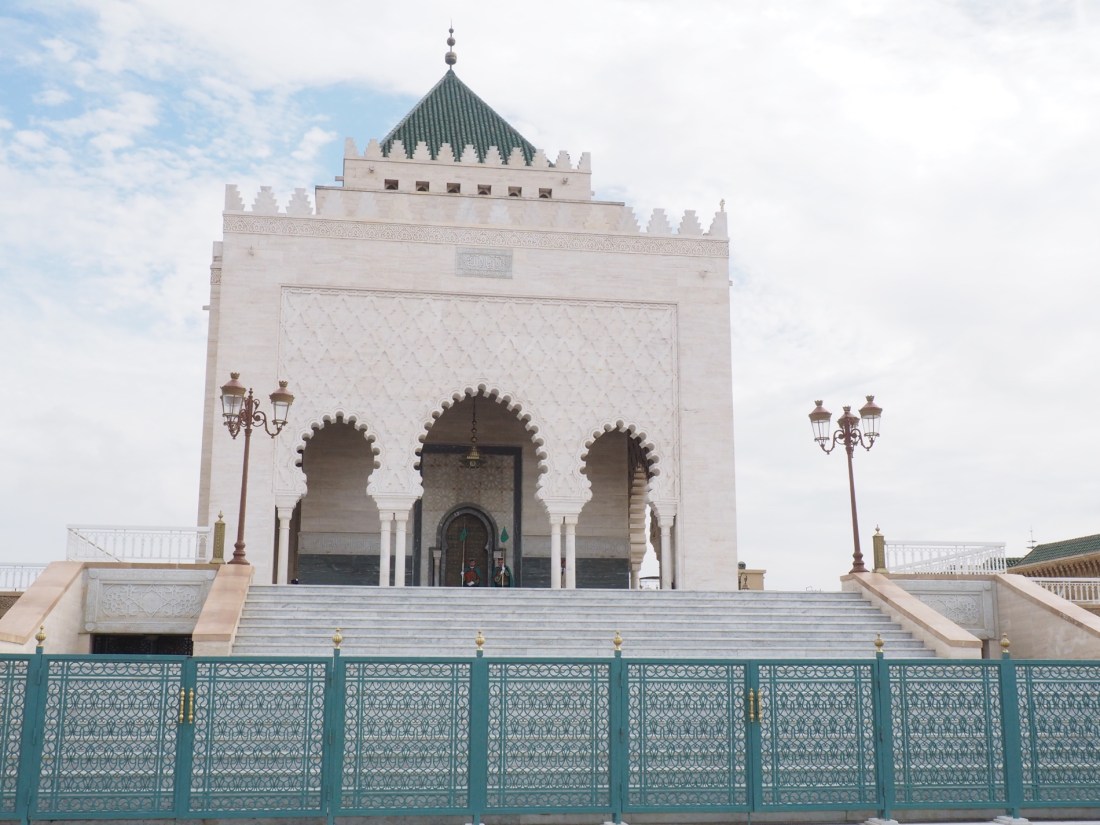
I started this trip in London, and on the first day I visited the British Museum (subject of another post). In the museum I saw drawings of the tomb of Mausolus, a Persian satrap of Caria, which was considered one of the seven wonders of the ancient world. Understanding came to me: This is where the term “Mausoleum” originated. I have visited some famous ones: the Taj Mahal in Agra, India, the Mausoleum of Cyrus the Great in Pasargadae, Iran, the Mausoleum of Ho Chi Minh in Hanoi, and the Tomb of Hafez in Shiraz, Iran, amongst others, but in Rabat I visited the tomb of Mohammed V, which was built by his son, Hassan II, and this one is truly extraordinary.

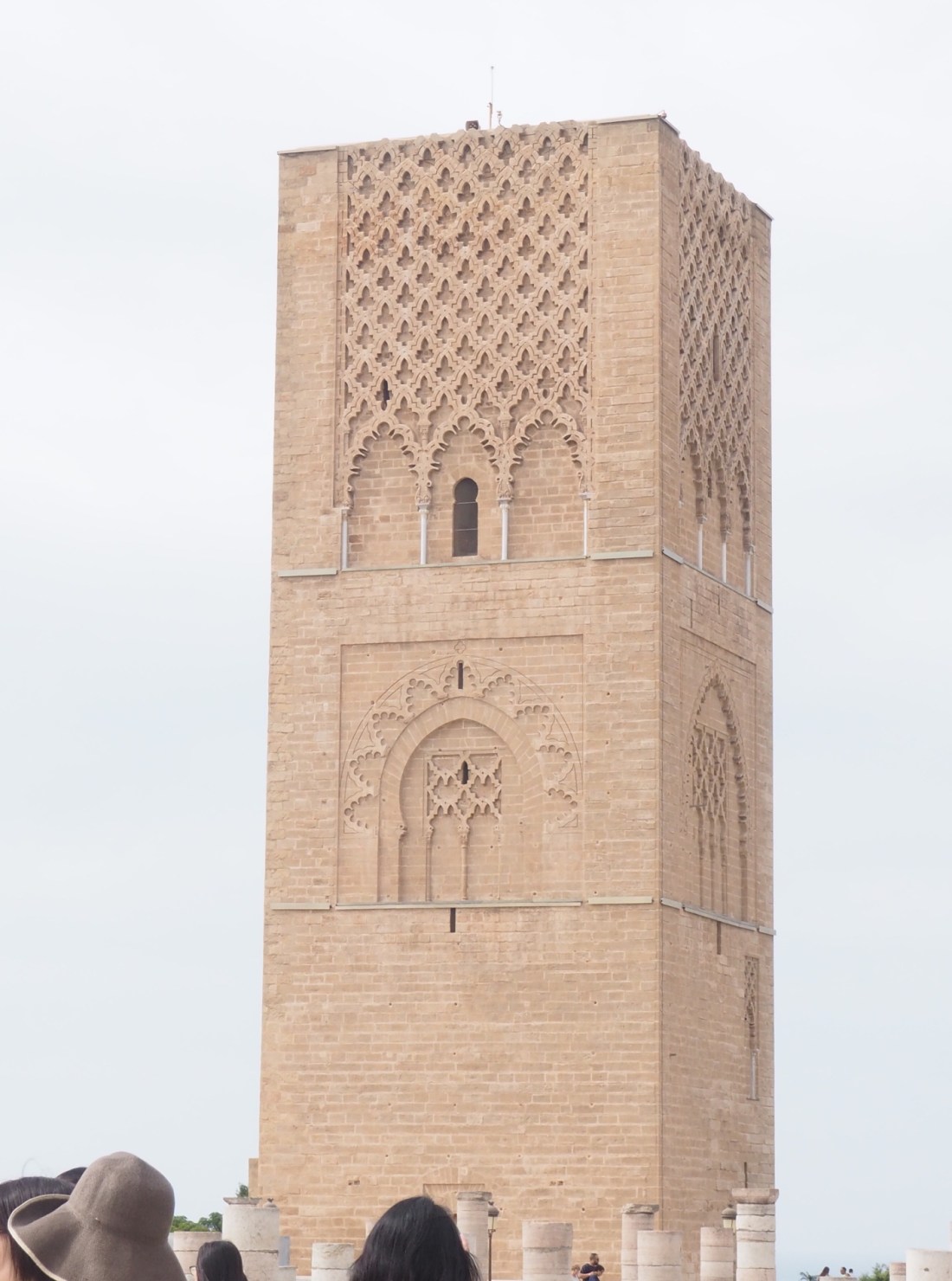
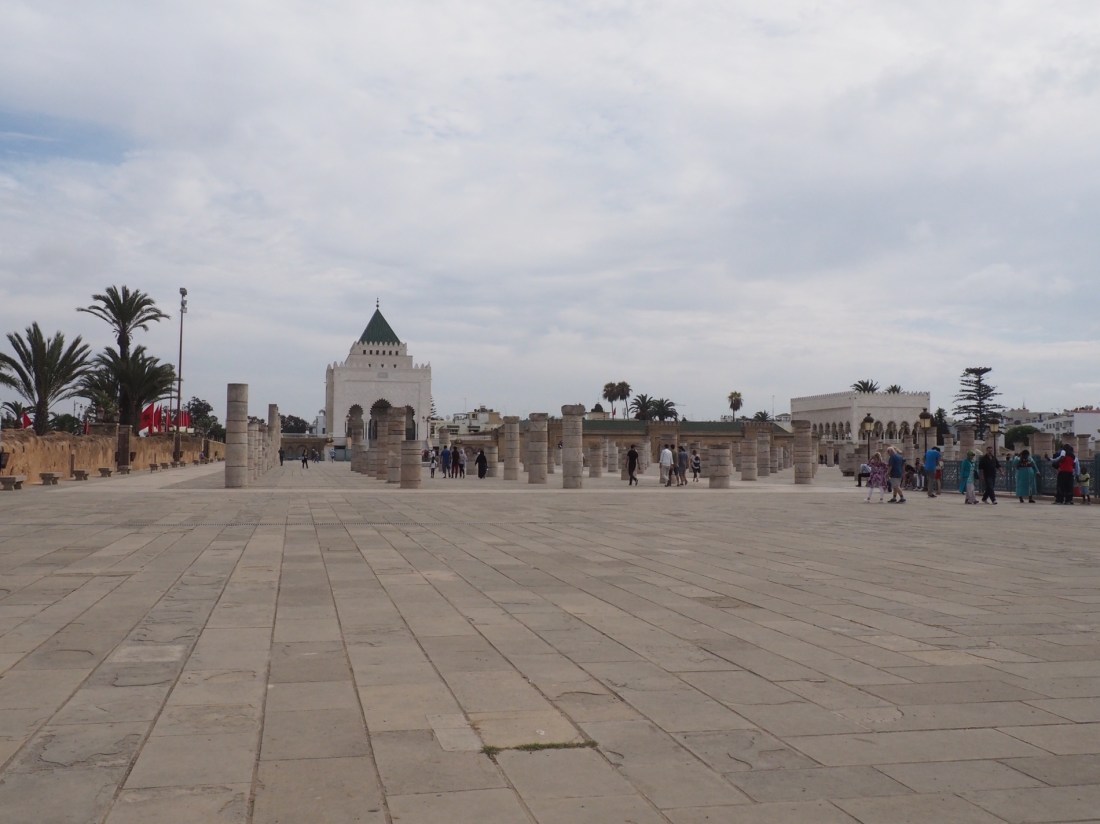
The Mausoleum is built on a large platform, the Yacoub al-Mansour esplanade, which was originally intended for a huge mosque. But only the minaret, known as the Hassan Tower, was built before the king, Abu Yusuf Yaqab- al-Mansur, who had commissioned the building, died in 1199 CE. The tower was originally intended to be about twice as tall as it is now (it stands 44 meters or 140 ft). It is so large, that it does not have stairs, but rather, it has ramps, which would have allowed the muezzin to ride a horse to the top to issue the call to prayer.

There are still a few columns that were intended to support the roof of the mosque, (and the modern architect added more) so that you can get an idea of how huge the structure would have been.

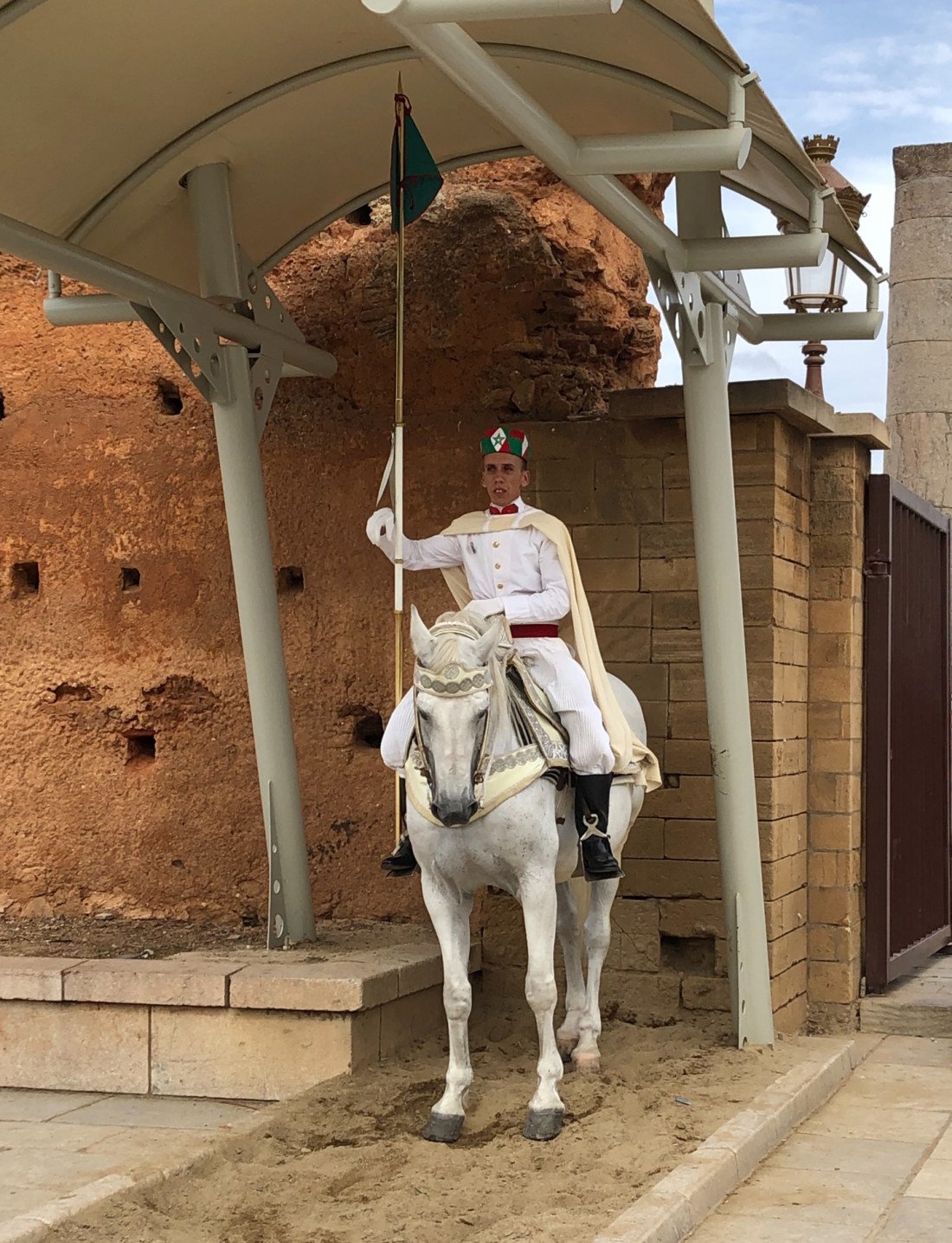
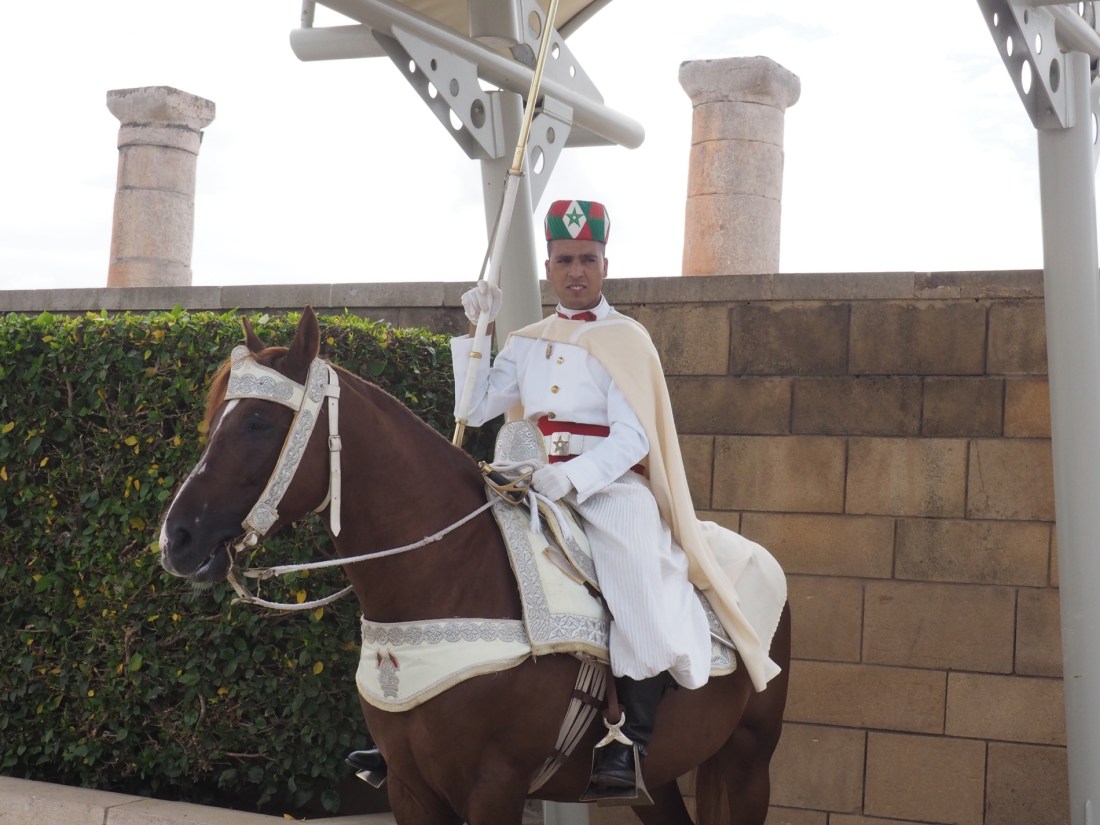
The entrance to the area is guarded by men on horseback.

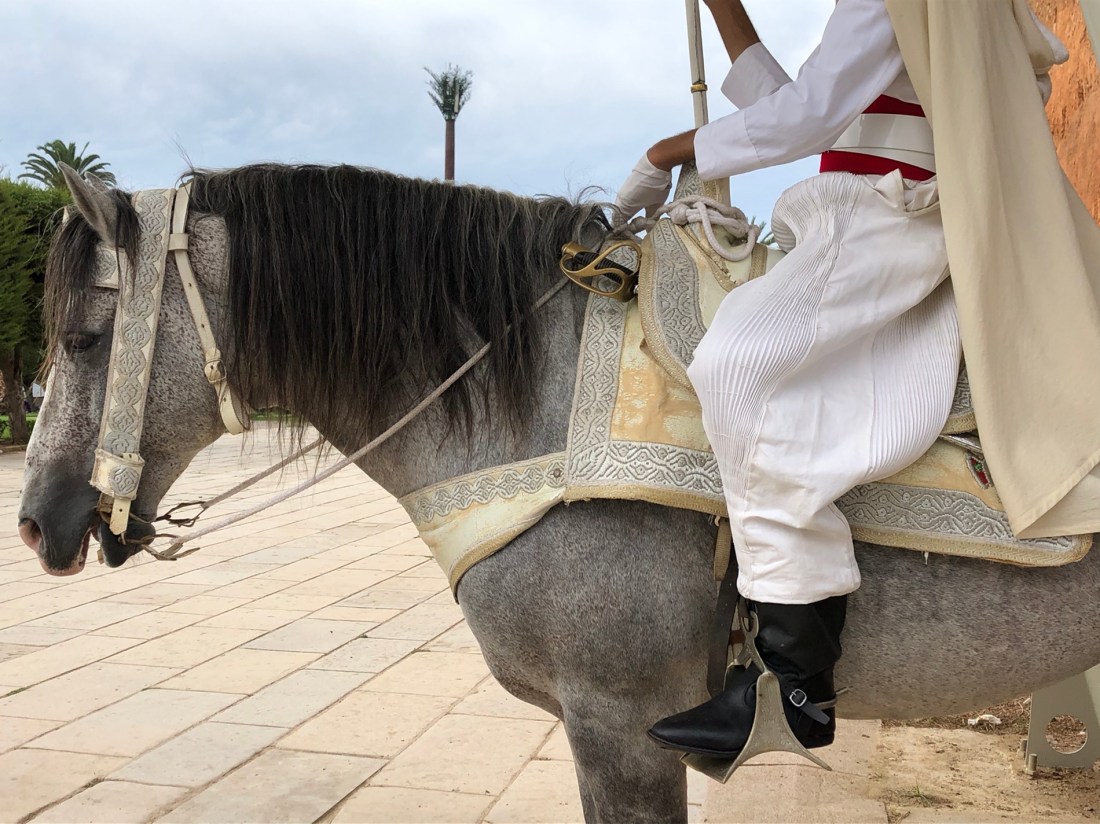
The horses and their riders stand a period of 1 hour, and are changed ritually. (And it appears that the breed of horse is changed, too.)

The men’s trousers are intricately pleated

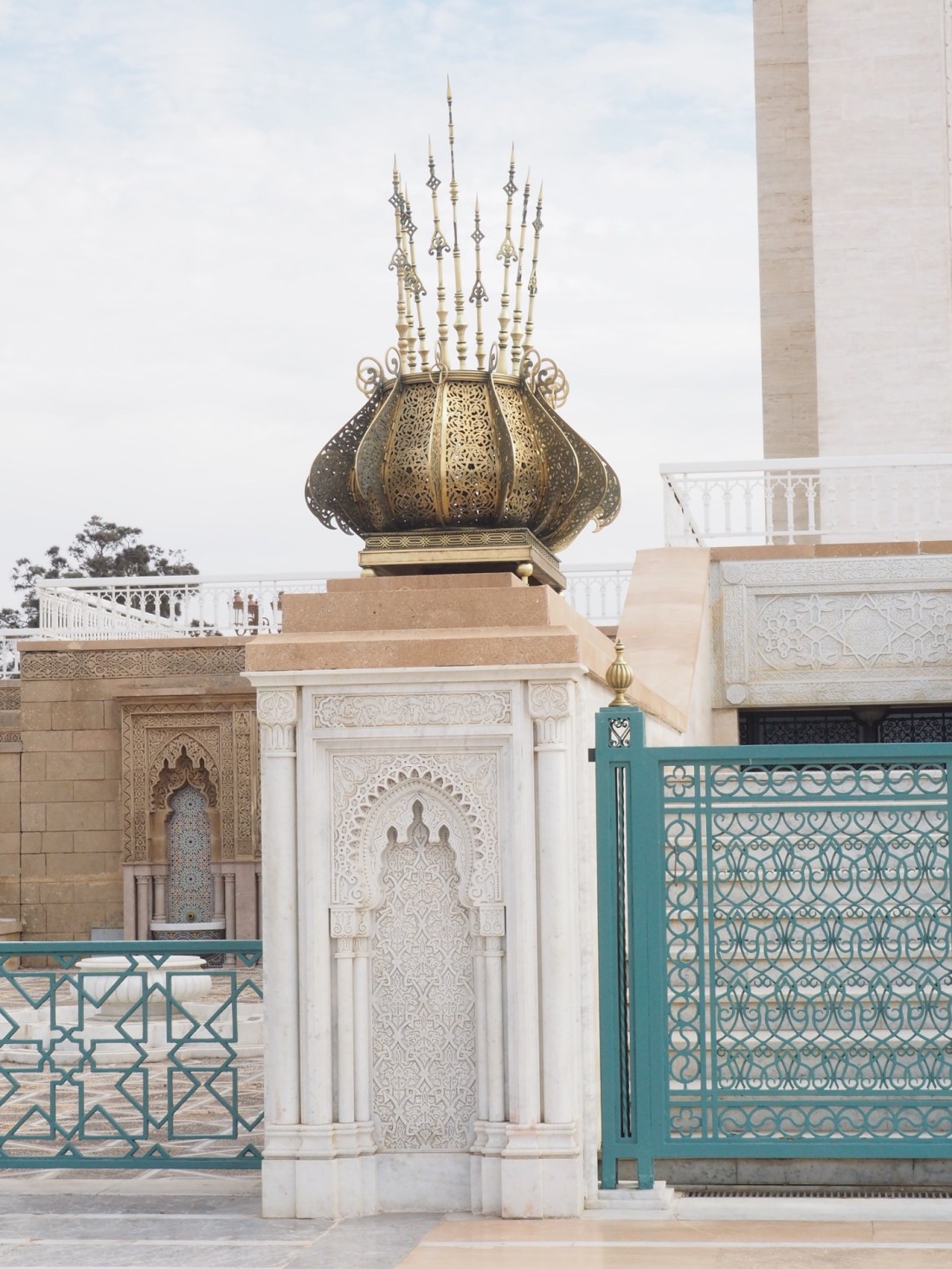
The mausoleum itself is surrounded with a low fence that is only opened during times that people can visit. And there are low pillars that break the fence at intervals. Unfortunately, I did not ask the significance of the large bowls and their decorative items that look a little like lightning bolts.

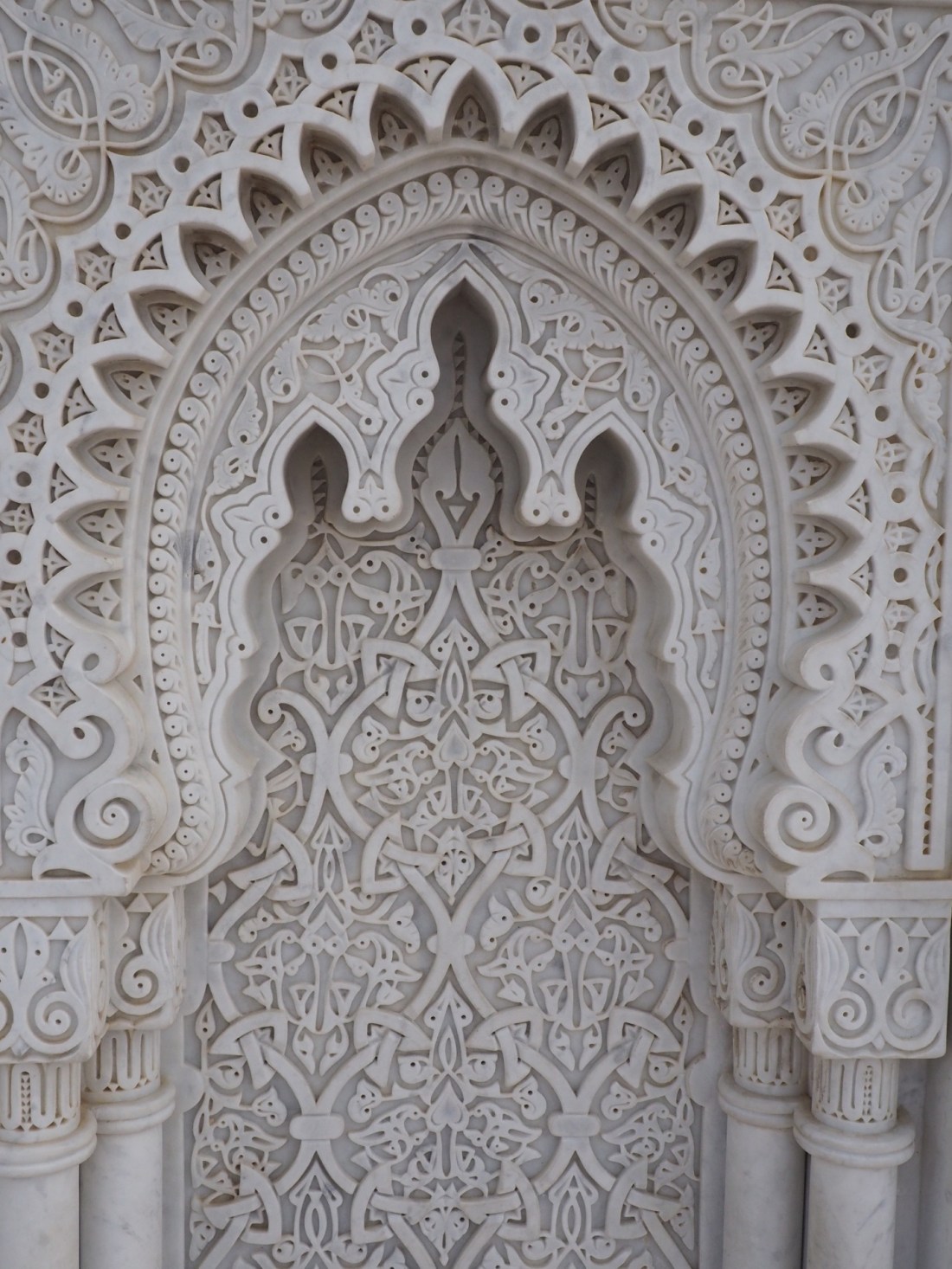
The pillars themselves are intricately carved.

The doors of the mausoleum are guarded by men in ceremonial uniform.

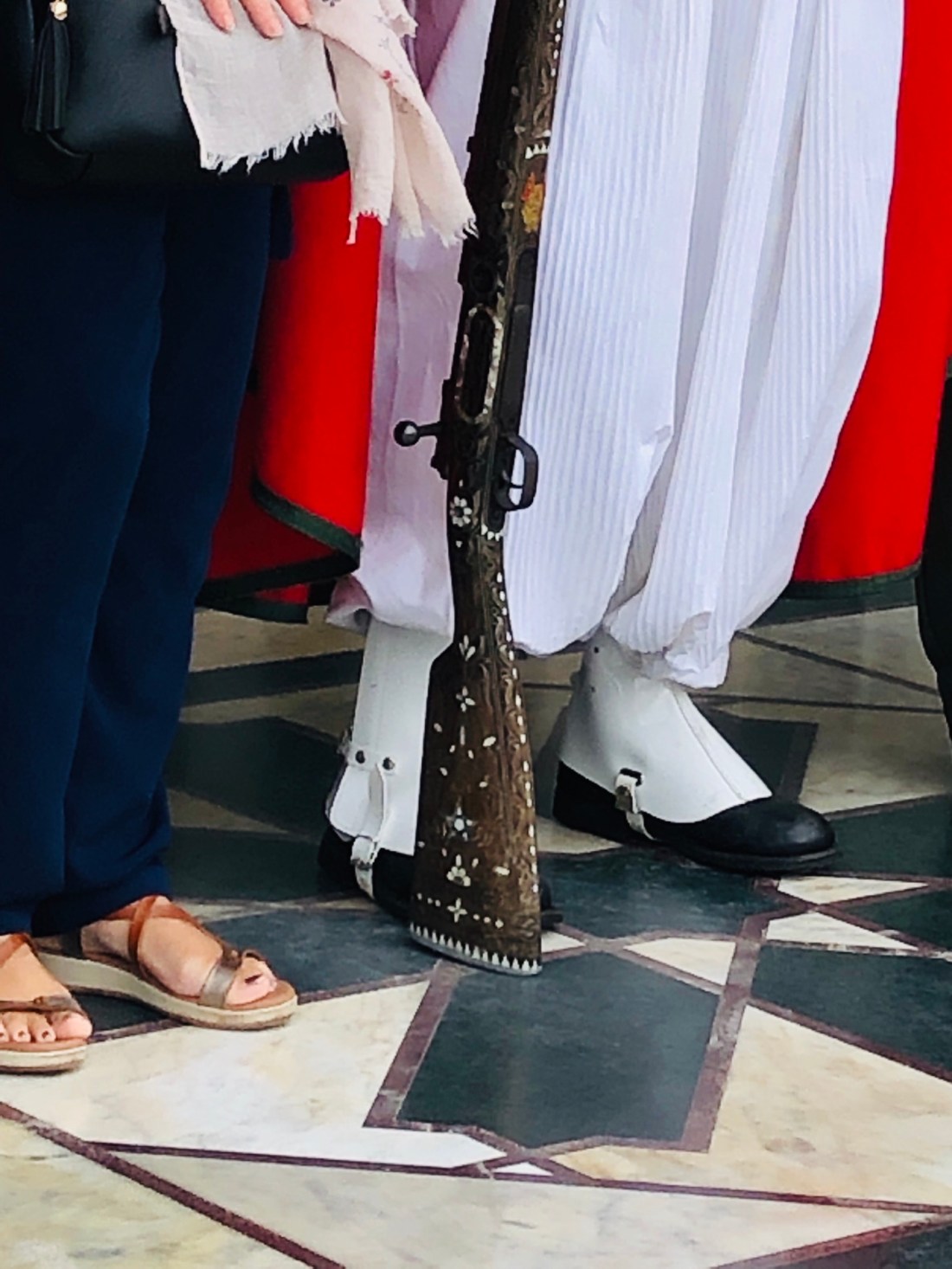
Here is a detail of the stock of the antique weapon held by one guard

(As is true wherever there are men standing on guard, tourists want to have their pictures taken with them. That’s the reason for the women’s feet in the picture!)

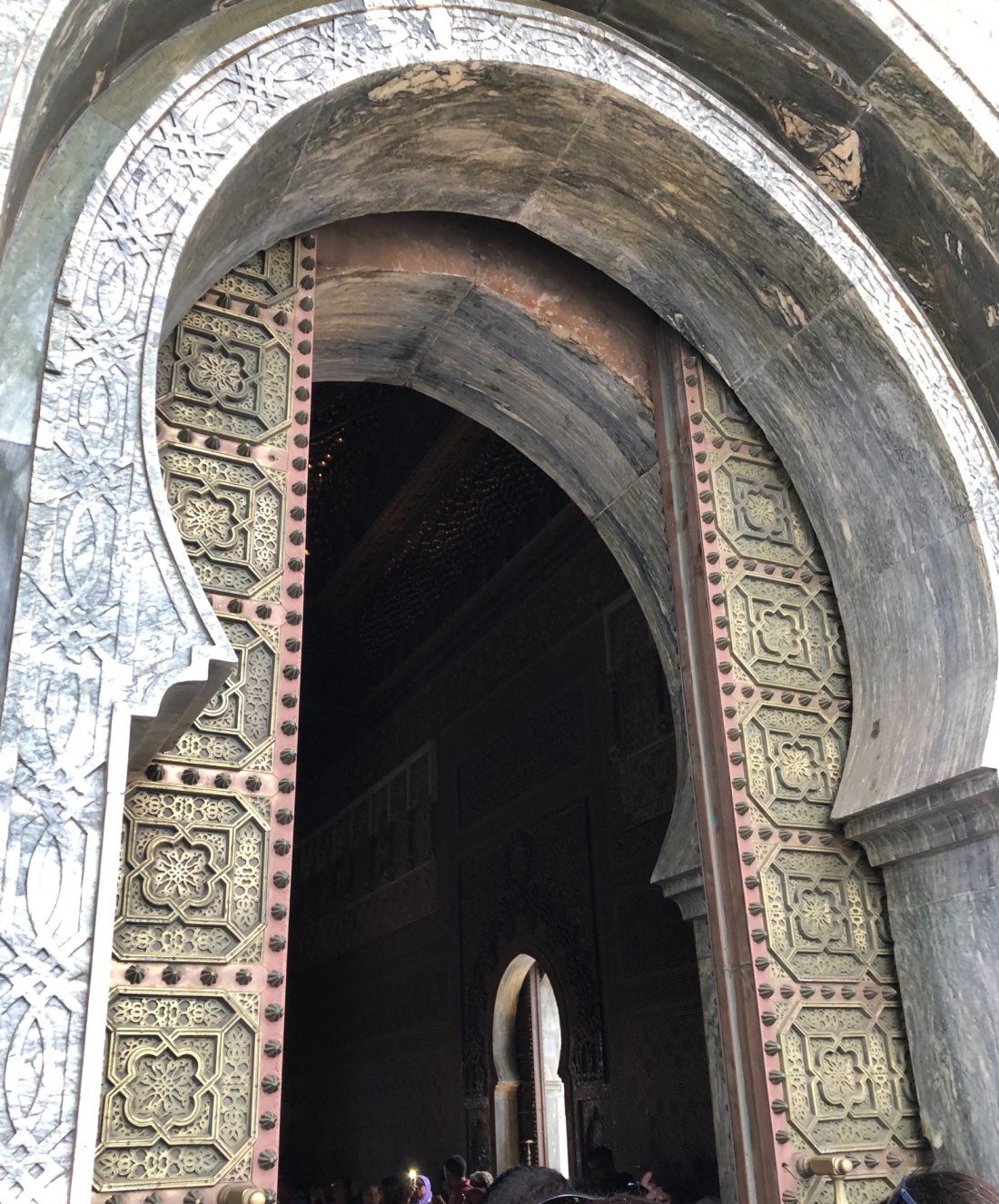
We arrived originally when the mausoleum was closed, but when we returned later in the day, we were allowed to mount the stairs and enter through one of the doors

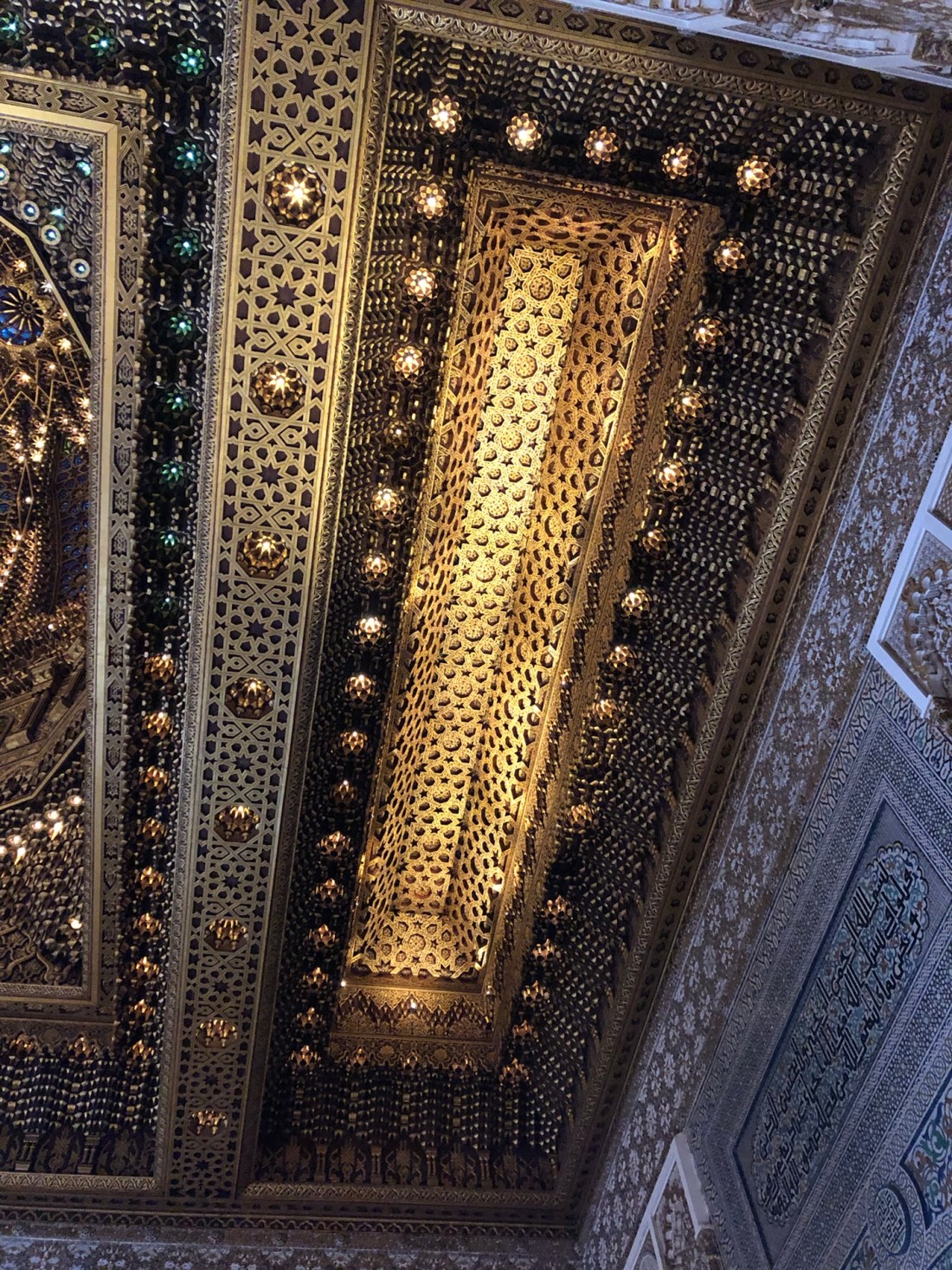
And were immediately amazed by the beauty of the interior. Every inch, including the coffered ceilings, is covered by decoration.

And the walls are covered with tile work (and protected by ceremonial guards)

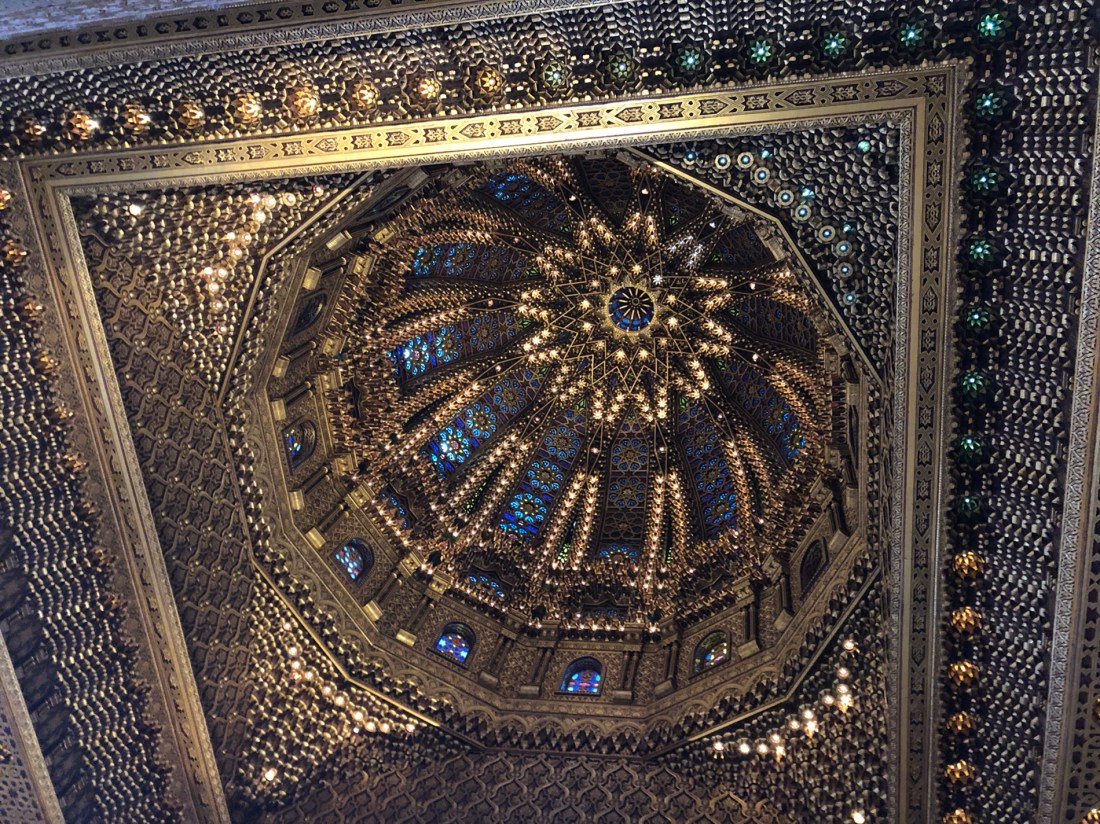
But it was the central domed ceiling which was the most breathtaking:

A closeup reveals that it is like a Faberge jewel

Mary
Written and posted in Fez, Morocco, 9/22/19

Native Headdress

We went to dinner at a very elegant restaurant the last night we were in Rabat. After we were seated, a beautiful young woman came to the table to bring bread, and I exclaimed at her beautiful headscarf. I told her that I hoped to be able to buy one like it when I got to the area from which she comes (southern part of Morocco).
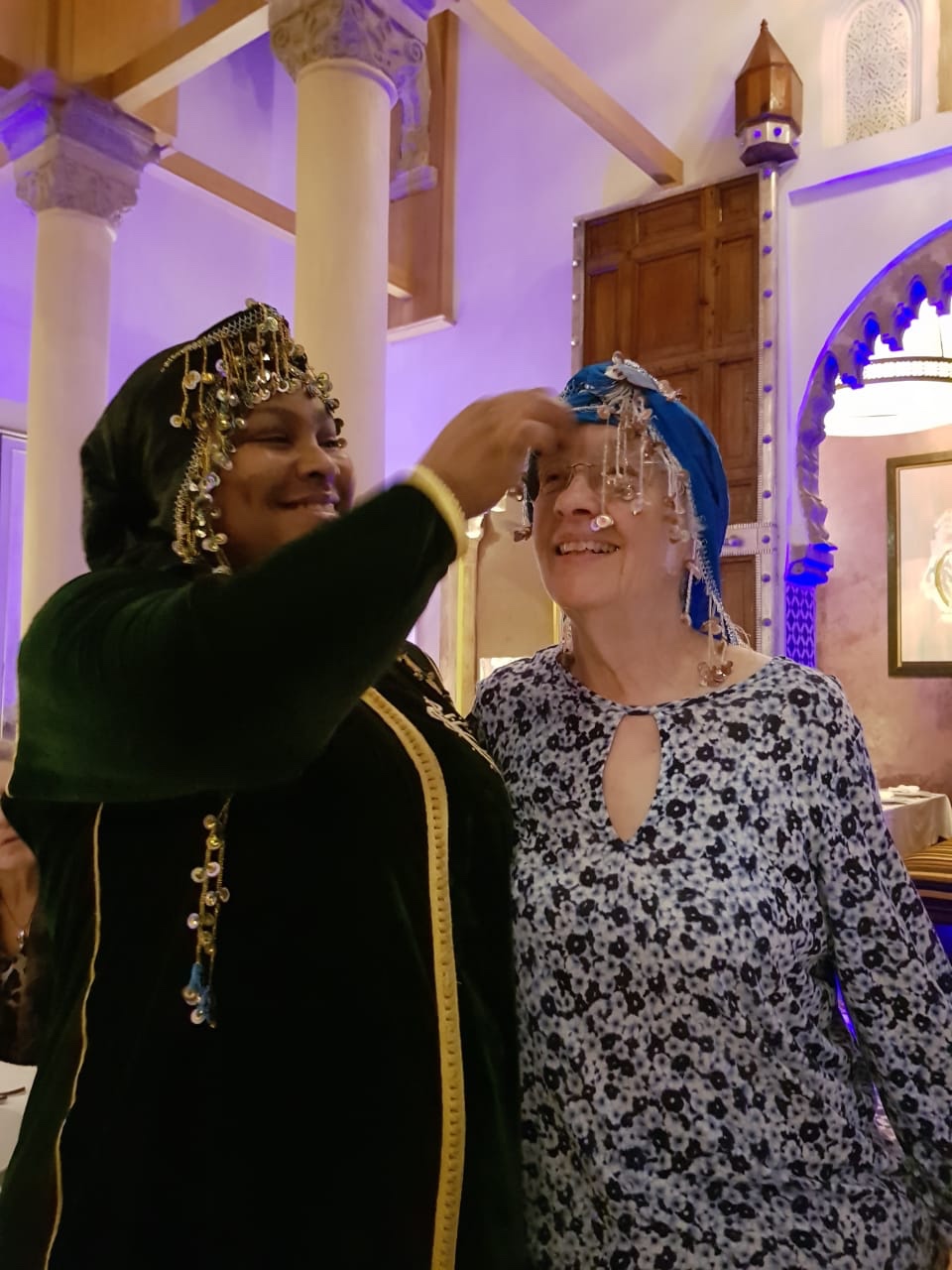
I was surprised to look up a little later to see her approaching with a headscarf in her hand. She motioned me to stand, and started to put it on for me:

It needed some adjustment

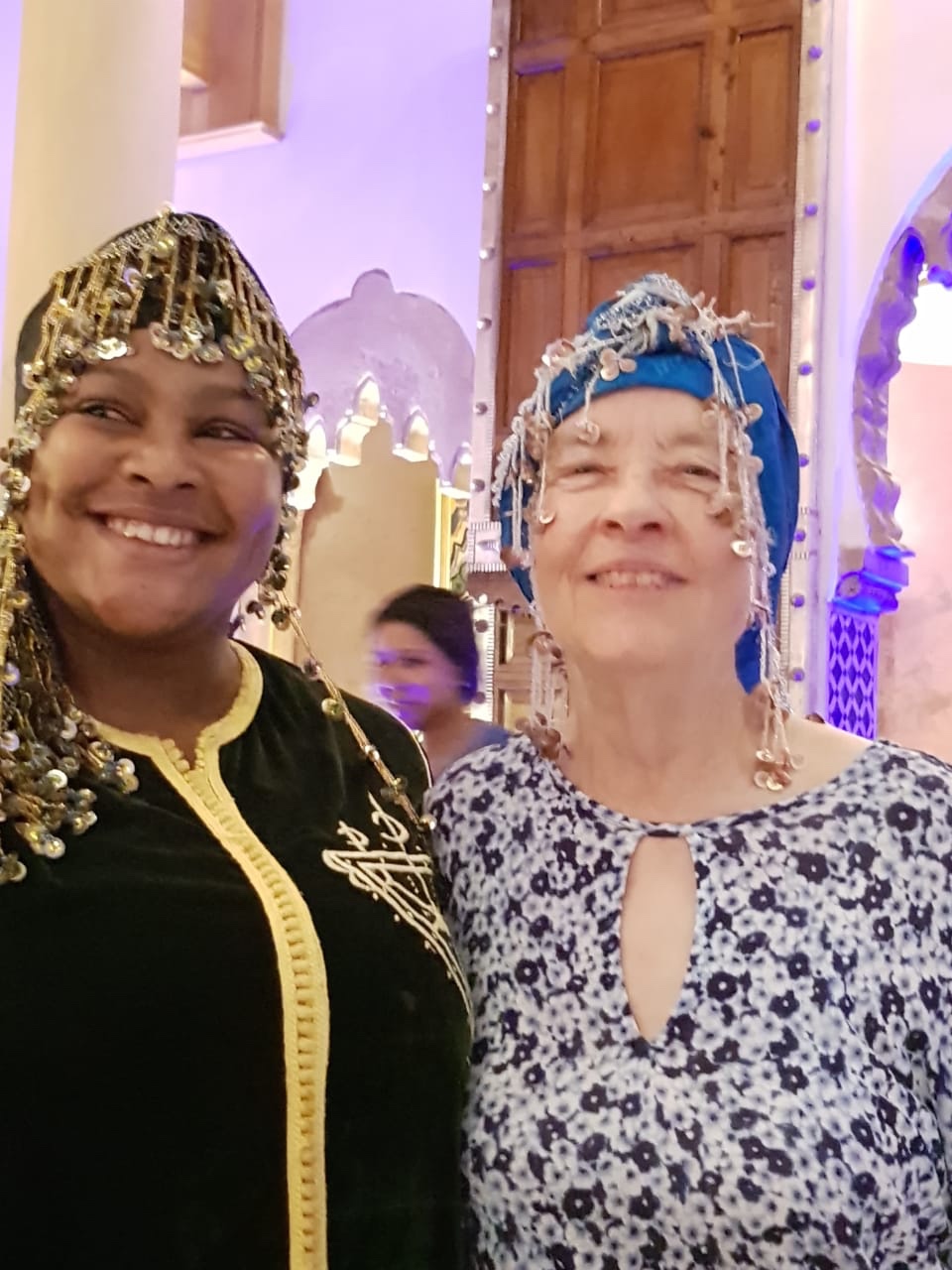
And then we posed together

Wearing this headscarf makes it a little hard to see for two reasons: you can’t really glasses with it, and the dangles keep getting in your eyes.

I still hope to buy one for myself. Putting it on properly will be the hard part!

Mary

Written and posted in Fez, Morocco 9/22/19

Kasbah de Oudayas

We wandered through the Kasbah des Oudayas in Rabat one late afternoon. The kasbah here was constructed for defensive purposes by the Almohad Dynasty when a defensive rampart was built. It is on high ground at the intersection of the Atlantic Ocean and the Bou Regreg river.

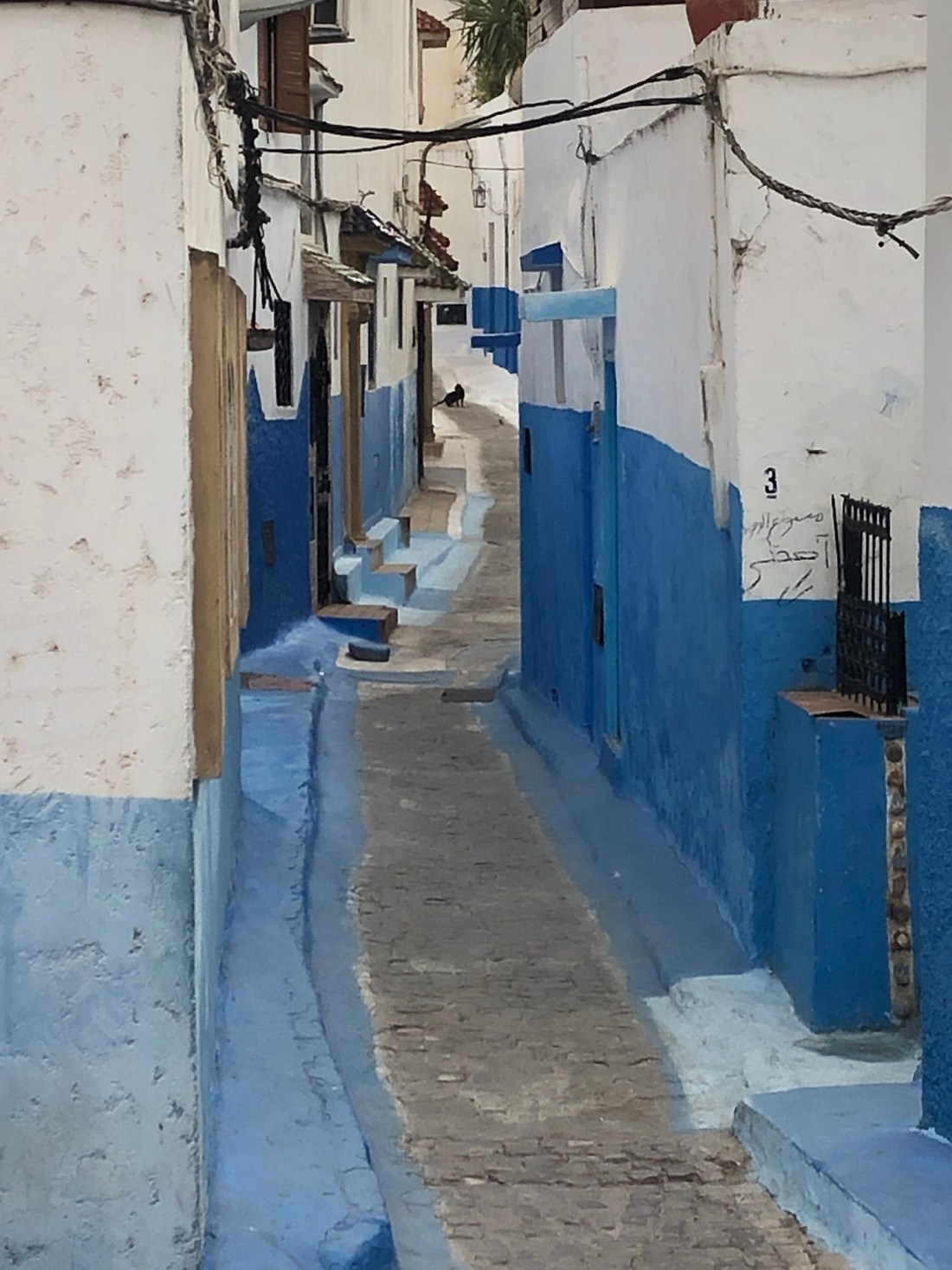
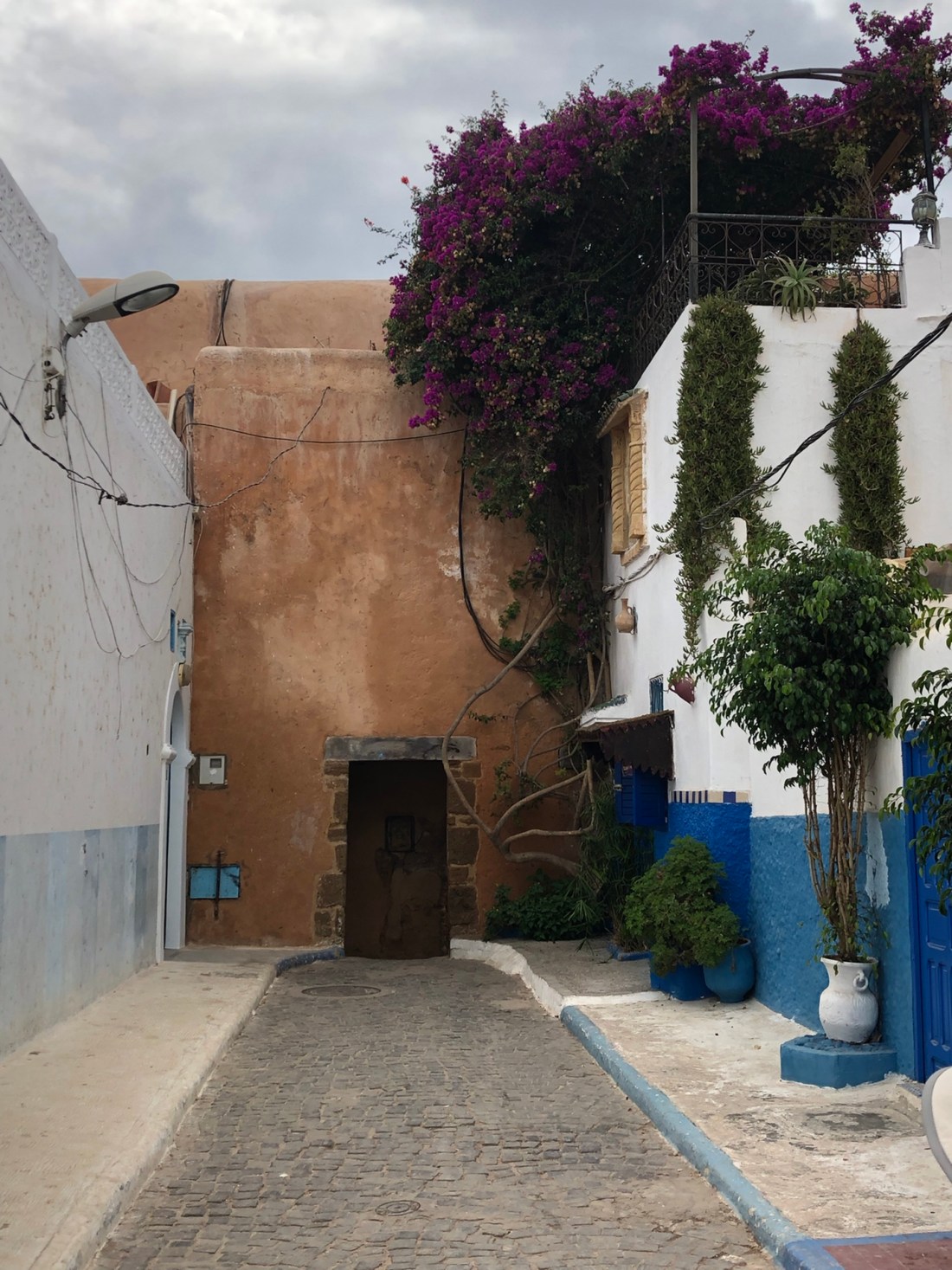
I had pictured the kasbah as a market, but this is not the case – it’s almost a village. Yes, there are some stalls selling some food and souvenirs, but mostly it is made up of houses, which all seem to share common walls. There are small alleys which wander down the hill, and take you to the Jardin des Oudays, laid out in the 20th century in the Andalusian style.

The houses are predominantly white, but to about shoulder or head height they are painted blue. What took my eyes here were the alleys

The entrance courts to the houses,

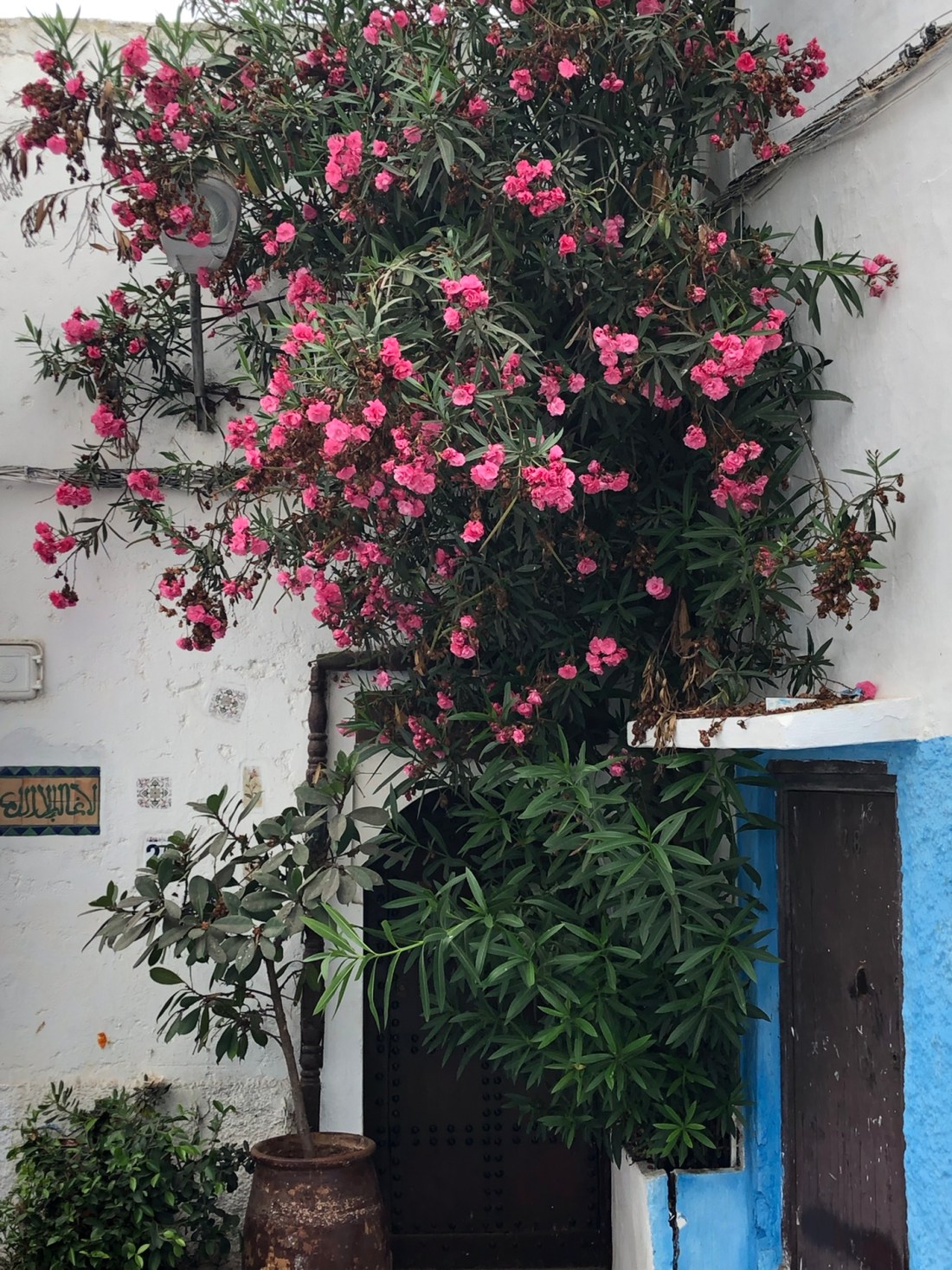
Bends in the alleys filled with plants, like this oleander in full bloom

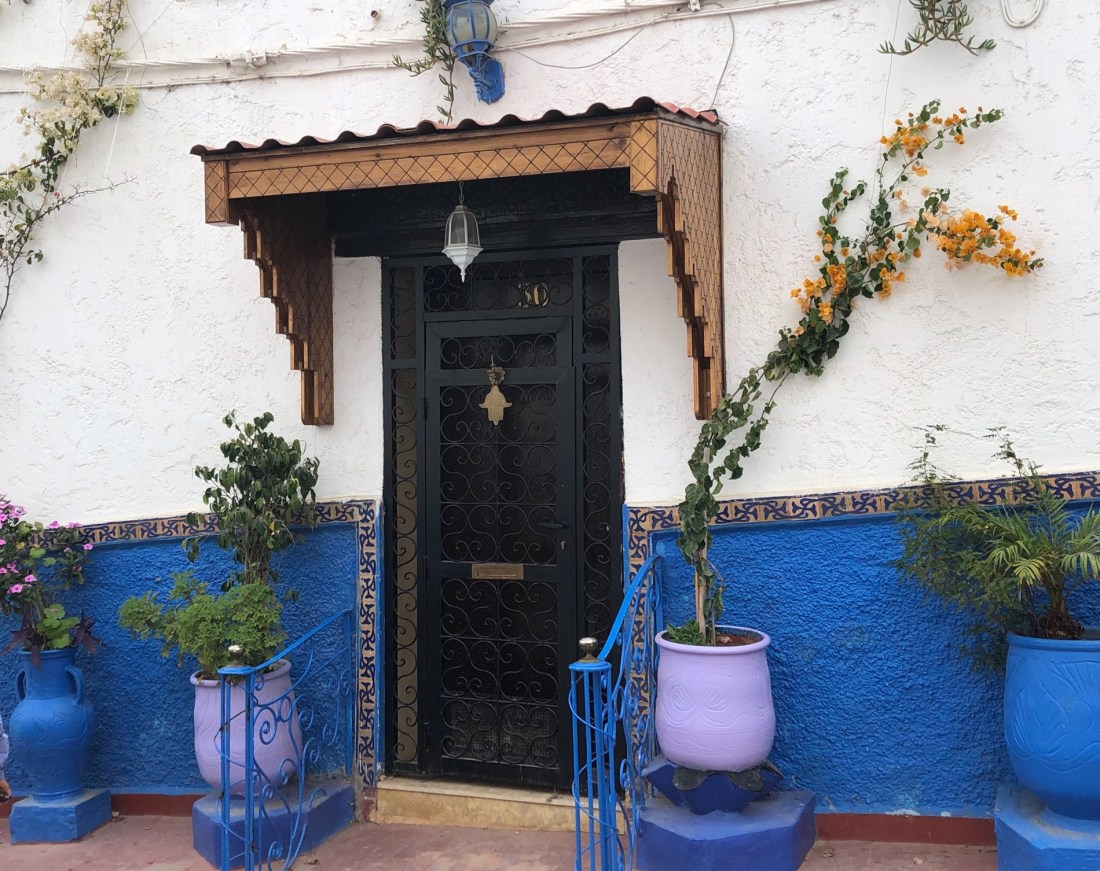
And the doors. This one has a canopy over the top and a “hand of Fatima” which fends off the evil eye.

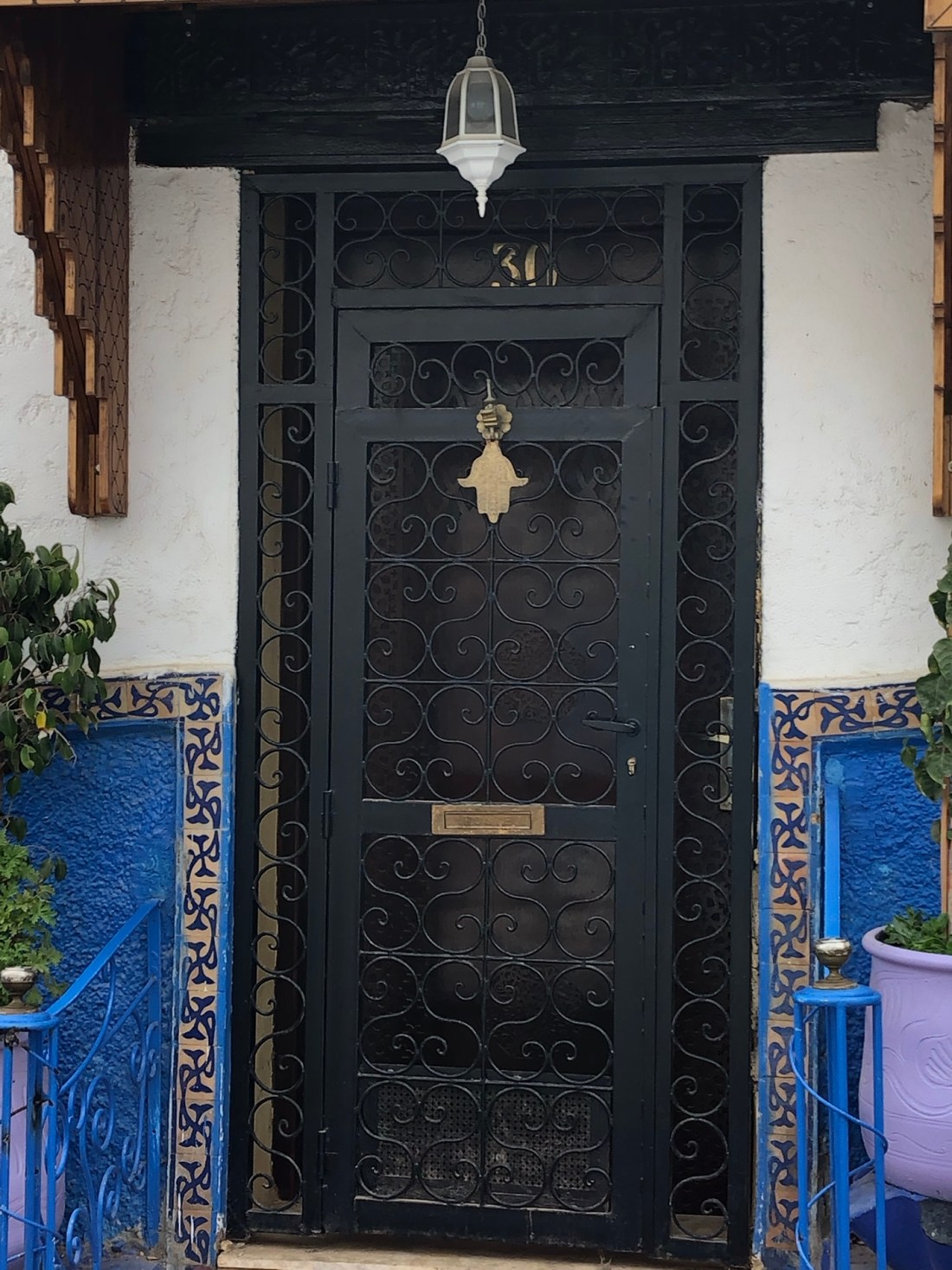
Here’s a detail of that door, so you can see the grillwork.

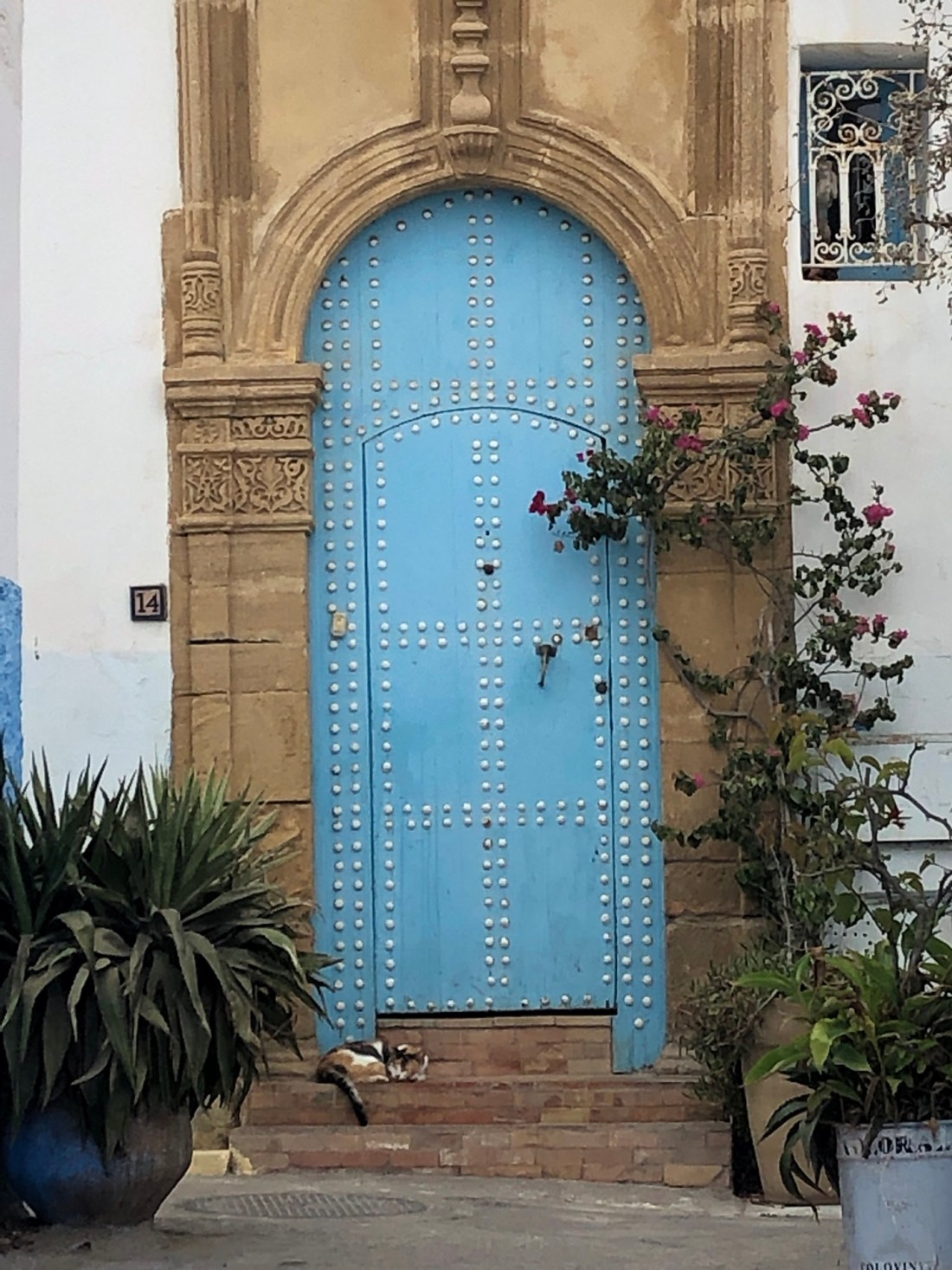
One door is very picturesque with bougainvillea, and, of course, the ubiquitous cat!

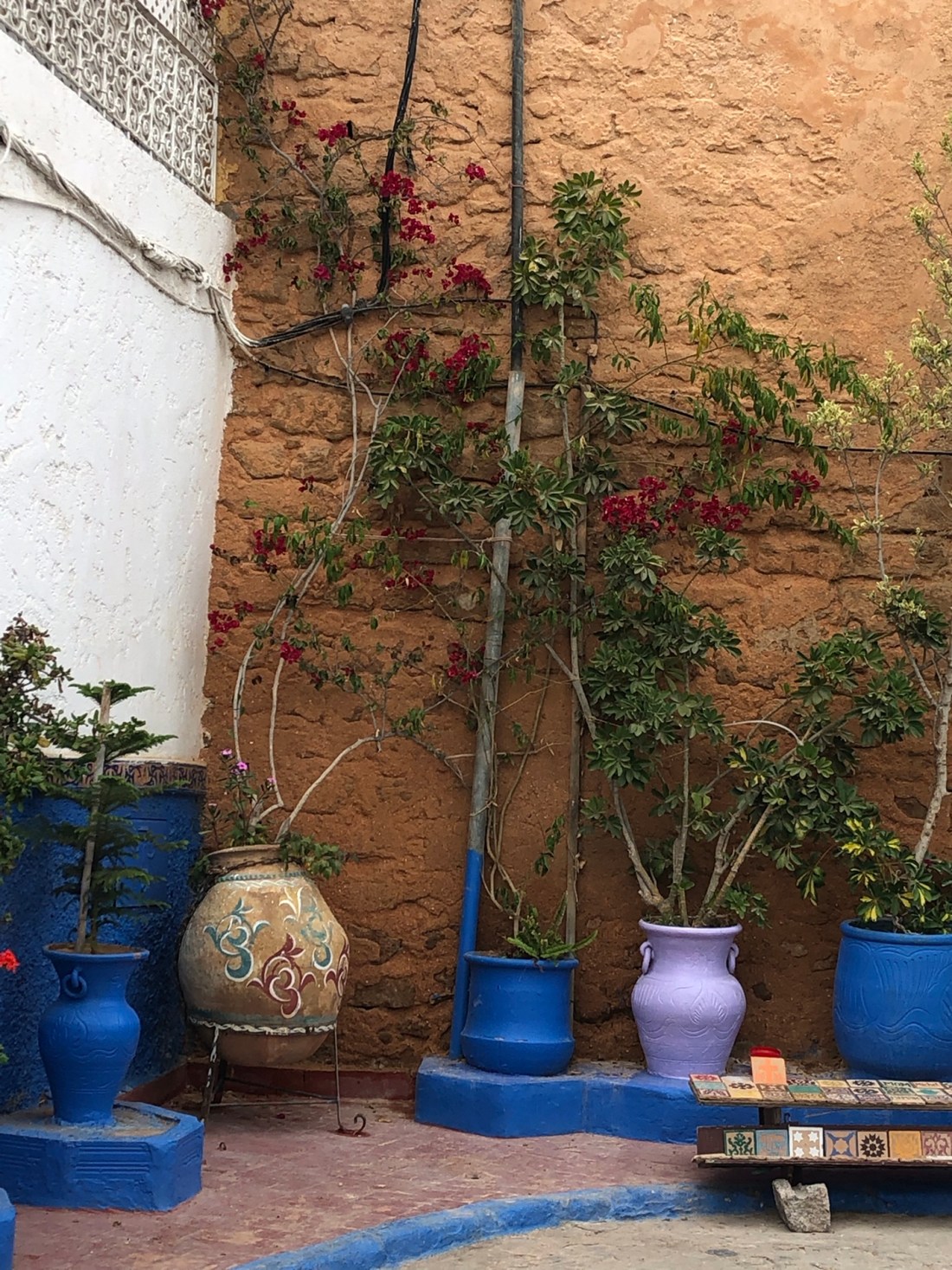
This courtyard has interesting pots in various colors with bougainvillea and a strange metal strip that seems to grow upwards:

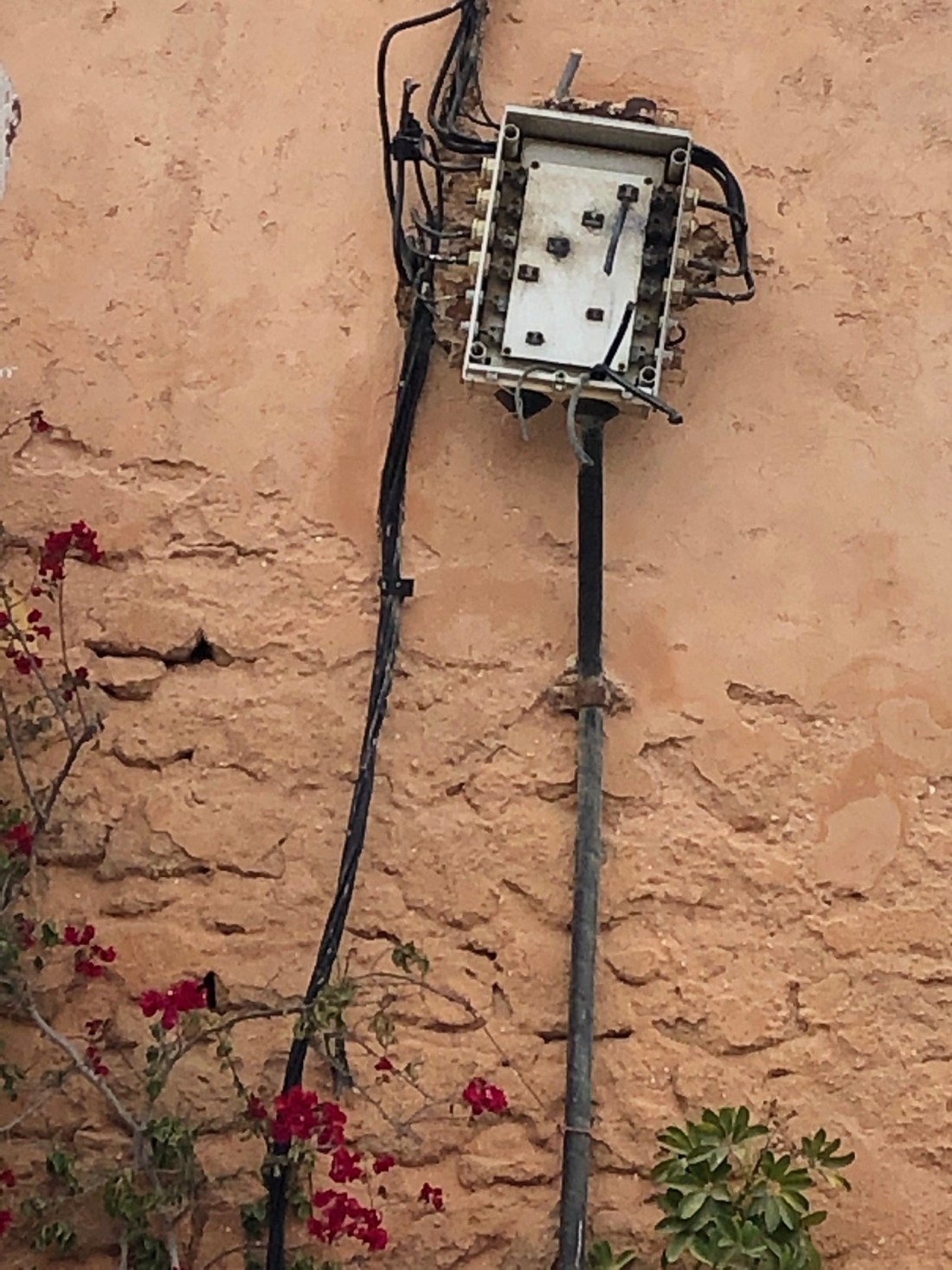
Panning the camera upwards allows you to figure out what the strip is doing: it’s connecting electricity, which must be underground, with a junction box:

And looking closely at the junction box brings a chilling realization – this must be the ‘main power panel’ for this group of houses and it is open to the elements. Which leads me to wonder, in my retired-insurance-broker mode, whether these houses are insured, and if they are, whether their insurance companies understand the risk they are taking….

Mary

Rabat, Morocco 9/20/19

Posted from Fez 9/21/19

Art

This week, I have been privileged to stand before many great works of art.

The British Museum is famous (infamous, some say) for its collection of marbles known as “the Elgin Marbles.” Lord Elgin visited Greece while he was ambassador to the Ottoman Empire from 1801 to 1805, and was appalled at the condition of the marble statues on the Parthenon. The Parthenon was begun around 447BCE, under the supervision of the architect and sculptor Phidias.

The marbles had been damaged in 1687CE when the Parthenon was bombarded and the ordnance stored inside exploded, causing much of it to collapse, and the remaining portions of the building and its sculptures were also subject to vandalism (for example, two heads had been removed from one of the metopes by a Danish officer, leaving just blank space behind).

When Elgin visited Greece it was occupied by the Ottoman Empire, and Elgin claimed to have obtained permission from the Ottoman government to remove the sculptures under the pediments at each end of the building, parts of the frieze which ran around the outside of the building and many of the metopes, which were located above the columns in the second row. He also removed one of the ‘caryatids’ from the Erechtheion porch.

All of the Parthenon marbles are displayed at the British Museum in a special hall built simply for their display, and I stood in awe before them and wondered at their artistry, and their state of preservation.

The frieze showed a procession including a heifer being led to be offered as a sacrifice. This picture shows the exquisite detail of the carvings, and also the damage that it had endured over the 2,000 years since its carving

Another portion of the frieze shows horses and their riders. They were riding 4 abreast, and it’s hard to understand how the artist could have kept track of what portions of each horse belonged in each plane of the carving:

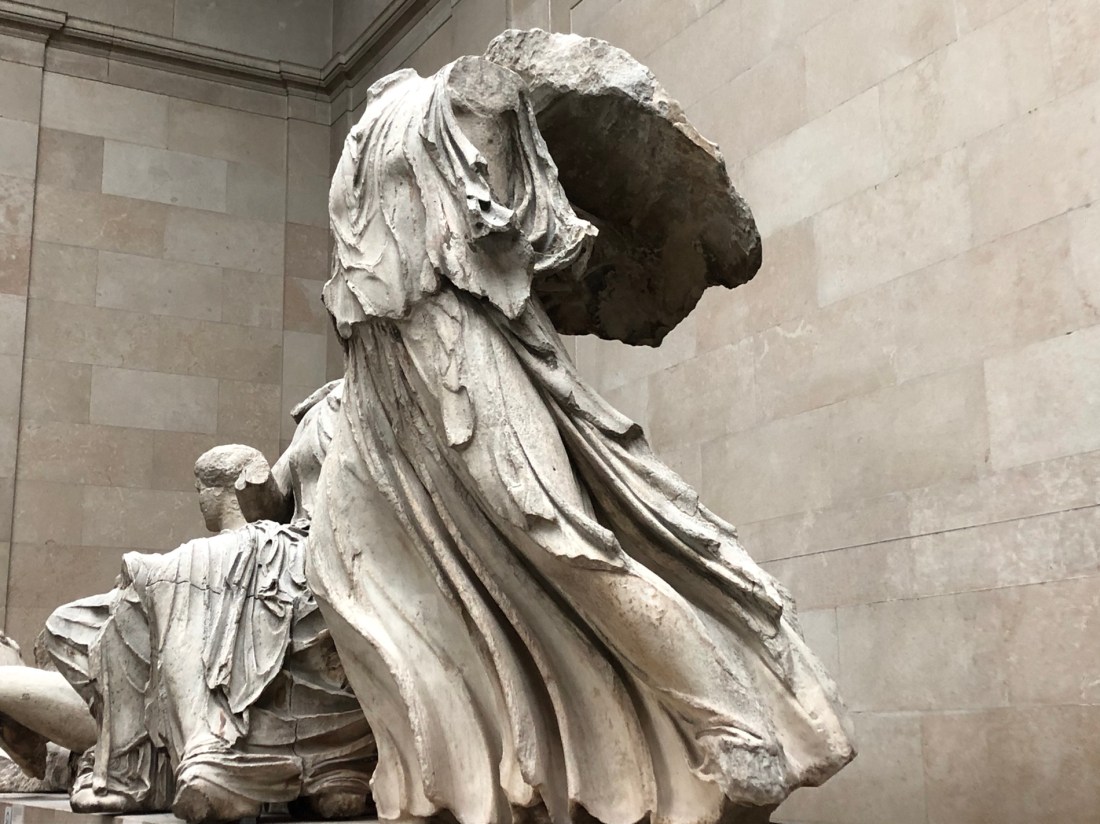
Sculptures from the pediment had suffered a lot of damage – and many were in pieces or simply missing. This sculpture is thought to be that of the girl is that of Hebe, cupbearer to the gods. She is obviously rushing to bring a libation to one of the gods!

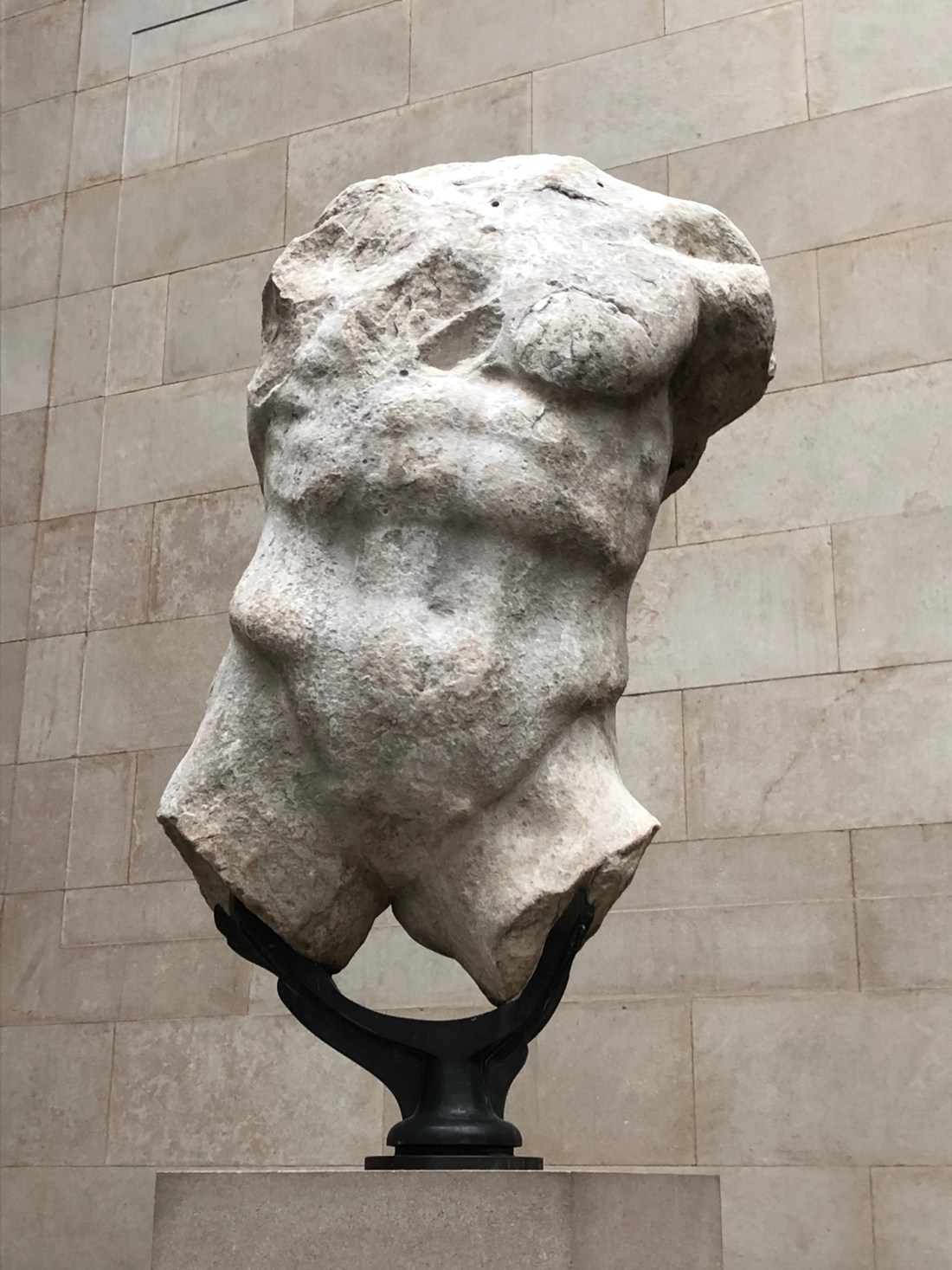
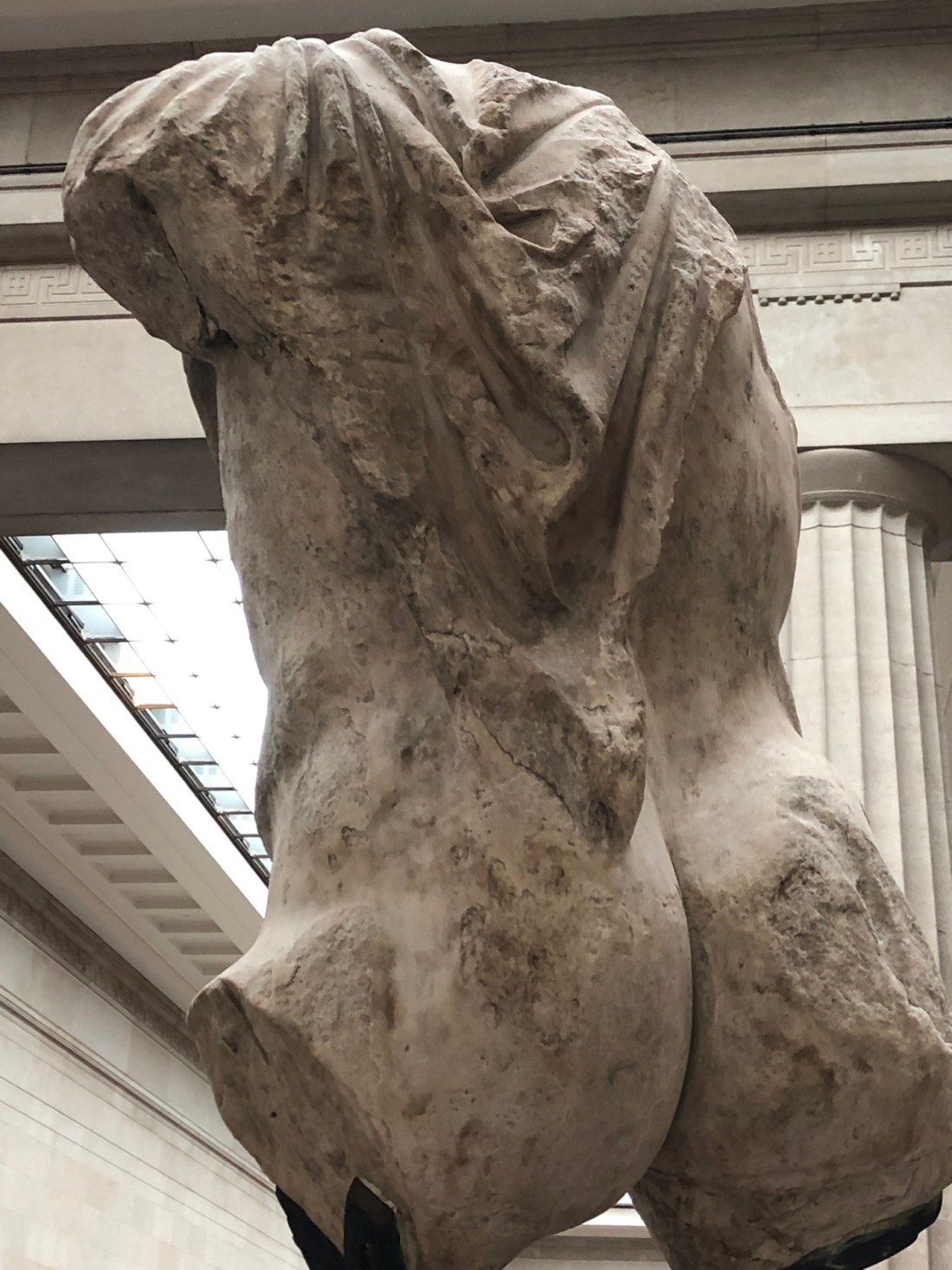
There is also a statue of Hermès, from the west pediment. Only a portion of his torso remains.

The statue could only be seen by humans from the front, but the statue was a gift to the gods, who could see it in its entirety, so his short cloak is carved on the back.

Given the terrible condition of the sculptures left there that I witnessed when I visited Athens in the late 1970s, I can only appreciate that Lord Elgin, for whatever reason, and whether legally or not, preserved the marbles for us (and the Greek gods, if they are still around!) to enjoy today.

London has no scarcity of great museums, and the second one that I visited was the National Gallery. How to describe the miles of galleries and the beautiful paintings they include (about 2,300 of them, in fact)? There is no lack for paintings by Monet, for example, or Van Eyck, or Van Gogh or Klimt, or Vermeer, or Leonardo da Vinci, but the paintings to which I had the strongest reaction were by Rembrandt and by Michelangelo Merisi da Caravaggio (commonly known as Caravaggio).

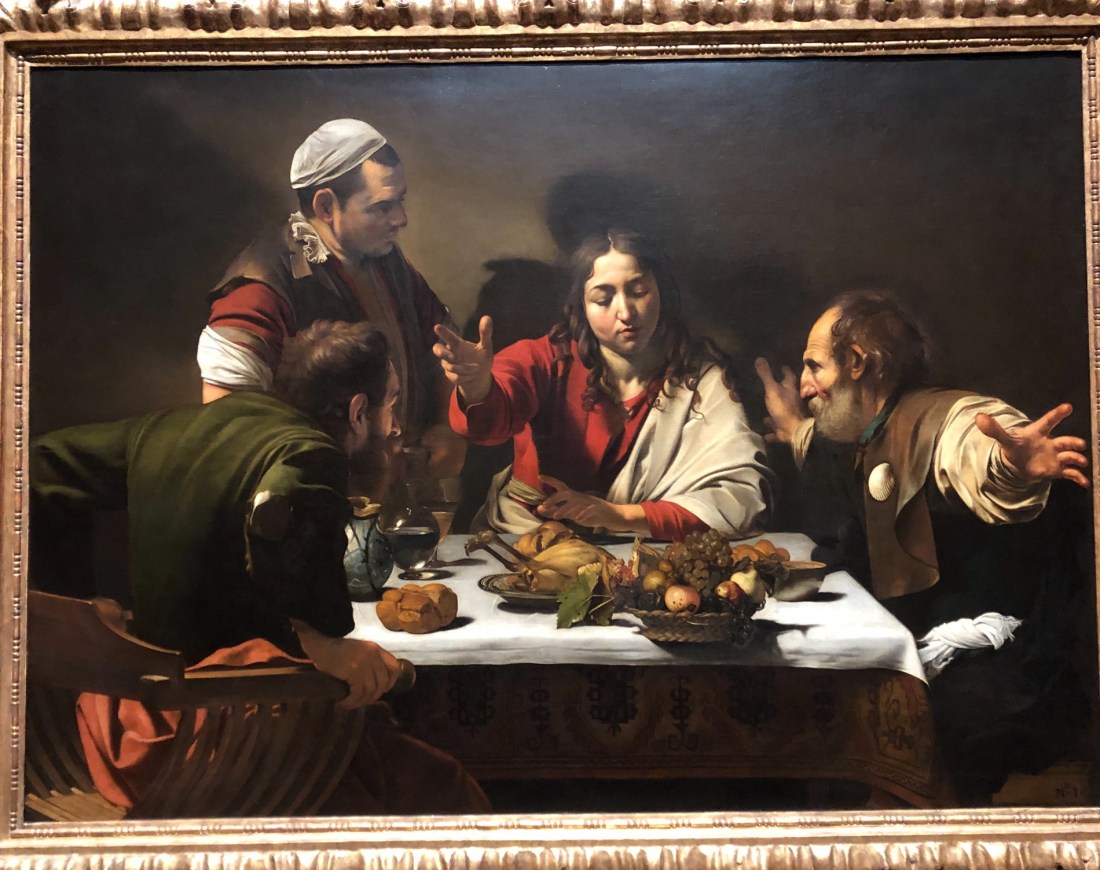
This painting by Caravaggio is entitled “The Supper at Emmaus” and it was painted in 1601. It shows a very human moment: 3 men have sat down for supper together, with the innkeeper hovering behind. The man in the middle is blessing the bread, and the two others have just realized who that man is: Jesus, risen from the dead. You feel as though you are seeing the disciples’ reactions in real time: The disciples are so amazed, that one of them is bolting out of his chair, while the other has flung out his arms in such jubilation that his right hand is still moving.

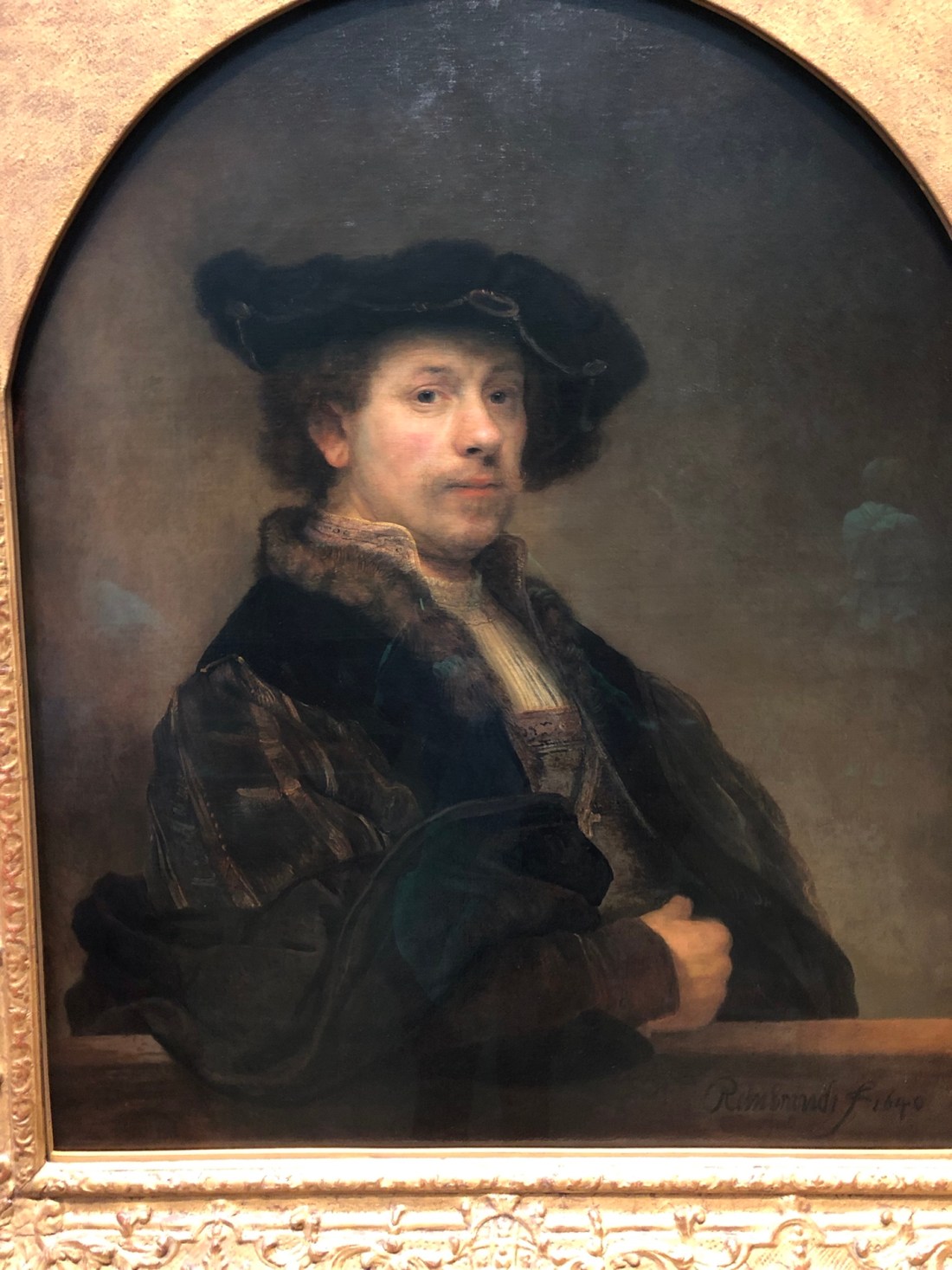
In one gallery, hangs a self portrait by Rembrandt of himself at age 34, painted in 1640. It shows him as wealthy, successful and confident, with his life before him:

And, in the same gallery, almost opposite the first, his self-portrait at age 63, painted in 1669. He doesn’t spare himself – you see what life has done to him, and you know that it is almost over.

I stood before him for a long time.

Mary

London, England 9/18/19

Hetch Hetchy

The Miwoks called the valley “hatchhatchie”, which translates as “edible grasses”, and inhabited the valley for about 4,000 years before the arrival of the white man. In the late 1800s, Americans viewed wilderness as something to conquer and natural resources as infinite. John Muir considered the valley of Hetch Hetchy to be at least as beautiful as that of Yosemite, and he fought hard to keep it from being inundated, but the need of San Francisco for water (and hydroelectric power) was found to outweigh the need for wild beauty.

It is possible, however, to catch a glimpse of what the valley must have been like if you drive north from Yosemite Valley for about an hour and a quarter, reaching a part of Yosemite National Park that is much less known (and a lot less crowded) than Yosemite Valley and its surrounding high country. And unlike Yosemite Valley, there are no roads to allow you to drive around Hetch Hetchy – you must park and hike.

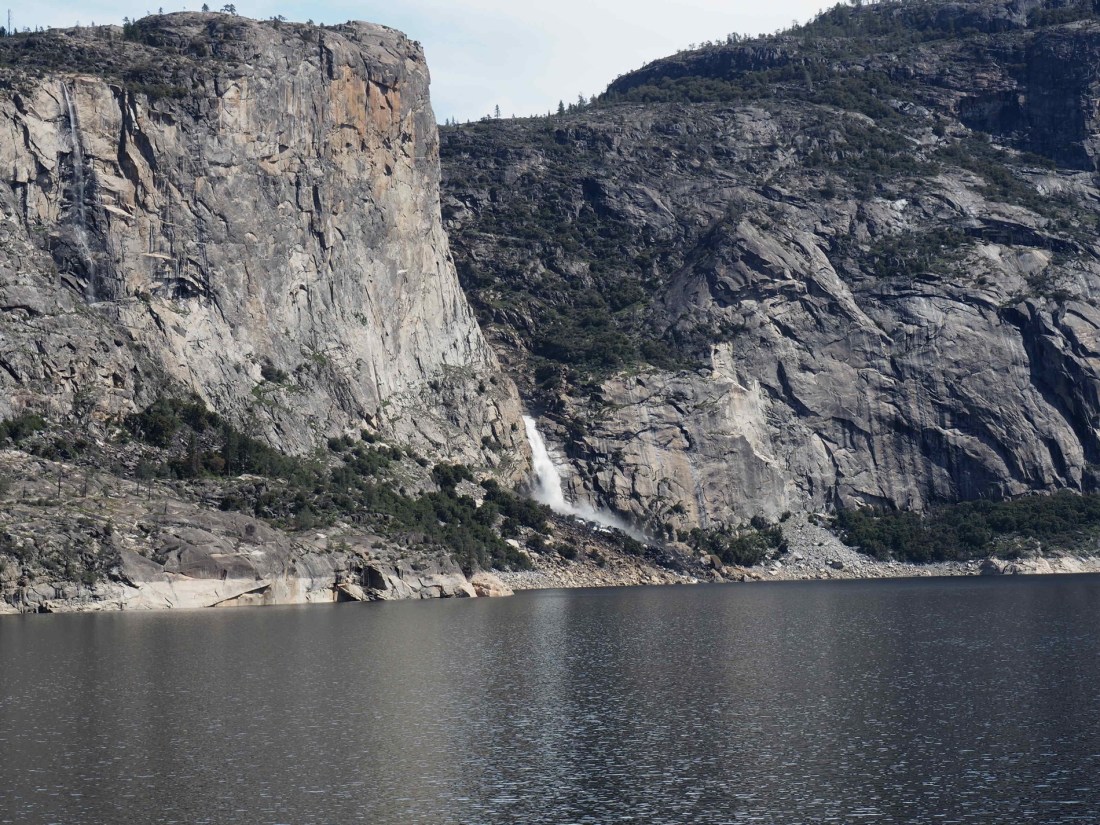
From the dam you can see walls of granite on the north side of the reservoir that are very reminiscent of El Capitan with Hetch Hetchy Dome on the north eastern end and two of the highest waterfalls in North America – Tueeulala, which reminds me of Bridal Veil, and Wapama, similar to Yosemite Falls.

Kolana Rock on the south side faces the dome.

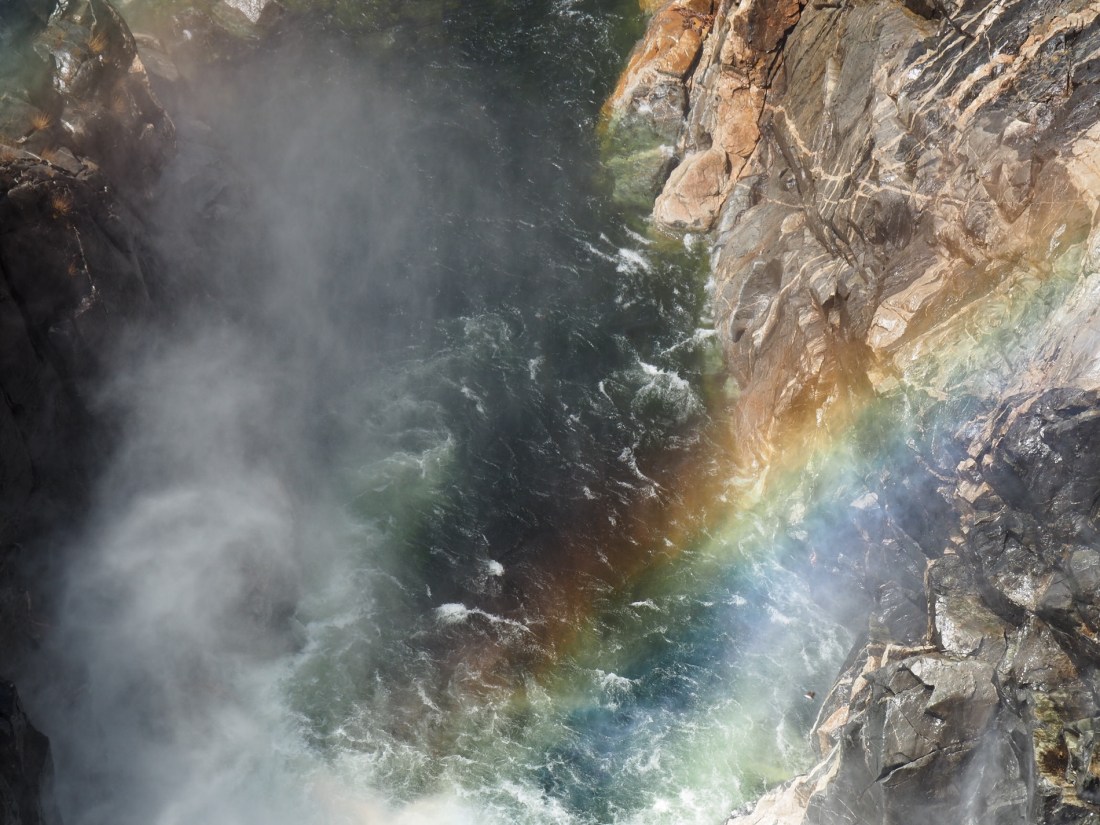
Leaning over the parapet on the west side of the dam, you can see the water cascading from the outlets and the resulting rainbow.

Cross over the dam and walk through the tunnel at its north end so you can hike around the north side of the reservoir. In April of this year there was a lot of water along the trail, cascading down the granite

The water supports small communities of plants

I have no idea what this orange plant is, but it certainly was photogenic!

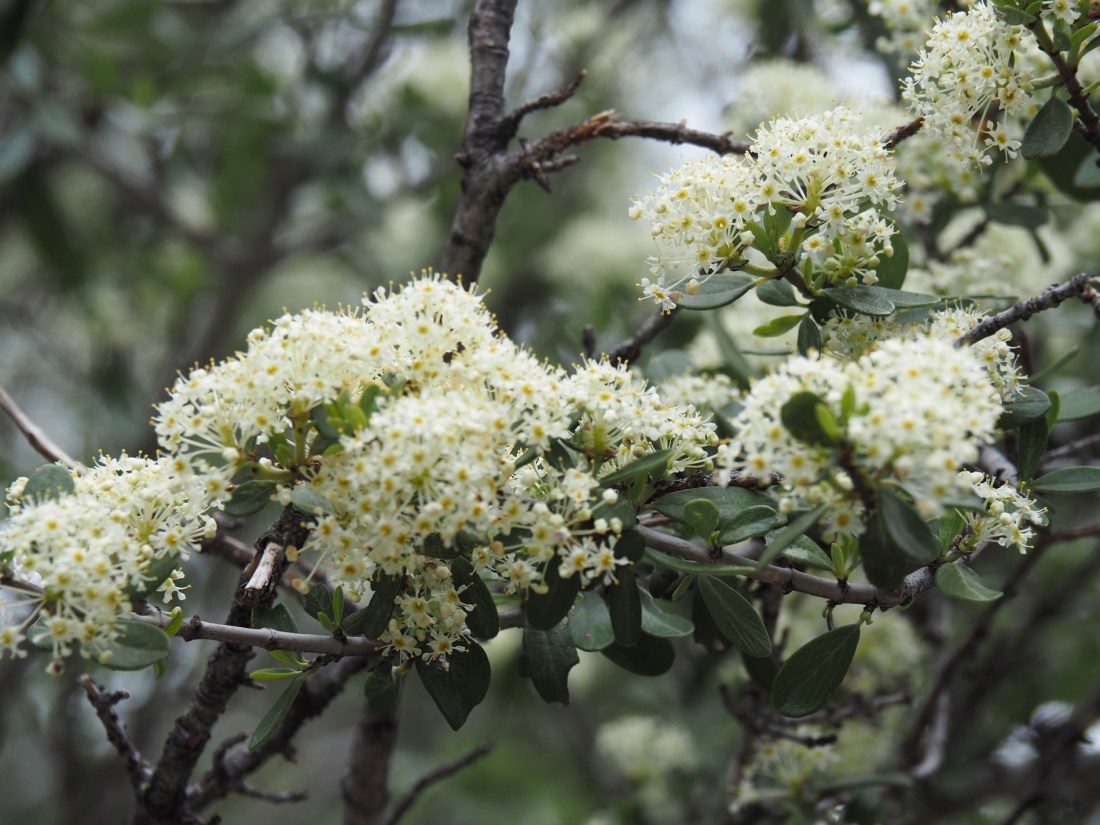
We found ceanothus in bloom – those in this area are white, unlike the ones with whom we are more familiar, which are purple or lavender. (It’s commonly known as “California lilac.”)

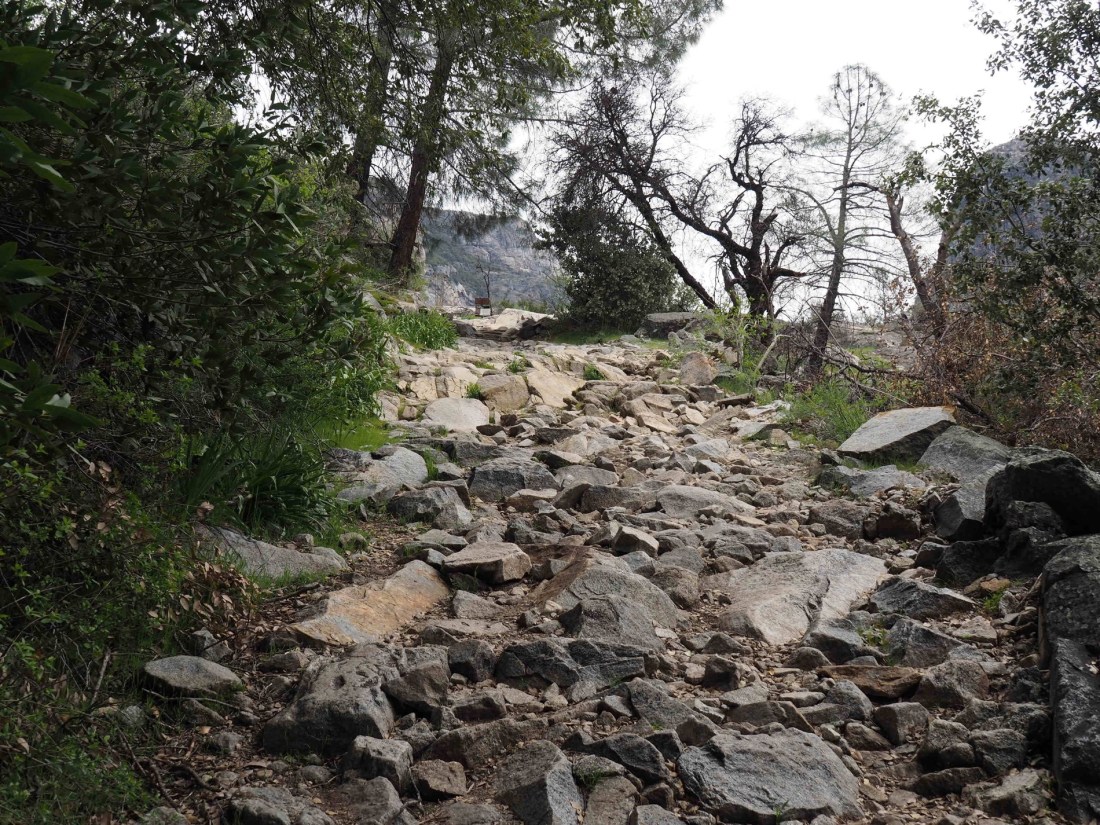
The trail was pretty rocky, and steep in some places.

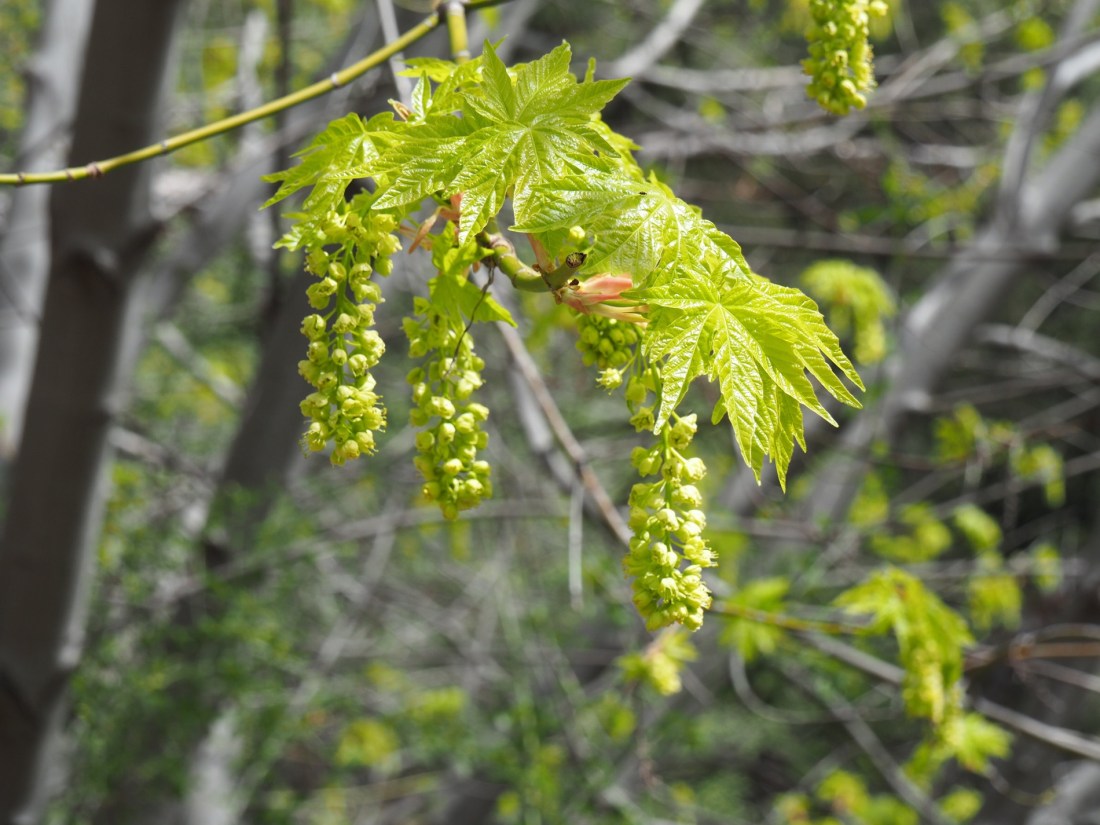
We found maple trees beginning to leaf out and bloom (didn’t know they bloom!)

And, in a section of granite that was covered with a thin film of water, there were amazing plants….

If you decide to go after reading this post, here are some tips: CARRY lots of WATER – once you are on the trail there are no drinking fountains! Wear a hat and sunscreen, and know that there is very little shade. And finally, if you are old like me, bring your hiking poles. Some of the stones in the path are loose, and in some sections the trail is quite steep. But be sure to go next time you are in Yosemite National Park – it is well worth the drive and the hike.

Mary

Written in Yosemite 4/19, posted from home 9/10/19

Granite

On our first morning in Yosemite, my hiking partner, In Ja, and I set out to walk from the hotel (the Ahwahnee, now known as the Majestic) to Mirror Lake. We were told to walk across the meadow, where we would strike a road, and then to turn east and just follow the signs.

We quickly broke out of the trees to see the north walls of Yosemite Valley and Royal Arches, with water forming impromptu (and unnamed) waterfalls from the walls of Washington Column.

But most of the walls were hiding behind the fog, and even those disappeared as we walked deeper into the forest – and the blocks of granite which have fallen over the years.

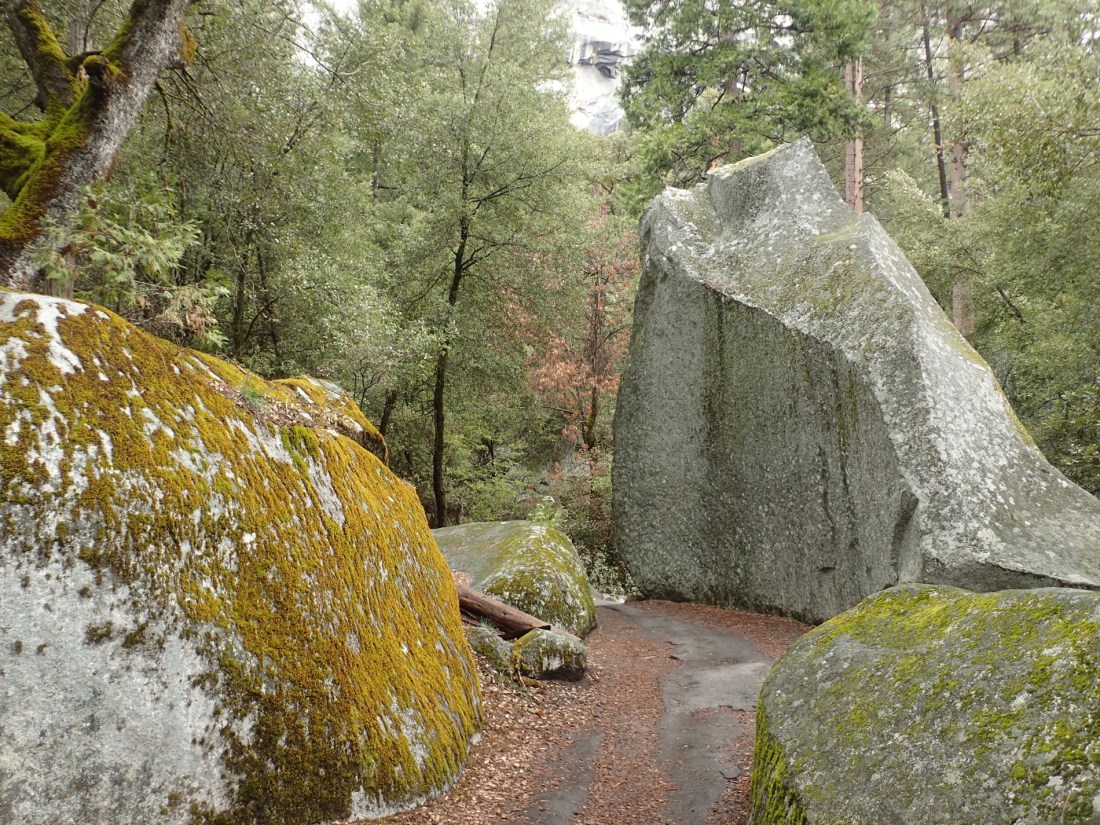
What was very surprising to me was how many of the blocks looked as though a giant sculptor had taken an awl and chisel and made straight cuts to separate the blocks from their original positions.

This jumble of rocks appeared around a corner in a stand of Ponderosa pines and Douglas first, which obviously have grown up after the rocks fell.

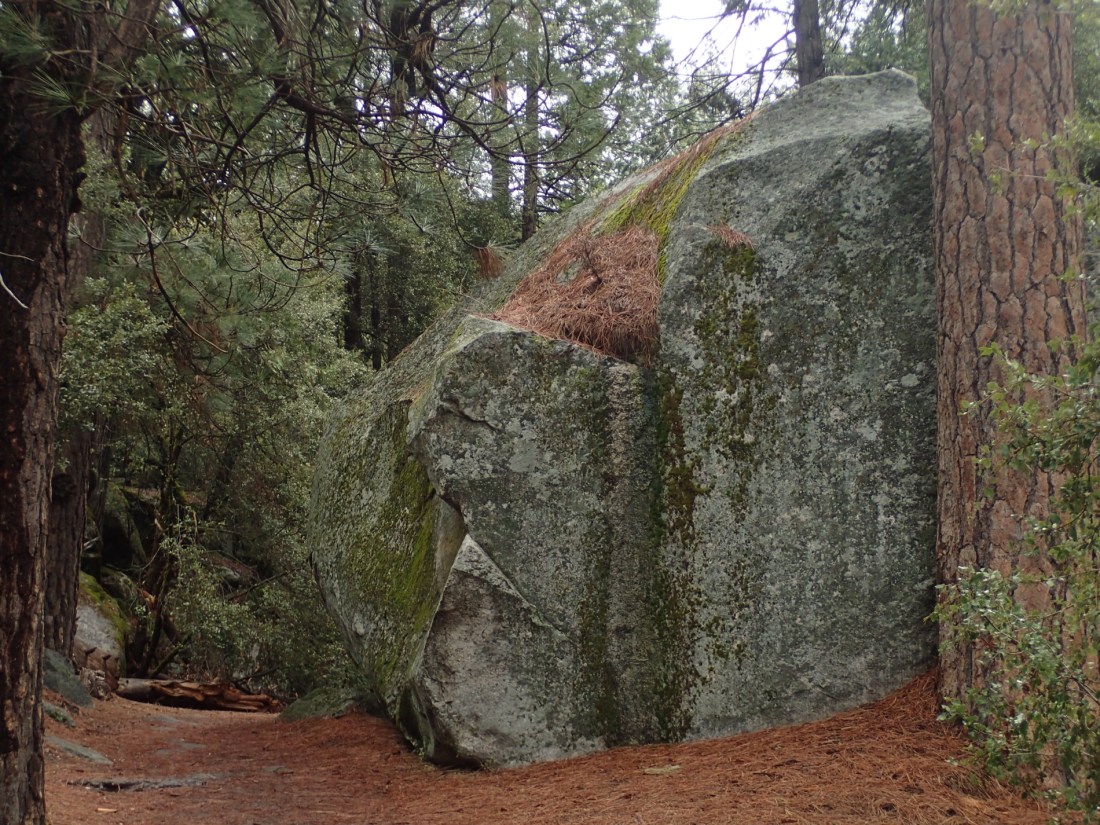
I was really taken with this huge boulder alongside the path, with needles from its companion Ponderosa pine

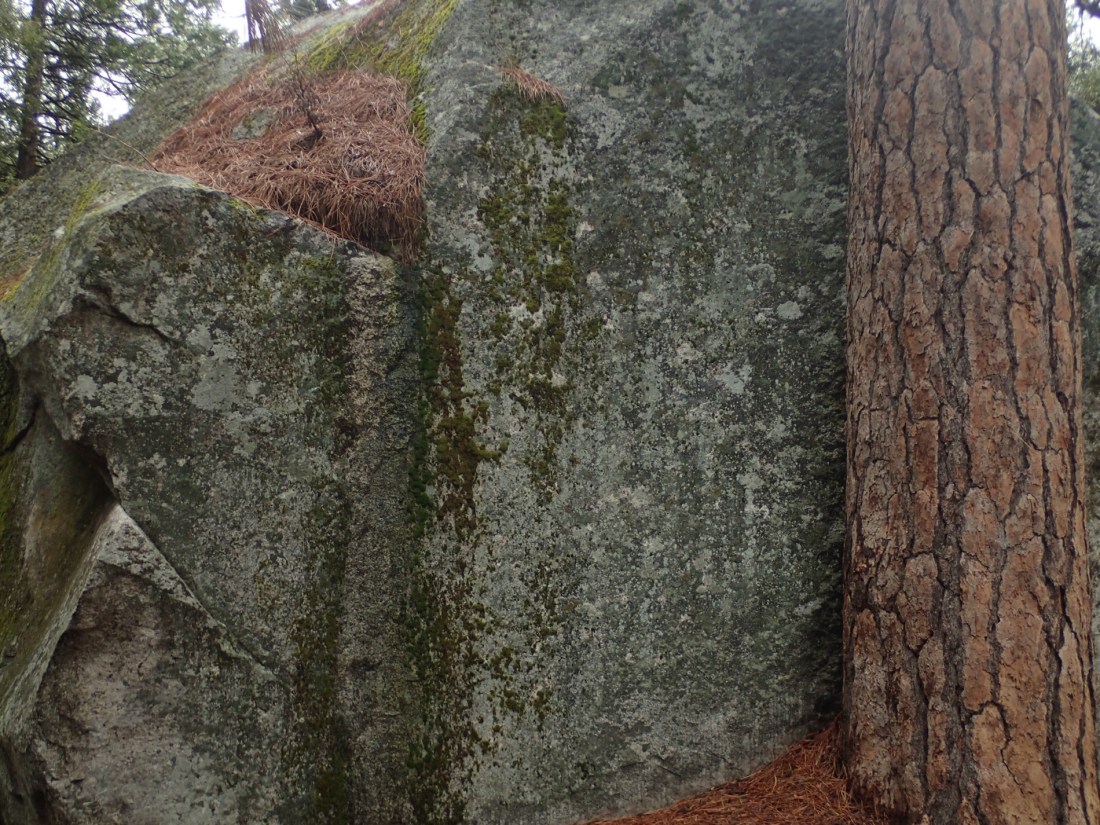
And then the juxtaposition of the textures – the relatively smooth granite and the ‘puzzle pieces’ of the pine’s bark.

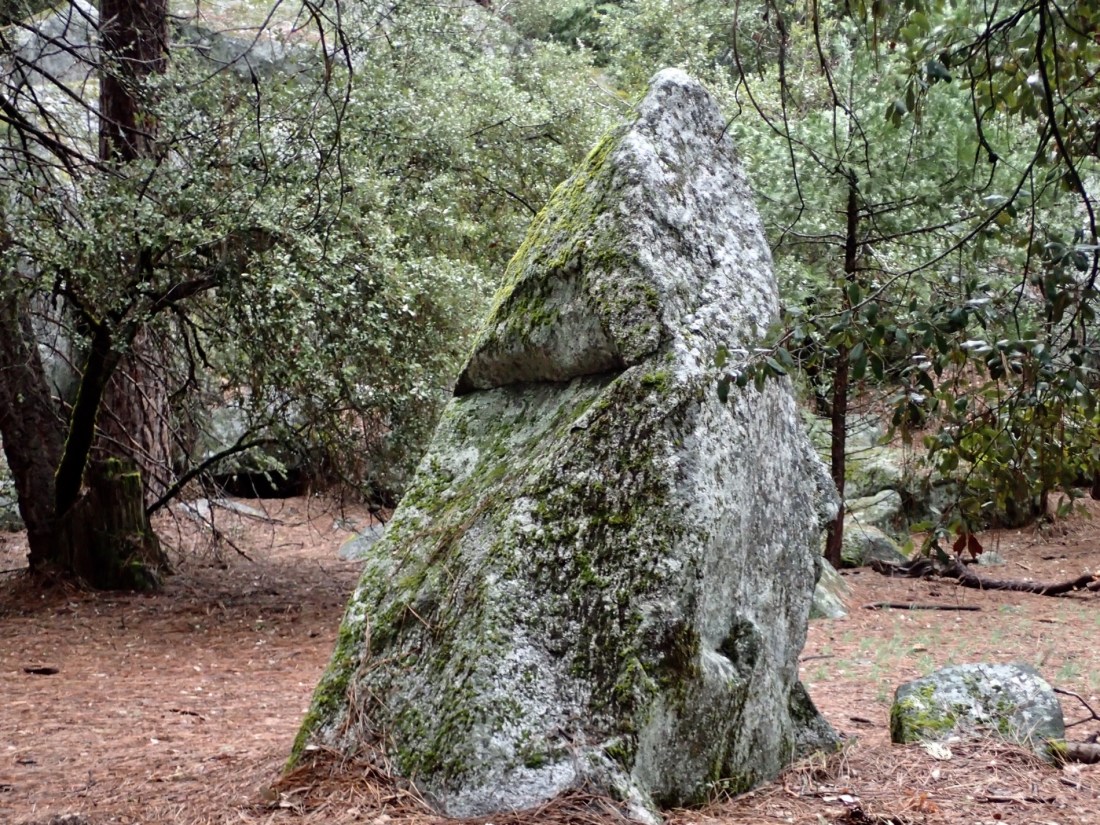
There was a rock that reminded me eerily of the blue stones in the circle of standing stones at Stonehenge

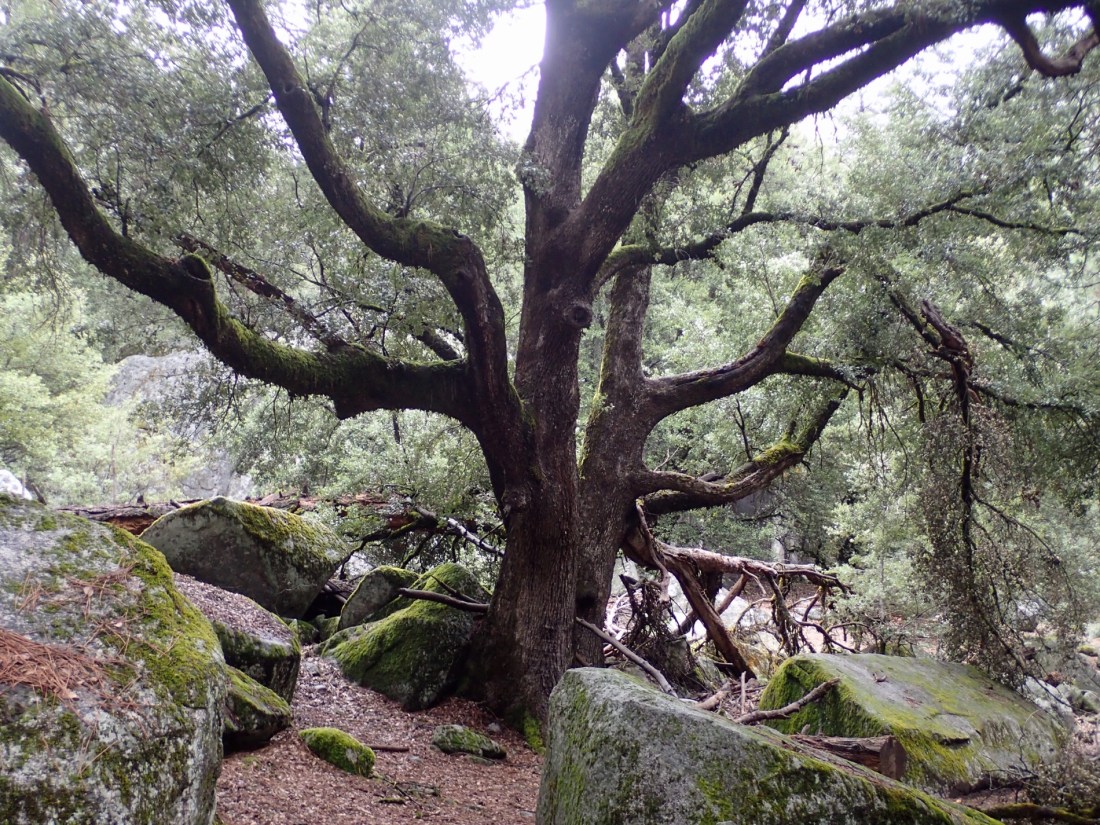
A little further on there was a black oak which has obviously been standing here for a long time

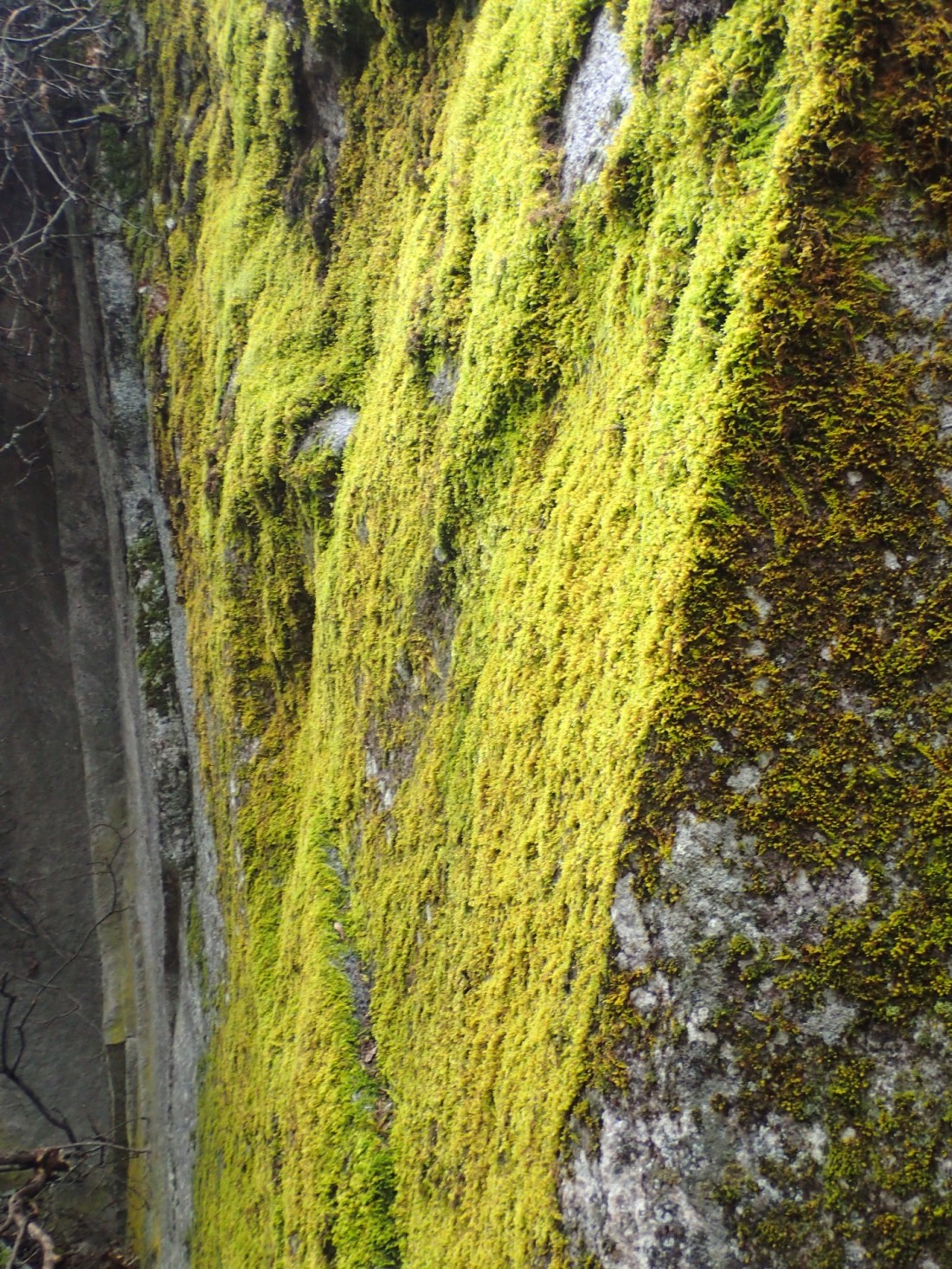
The bright green of the moss on this boulder really stood out

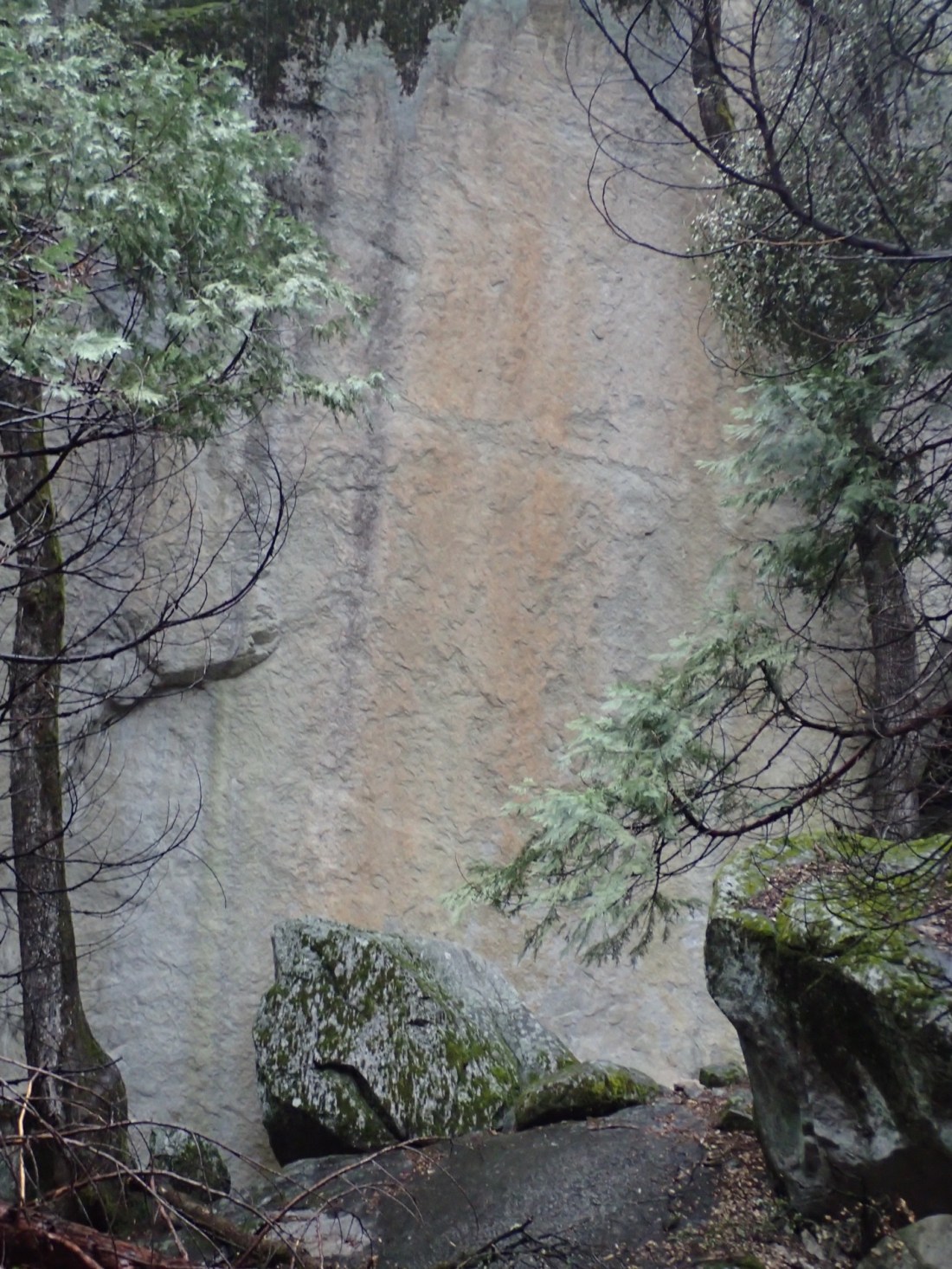
The base of the north wall suddenly appeared, with pink on its surface

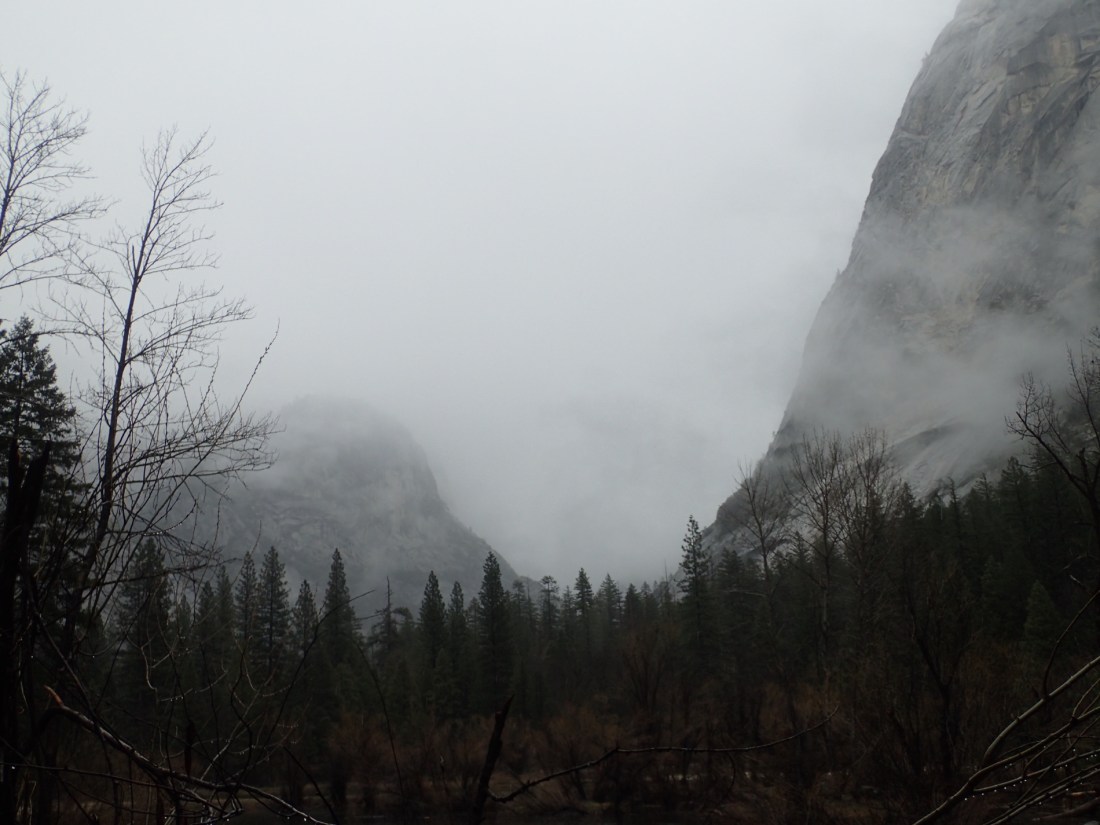
Soon, we broke out of the trees and boulders to stand on the side of Mirror Lake and look across it to the south walls of the valley. Unfortunately, half dome was wreathed in fog, but again there are little waterfalls everywhere, cascading off the granite

Mt. Watkins, on the north side of the valley, loomed faintly out of the cloud,

And everywhere was the sound of white water, cascading over the blocks of granite in Tenaya Creek

Mary

Posted on the train heading home, somewhere west of Antioch, CA

4/22/19