El Capitan

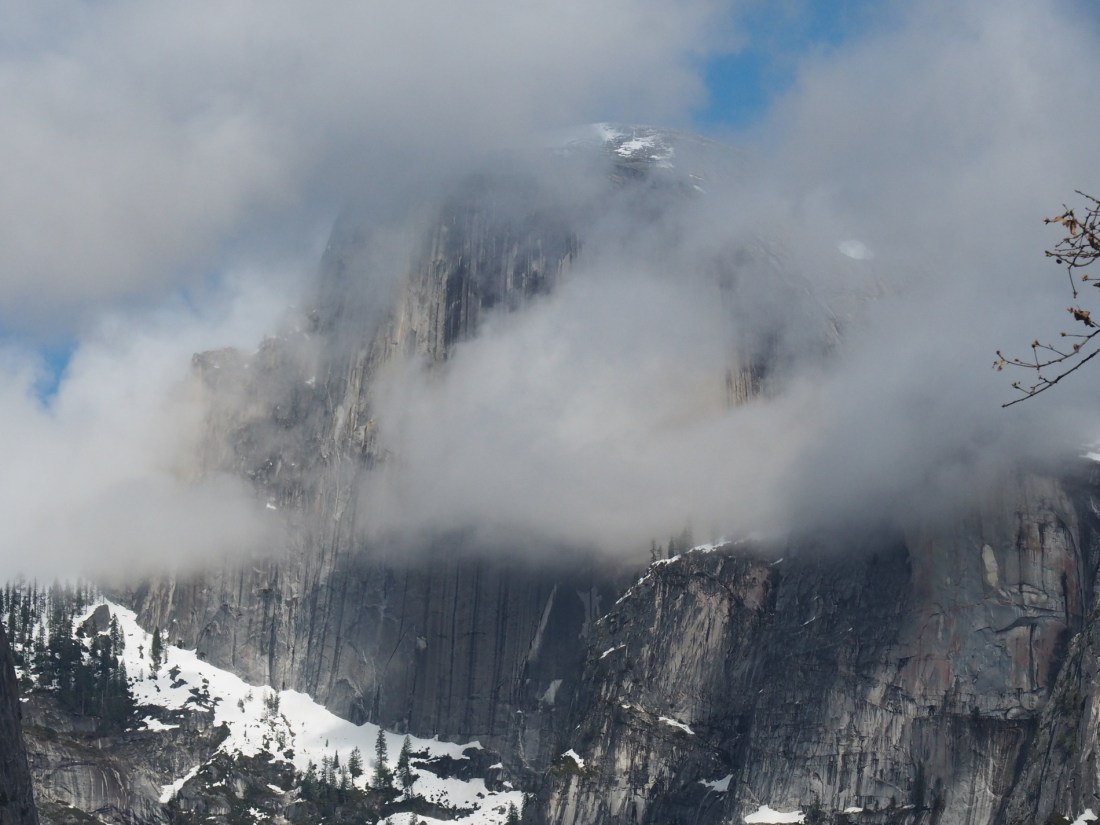
If you see pictures of Half Dome, even partially enshrouded by clouds,
And El Capitan
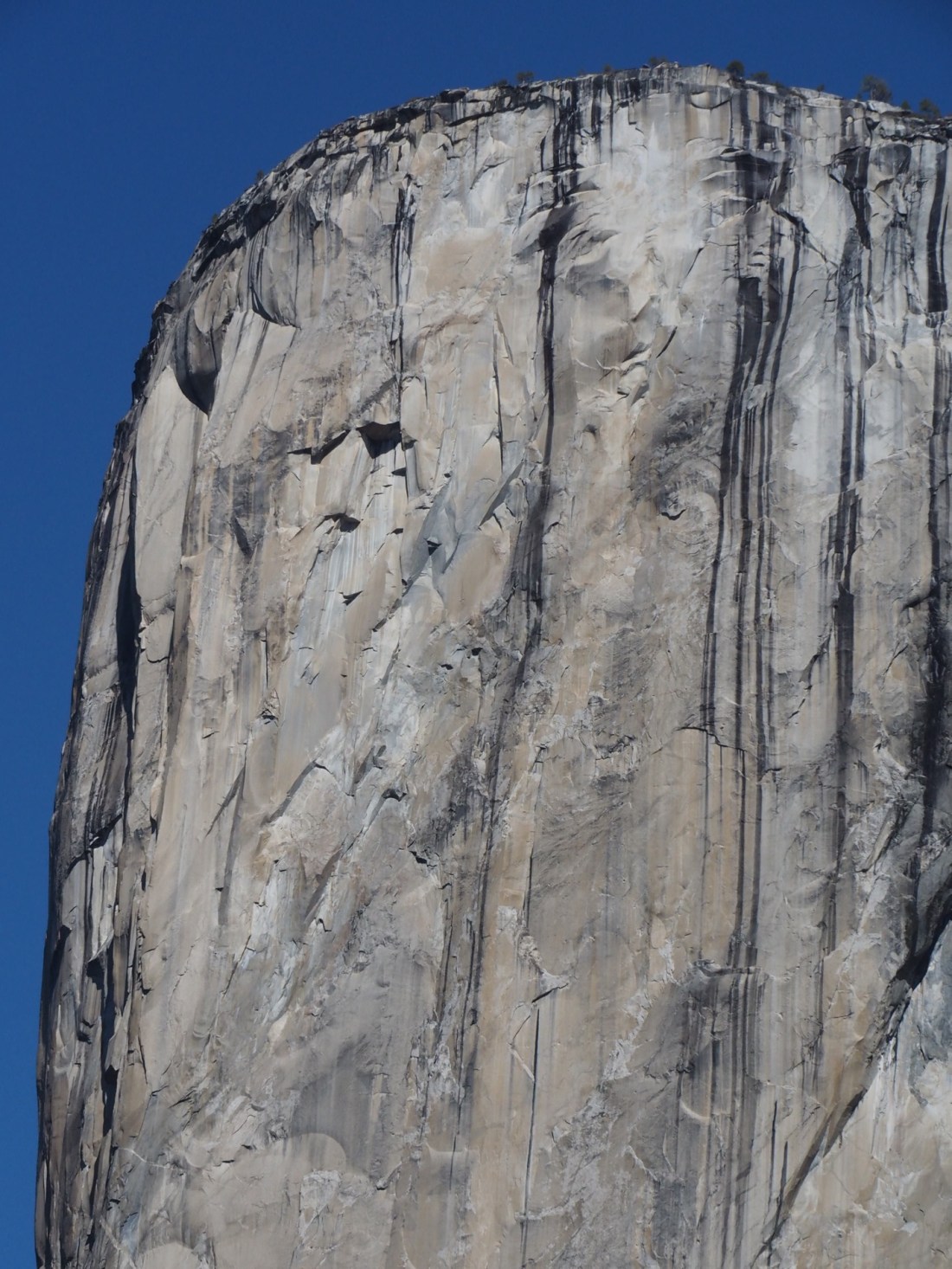
you immediately know that you are looking at two of the most iconic sections of granite in Yosemite.

We walked a part of the “west loop” trail in Yosemite valley one day. The trail parallels the Merced River
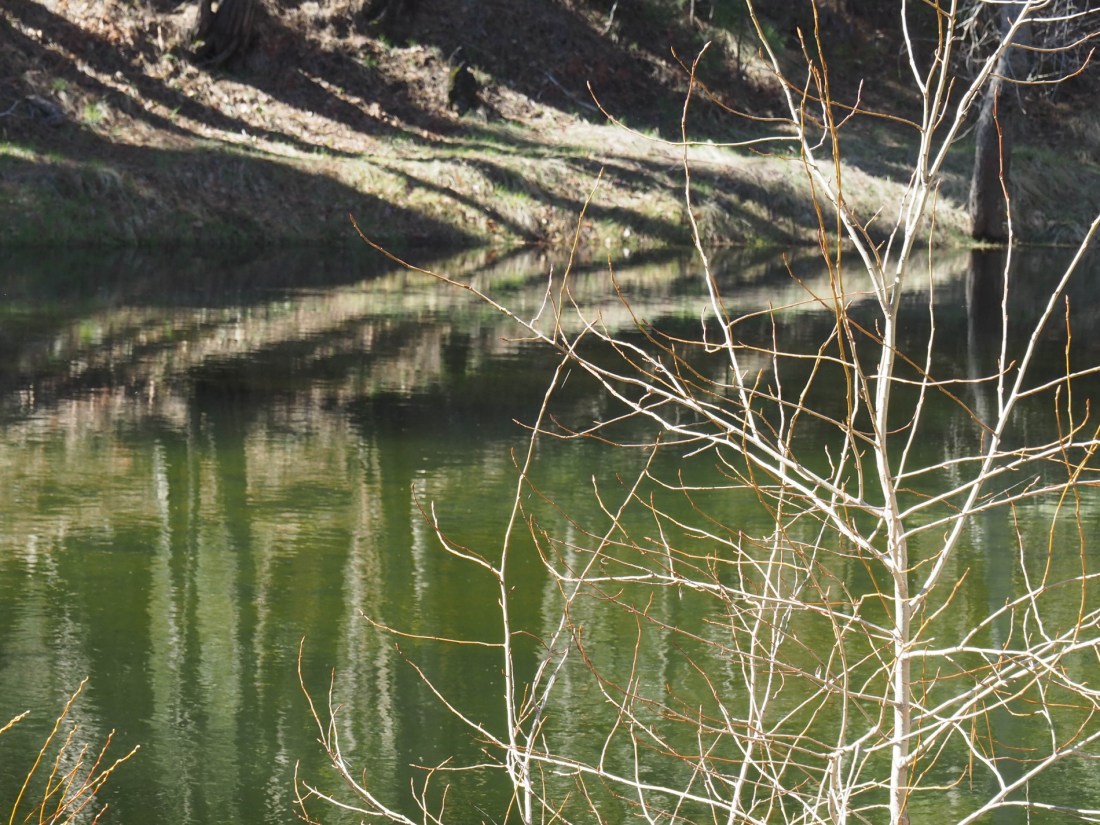
With a view across the river of Cathedral Spires

From a distance, El Capitan looks pretty smooth, but when you look at it closely, you can believe that some sculptor was at work

And there is even an “eye”, and just below the “eye” is a tree, which must have grown to a great height before dying. How did it find enough soil to do that?

When you spend some time looking at El Capitan, you realize that the colored dots you are seeing on the granite are climbers:
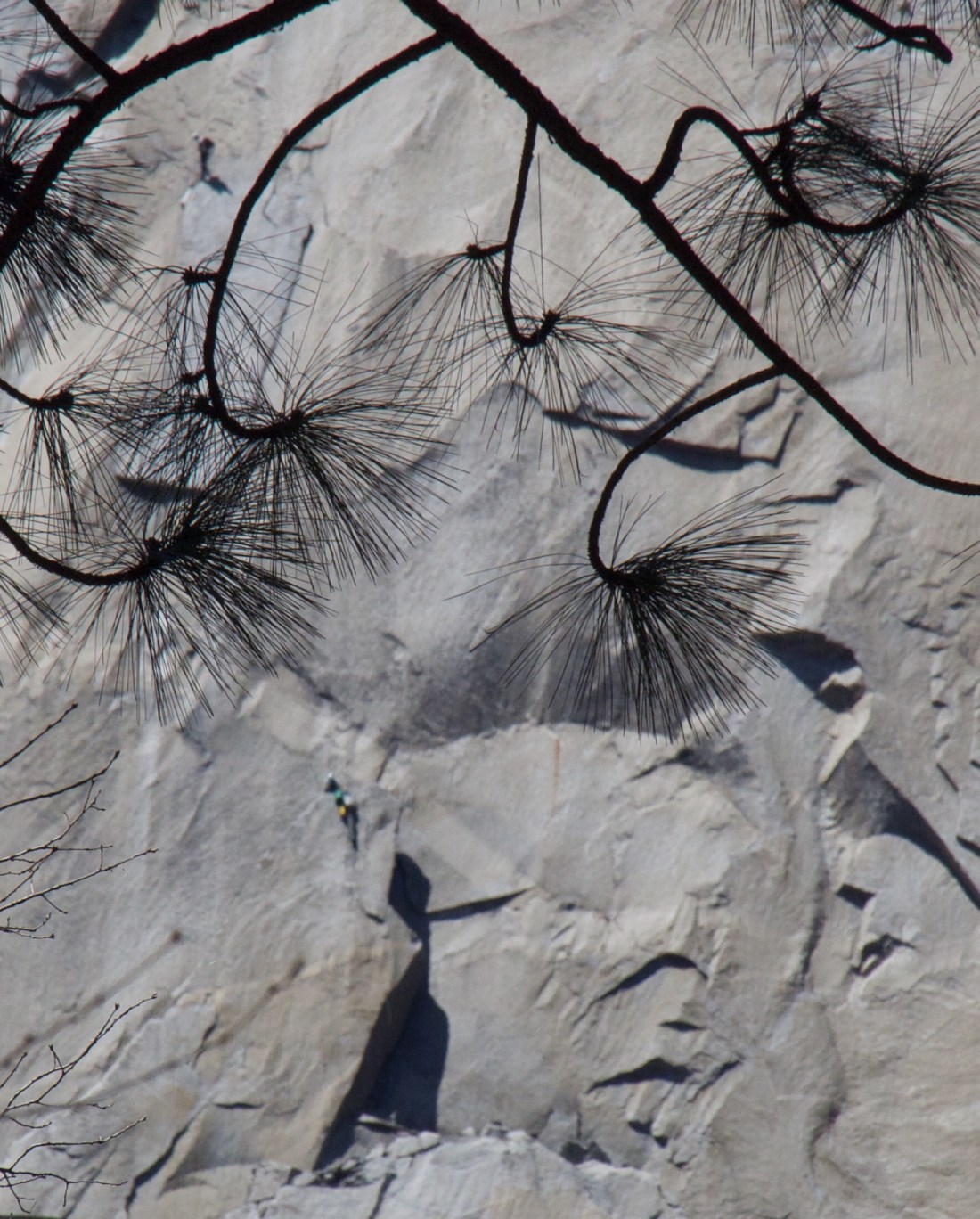
We first saw this group when they were clustered on what looked like a fairly big ledge,
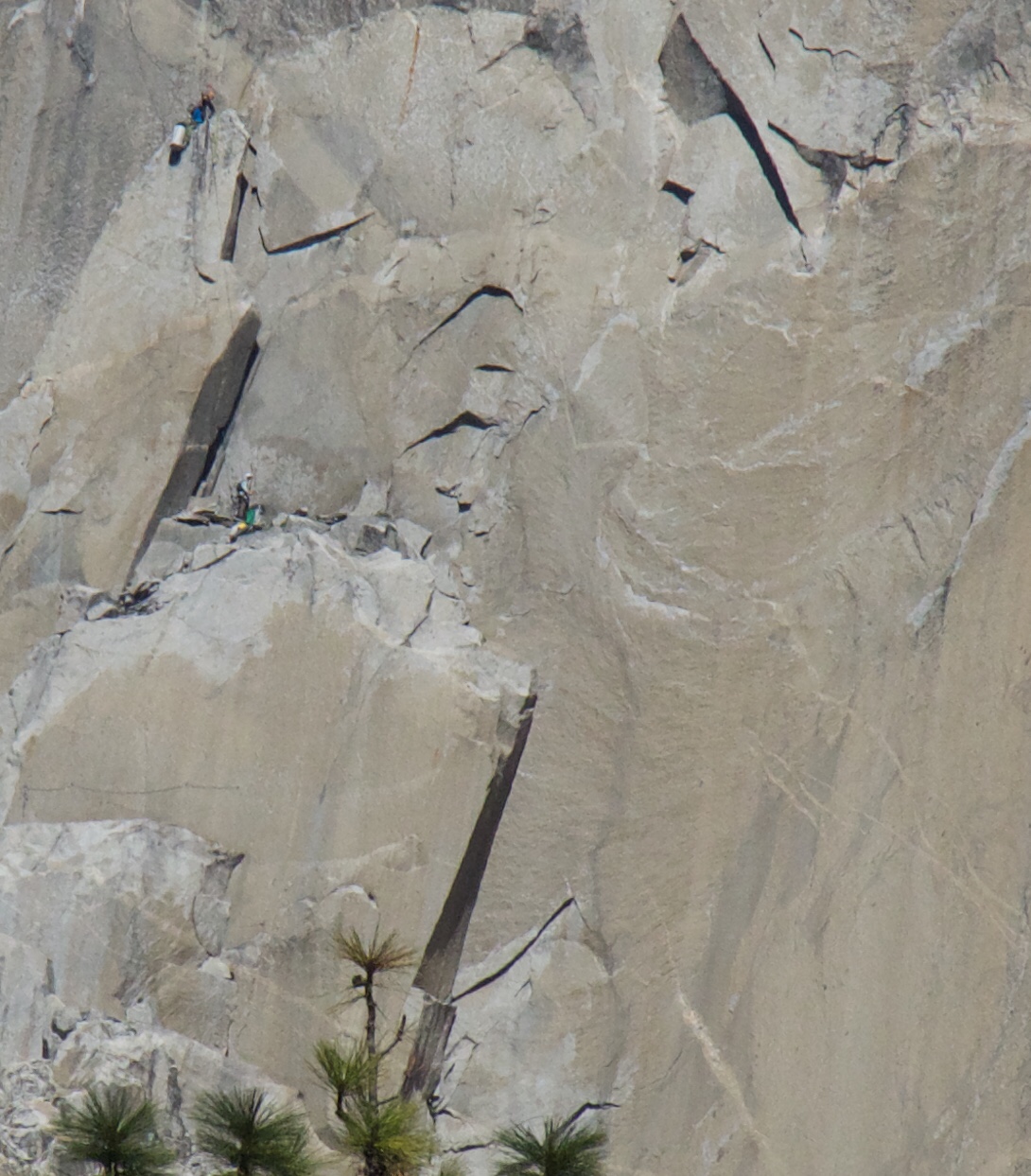
And then they began to move, with one person in the lead. The leader seemed to be hauling a canister of some kind – probably their food and water,
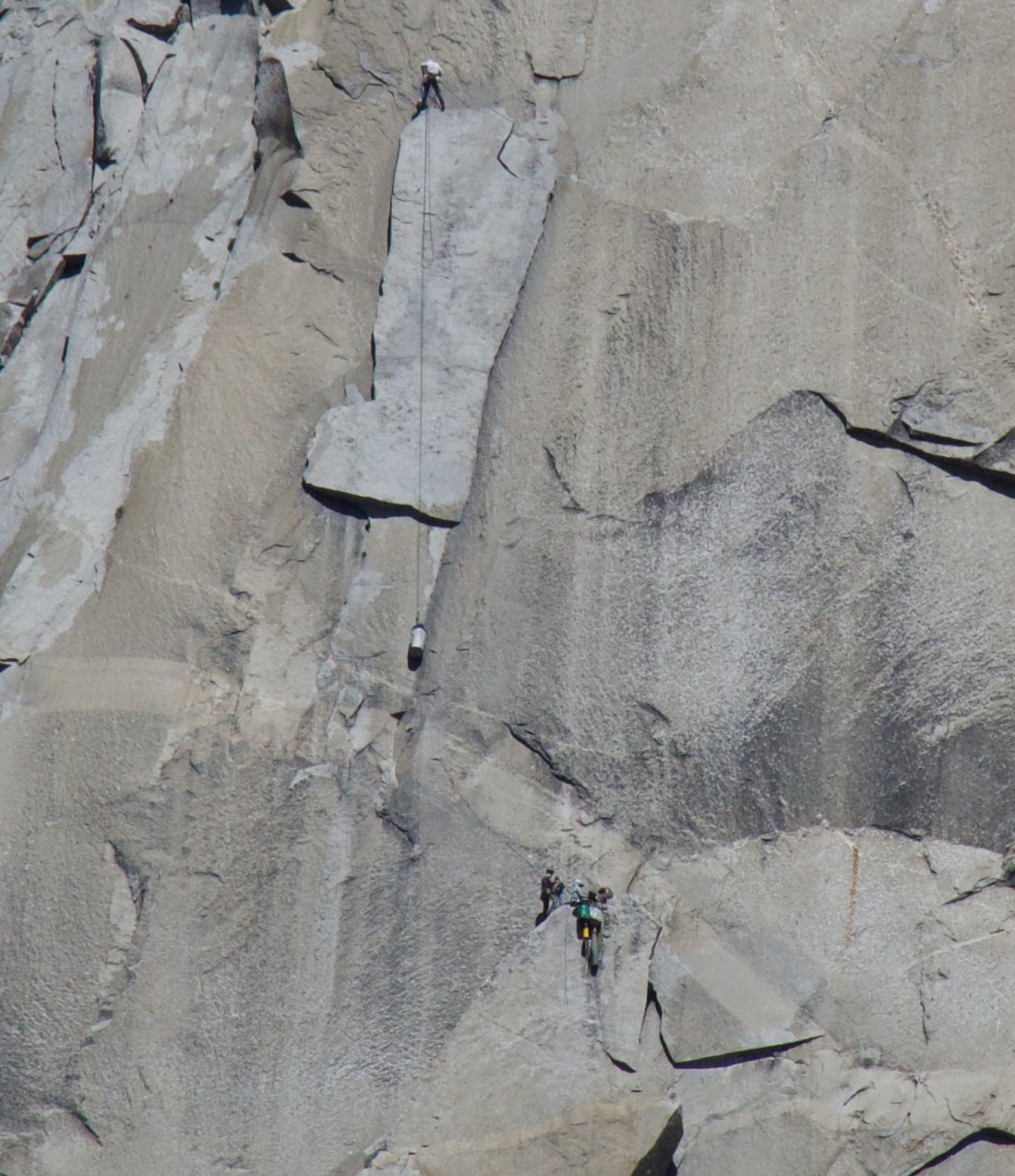
And you can clearly see that the members of the group further down the granite are belayed by the leader above. He seems to be standing on another ledge above them.

We realized that we needed to move on, so we did, and on the way back to the car we lost sight of the climbers. The cover article of the “National Geographic” a couple of months ago was about a young man who free climbed (that means NO ROPES) El Capitan in 4 hours. Clearly, this group was going to need several days!

Mary

Posted on the train heading back home somewhere north of Stockton, CA

4/22/19
Textures

I am fortunate to live near the Botanical Garden at the University of California, Berkeley, and love to visit there at any time of the year. I usually take my camera with me, because I know that there will always be something that catches my eye. It is February, so there aren’t a lot of things blooming now, but the shapes and textures of the plants are what attract me.

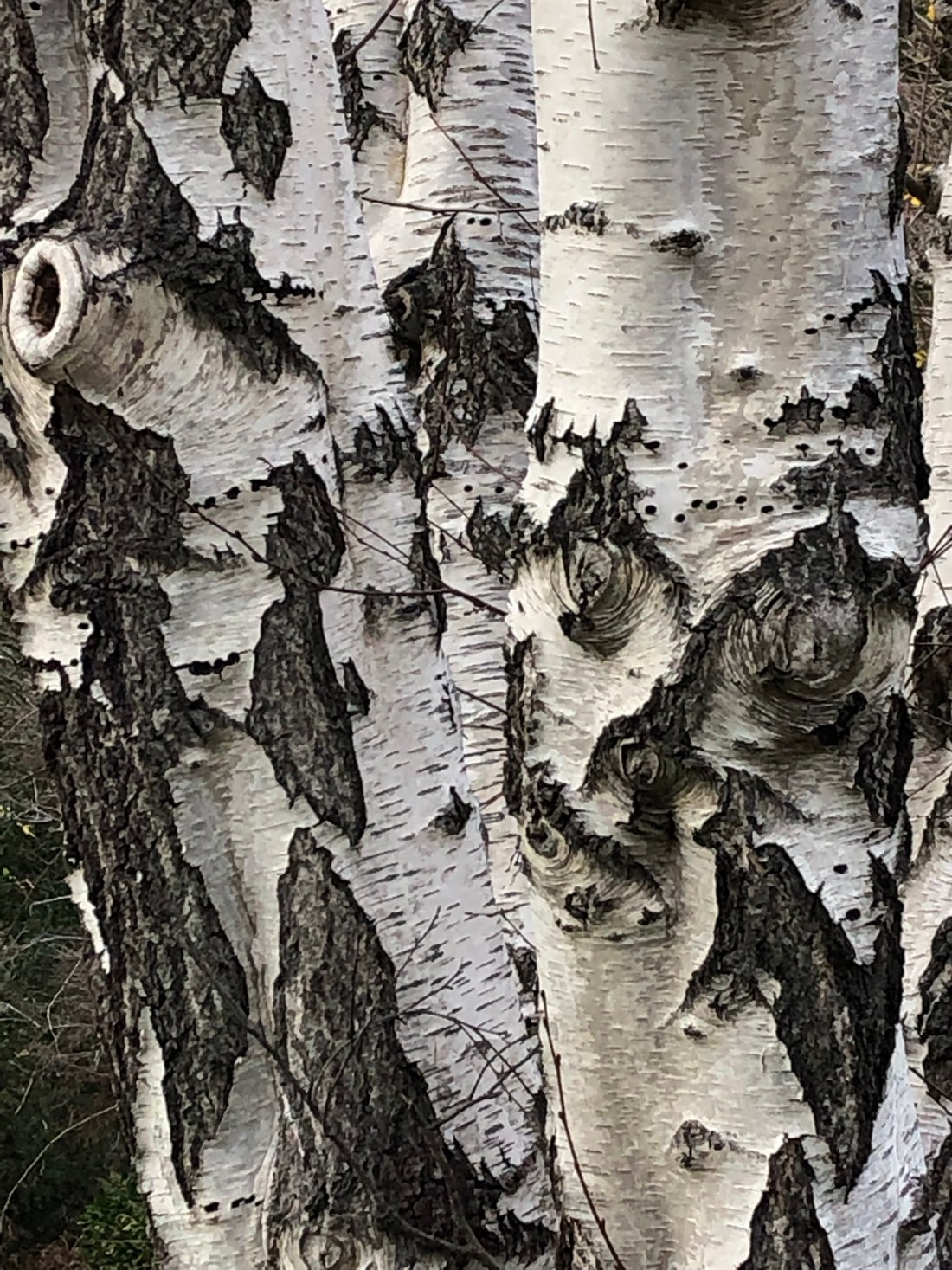
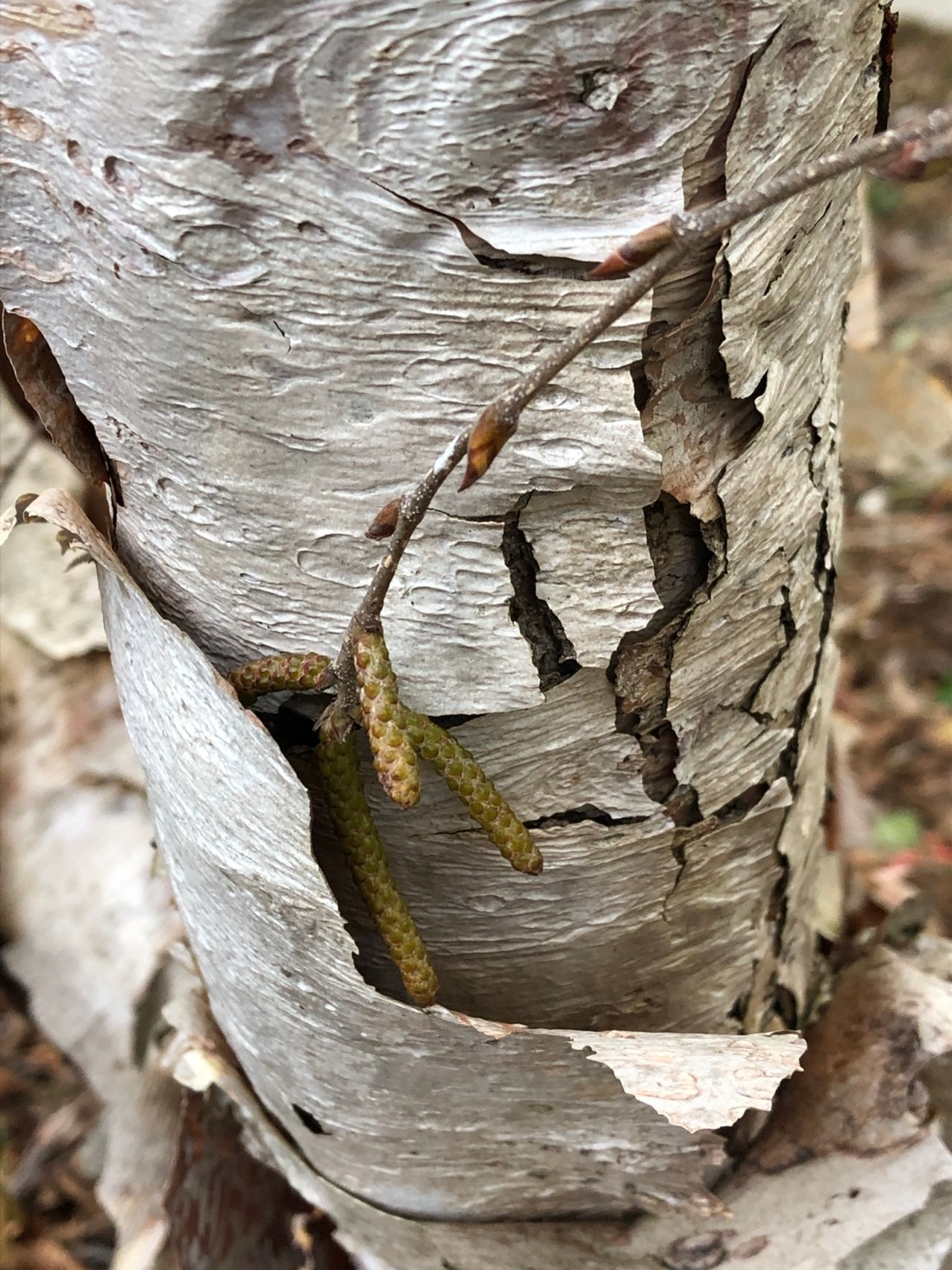
For example, here’s the peeling bark on the Betula Utilis, a member of the Betulaceae family, a birch from Bhutan.

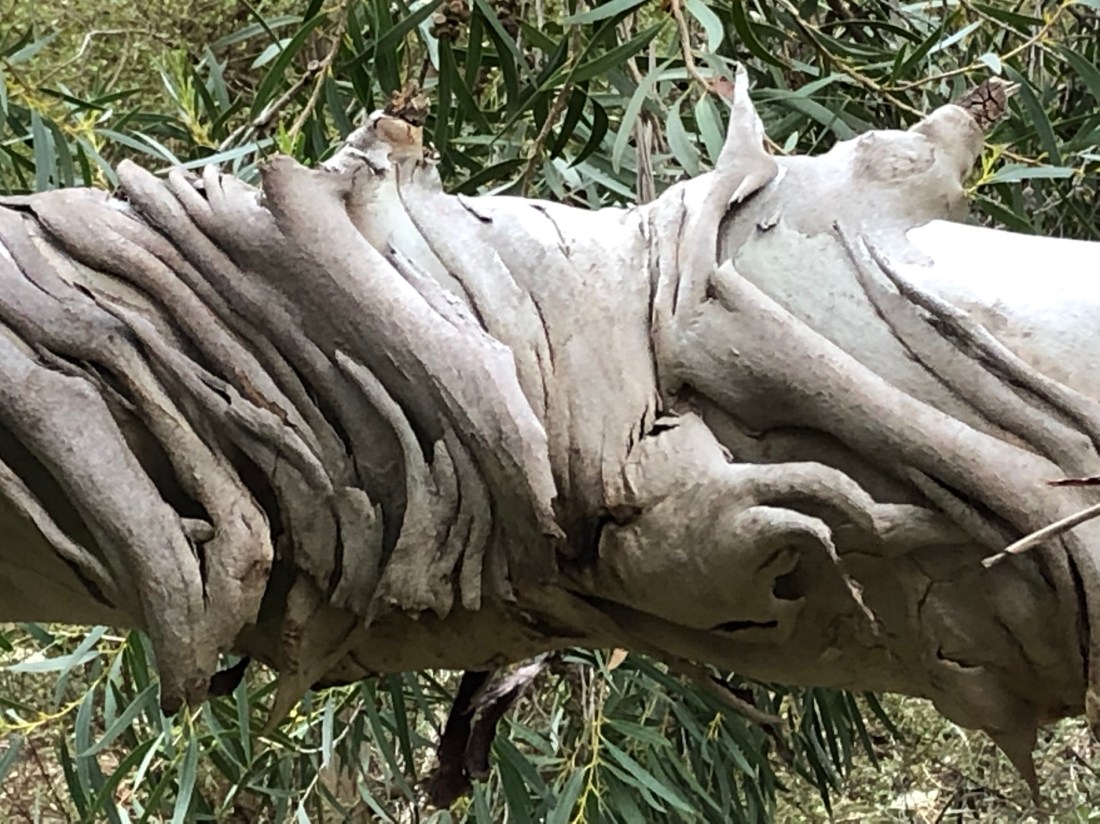
And then there’s the branches of a Eucalyptus Kybeanesis, a member of the Myrtaceae family, from New South Wales, Australia. One branch looks like a hippopotamus,

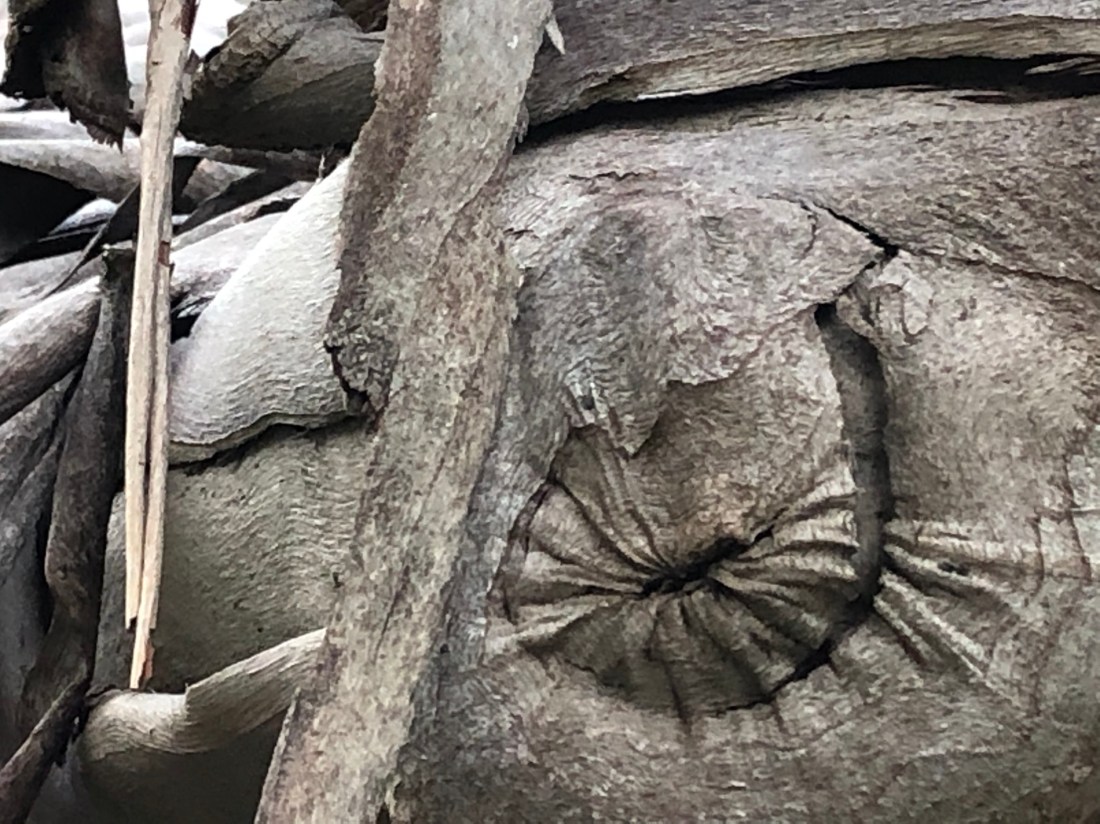
Another branch seems to have a cyclone carved into it.

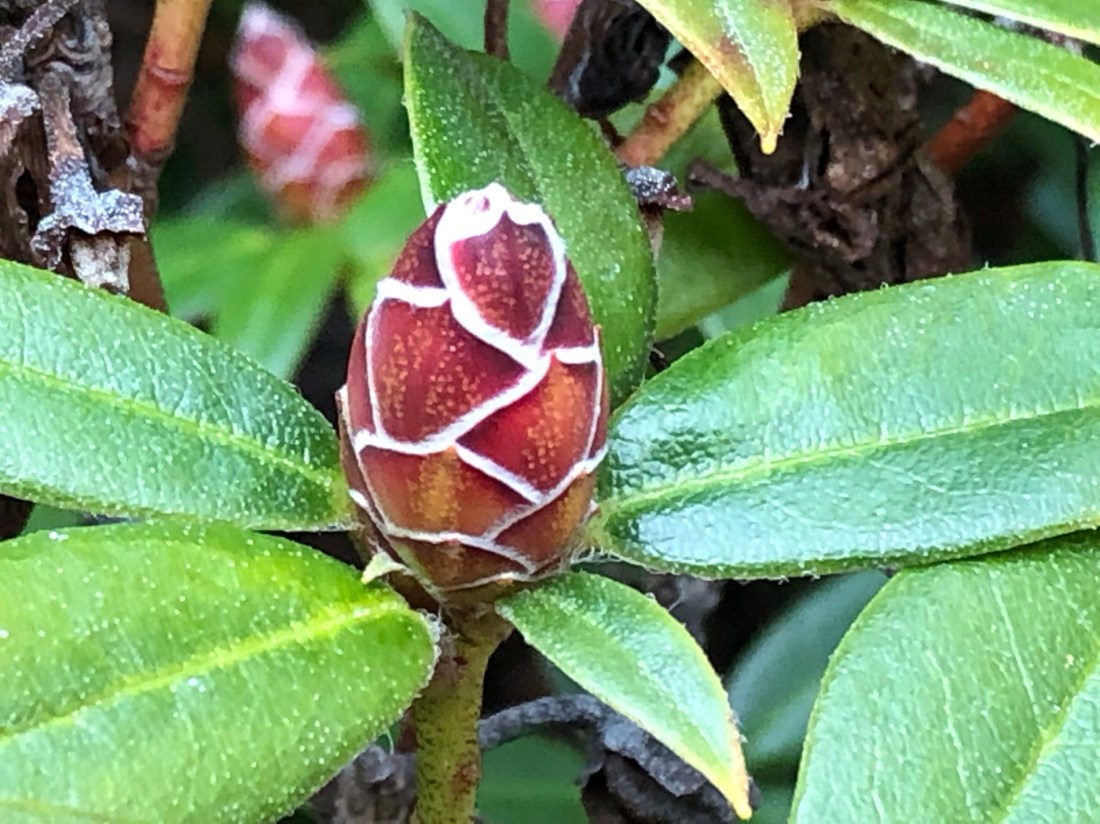
While the garden is meant to be a museum of wild-collected plants (many of which are endangered in the wild and find safe harbor here), it also has some horticultural varieties, like this member of the Rhododendron family, called “Scott’s Valentine” whose buds are almost architectural.

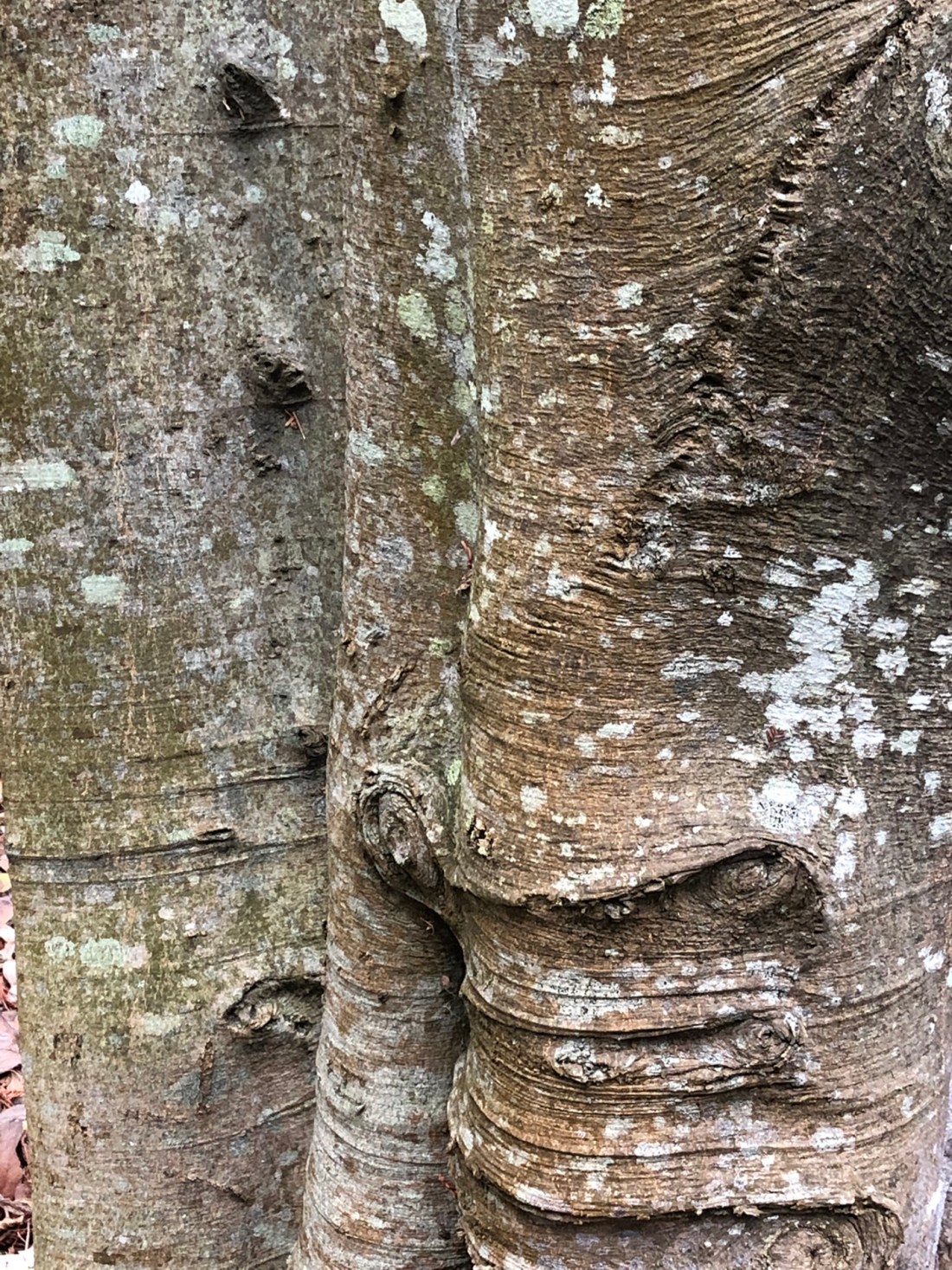
Here a member of the Cannabaceae family, Celtics Tetrandra, from Yunan province, China, seems to have bark that has been troweled on in swirls.

And this member of the Rosaceae family, Stravanvaesia Davidiana, from China could almost convince you that square sections of bark have been cut and pasted on.

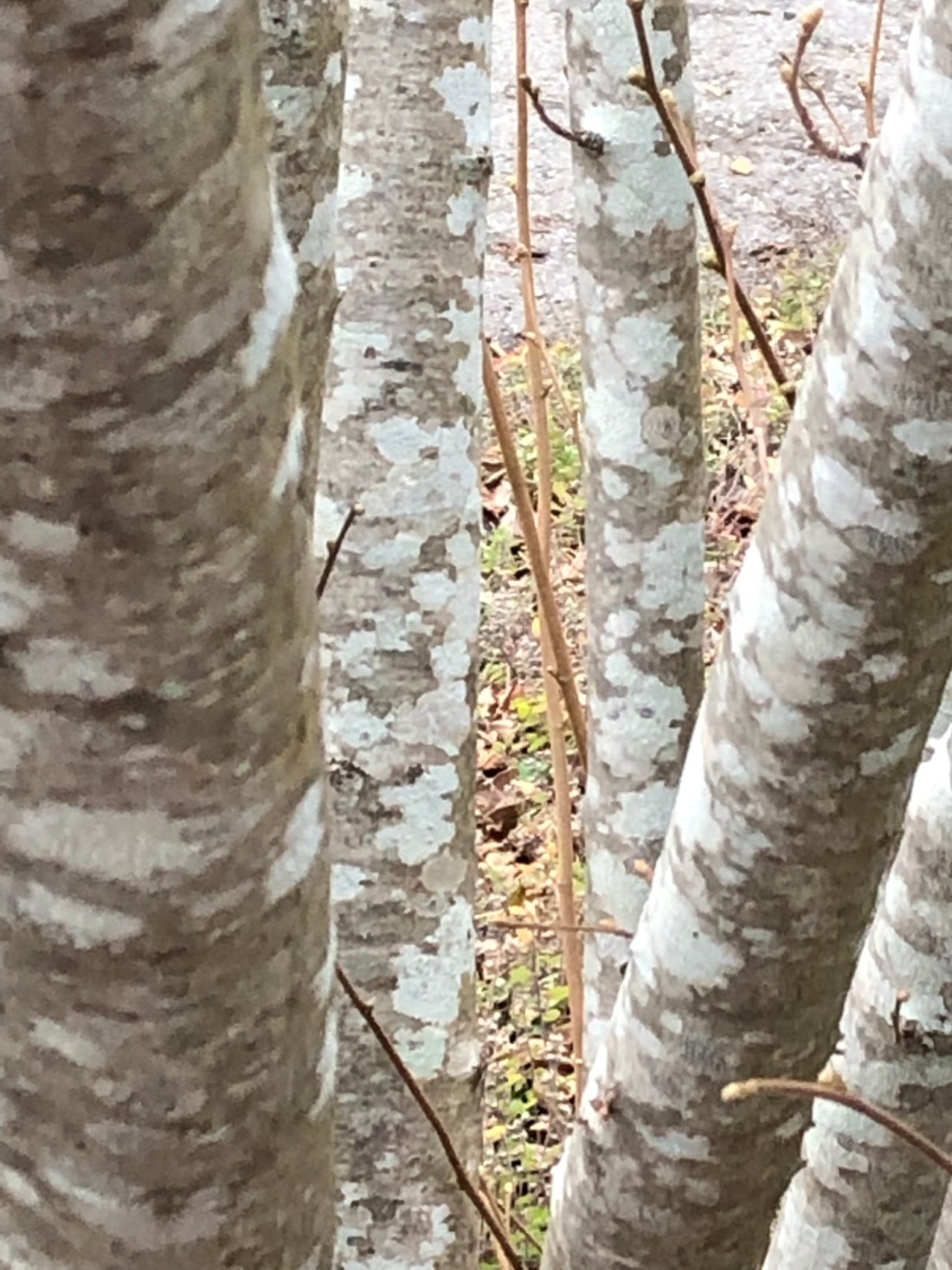
The bark on this member of the Sapindaceae family, Acer Monspessulanum, a Montpellier Maple from France, also caught my eye,

One of my favorite trees in the garden is a European White Birch from Spain, a member of the Betulaceae family, Betula Pendula and it always causes me to stop and admire it.

The garden also has some “Monkey Puzzle” trees, Araucaria Araucana, from Chile. It is an endangered tree, and, sadly, some of the specimens in the garden seem to be sick and dying. You want to know how it got its common name? It is said that a noted British barrister, Charles Austin, remarked “It would puzzle a monkey to climb that!”

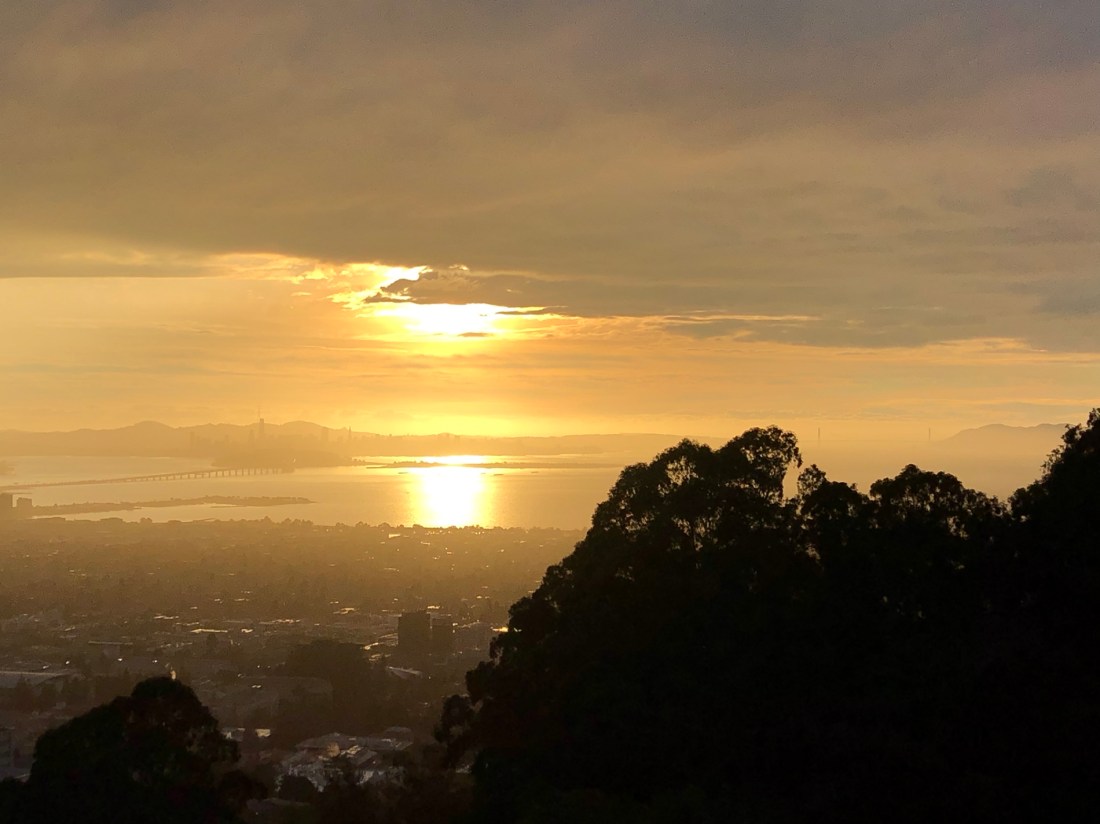
And this day, I was in the garden at the end of the day, and was rewarded with an approaching sunset from the garden of old roses near the top of the garden, looking out towards the Golden Gate Bridge.

The garden was closing, so I drove further up the hill to watch the sky and the bay turn to gold

Mary

Posted from Berkeley, CA 2/25/19
Scotland – land of my ancestors

I came to Scotland because I wanted to see the land of my maternal ancestors. It was important not only to see the land, but also to see the monuments and meet the people. What I found were very friendly people, ready to talk, anxious to help when needed, and curious about my country.

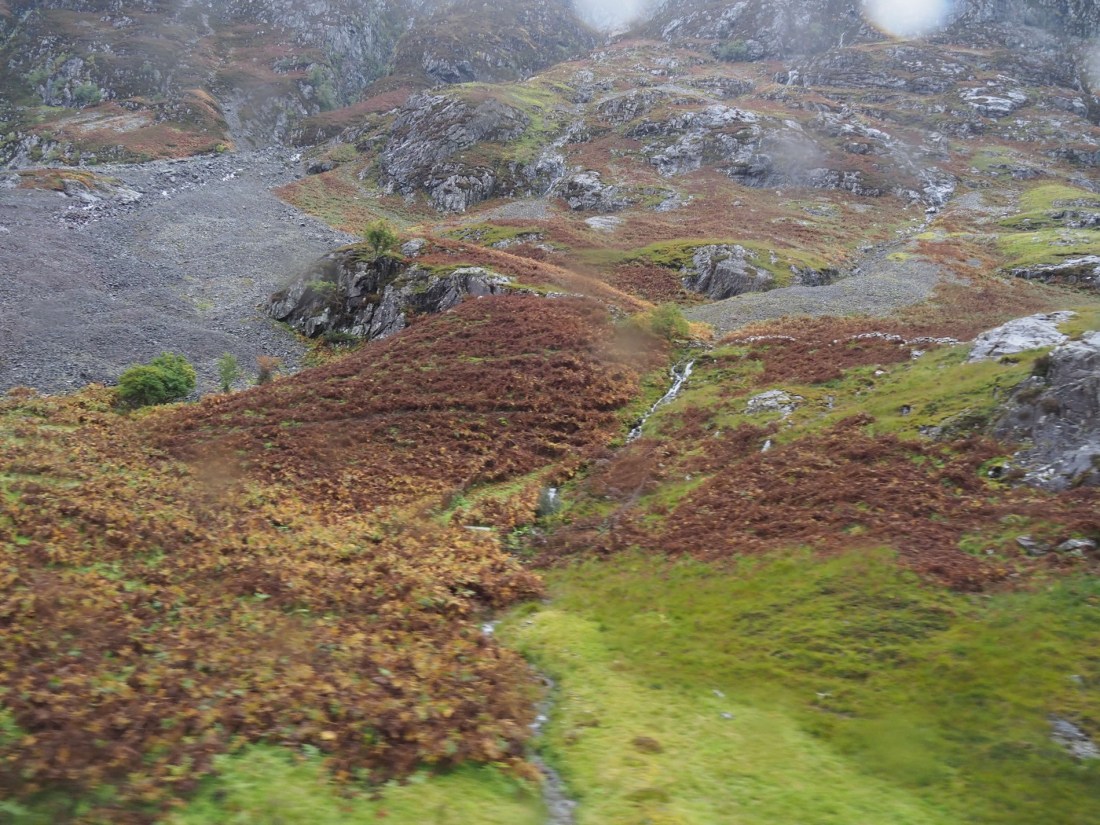
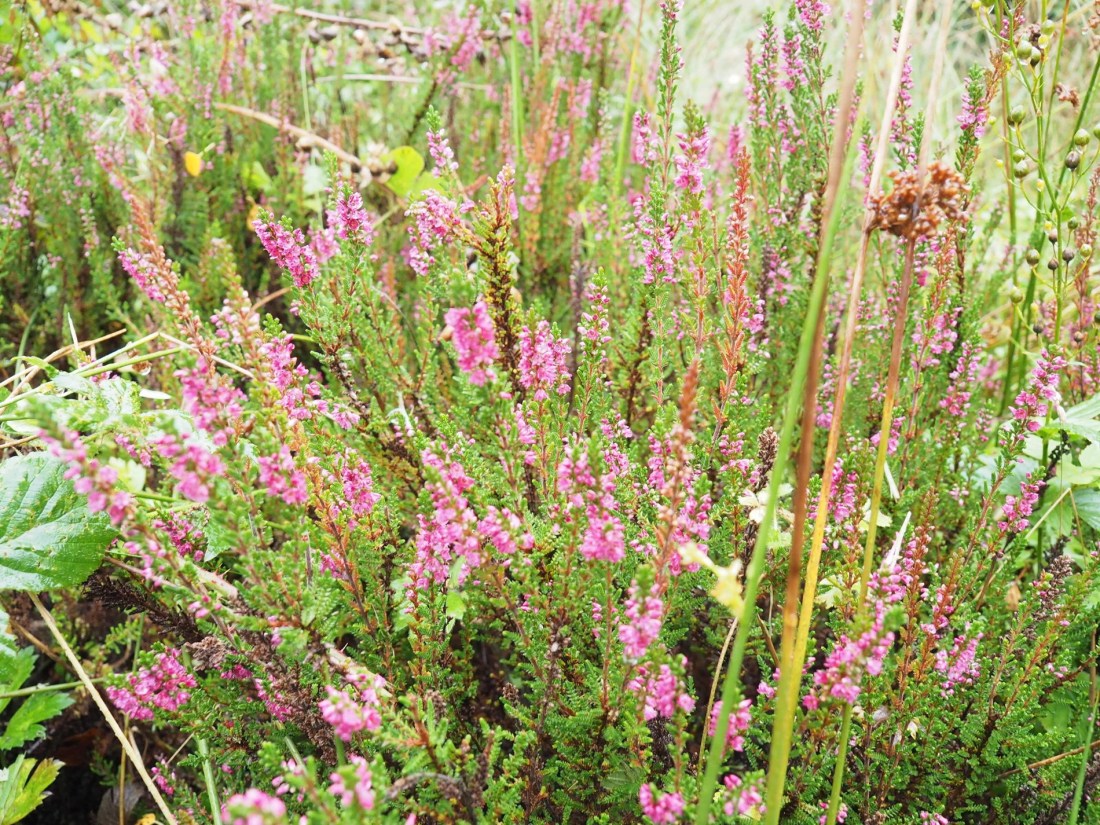
Of course, I had an idea of what Scotland would look like. I had expected to find windswept moors, but didn’t realize that they wouldn’t be purple or pink with heather – it’s too late in the year for that! The heather is there, yes, but it’s grey-green. And there are rolling hills, never very high, with dry stone walls and swathes of bracken (what we call fern) that, in September, is turning brown.

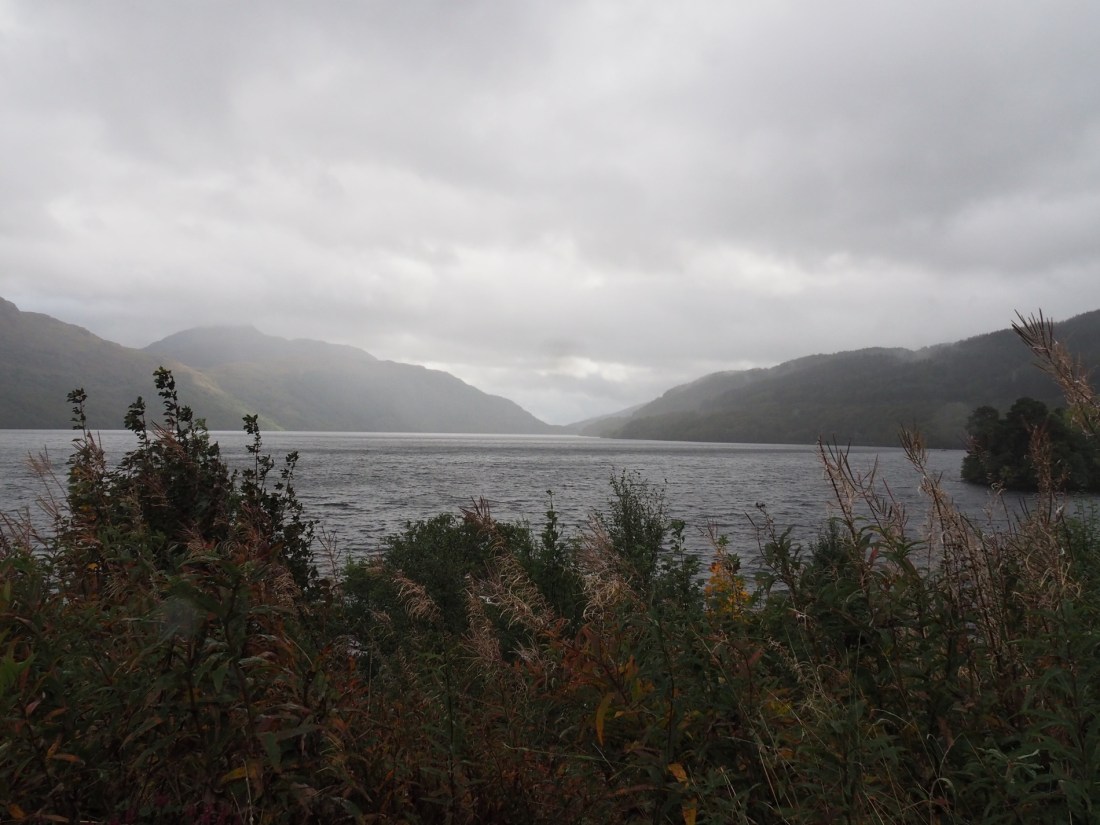
And everywhere, there is water. Yes, it did rain occasionally, but a lot less frequently than I expected! But the lochs (we would refer to them as lakes) are full and waterfalls spill down the slopes to feed rivers and streams that run along the bottom of the glens (valleys).

And the ocean is never far away (here it is from the Isle of Skye)

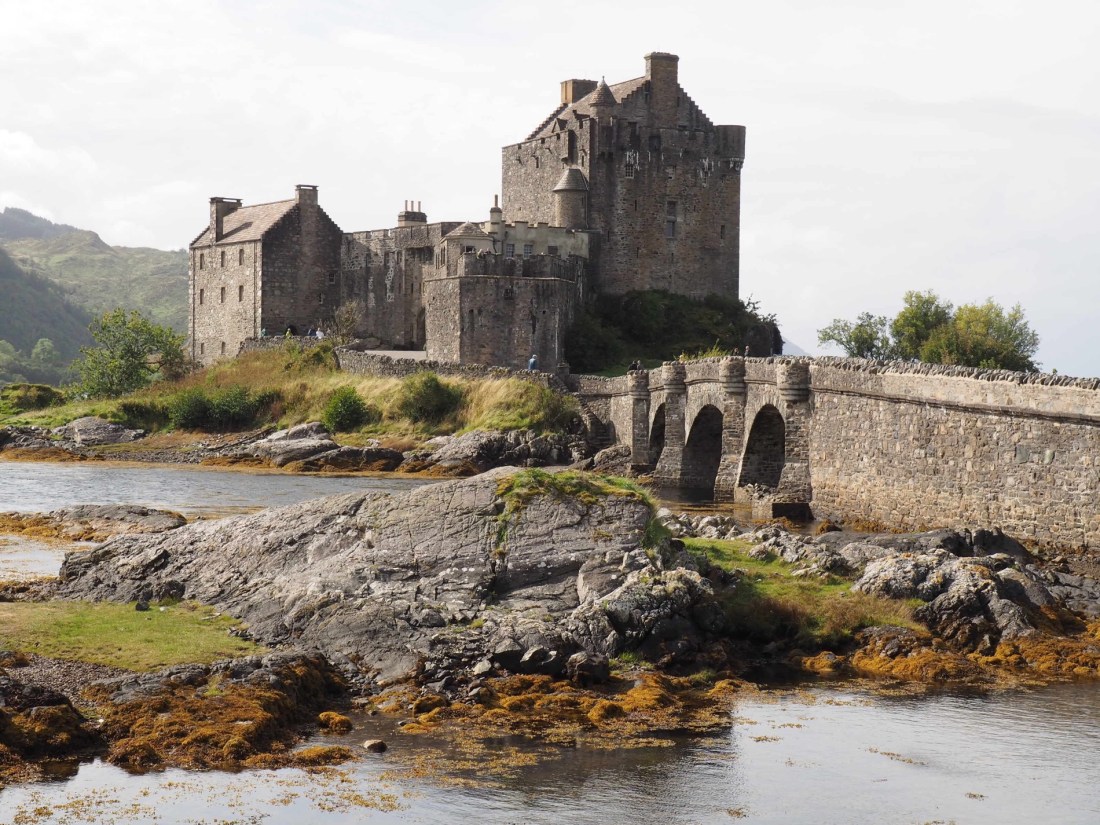
Of course, there are castles, such as Eilean Donan

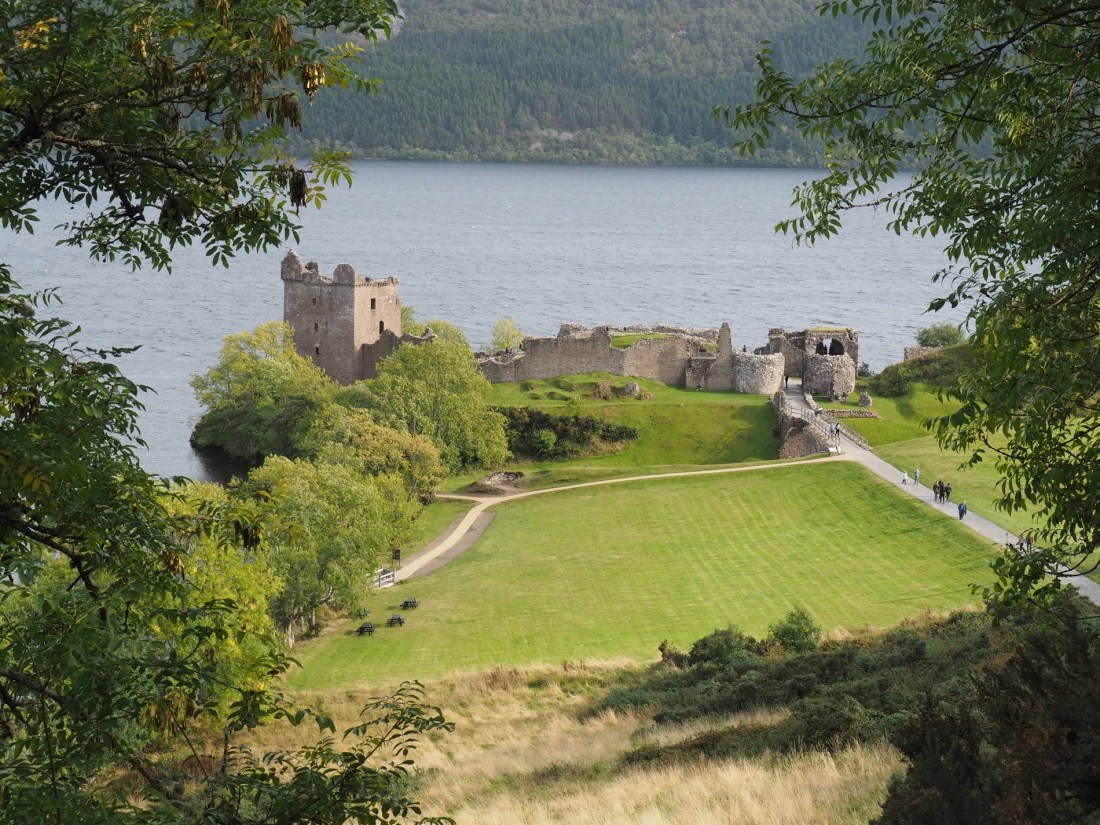
And Urquhart Castle, both on Loch Carron on the west coast of Scotland

There are rainbows (like this one over the Devil’s Beef Tub (so-called because cattle rustlers ‘hid’ the cattle there before ‘ransoming’ them back to their owners)

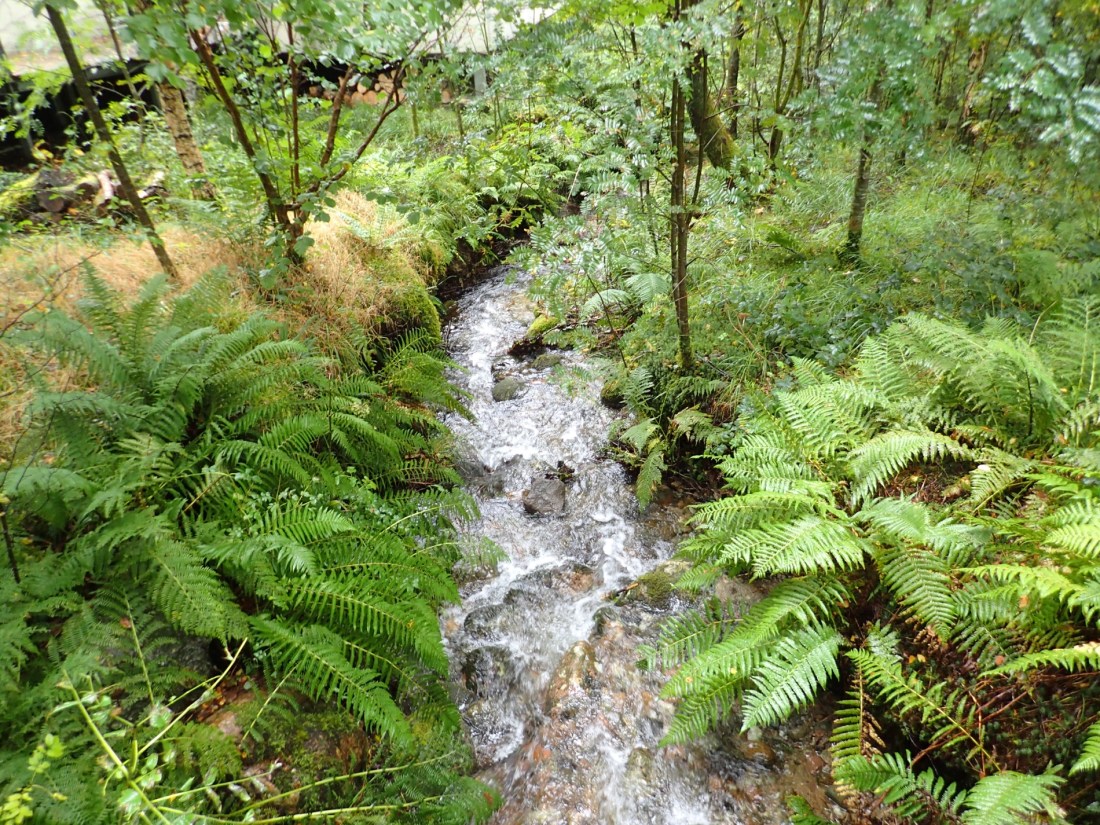
There are glens – like Glen Coe, with a beautiful little stream running through it,

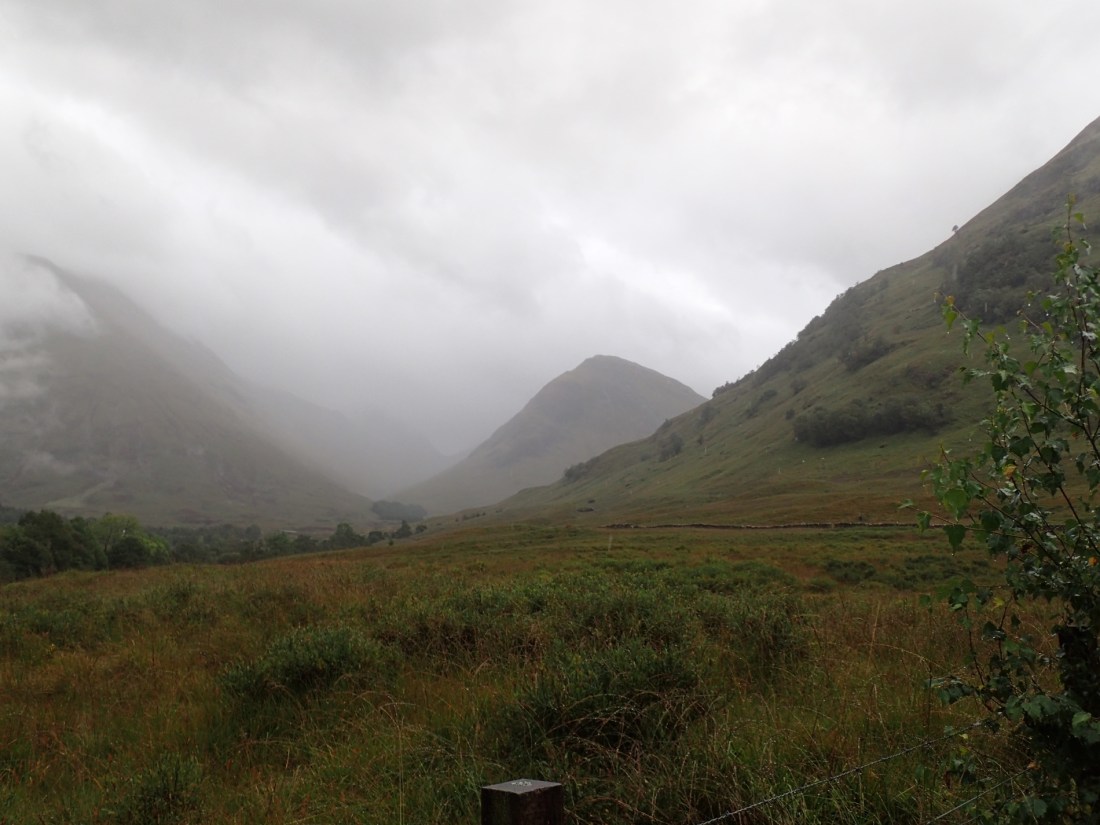
surrounded by mountains (known as bens in Scotland)

But perhaps most beautiful (and iconic of all) Loch Lohmand

We learned about the Jacobite rebellion in which the forces of Bonnie Prince Charlie were defeated, and many of his supporters imprisoned. It is said that the song “Bonnie Bonnie Banks of Loch Lohmand” was written by one of his supporters who was imprisoned and awaiting execution for treason. “Low road” is the euphemism for the road that the dead travel.

And, on our last full day in Scotland, we finally got to see some heather still in bloom – on the bonnie, bonnie banks of Loch Lohmand.

Typed on the way home 9/19/18, and finally published 1/21/19 from Berkeley, CA
Balnuaran of Clava

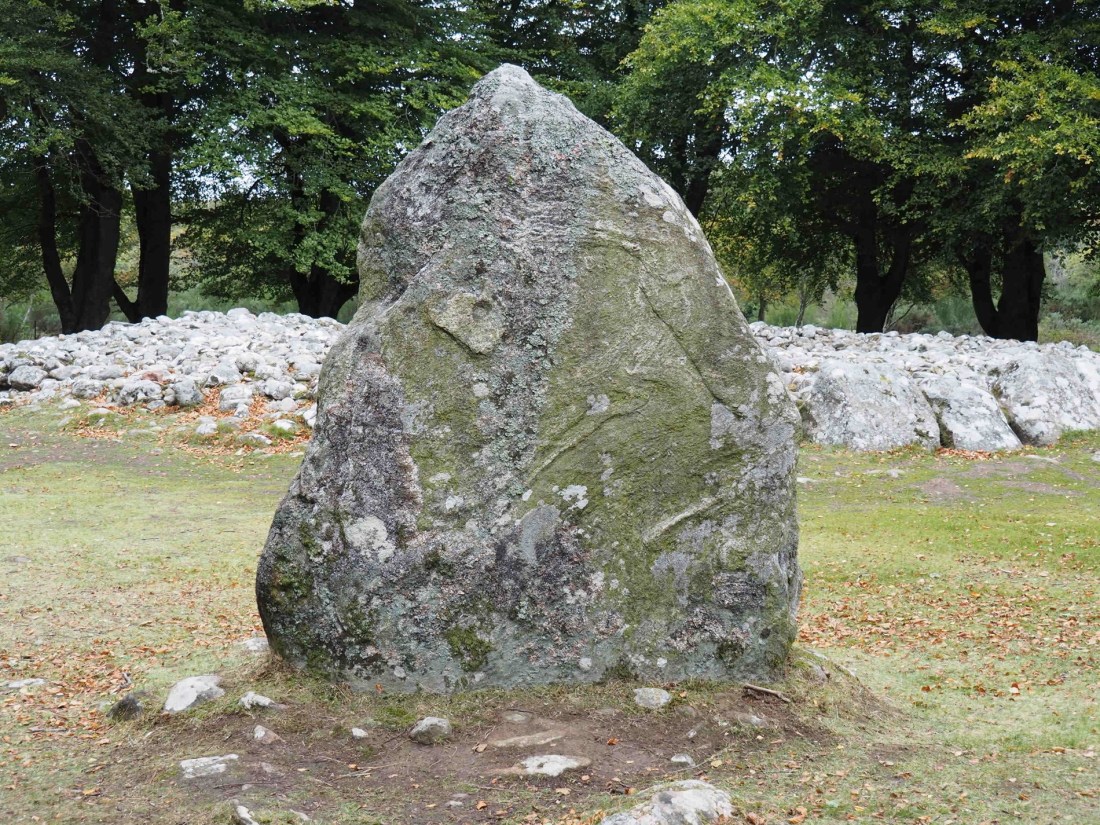
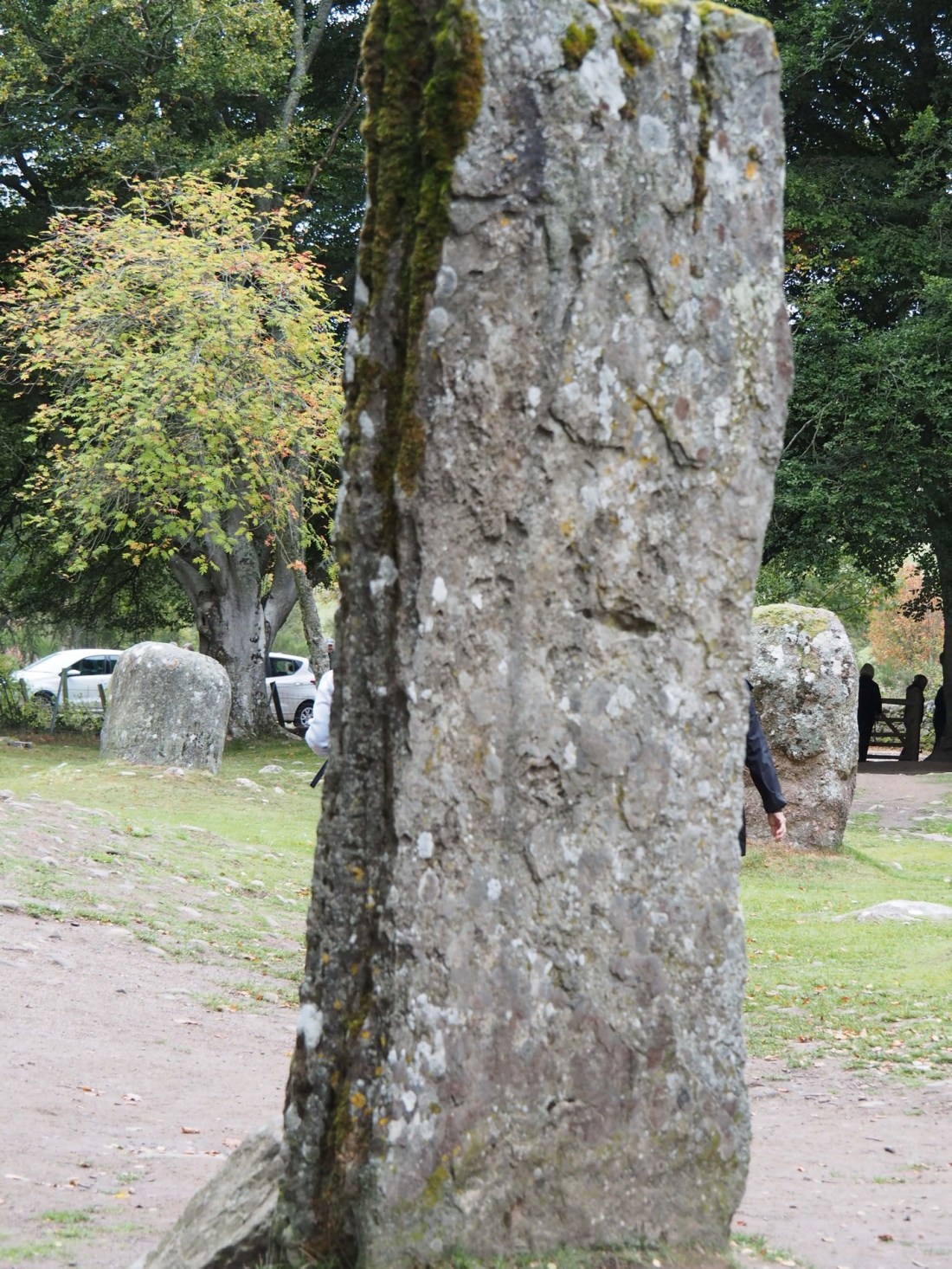
Great Britain and other places where Neolithic cultures thrived have a long history of standing stones. Many of these were raised in circles, apparently as places of worship, or perhaps for observation of the changing seasons to tell farmers when to plant and when to reap. Others stand as lonely sentinels. Why they were raised and how has long fascinated archaeologists and researchers.

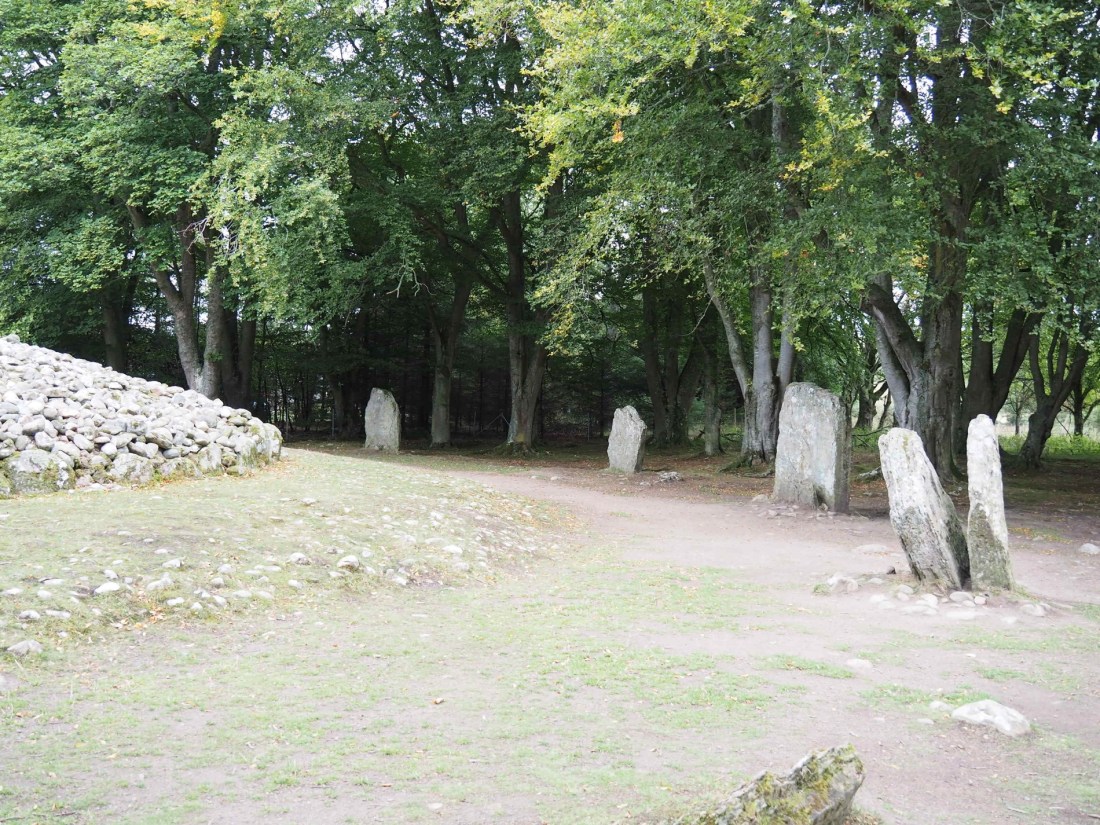
Earlier in our trip, we visited Stonehenge, probably the most famous of the stone circles. In Scotland we visited a lesser known site, Balnuaran of Clava, that contains four cairns (burial places) three of which are surrounded by stone circles. It is thought that this site, in the Nairn valley, was originally used by Bronze Age peoples at about 2000 BCE, which is just a little later than Stonehenge, where the builders seem to have started erecting stones in about 2500BCE. The site was apparently used for burials for 200 years, and then again in about 1000 BCE

There are burial berms in the area around Stonehenge, but it seems that there were no burials within the circle of its standing stones. That is not the case, however, at Balnuaran of Clava, where the burial cairns are inside the circle of stones.

The people who raised the cairns and stones were obviously very in tune with the seasons. Both of the two large cairns are aligned to the midwinter sunset. On the shortest day of the year, sunlight streams up the passage to illuminate the burial chamber.

The builders also varied the colors of the stones, although they are so weathered now that it’s hard to see on the outside (the stones pictured here are on the inside of the cairn) but red and pink stones faced the midwinter sunset, while grey stones were used on the side facing the midwinter sunrise.

And the larger stones were also placed on the southwest side to face the midwinter sunset.

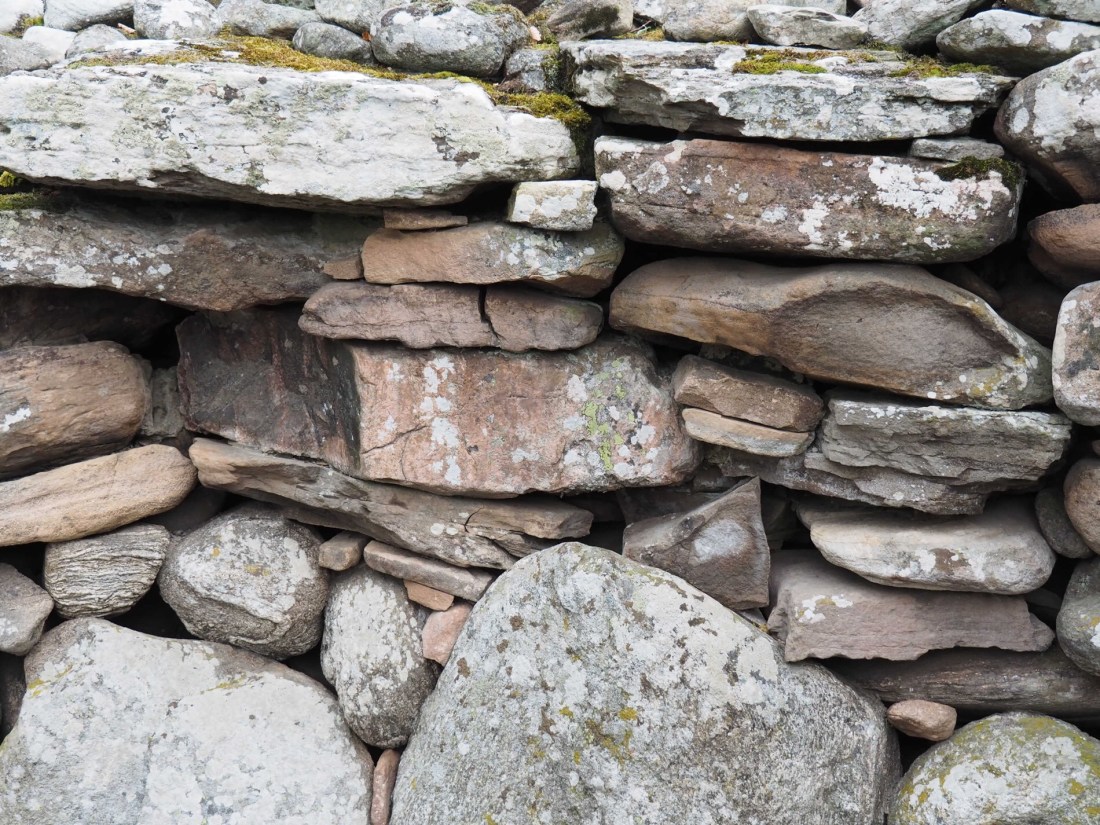
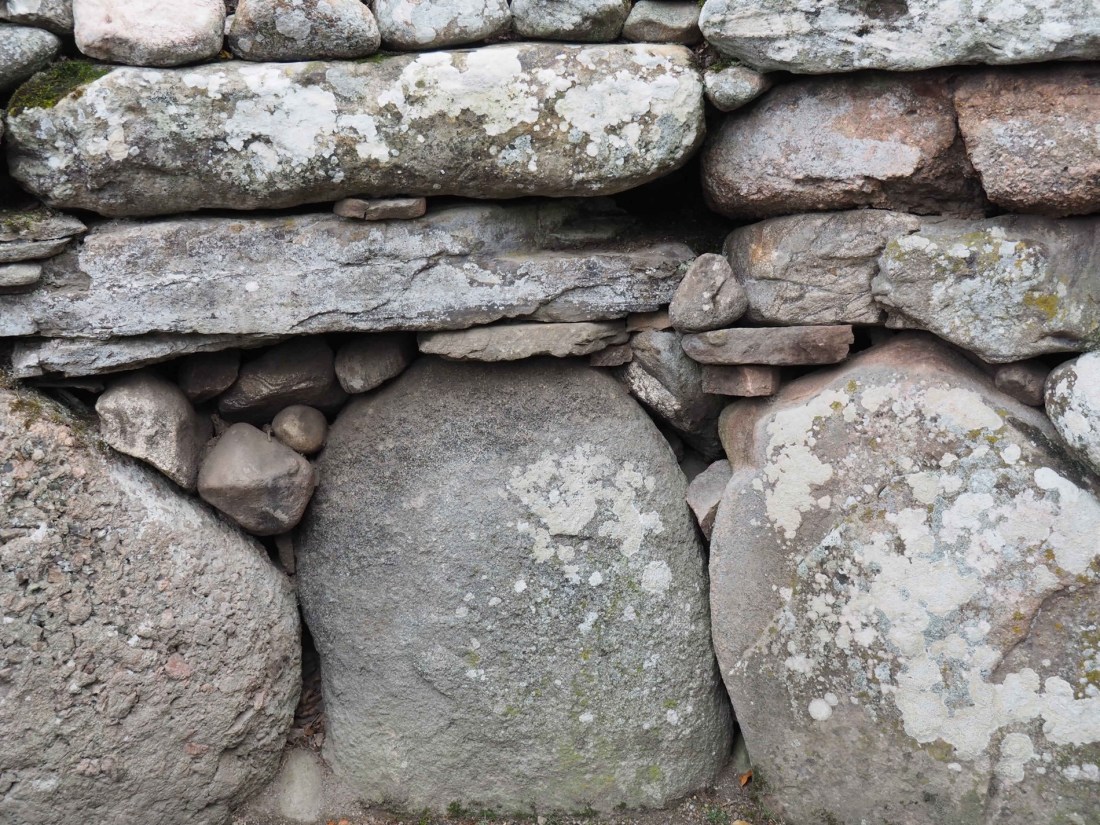
I was also interested to see that the technique of building ‘dry stone walls’ has not changed in 4000 years. While we were in the Lake District, we had a lecture from a man who is a ‘waller’ who teaches the building of dry stone walls today and he said that one of the absolute requirements is that the larger stones be horizontal, with “hearting” stones in between and behind.

And think back to the last time that you visited a graveyard that has been in use for a long time – we still erect the equivalent of standing stones to honor our dead.

Mary

Typed on the flight from Glasgow to Newark, Published at 36,000 feet somewhere south of Salt Lake City, UT

9/19/18

Piper

In Edinburgh on the last night of our main trip, we were told to bring our cameras to dinner. I presumed that this was because many of the people in our group were leaving the next day (I was spending another 6 days to explore Scotland in more depth). But suddenly we heard the skirl of a pipe, and a piper appeared to pipe us in to dinner.

He obligingly posed for pictures, and patiently waited for me to take pictures of his sleeve and pipes,

And bonnet

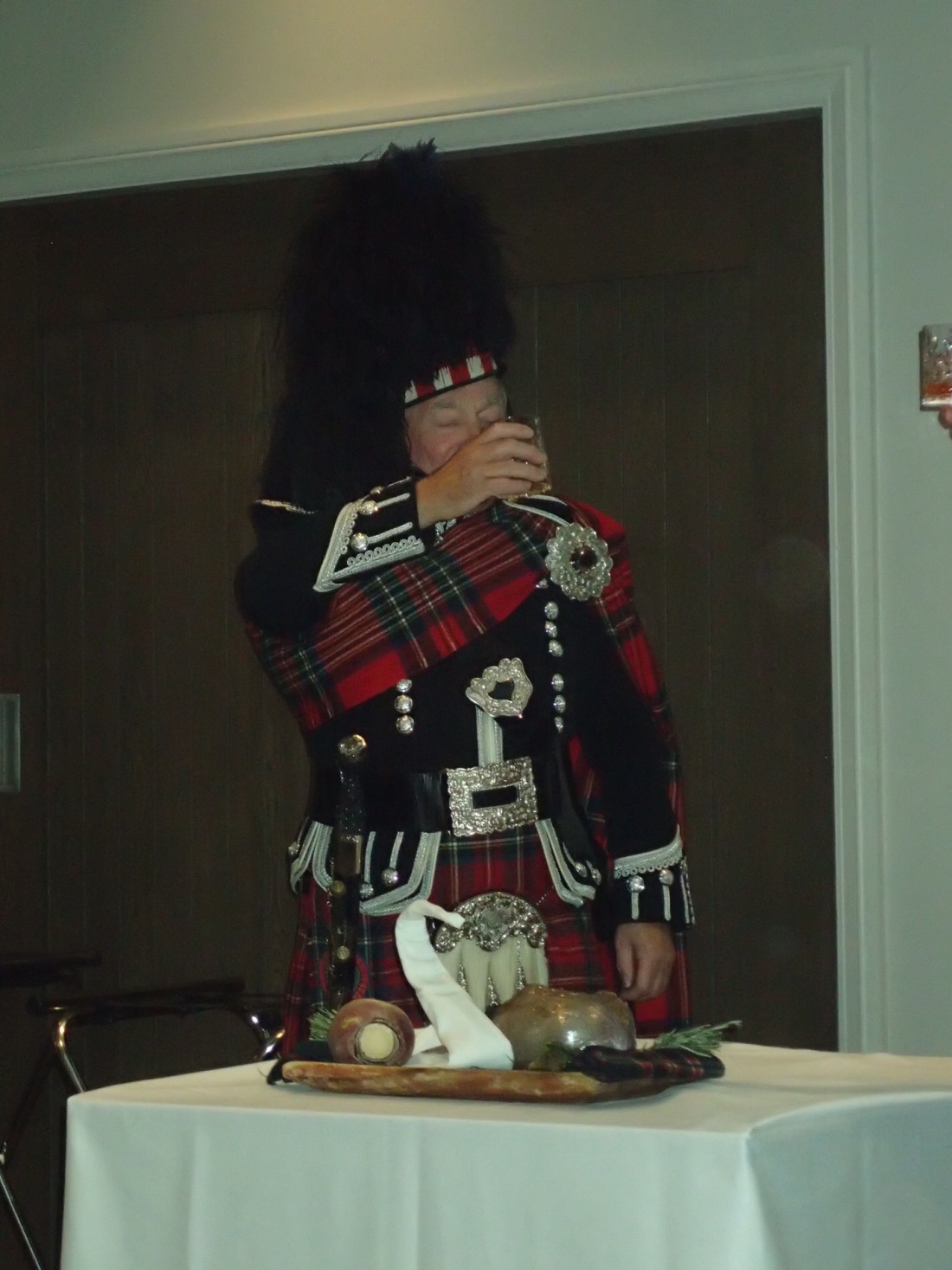
He then performed the traditional “address to the haggis”, reciting the famous poem by Robert Burns

Then, drawing his short sword, he stabbed it

And then drank a toast in (what else) Scotch Whisky!

Yes, I have eaten lots of strange things in my travels (grubs, guinea pig…) but haggis is one strange thing that I can honestly say would take some getting used to! For those of you who are not Scottish, Haggis consists of finely minced heart, liver, and lungs of the animal, minced with onion, oatmeal, barley, suet, herbs and spices. Originally it was incased in a sheep’s stomach. (Now it’s in an artificial skin like that of a sausage) Traditionally it is served with “neeps” (turnips) and “tatties” (potatoes). O.K., it doesn’t sound so great, but many people survived on it during hard times over the years.

Mary

Typed on route home 9/19/18

Published over Cleveland at 36.000 ft.

Distillery

You didn’t think I would come to Scotland without going to a distillery, did you? We visited the Tullibardine distillery on our way from Edinburgh to Inverness.

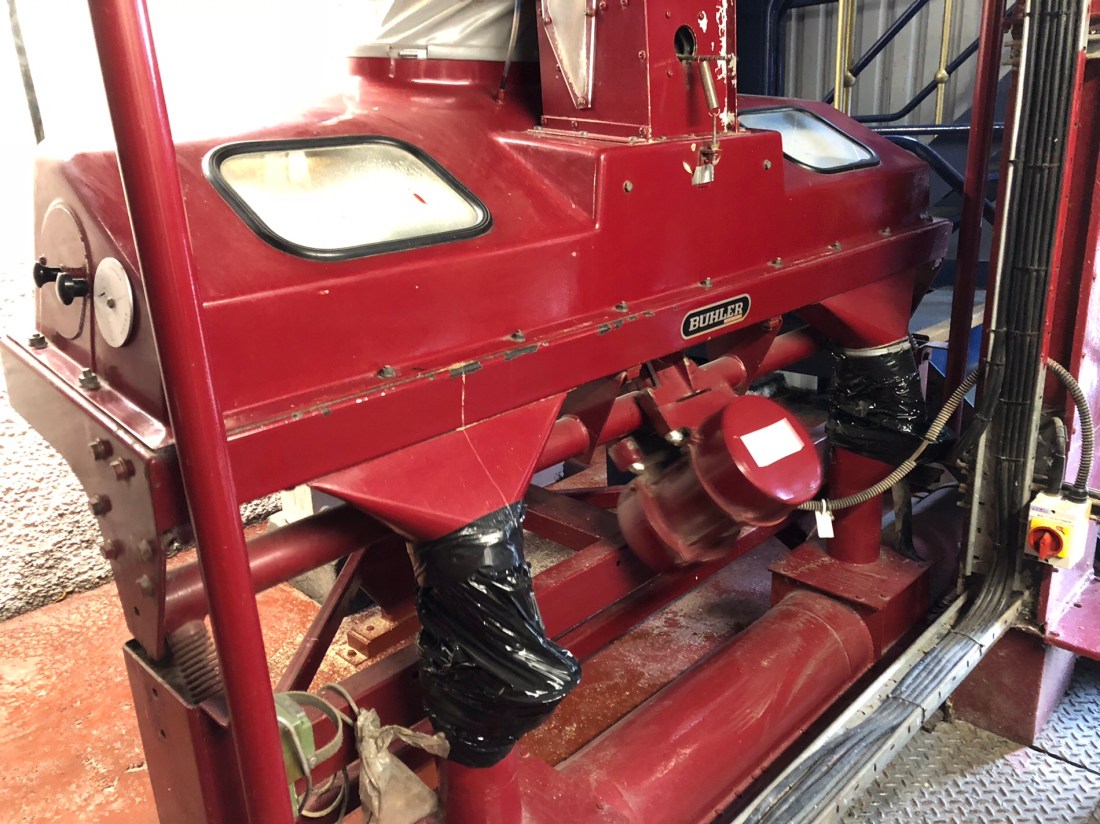
I learned that the distillery receives 28 tons of malted barley each day. The barley is malted by a local firm to the distillery’s specifications. The distillery mills the barley, and then it is mixed with water which comes from the local hill behind the distillery. It is very soft, having filtered through volcanic and limestone rock on its way down the hill.

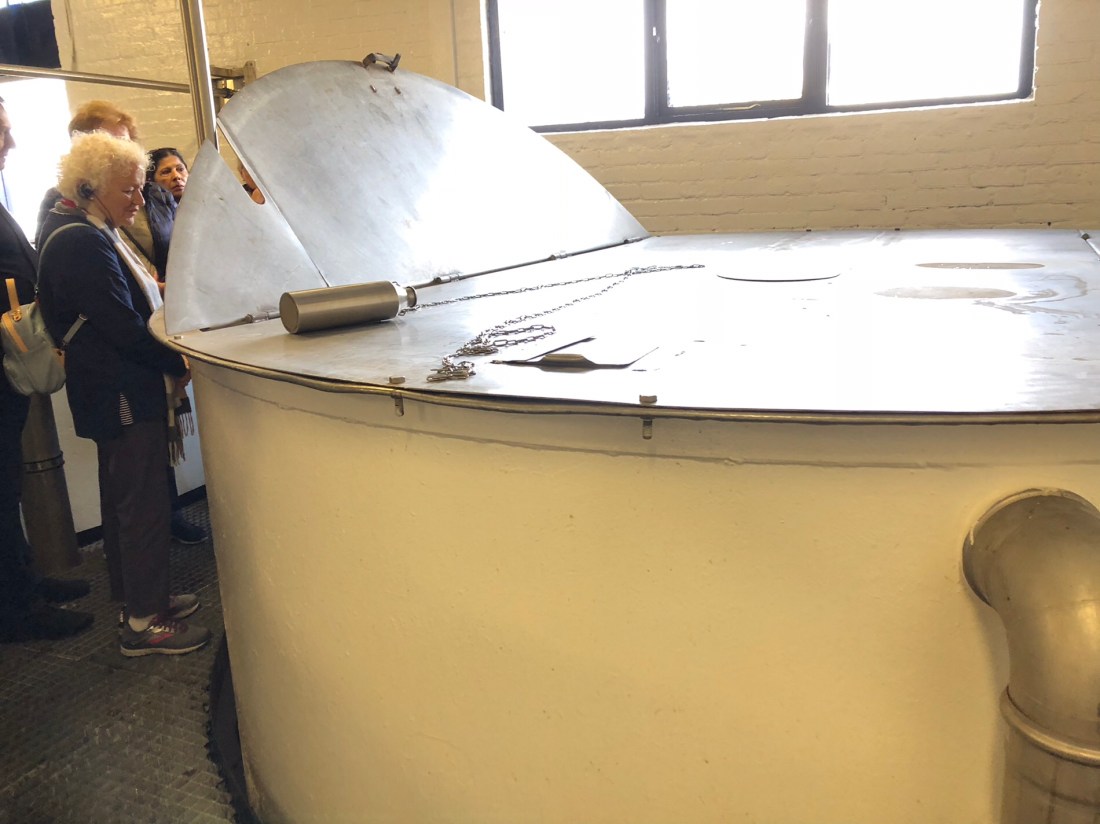
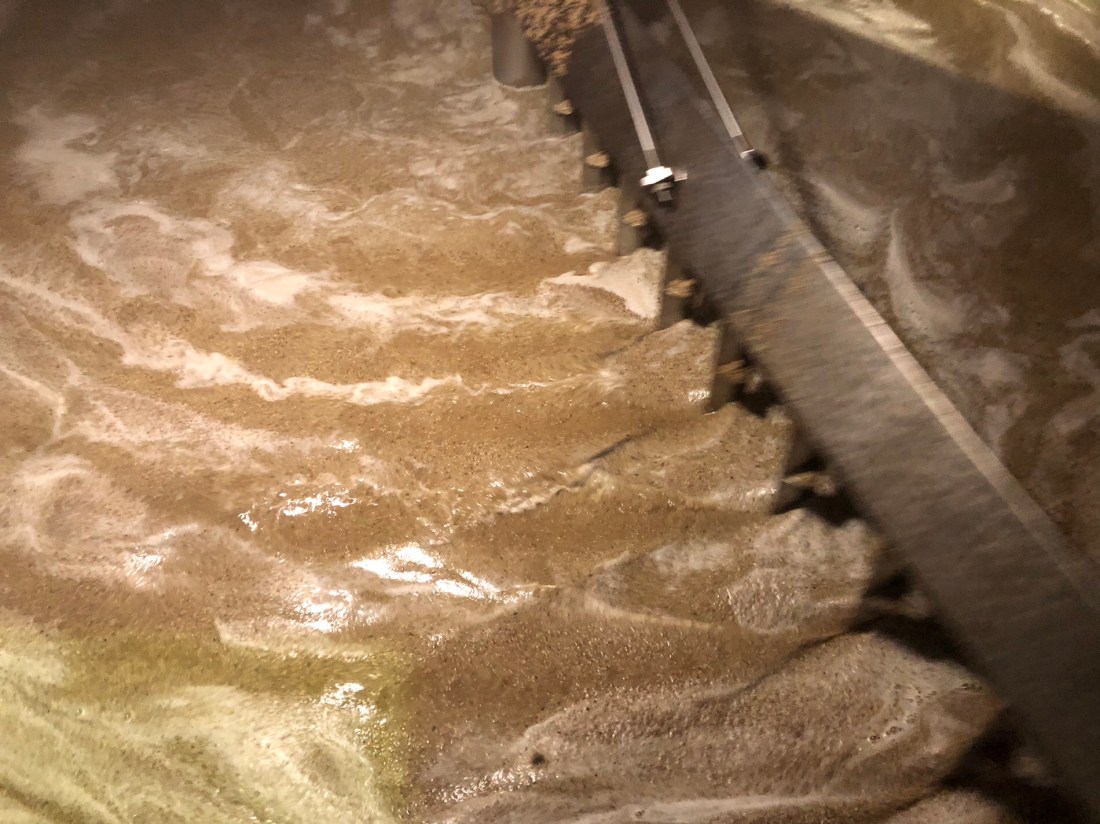
Once the water is added, the mash is pumped to the “wash back” where yeast is added.

A few hours later, it looks like this,

But when the fermentation is further advanced, it looks like this:

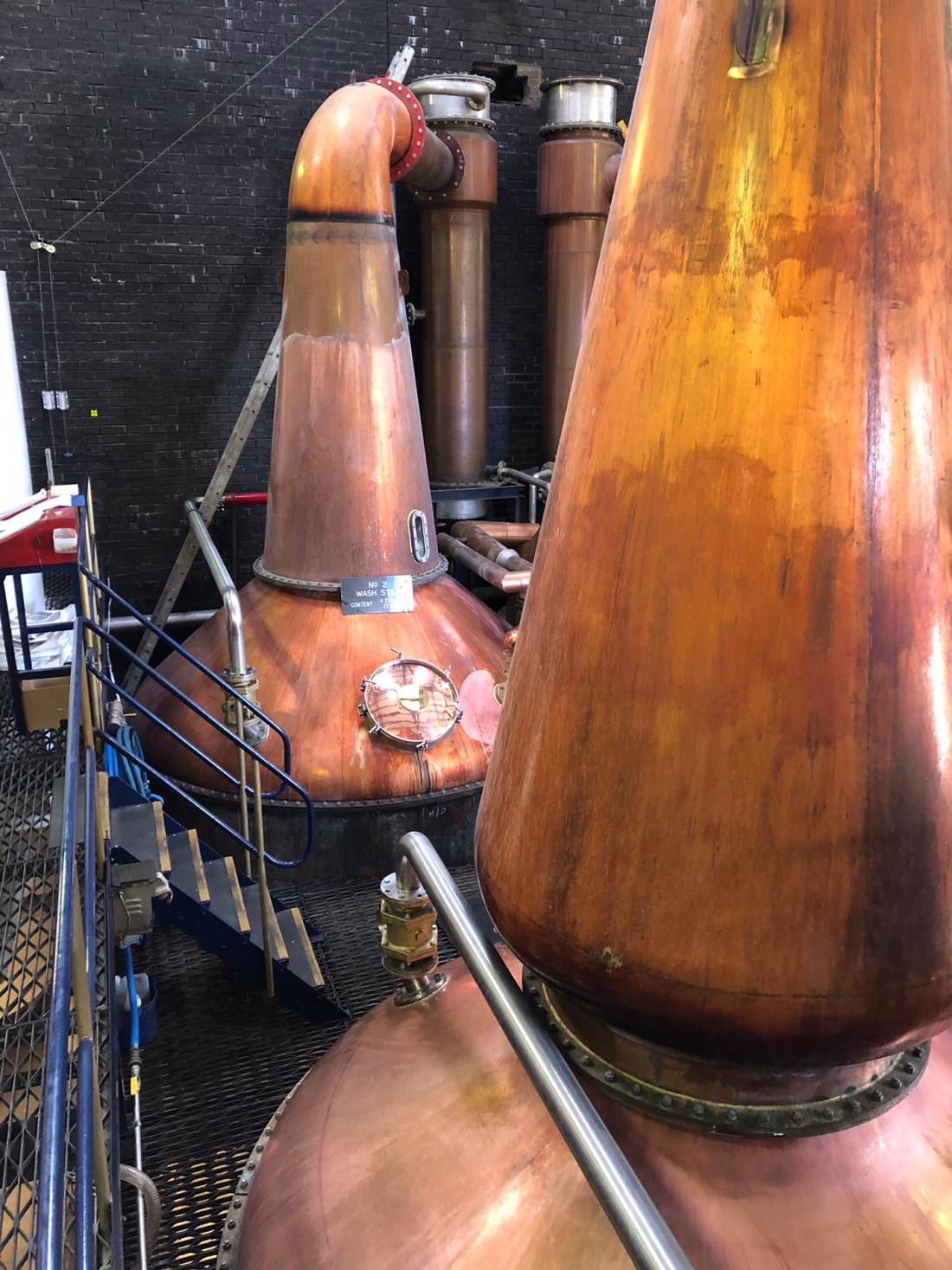
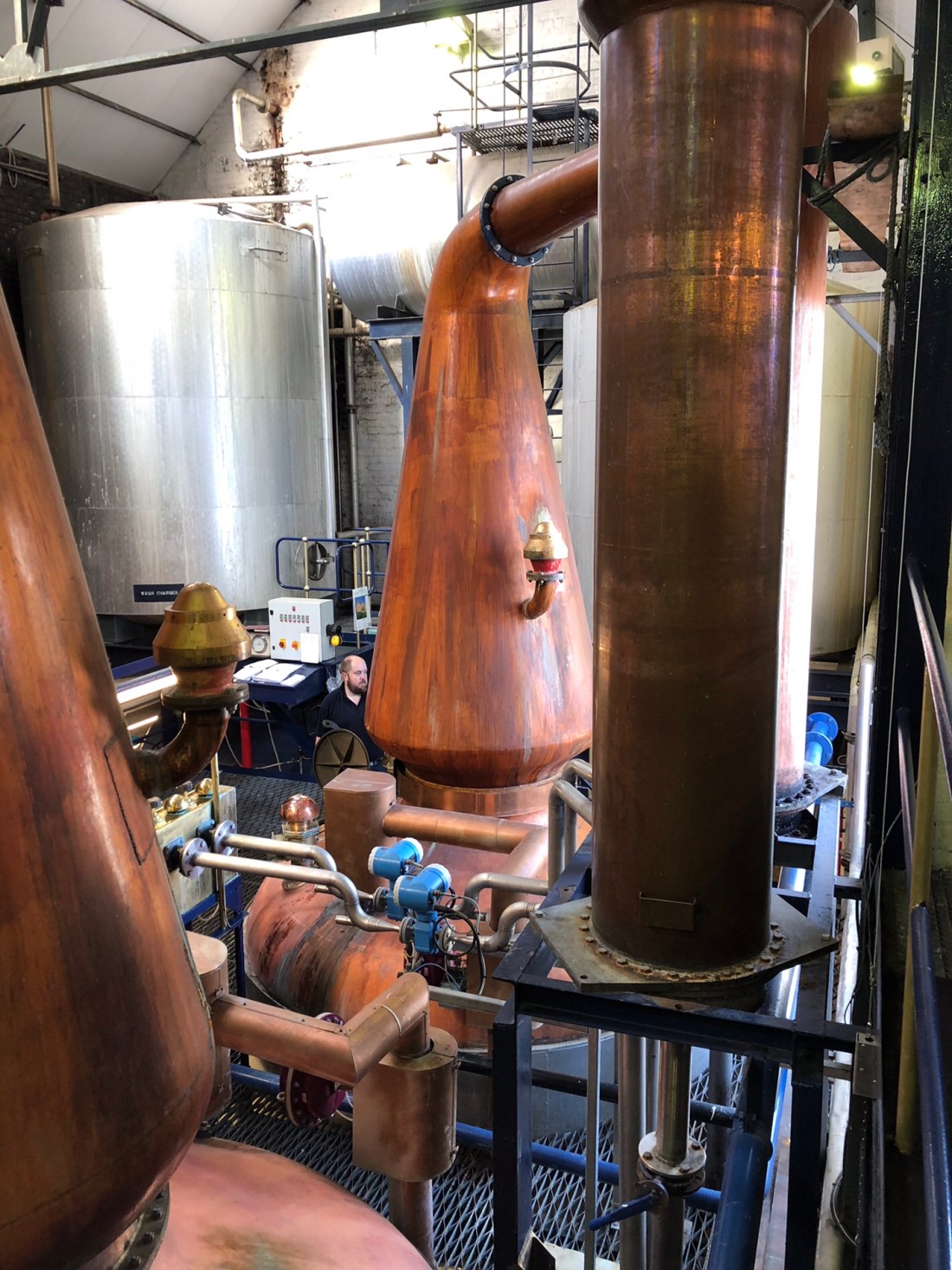
After fermentation the mixture is 7% alcohol. The liquid is then pumped to the wash still, and steam is pumped in to heat it. Steam goes up through pipe that is chilled, and it condenses. The condensed spirit is 23% alcohol.

Remember that the Scots are renowned for being thrifty: The remaining barley mash is pumped out and sold to farmers who are raising cows, where it is dried and used as feed (happy cows, maybe?). And after the mash is pumped out, the wash backs are washed with water, and that is pumped out and goes to be sprayed on the fields!

In the meantime, the distilled spirit goes into a second still where it is distilled again. The goal is to come out with spirit that is 70% alcohol.

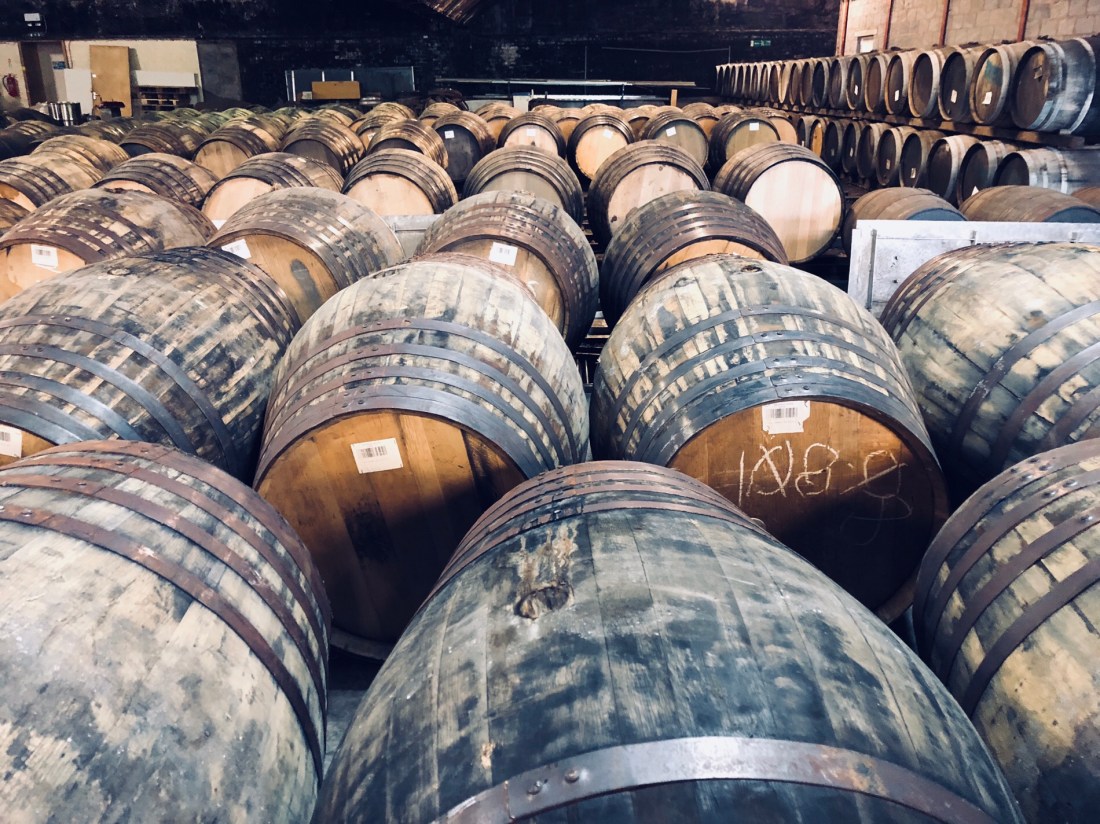
Next the distilled spirit is pumped to oak barrels for aging (by law, all Scotch Whisky must be aged in barrels for at least 3 years and a day, but many types of Scotch are aged for longer). The type of barrel effects taste. Some of the Whisky is placed in small American white oak barrels previously used for bourbon. Some of the Whisky goes into larger barrels of European oak that had previously been used for sherry, and some into medium sized barrels previously used to age Sauternes.

There has been brewing of one kind or another on the site of the distillery since the 1100s. The first brew was beer or ale. The distillery uses a crown and 1488 as its logo. It does so because in 1488 James IV became king. While traveling from Perth to Scone for his coronation, James stopped in the original brewery for a glass of ale.

So, as you probably assumed, at the end of our tour of the distillery we were treated to a “wee dram” (actually 2 tastes). My favorite was the one aged in the Sauternes barrels.

Mary

Typed in transit from Inverness to Glasgow 9/18/18

Posted from Newark on the way home 9/19/18

Cooking at Brodie Castle

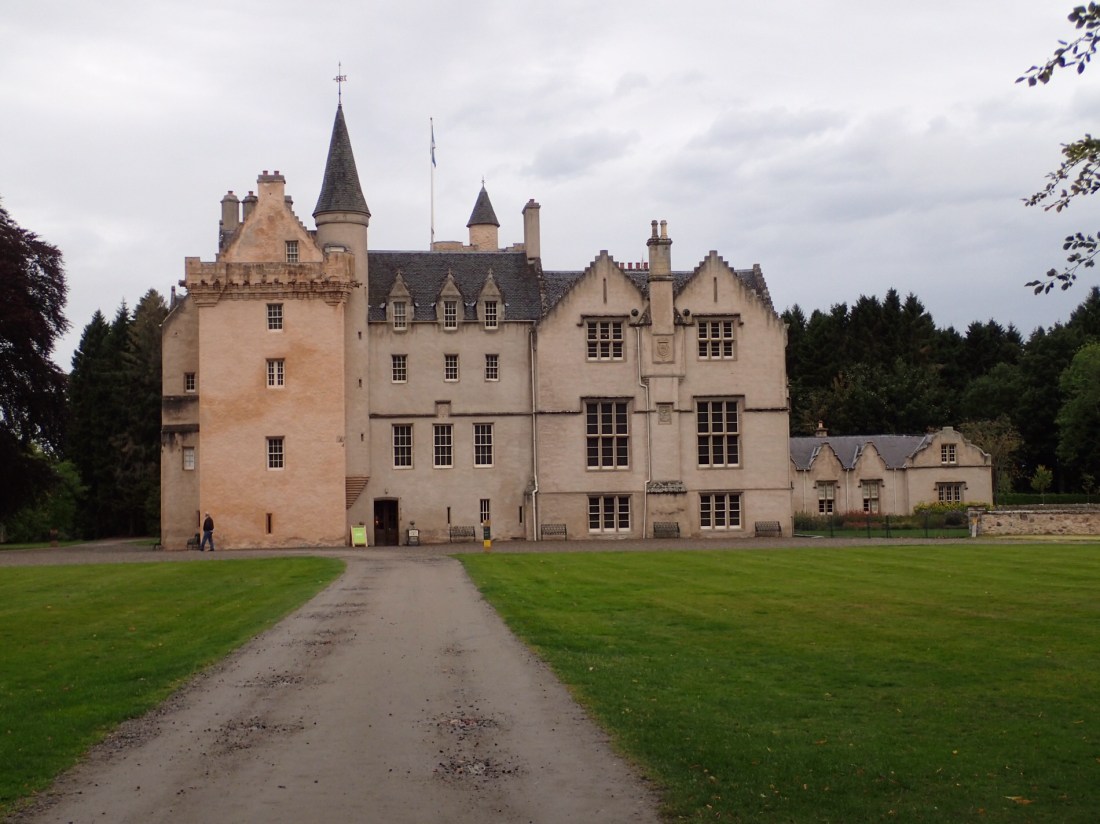
The first section of Brodie Castle was built by the first Brodie of Brodie in the 1500s. You can pretty much see the sequence of building from this photo. The part on the left was first, with the tiny windows (remember that this was built at a time when defense was important), then the middle part with slightly larger windows was next, and the more modern part, probably Georgian, came last with the larger windows.

“Brodie” is the title of the head of a family who is less wealthy and/or noble than a “laird” (we say “lord”). The 25th Brodie gave the house and its land to the Scottish National Trust several years ago, and actually volunteered for the Trust as a docent to give tours to visitors. Our docent told us that he did not introduce himself by his title to the visitors, but did make a point in the library to stand beside the painting of him and wait for someone to realize who their guide was!

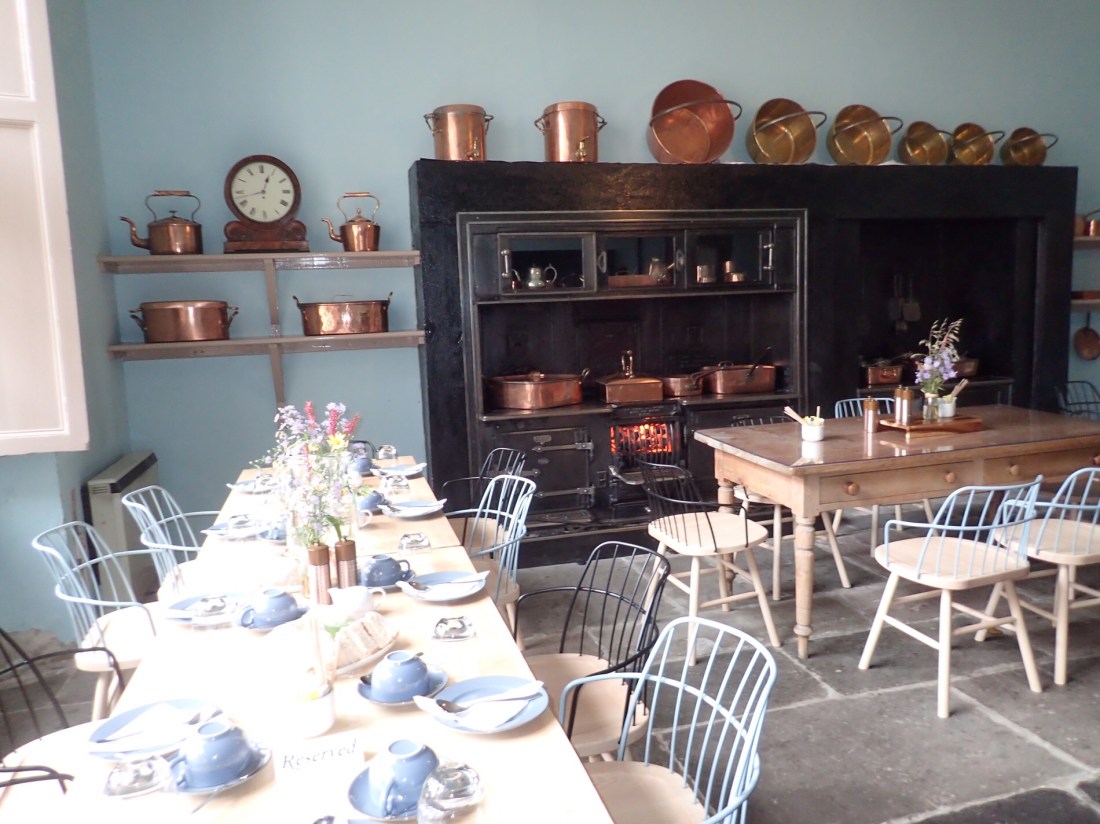
After our tour of the castle (no photos allowed) we sat down in the kitchen to eat lunch in the one place where photos were allowed. We immediately felt as though we had fallen into the “bellow stairs” dinner of a Victorian family, which was always eaten in the kitchen.

Because I am interested in cooking, I was fascinated to see the stoves that the cook would have had to use to produce the meals.

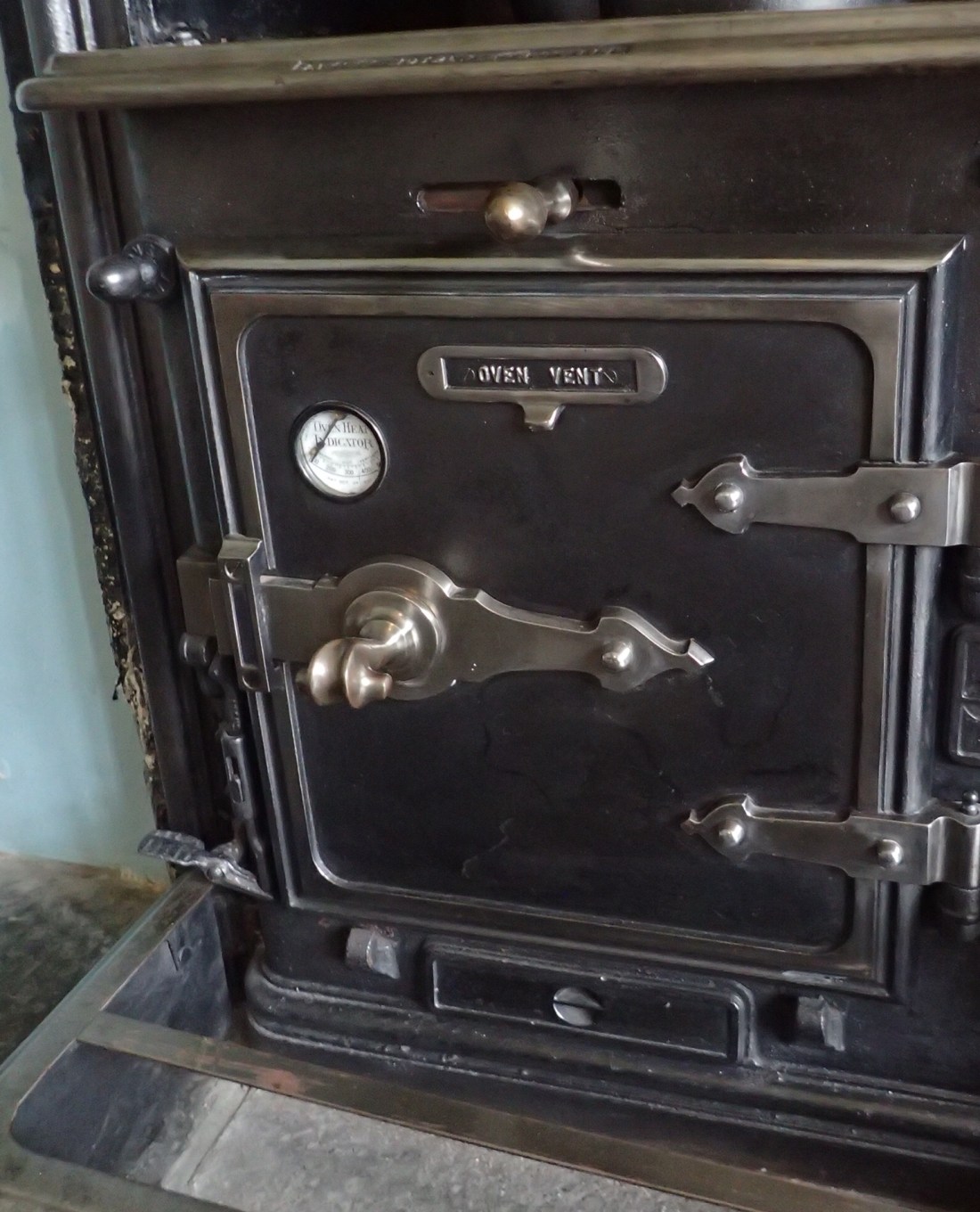
I looked in vain for a heat regulator, but I did see what the cook probably used – the “oven vent” which must have been used to let out some of the heat.

And there was what looked like a very rudimentary thermometer – but clearly it was not very accurate!

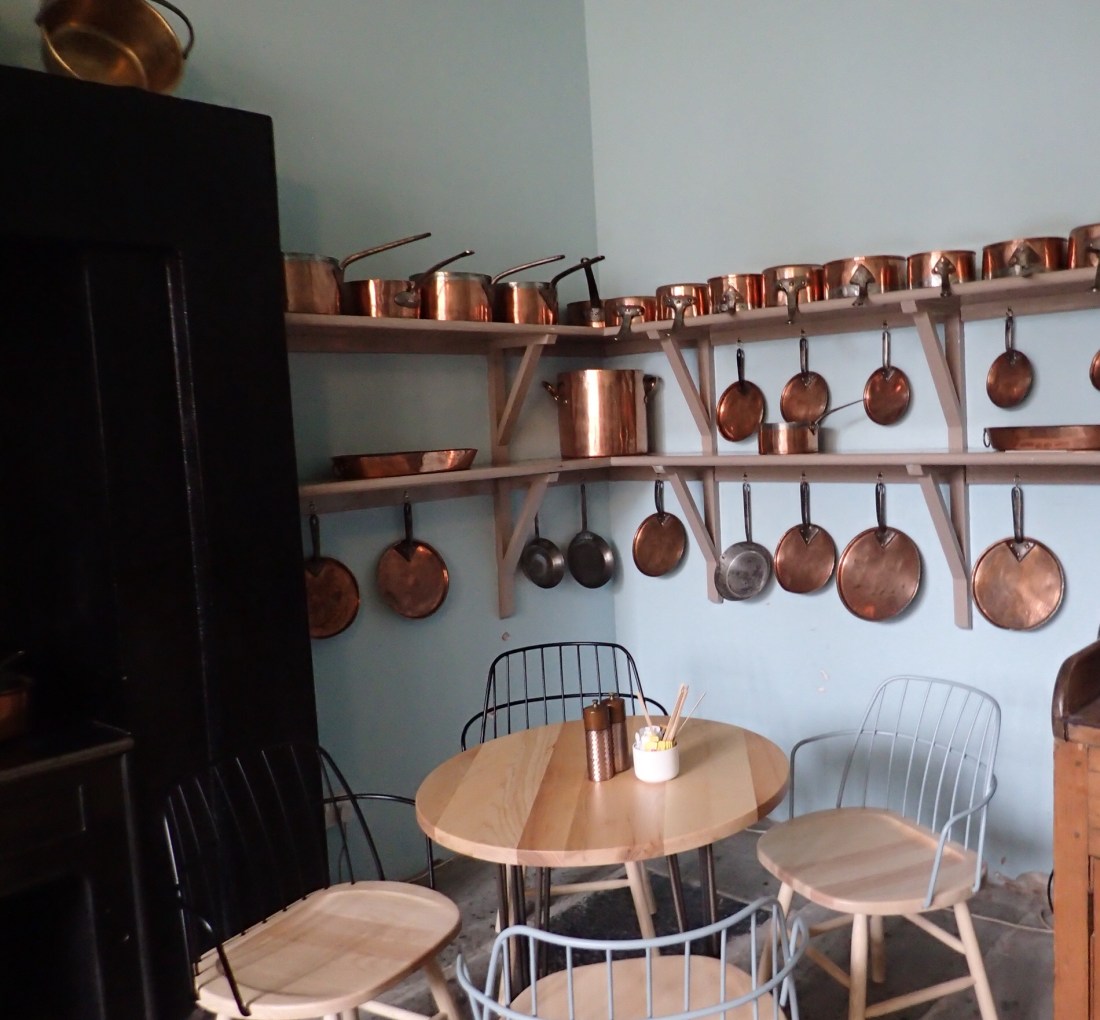
I shudder think how long the scullery maid would have had to work to keep the copper pots so gleaming..

Mary

Glasgow, Scotland 9/19/18

Scottish War Memorial

One of the structures in Edinburgh Castle is set aside as a memorial to all those who died in the various wars, beginning with World War I, in which the people of Scotland have served. It is in the building known as the North Barracks, which was constructed originally in 1755, and then renovated for this purpose, and opened as the Scottish National War Memorial in 1923.

Hanging beneath the ceiling of the Shrine is a statue of St. Michael,

And beneath the statue, in the highest point of Castle Rock, stands a sealed casket holding the names of 147,000 service personnel who died in World War I. The casket seems to me to look much as the Ark of the Covenant must have looked

With angels kneeling in grief on each corner of the marble plinth that holds the casket.

In the main part of the hall are leather bound books which contain the names of another 50,000 Scots who have served and died in the wars since 1923.

But what moved me the most was this plaque:

And, fittingly, the sculptor of all these items was a woman: Alice Meredith Williams.

Mary

Posted 9/16/18 from Inverness, Scotland

Chess Set

Chess

On the way to the Isle of Skye this morning, we stopped for tea at the Ledgowan Hotel in Achnasheen, in the highlands of Scotland. The building was constructed in 1906 as a hunting lodge. In the lounge, I found a chess set that was different from any that I have ever seen.

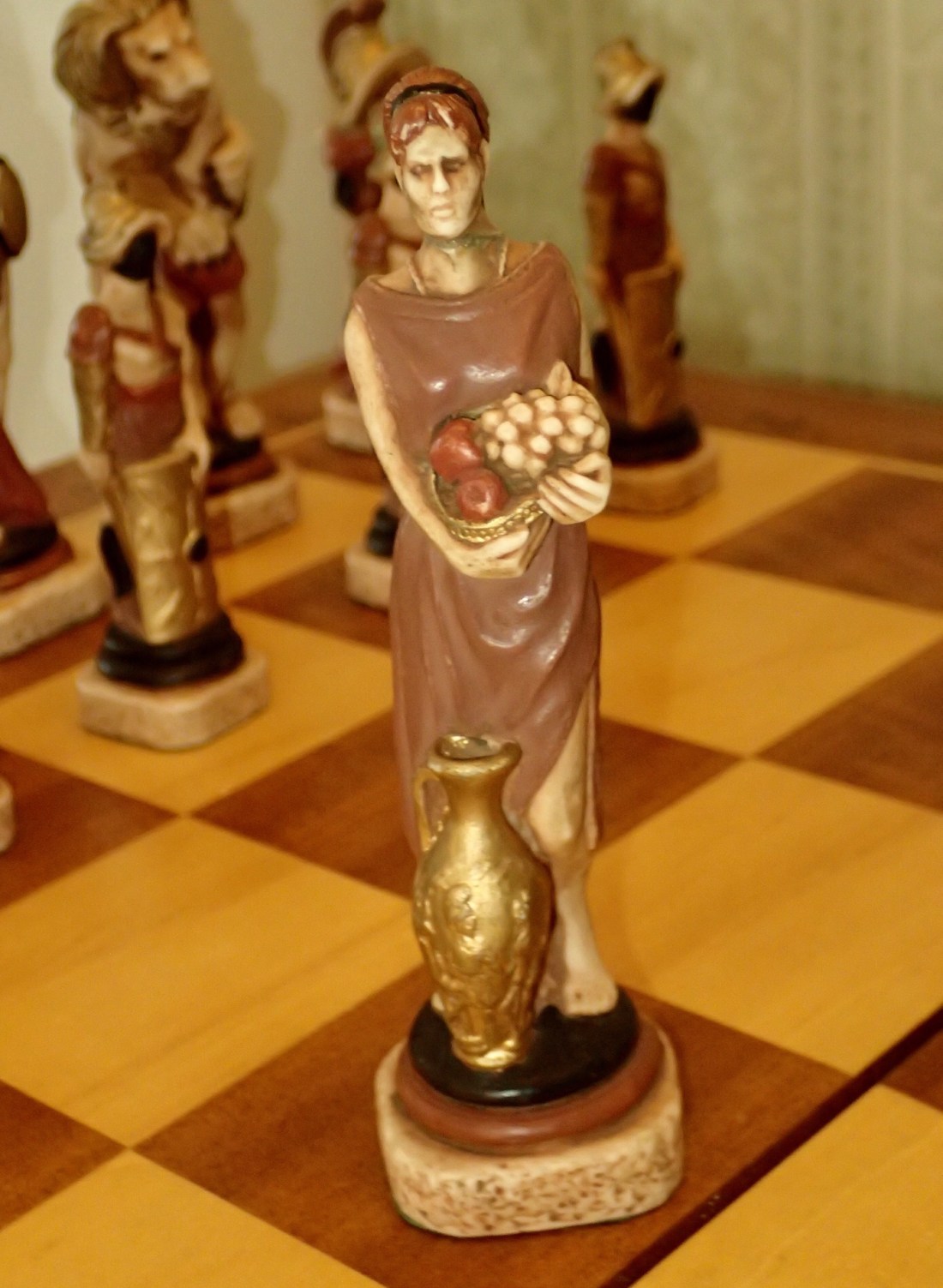
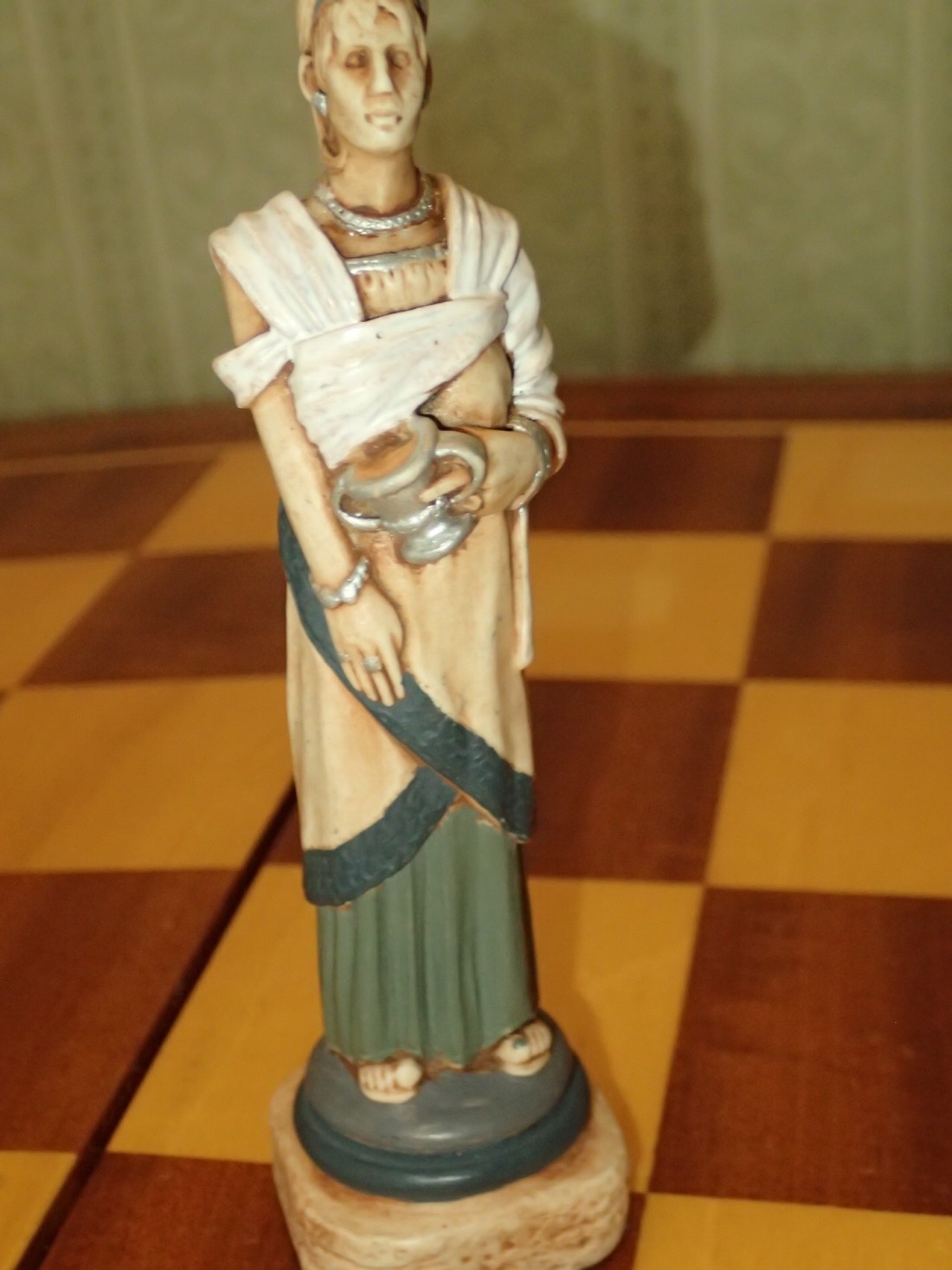
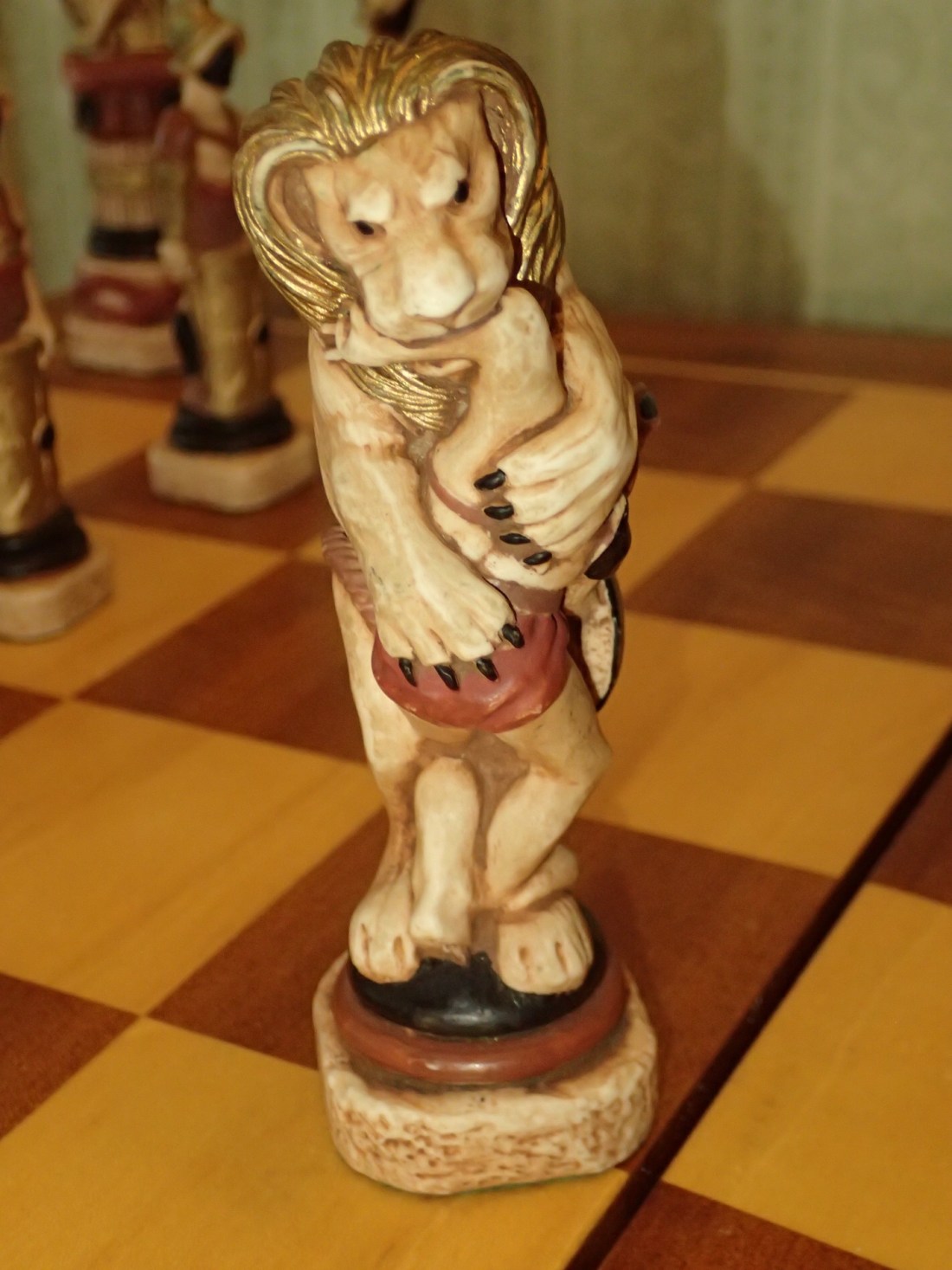
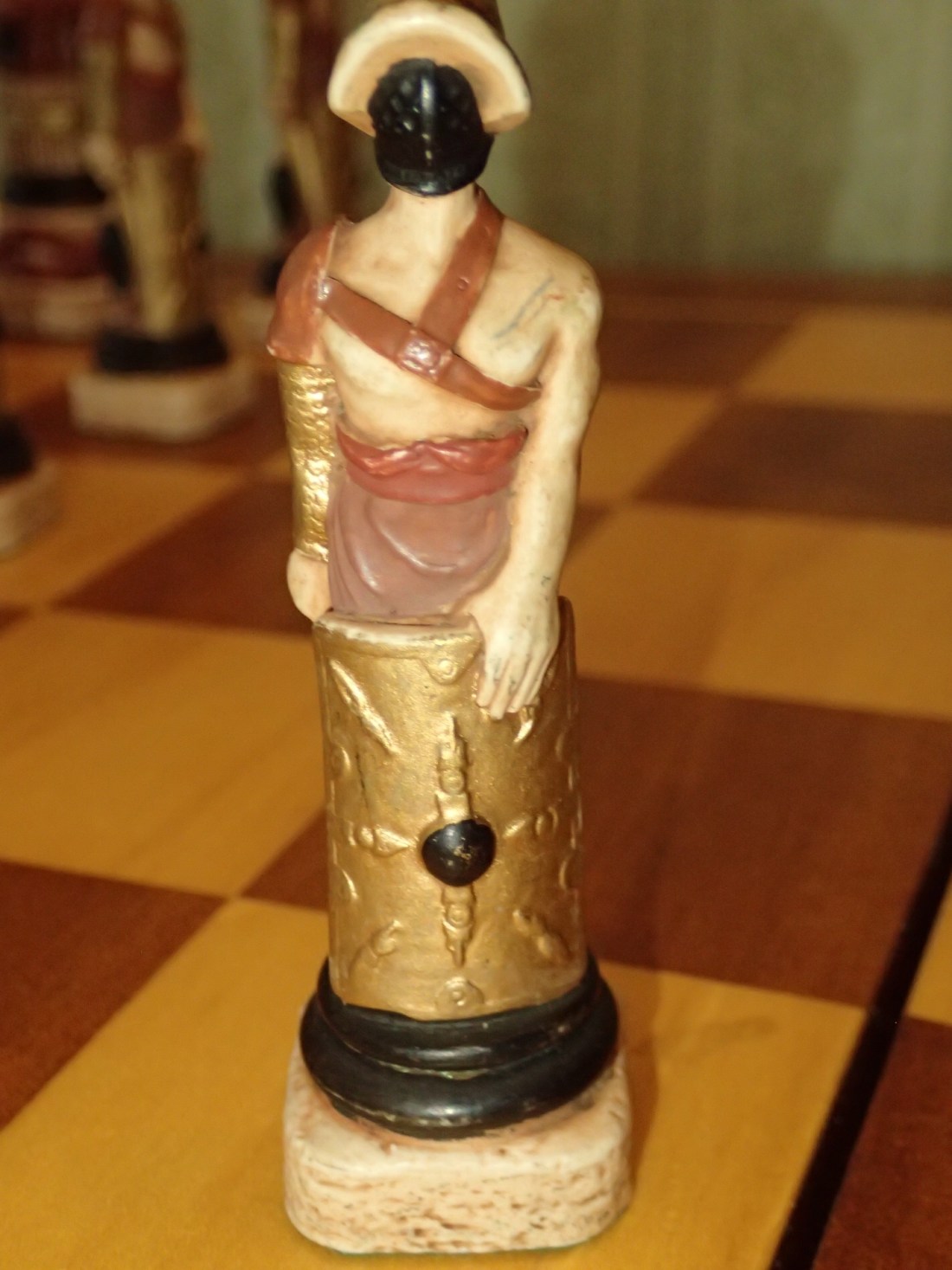
As one would expect, the two sides are painted in different colors, but what I found surprising was that the figures were totally different from side to side.

For example, here’s the queen on the ‘brown’ side,

And the queen on the ‘green side.’

The knights are quite different, too. The ‘brown’ knight is a lion devouring its victim:

While the ‘green’ knight features a knight riding on a charger

And the pawns are also interesting, the ‘brown’ pawn has a black face, but the rest of his skin is white,

And the green pawn seems to be wearing proper armor.

Unfortunately, we didn’t have time for a game!

Mary

Posted from Inverness, Scotland, 9/16/18