Whitby Abbey stands on the east coast of England, looking out over the North Sea on a high, windswept plateau. Here is the abbey as seen from the north side of the estuary near which it is situated through the jaw bones of a whale (the whaling industry was very important here).

The abbey was founded in the 7th century by King Oswiu of Northumbria. As head of the abbey he appointed a woman, who came to be known as St. Hild. She was the daughter of a king. The only two occupations for a woman at that time were marriage or to take Holy Orders (enter a convent). She was apparently pretty headstrong, and therefore wasn’t up for marriage, so she became a nun.
This was obviously the correct choice, because as head of this abbey with her administrative skills (and, no doubt, her royal connections) the abbey thrived and became famous. Interestingly enough, the abbey housed both men and women (living and worshiping separately).
By 664 the Abbey was so well respected that the Synod of Whitby was held there. There were two ‘arms’ of Christianity in England at the time, the Celtic and the Roman, and they celebrated Easter at different times. Clerics from both factions met here, and after much debate, the Roman date for Easter was chosen, and has been followed ever since.
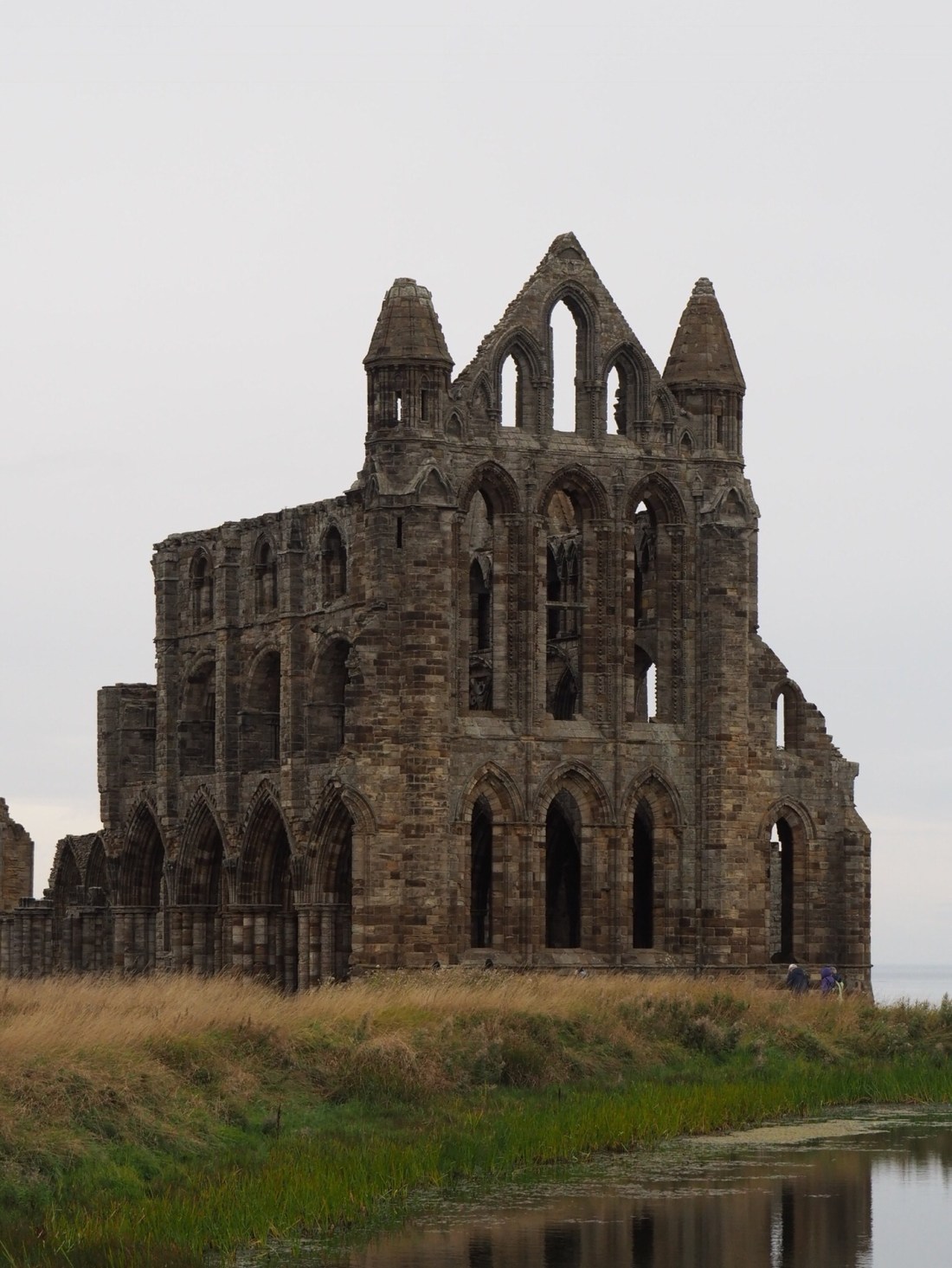
Because of its location, at the mouth of a navigable river, the fishing village just down below the cliff, the Abbey and its community were frequently the object of Viking attacks, and it was abandoned in the 9th century. In the 11th century, the abbey was re-established as a Benedictine abbey. The original abbey building had disappeared, so the monks built again, and it was enlarged several times. The ruins that we visited were actually built in the 13th century in the Gothic style.
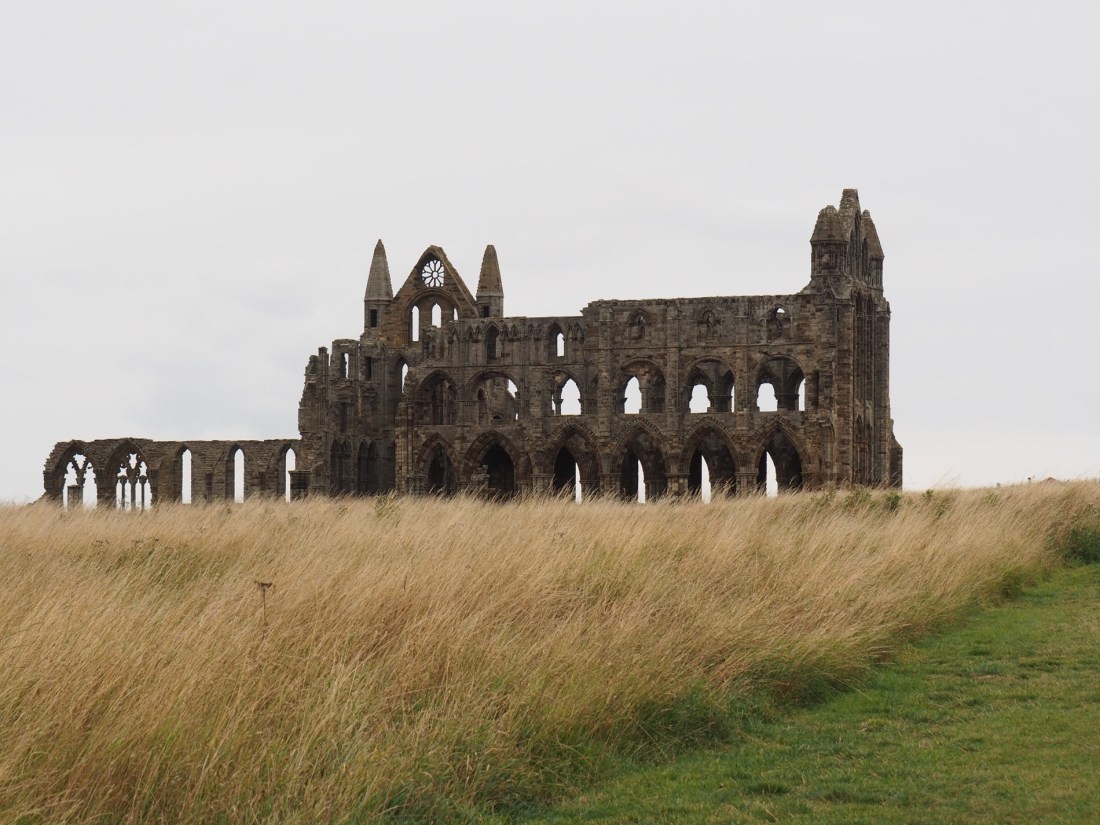
Interestingly enough, Bram Stoker spent some time in the town of Whitby, and the abbey ruins provided the inspiration for one of his most famous books, “Dracula.” And the day that we visited, because the skies were overcast, the abbey was particularly atmospheric, as you can see from the pictures below:
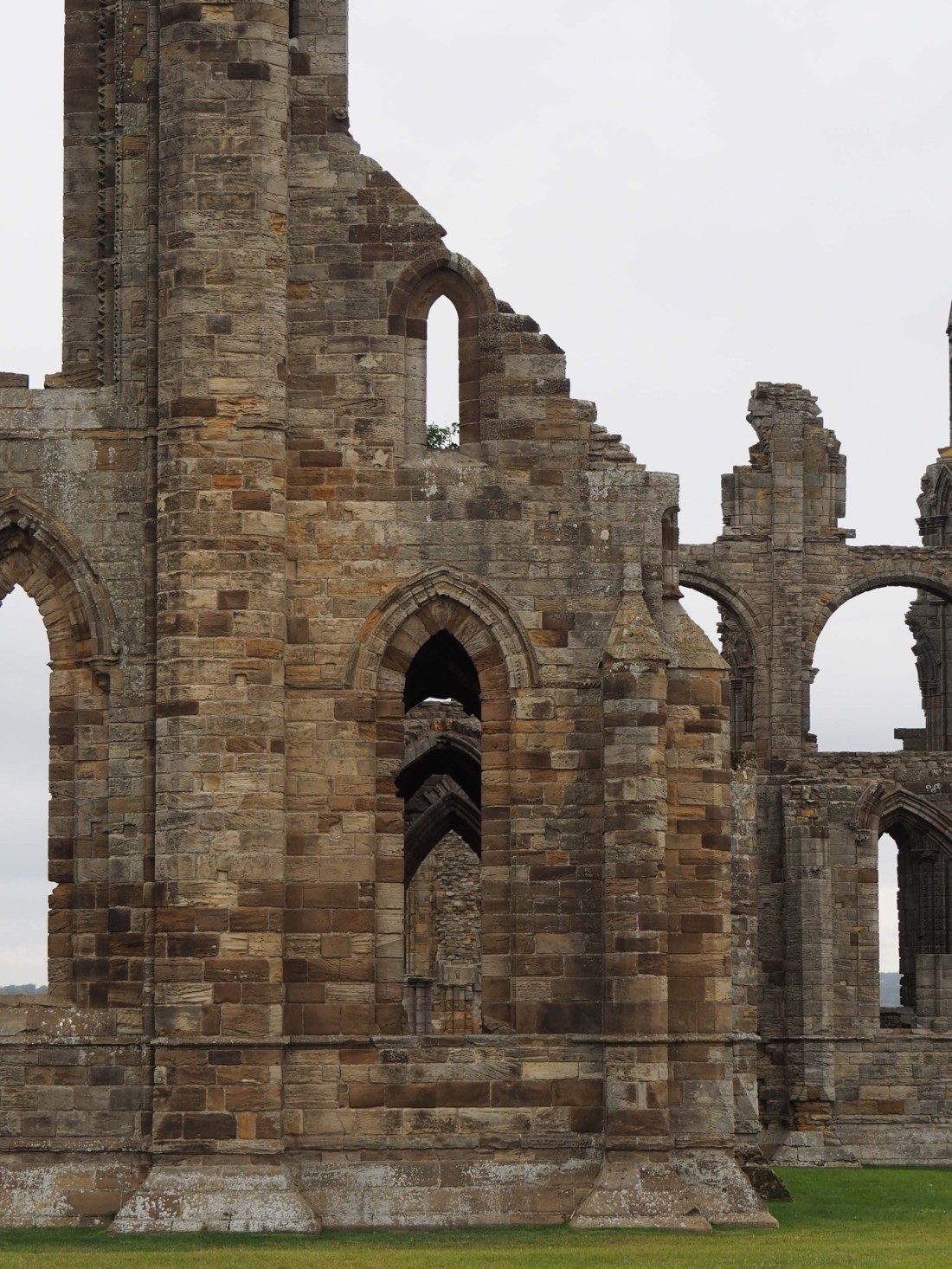
You can actually wander inside the ruins to see how finely the gothic arches were made

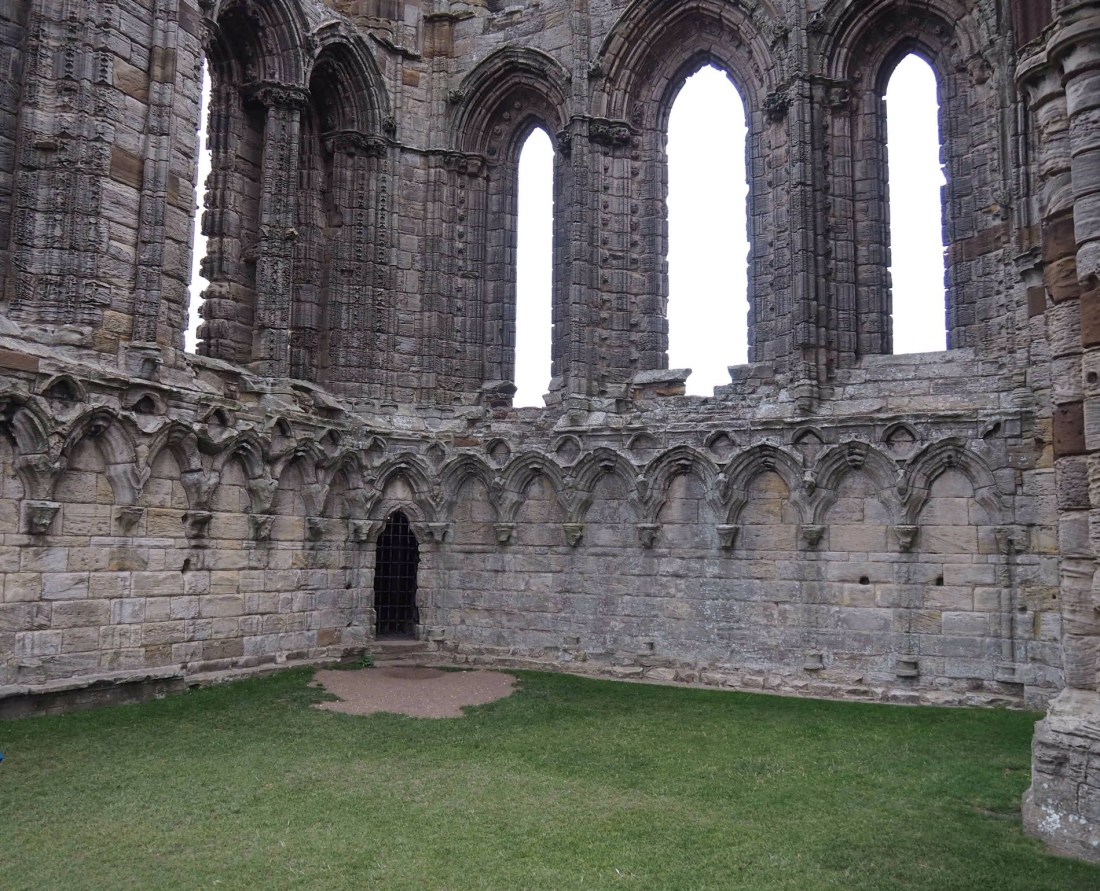
And the area where the monks must have sat in the quire
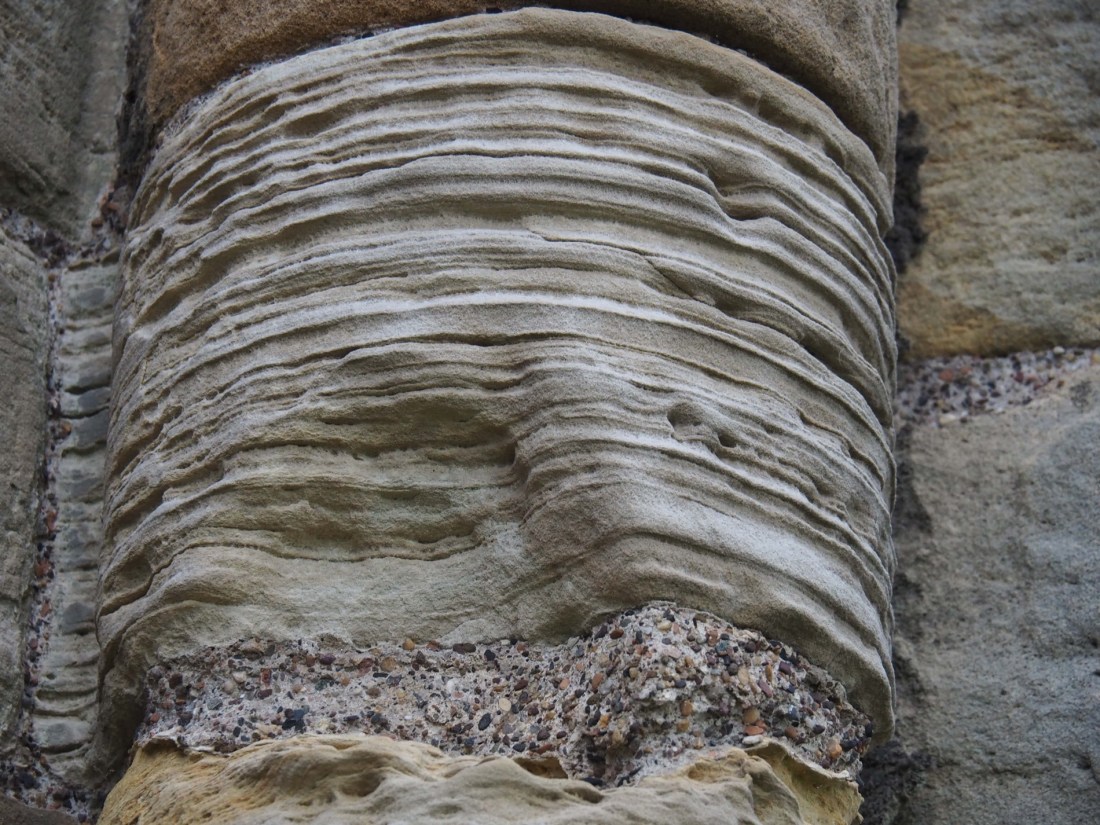
The abbey was constructed using stones set into bands of color

Some of the stone must be softer than the rest
And what must once have been glorious stained glass has long since succumbed to time, storms, and winds.

The abbey has survived bombardment (by a German ship in the First World War), quarrying (by the Cholmley family which bought the abbey and its estates when Henry. VIII dissolved the monasteries and used its stone to extend what would have originally been the Abbot’s house), storms and time and still has a haunting presence on the moor.
Mary
Posted 9/12/18 from Grasmere in the Lake District of England

 Mary's Travel Blog
Beautiful and succinct description of the abbey. You must be on way to Scotland.
Vishu
Sent from my iPhone
>
LikeLike