Kelpies
Kelpies were thought to be shape shifting water spirits. They could take several shapes, but in their equine form, they were believed to have the strength of 10 horses. This belief seems appropriate, since Clydesdale Horses powered the area between Edinburgh and Glasgow for a long time. They pulled barges on the canals, which were one of the major means of carrying goods from one place to another, helped with farming, and the like.
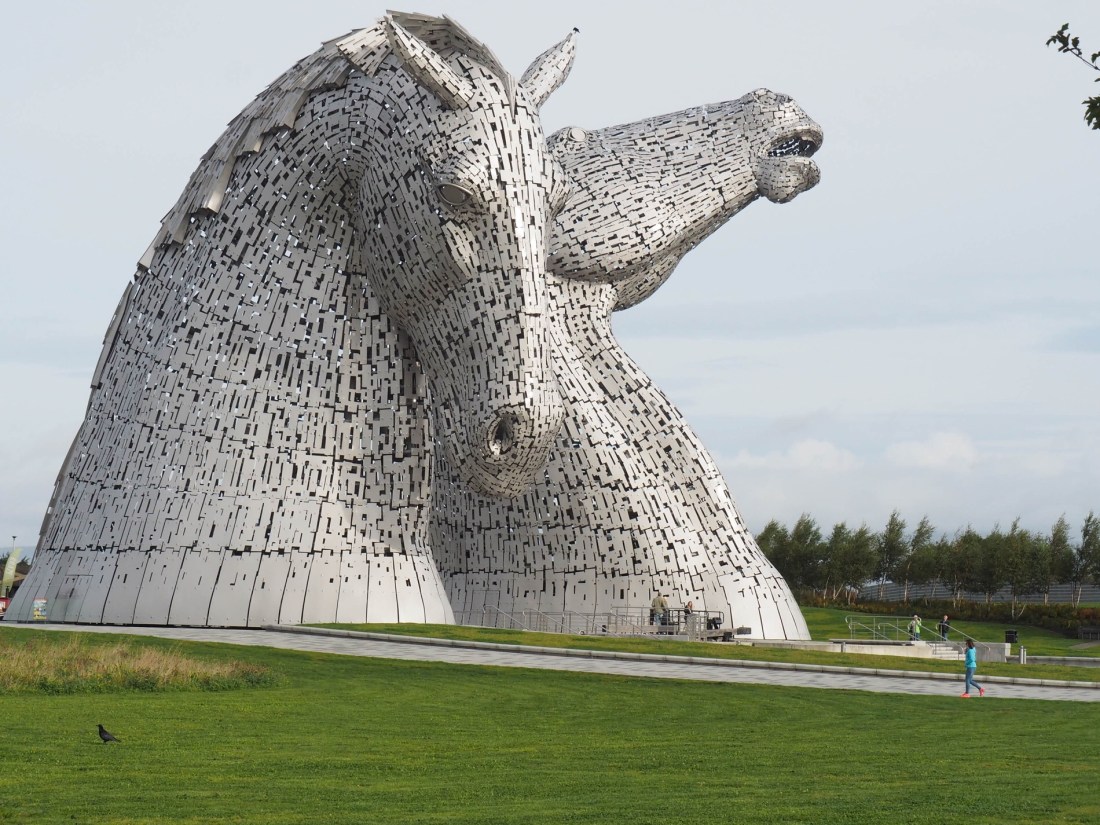
This area has suffered from a stagnant economy, and many schemes have been hatched to rejuvenate the area and attract tourists. One of these is to build a new extension to the Forth and Clyde Canal, which reconnects the canal with the River Forth, and to build sculptures of the Kelpies in Falkirk. They are about 90ft tall, and each weighs over 300 tons. When you first arrive at the site you can believe that they are actually rising up out of the ground.
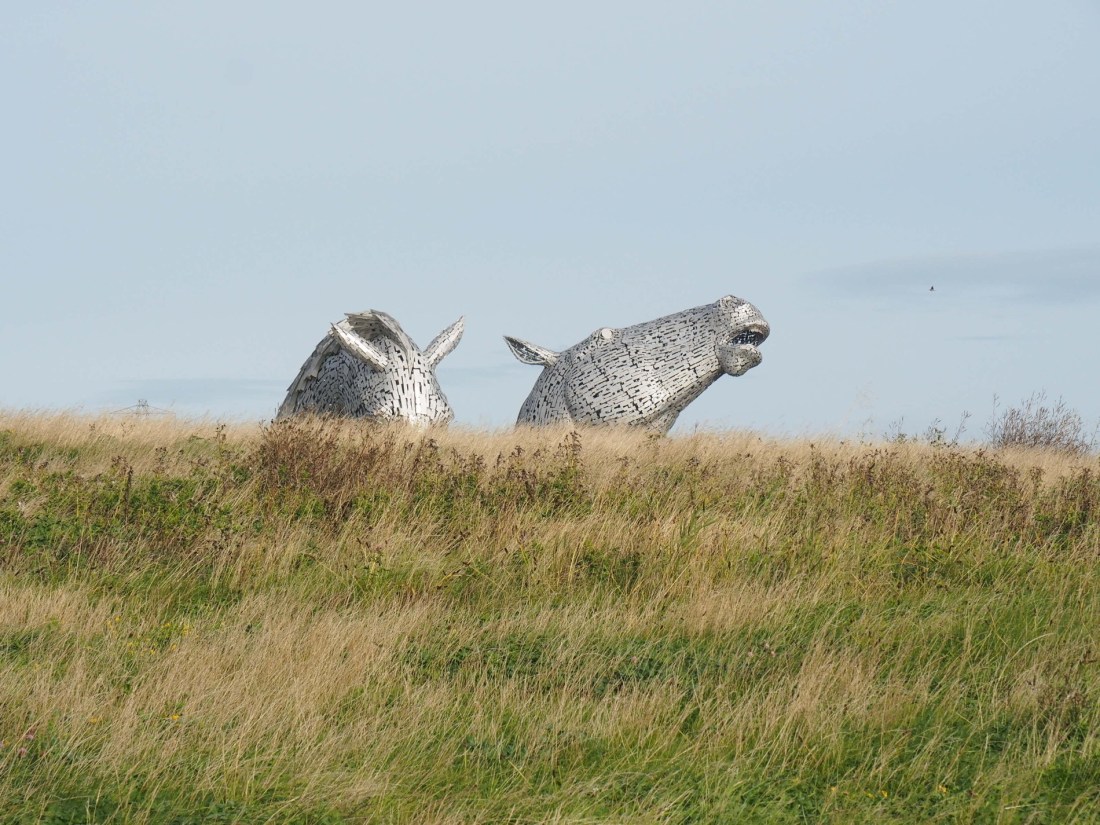
Clydesdale horses still live here and were the models for the sculptures. The real horses who were the models are Baron, at 18.1 hands or 1.84 meters in height, but in the sculpture, he stands 30 meters high, or about 98 feet.
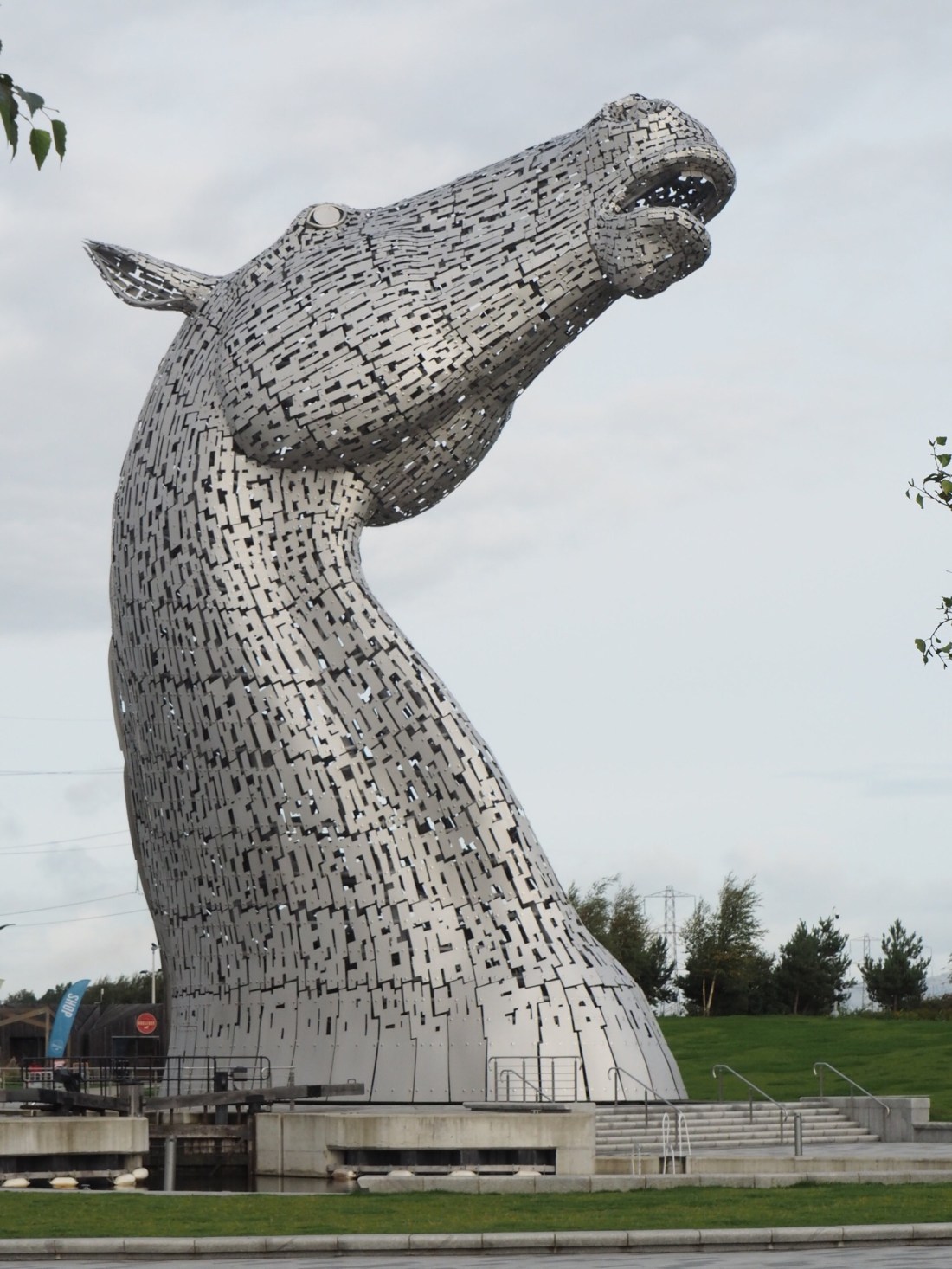
And Duke stands 17.3 hands or 1.8m in height, but in the sculpture, he stands 26.5 meters, or about 87 feet.

Both worked for Glasgow City Council, providing rides around Pollock Country Park and transporting goods needed for the park. Baron retired in 2014, Duke in 2015, and the artist, Andy Scott, called them both his models and his muses.
He said “working with the horses really captures the spirit of the project, because I wanted to honor old working horses from the past.”
I told you how high each sculpture stands. To give you a better idea of the structural engineering, just the jaw (not the entire head) of Baron weighs 17 tons.
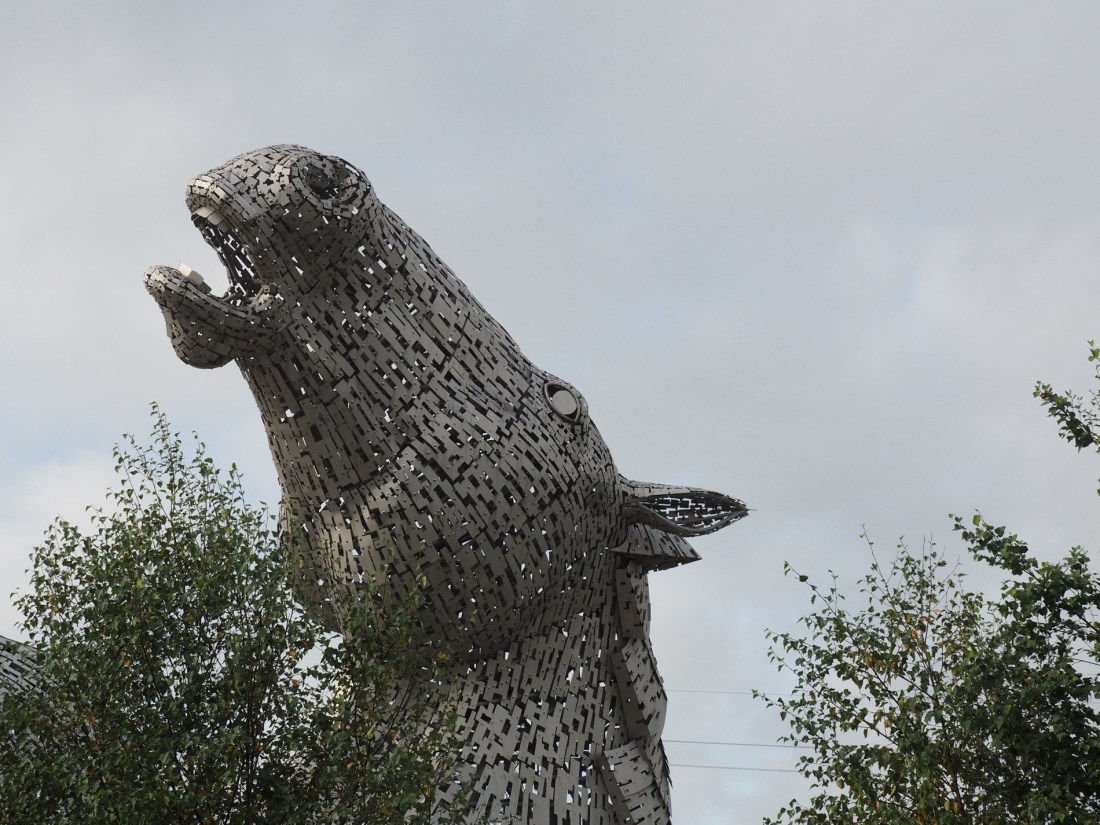
12,000 tons of steel are in the reinforced concrete pad. The skeleton that holds up the structures is tubular structural steel, and the plates that form the skin are stainless steel. There are 928 of them, and each was individually sized and numbered so that they could be bolted onto the structure in the correct order. It took 90 days to assemble the sculptures.
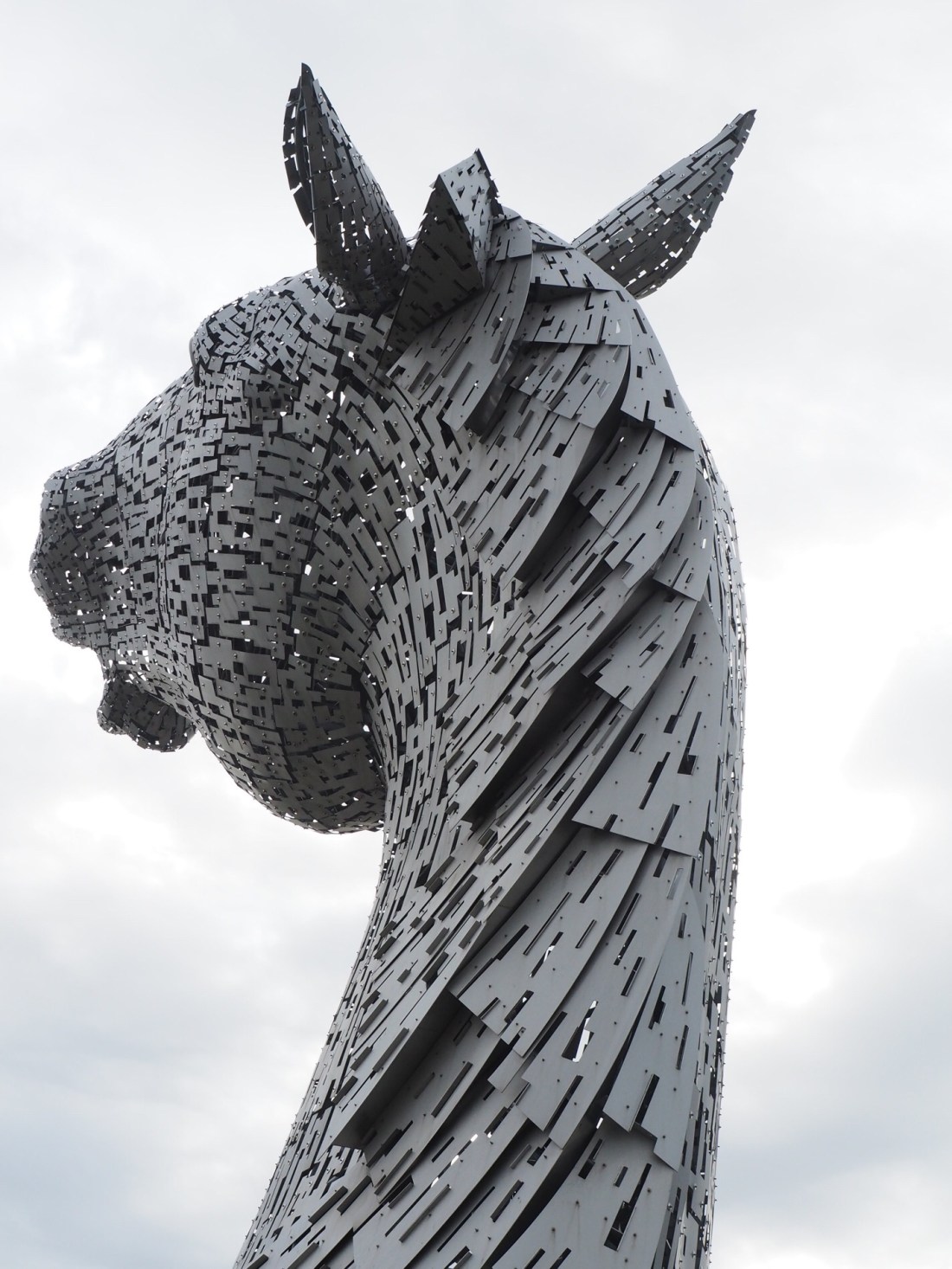
Here are details of Duke’s mane and ears
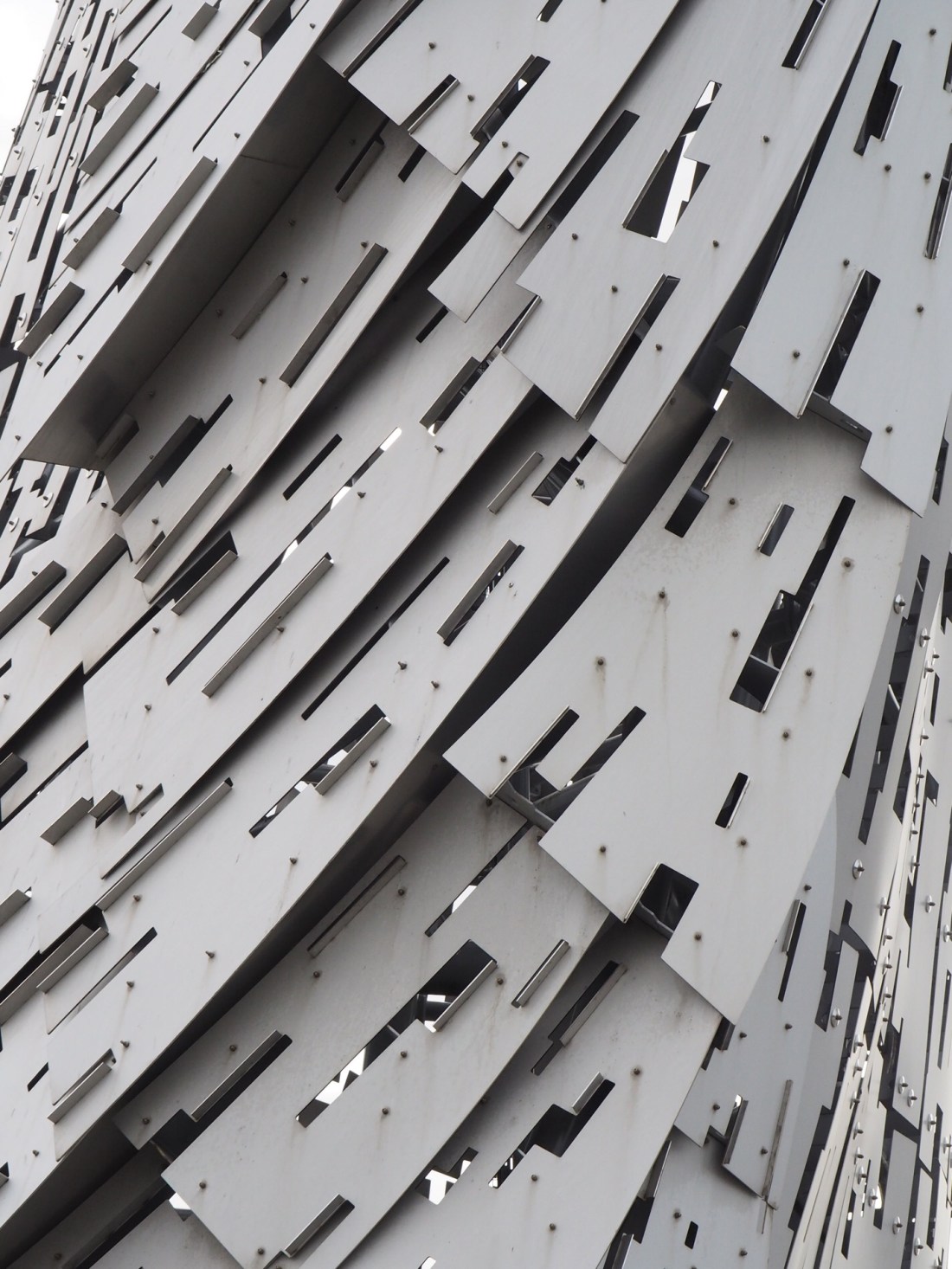
And Baron even has teeth:

The scheme to attract visitors to the area has obviously worked: during the fist year following the opening, nearly one million people visited the sculptures.
When Queen Elizabeth came to officially open the sculptures and re-name the canal, two of the honored guests who greeted her were the real Duke and Baron, as seems fitting.
Mary
Written and posted from Inverness, Scotland 9/15/18

 Mary's Travel Blog
Beautiful equine sculptures! I am so glad that these Clydesdale horses were honored this way. What a feat of art and “sculpted” engineering.
Vishu
Sent from my iPhone
>
LikeLike