There are two types of Berber nomads: semi-nomads, who move once a year between more or less permanent homes in the high mountains, and in the valleys at lower elevations. And the truly nomadic people who move more or less continuously and do not have permanent lands.
Driving through the Middle Atlas Mountains, on the way from Fez to the Sahara, we met Maymouna and her family.
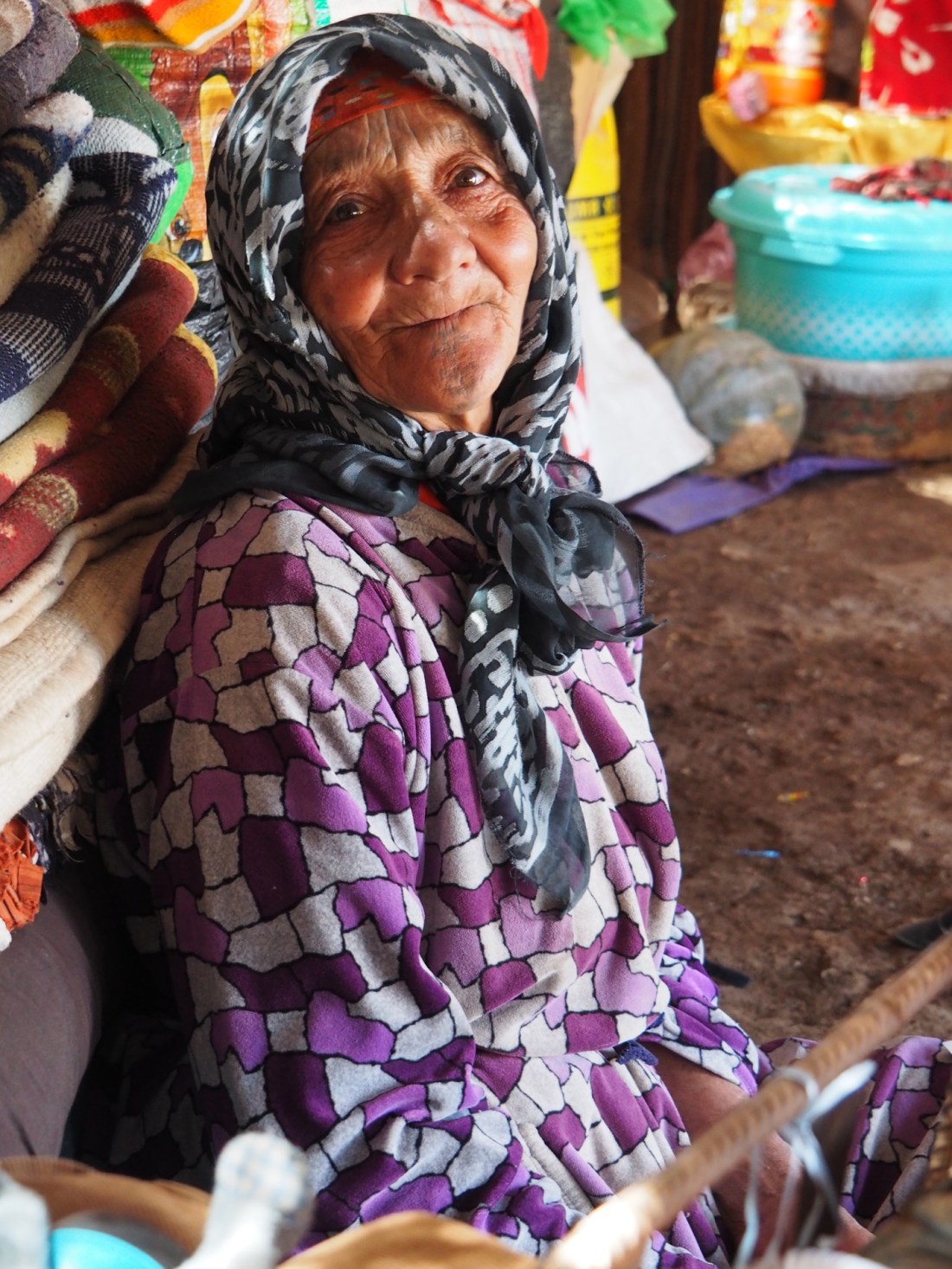
Theirs is a semi-nomadic family, which consists of Maymouna, the great grandmother, her son, Mohammed, and daughter-in law, Hajo, her grandson, Hamid (who was out with the flock) and his wife, Hajiba, and her 2 great grandchildren. We were invited to take off our shoes and enter the tent, sitting on rugs under a cloth roof woven of goat hair by Maymouna and the other women in the family.
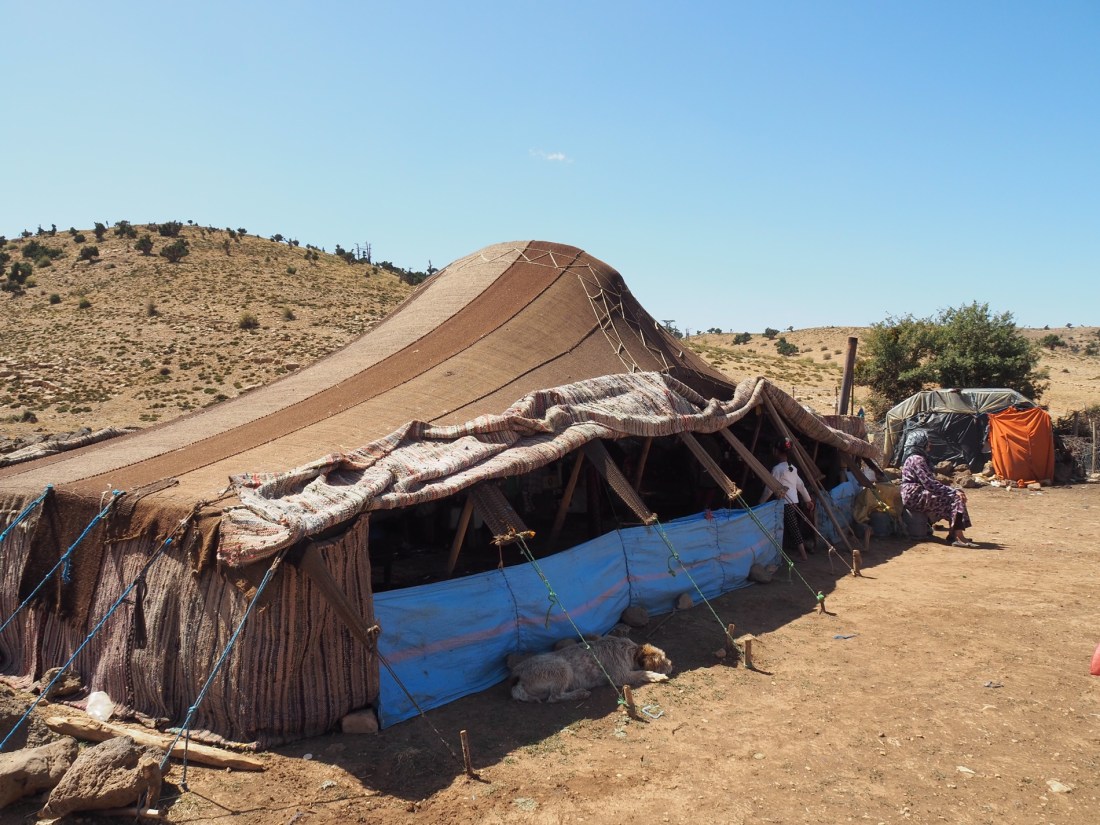
Nomadic hospitality was immediately offered, in the form of cups of steaming mint tea (which is sometimes referred to as “Moroccan Whiskey”.
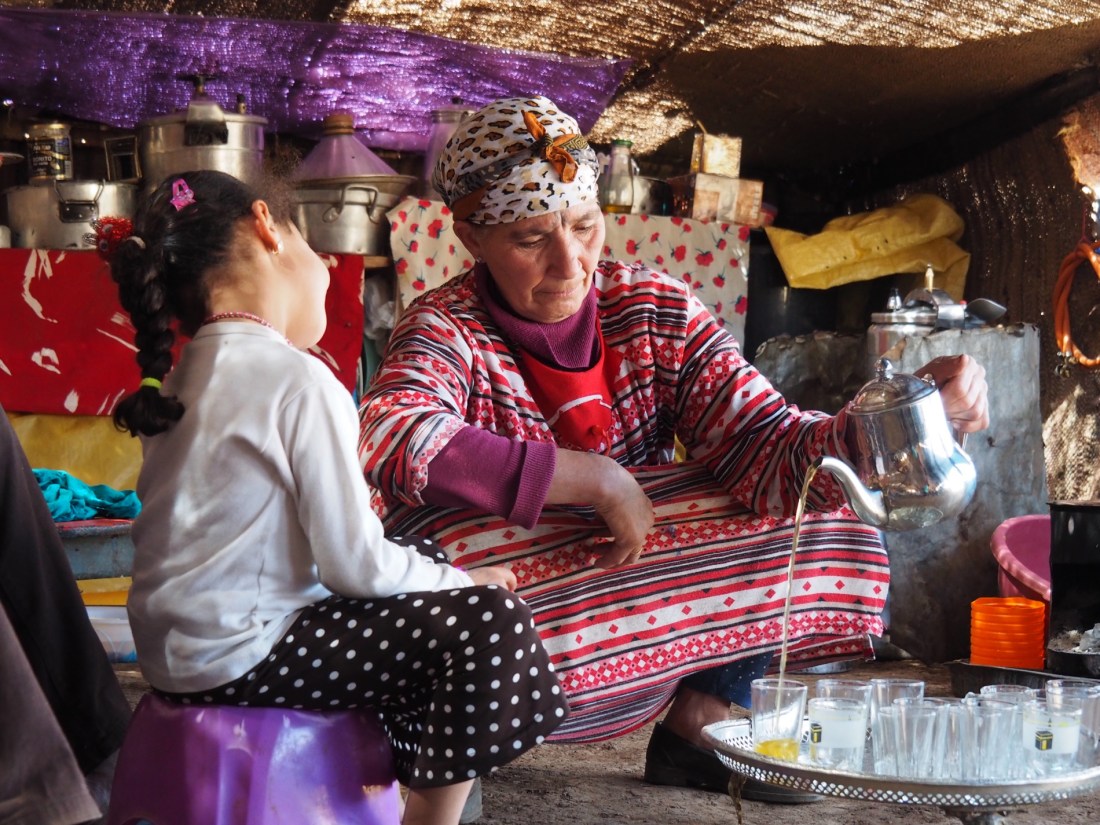
The tea was brewed by Maymouna’s daughter-in-law, Hajo. This picture shows her at work, and gives you an idea of the ‘kitchen’ area of the tent.

The family has a solar panel, which charges a car battery, which in turn is used to charge their phones, which allows them to communicate with each other while out herding the animals, and with other members of the tribe who hold grazing rights to this area.

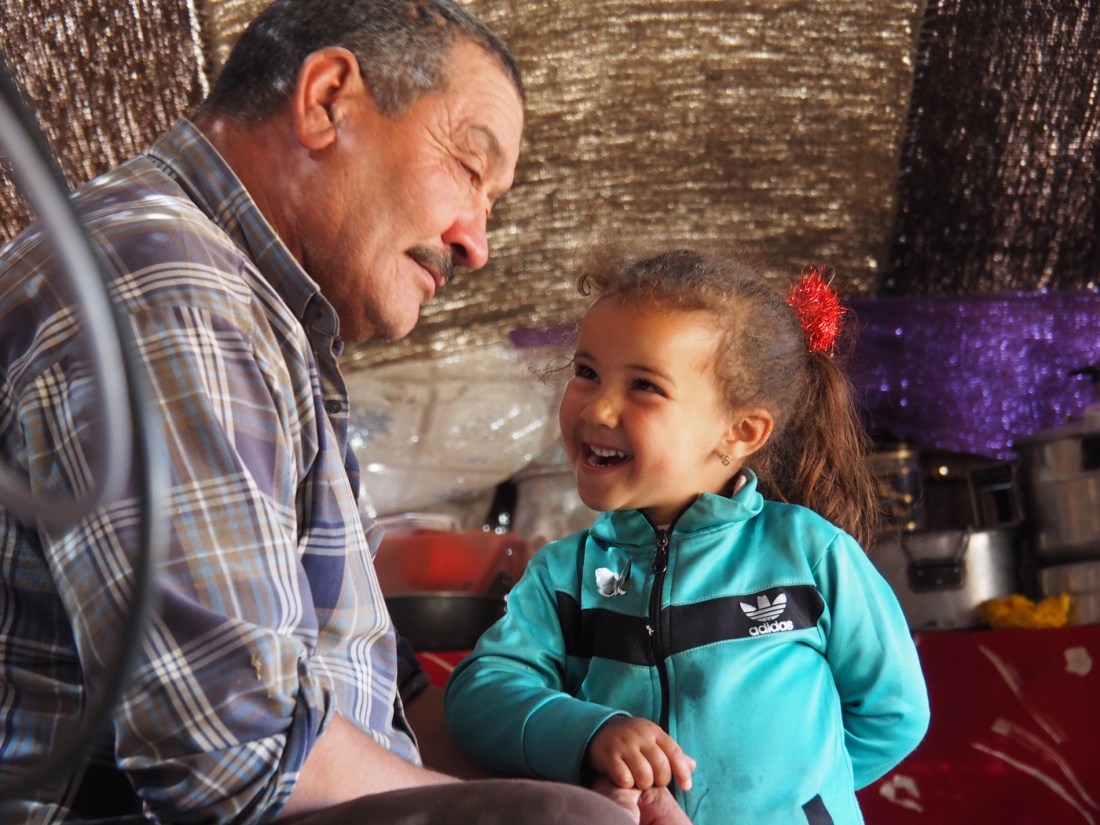
What pervaded the home, however, was love. It was most obvious in the care that is taken of the children, their happy, healthy bodies, and in the interactions between grandparents and grandchildren:
Here, grandpa shares a laugh with one of his grandchildren:
And the other grandchild finds a comfortable grandmotherly lap
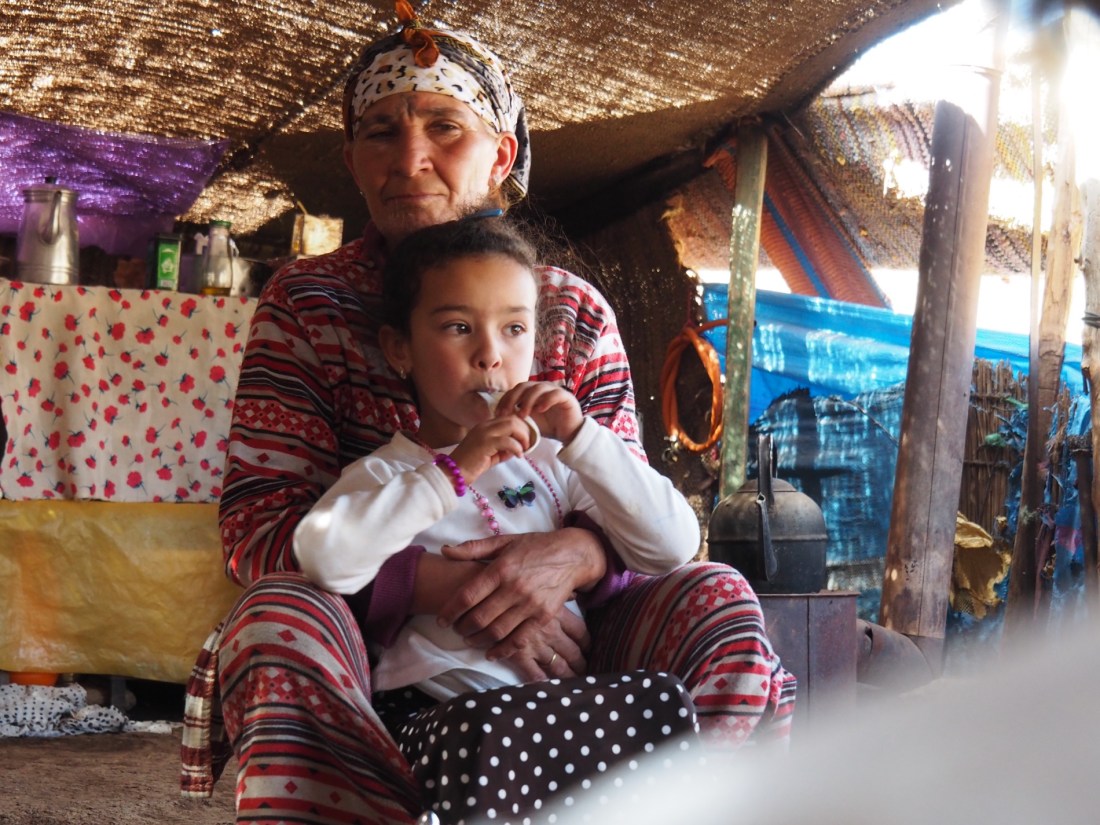
A few days later, in the Sahara, we met another woman, Itto. She is a nomad, but told us she does not move from her current location. Unlike Maymouna’s family, there is no father or grandfather in the picture. Itto’s husband left her when he took a second wife, leaving her with 4 daughters. And the same thing happened to Itto’s daughter.
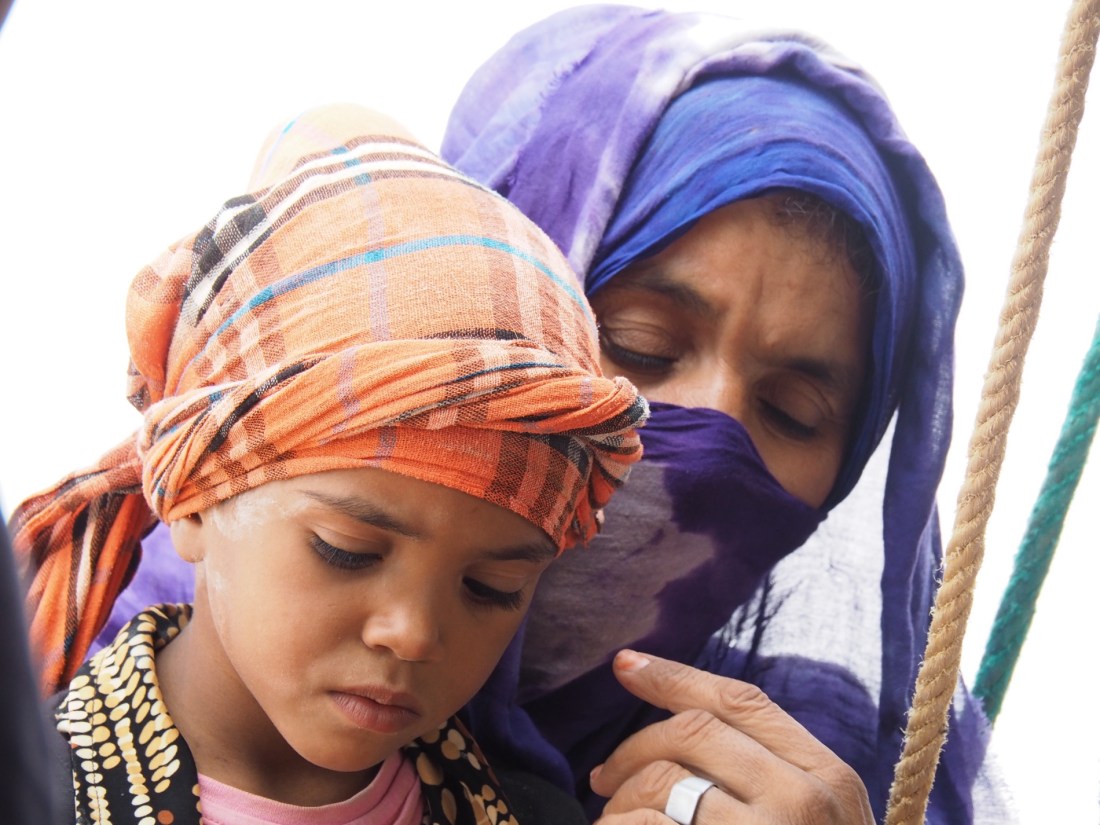
Itto almost never looked at us directly. Her eyes were usually cast down, and she frequently put her hand over them. It was obvious that there was love between Itto and her granddaughter, who came to sit with her grandmother soon after we arrived.
The tent into which we were welcomed was very bare, and the cloth roof was becoming threadbare. There was only a very sketchy shelter for the animals, and not many of them.
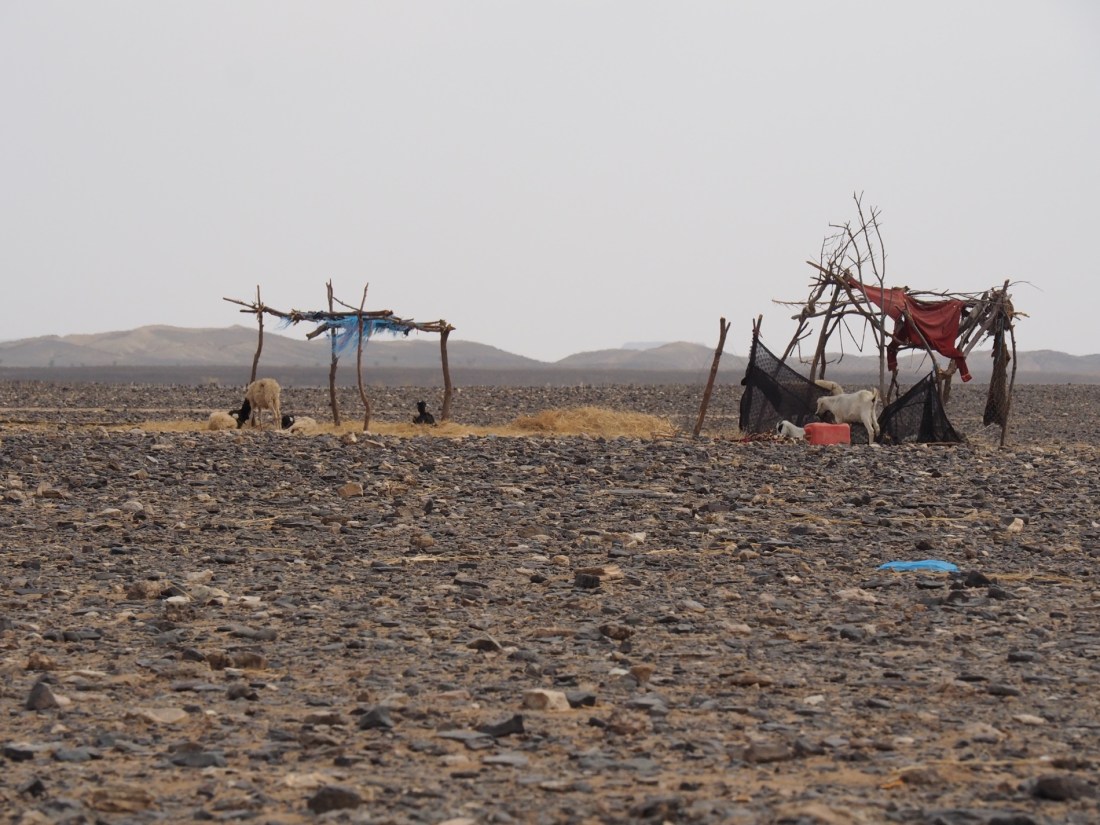
We gave Itto presents, including a gift of money (about $10 US), and I took instant photos of her and her granddaughter, over which they wondered. Our last glimpse was of Itto examining a photo of her granddaughter and holding the tea we had brought, with a view of their threadbare tent behind her. Itto and her family clearly live on the edge, surviving, I suspect, just barely, with no room for anything but necessities.

I was in tears when I left, remembering the precious great grandchildren of Maymouna, and the bicycle and toy bear belonging to her grandchildren in their tent, which Itto’s granddaughter could never dream of receiving in her lifetime.

Mary
Written and posted from Essaouira, Morocco
10/3/19

 Mary's Travel Blog
Beautiful picture of Maymouna – you should enlarge and frame.
What a nice, moving story.
I am glad you are having a great time.
Vishu
Sent from my iPhone
>
LikeLike
Exquisite coverage of a nomadic family. Great photos too. I am glad you are enjoying yourself.
LikeLike
Mary, you are quite a photographer and journalist. Your photos are full of character.
LikeLike
Mary, your blog, has a flair of a globetrotter extraordinaire, your photographs are of professional quality, your writing touches the soul and with an exquisite respect toward the people you meet on your journey. Martina Konietzny
LikeLike
Thanks, Martina, for your comments. I’m looking forward to seeing you on Thursday.
LikeLike
Amazing adventures and quite an eye opening experience to see how these nomadic people live. Thanks for sharing!
LikeLike
what an interesting and beautiful story
LikeLike